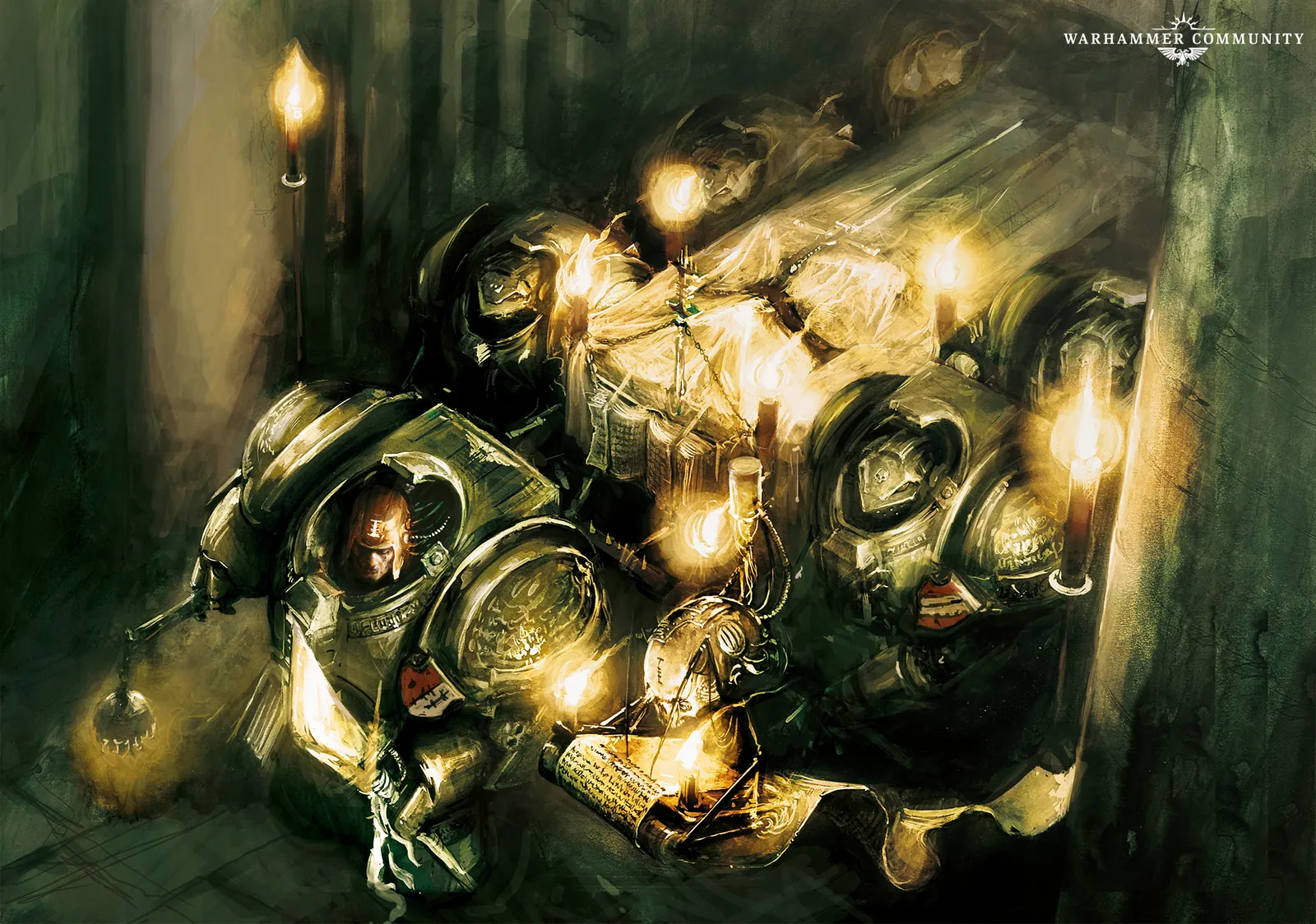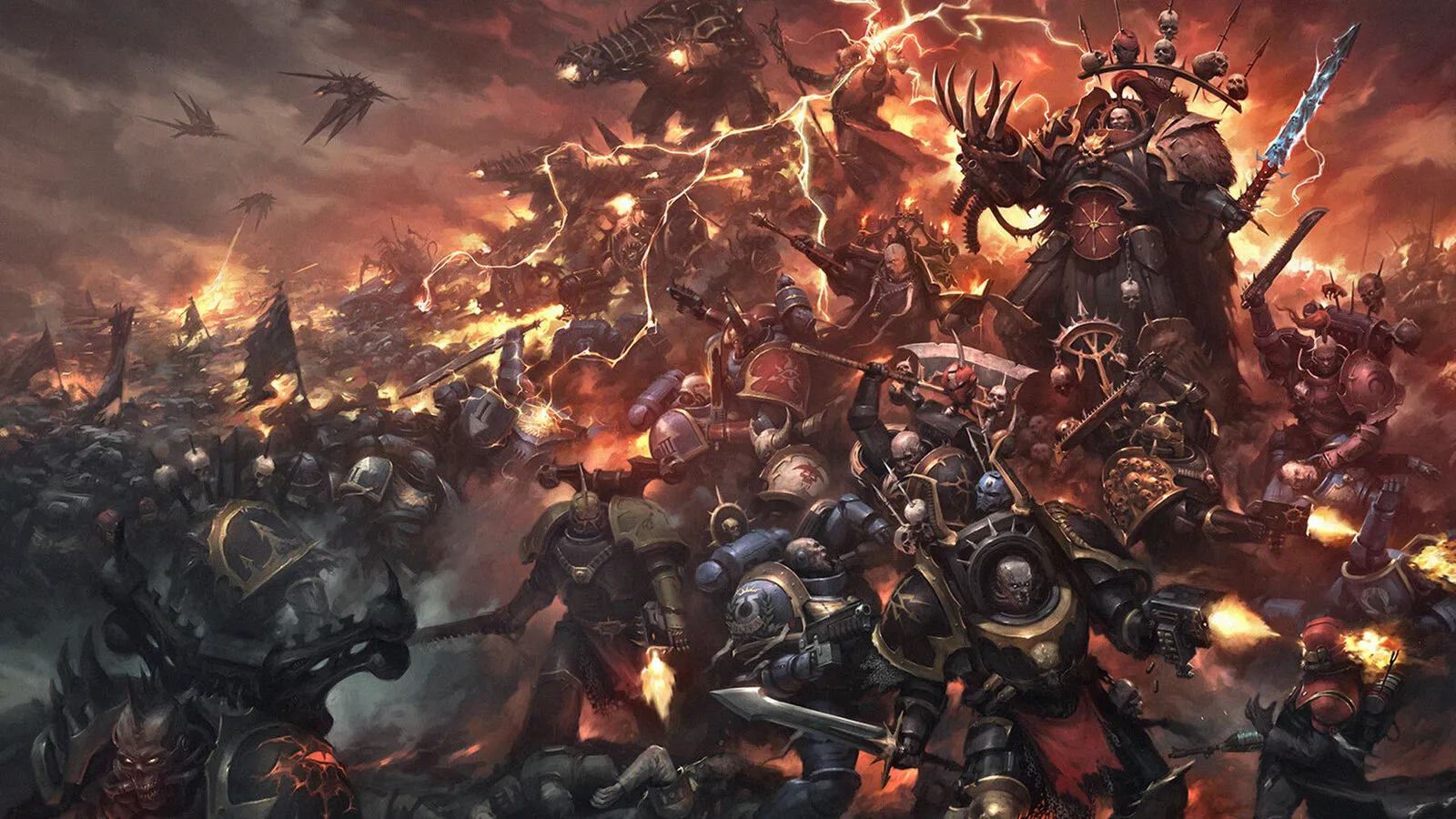
Chaos is Warhammer 40K’s best villain, and it’s a villain that can’t be beaten. You can’t kill it. You can’t negotiate with it. You can’t even fully understand it without risking corruption. The four Chaos Gods are the psychic manifestation of every negative (and some positive) emotion in the galaxy, and they’ve been growing stronger for tens of thousands of years while the Imperium slowly crumbles around the Emperor’s failing throne.
And the Chaos Space Marines are their most effective weapon: the Imperium’s own super-soldiers, turned against it.
What Chaos Actually Is
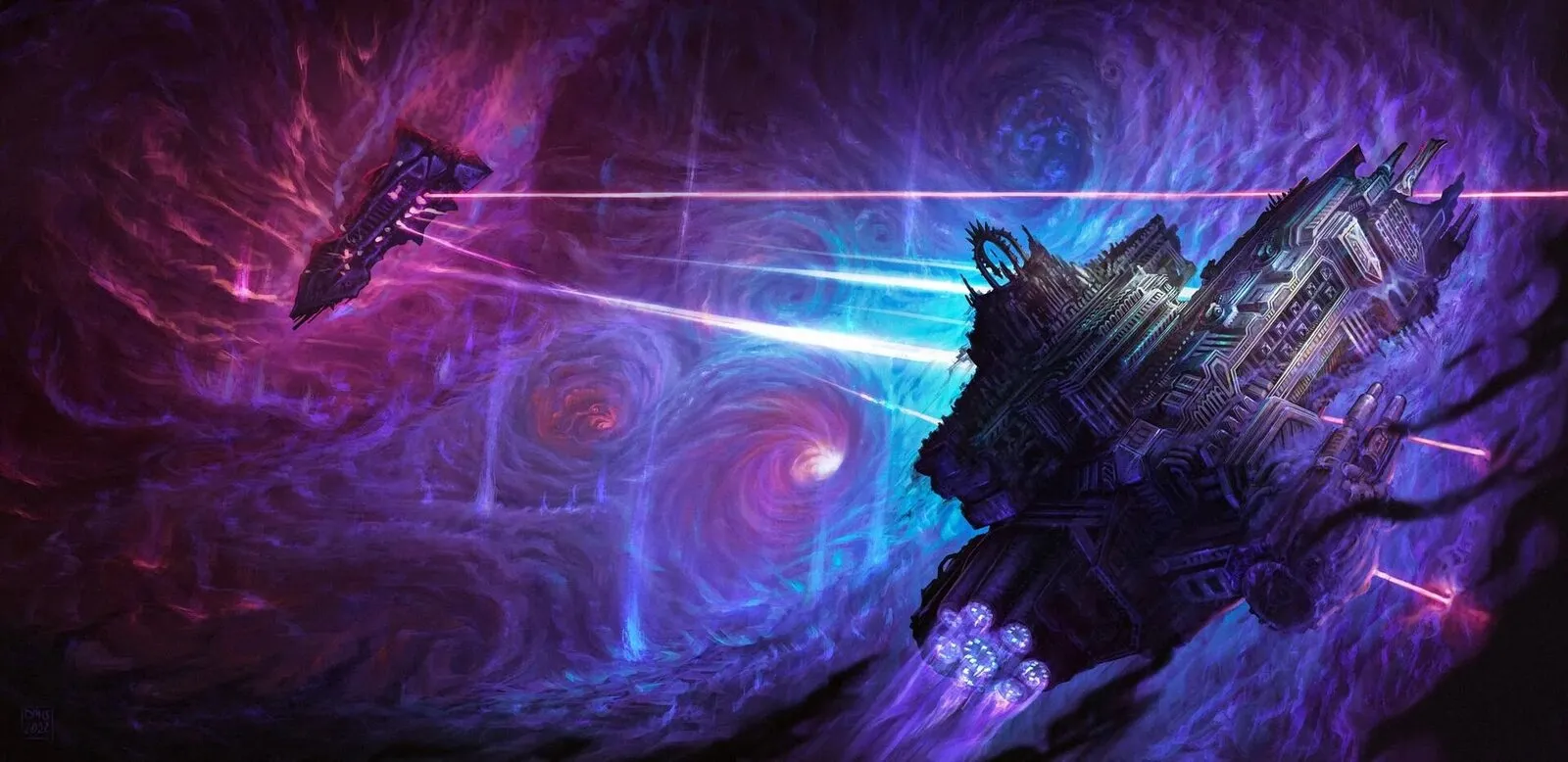
The Warp is a dimension of psychic energy that reflects the emotions of living beings. The Chaos Gods are concentrations of that energy that have become sentient. Khorne is the accumulated rage and violence of every war ever fought. Tzeentch is ambition, change, and the desire to know forbidden things. Nurgle is despair, decay, and the perverse comfort of giving up. Slaanesh is excess, obsession, and the pursuit of sensation beyond all limits.
They’re not evil in the way a person is evil. They’re forces. Khorne doesn’t hate you. He’s the hate itself. And because every living thing in the galaxy contributes to the Warp through their emotions, the Chaos Gods can never be destroyed. You’d have to eliminate all sentient life, and even then, the Warp would still be there.
This is what makes Chaos such a great antagonist. The Imperium can win battles against Chaos. It can close Warp rifts, banish daemons, and purge cults. But it can never win the war, because the war is built into the nature of existence. As long as people feel anger, despair, ambition, and desire, Chaos feeds.
The Traitor Legions
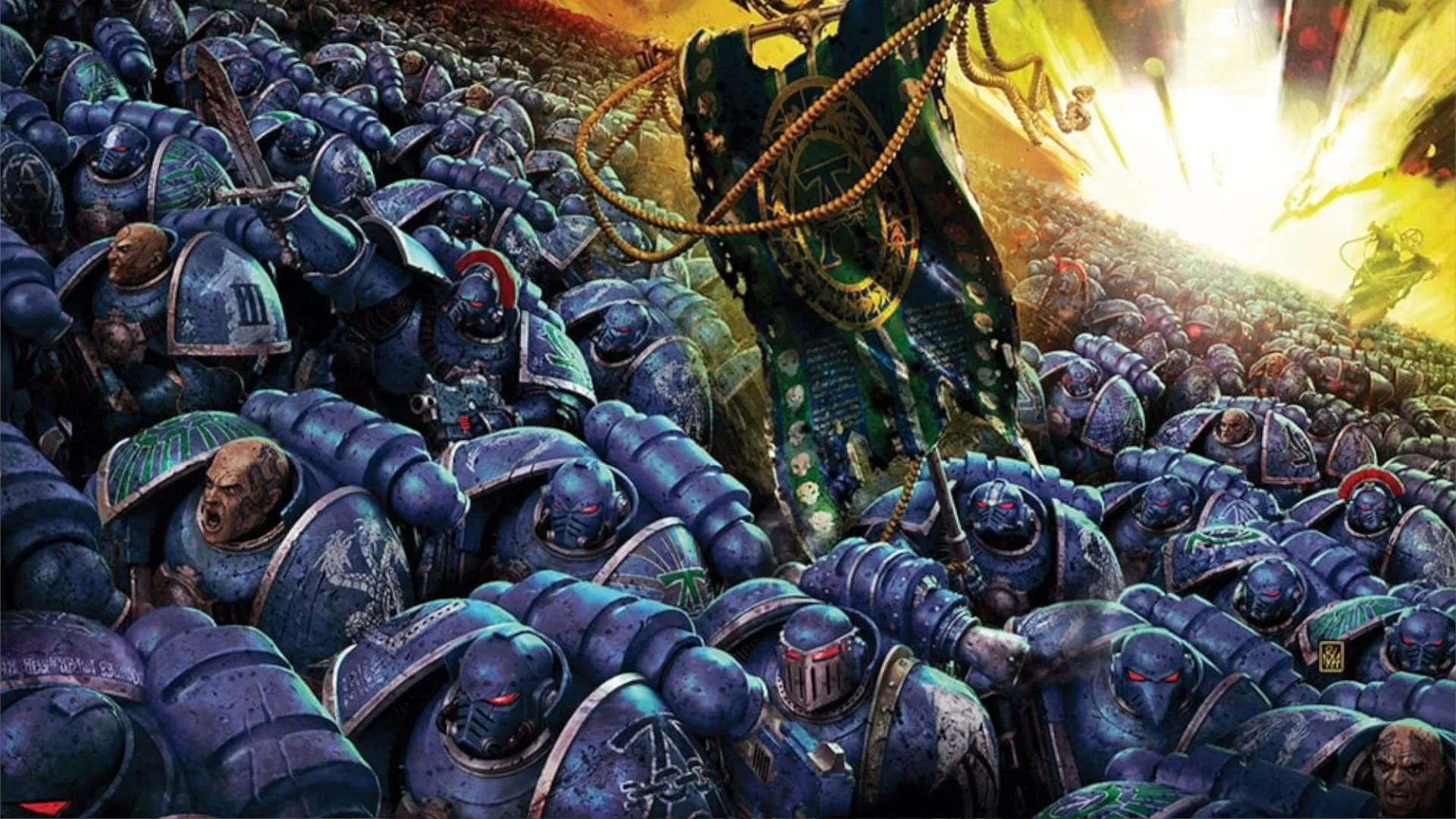
During the Horus Heresy, nine of the Emperor’s twenty Space Marine Legions turned to Chaos. Not all for the same reasons, and that’s what makes the Traitor Legions interesting. Each one fell in a different way.
The Sons of Horus (later the Black Legion) followed Horus out of loyalty and ambition. The World Eaters were driven mad by the Butcher’s Nails (neural implants that amplified rage) and fell to Khorne almost inevitably. The Emperor’s Children pursued perfection until it curdled into Slaaneshi excess. The Death Guard were trapped in the Warp, ravaged by plague, and accepted Nurgle’s “gifts” to survive. The Thousand Sons tried to save their Legion from a psychic curse and accidentally damned themselves to Tzeentch.
Each Traitor Legion is a different tragedy. That’s what separates good Chaos lore from “bad guys are bad.” The Iron Warriors turned traitor because they were ground down by thankless duty. The Night Lords were monsters before Chaos got involved, and their Primarch despised Chaos even as his Legion fell to it. The Word Bearers were the first to worship the Emperor as a god, and when he rejected them, they found gods that wanted to be worshipped.
In the ten thousand years since the Heresy, the Traitor Legions have fragmented into warbands. Some are still organized enough to be called Legions (the Black Legion under Abaddon, the Death Guard under Mortarion). Others have splintered into dozens of independent warbands that raid, conquer, and scheme independently. The Eye of Terror and the Great Rift serve as their home base, regions of space where the Warp bleeds into reality and Chaos Marines can live, recruit, and rebuild.
But the Traitor Legions aren’t the only Chaos Marines out there, and this distinction matters. Renegade warbands are loyalist Chapters that turned traitor after the Heresy, sometimes thousands of years after. They weren’t there for the Siege of Terra. They didn’t fight alongside Horus. They broke from the Imperium for their own reasons, at their own time, and their relationship with the original Traitor Legions is complicated at best. Some renegades resent being lumped in with ten-thousand-year-old traitors. Others seek out the old Legions for protection, supplies, and the accumulated knowledge of fighting the Long War. A newly renegade Chapter turning up at the Eye of Terror is a desperate thing, because the warbands already there don’t trust newcomers and the newcomers don’t understand the rules of survival in a realm where reality is negotiable.
The Red Corsairs are the most successful renegade warband and a perfect example of why the distinction matters. Huron Blackheart, formerly Chapter Master of the Astral Claws, turned renegade during the Badab War after his Chapter’s resource hoarding and defiance of Imperial authority escalated into open rebellion. He didn’t fall to Chaos through corruption or daemonic temptation. He fell because the Imperium pushed him into a corner and he decided he’d rather rule in the Maelstrom than serve on his knees. The Red Corsairs now operate as pirate kings from the Maelstrom, raiding Imperial shipping, absorbing other renegade warbands, and building a power base that rivals some of the original Traitor Legions. Huron is pragmatic where the old Chaos Lords are fanatical, and that pragmatism makes him arguably more dangerous in the current era. He doesn’t care about the Long War. He cares about power, territory, and survival, and he’s very good at all three.
The Long War
Chaos Space Marines call their ongoing campaign against the Imperium the Long War. It’s been going for ten millennia. From their perspective, the Heresy never ended. They’re still fighting the same war Horus started, just in different ways.
Abaddon the Despoiler, Horus’s successor as Warmaster, has launched thirteen Black Crusades from the Eye of Terror. And here’s the thing people get wrong about Abaddon: the popular meme is that he’s a failure because his first twelve crusades didn’t destroy the Imperium. But look at what those campaigns actually accomplished. The First Black Crusade saw him claim the daemon sword Drach’nyen, one of the most powerful weapons in existence. The Seventh devastated the Blood Angels’ recruiting worlds. The Tenth targeted the Iron Hands, and the Twelfth struck deep into Gothic Sector, with Abaddon seizing Blackstone Fortresses and nearly winning the entire Gothic War before the Imperial Navy rallied.
Each crusade had specific strategic objectives, and most of them succeeded. Abaddon was never throwing forces at the Cadian Gate and hoping for the best. He was systematically weakening the Imperium over millennia, testing its defenses, harvesting resources, and eliminating threats. The Thirteenth was the payoff. Cadia broke. The Cadian Pylons, which had been holding the Eye of Terror in check for millions of years, were destroyed. The Great Rift tore the galaxy in half. Ten thousand years of the Long War, and Abaddon delivered the single most devastating blow the Imperium has suffered since the Heresy itself.
That lack of unity among the Chaos forces is their greatest weakness and also their nature. The Chaos Gods compete with each other as much as they fight the Imperium. Khorne and Slaanesh are eternal rivals. Tzeentch plots against everyone, including the other gods. Nurgle and Tzeentch embody opposing principles (stagnation vs. change). Chaos will never unite behind a single leader because Chaos, by definition, doesn’t do unity.
The Warband Ecosystem
One aspect of Chaos Space Marine culture that doesn’t get discussed enough is how warbands actually survive in the Eye of Terror and the Great Rift. These are regions where reality doesn’t work properly, where time flows sideways, and where the Warp bleeds into realspace so thoroughly that maintaining anything resembling a supply chain is functionally impossible. Warbands survive through raiding, scavenging, enslaving, and making deals with daemon entities that always come with a price. The economy of the Eye of Terror runs on soul-barter, stolen munitions, and the labor of enslaved mortal populations dragged back from realspace raids.
The Iron Warriors are probably the most pragmatic about this. While other Legions pursue religious ecstasy or personal glory, the Iron Warriors build. They maintain forge complexes in the Eye of Terror that produce weapons, ammunition, and war machines through a combination of enslaved labor and daemon-bound manufacturing. Their fortresses are functional rather than ostentatious, designed to withstand assault from rival warbands as much as from Imperial forces. Perturabo’s sons approach Chaos with an engineer’s mentality: the Warp is a resource to be exploited, not a god to be worshipped. That practicality makes them terrifyingly effective. While a World Eaters warband might burn through its ammunition in a single berserker charge, Iron Warriors plan campaigns with logistical depth that rivals Imperial military operations. The Word Bearers occupy the opposite end of the spectrum. They maintain the most organized religious hierarchy of any Traitor Legion, with Dark Apostles presiding over congregation-warbands that function more like militant cults than military units. Their power comes from faith rather than industry, and they’ve been remarkably successful at corrupting Imperial worlds from within, planting the seeds of heresy generations before an actual military invasion. A Word Bearers operation might begin with a single missionary arriving on an Imperial world and end, decades later, with the entire planetary population rising up to welcome their Chaos liberators. It’s patient, insidious work, and it’s why the Inquisition considers the Word Bearers one of the most dangerous Traitor Legions despite their relatively modest military strength compared to the Black Legion or Iron Warriors.
What It’s Like Fighting Them
If you’ve ever read a firsthand account from an Imperial perspective of fighting Chaos Space Marines, you know it’s a different kind of horror than facing xenos. Orks are terrifying because of their numbers and ferocity. Tyranids are terrifying because they’re an alien swarm. But Chaos Marines are terrifying because they’re you. They wear corrupted versions of your armor. They use your weapons. They speak your language, and they know exactly how you think, because they used to be on your side.
The psychological warfare is almost as effective as the physical. Chaos warbands broadcast on Imperial frequencies. They taunt defenders by name. They leave desecrated Imperial symbols at breach points. A Chaos Lord who’s been fighting the Long War for three thousand years has seen every tactic, every stratagem, every desperate last stand the Imperium can throw at him, and he’s survived all of it. The experience gap between a Chaos Marine veteran and a newly minted loyalist is measured in millennia.
And then there’s the Warp corruption. Battlefields where Chaos Marines fight get weird. Reality thins. Gravity shifts. Dead men get back up. Your vox starts whispering things that aren’t on any frequency. Commissars who fight Chaos regularly report the highest rates of post-battle summary execution in the entire Astra Militarum, because soldiers who survive exposure to Chaos corruption can’t always be trusted afterward.
Why They’re Fun
Chaos Space Marines are the best faction for kitbashers and converters. The whole aesthetic is “corrupted super-soldiers,” which means you can take any Space Marine kit, add mutations, spikes, tentacles, daemon imagery, and Chaos iconography, and make something unique. The current Chaos Space Marine range (especially the new Chosen, Possessed, and Accursed Cultists) is some of GW’s best work.
On the tabletop, Chaos Marines play as a darker mirror of loyalist Space Marines with access to daemons, daemon engines, and unique mechanics like Dark Pacts. The variety of Legions and Detachments means you can build anything from a horde of Cultists to an armored column of daemon engines to an elite warband of Terminators. If you’re starting out, I’d recommend grabbing a box of the new Legionaries and a Chaos Lord. The Legionaries kit is one of the most versatile kits GW has ever made, with enough sprue options to make each marine look distinct. Add a Helbrute for your first daemon engine, because nothing says “welcome to Chaos” like a Dreadnought that screams.
For models specifically, the Possessed are a highlight of the current range. The sculpts genuinely look like Space Marines mid-mutation, and they’re a blast to paint because you can go wild with skin tones, tentacles, and organic details in ways that loyalist kits never allow. The Accursed Cultists are similarly impressive, giving you this wave of mutated human followers that look horrifying ranked up together.
For novels, Aaron Dembski-Bowden’s Night Lords trilogy is the gold standard for Chaos Space Marine fiction. It follows a Night Lords warband and makes them genuinely sympathetic without ever pretending they’re good people. It’s fantastic, and it’ll change how you think about the Traitor Legions.
Chaos is 40K’s oldest enemy and its most enduring one. And honestly, given how the Imperium treats its own citizens, you can understand why some Space Marines looked at what they were fighting for and decided the alternative might be worth the damnation.