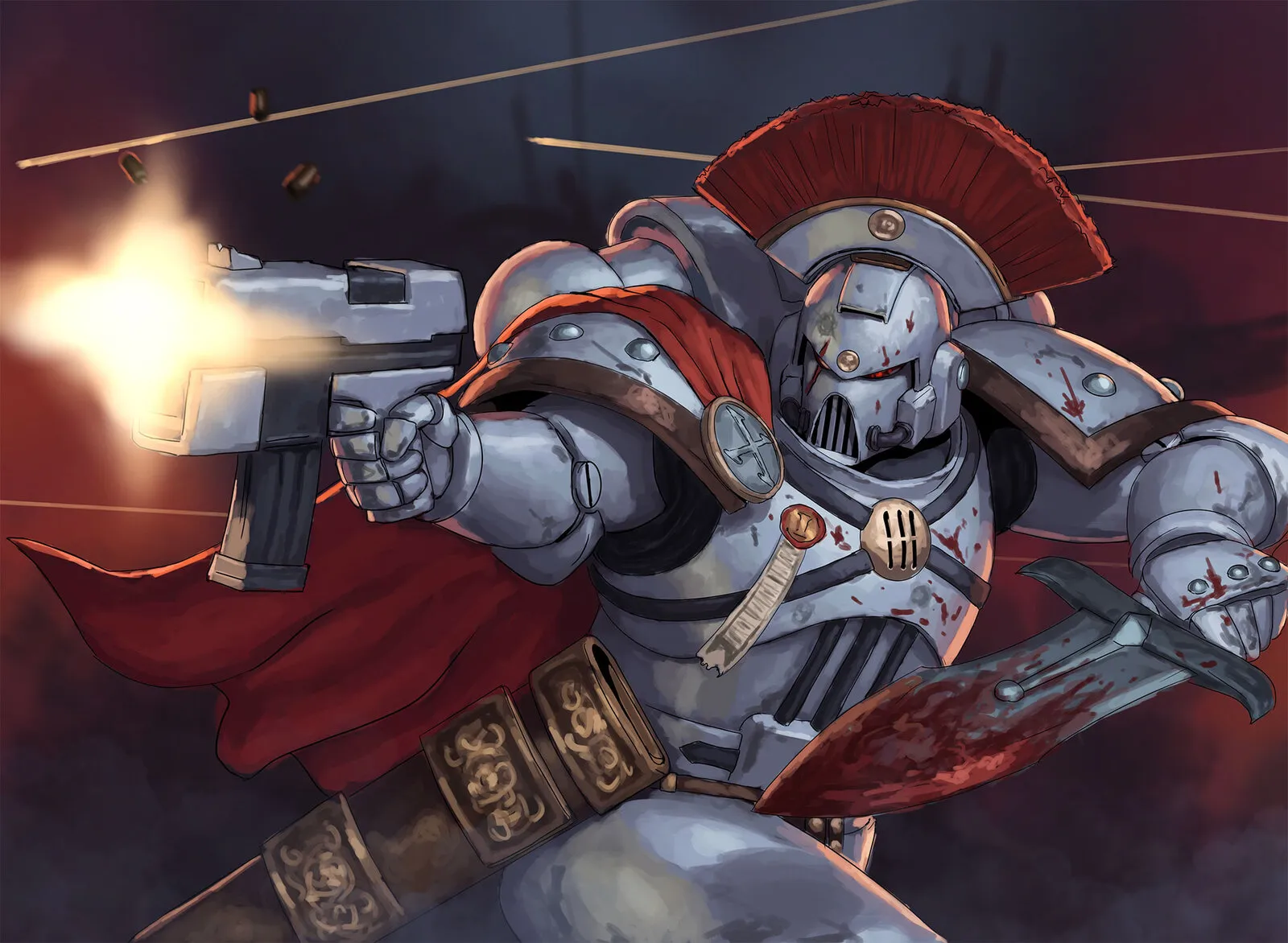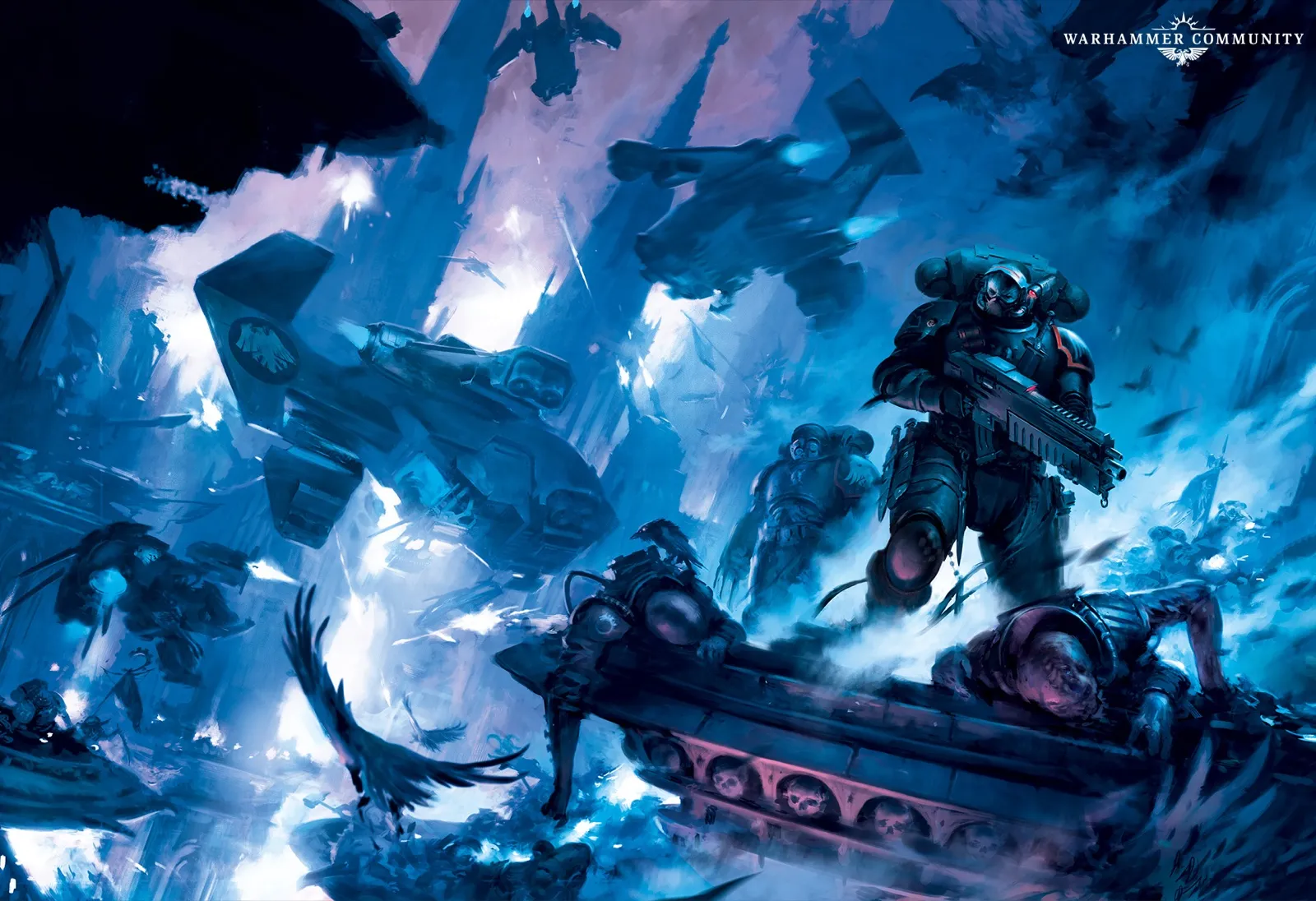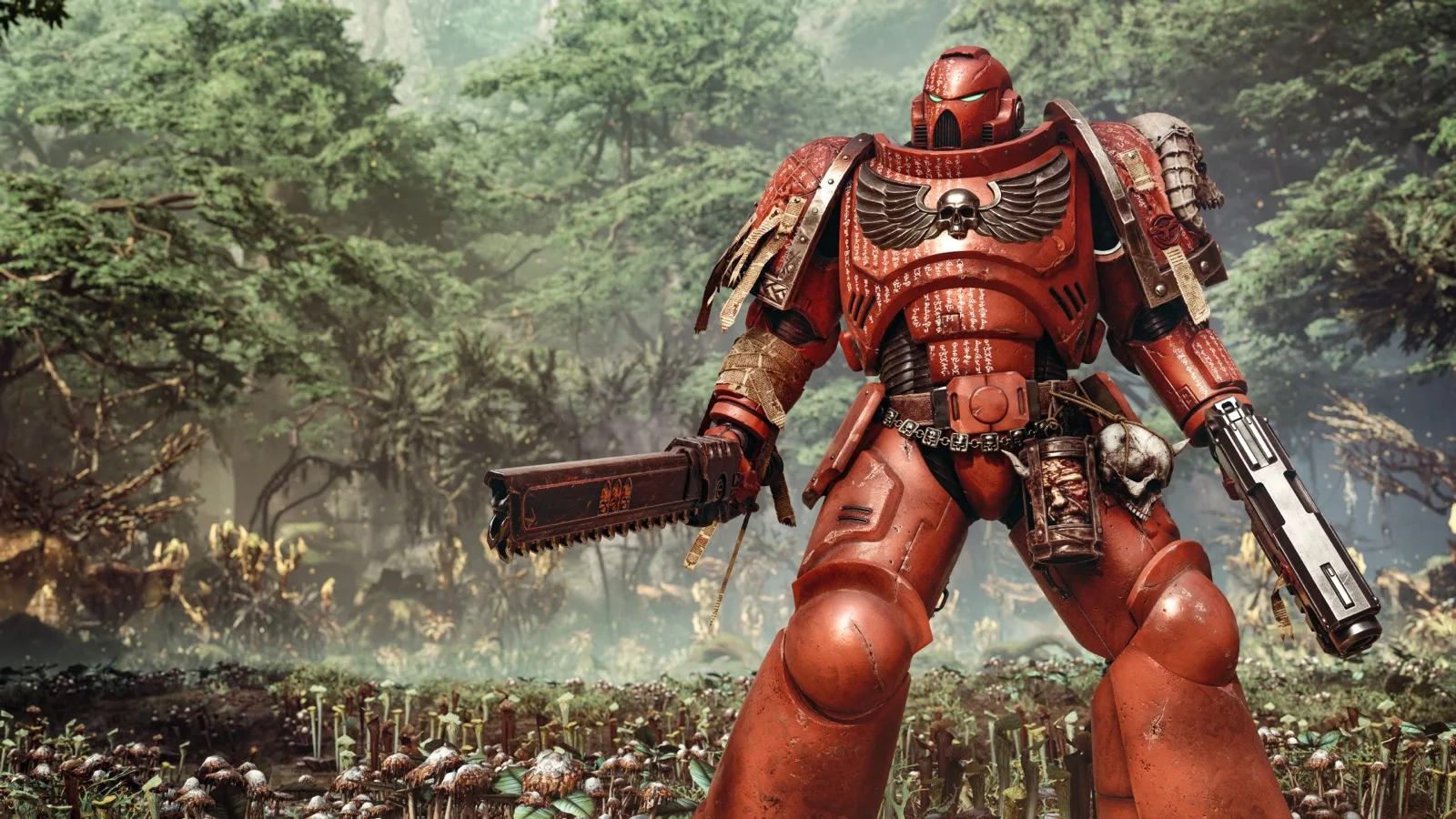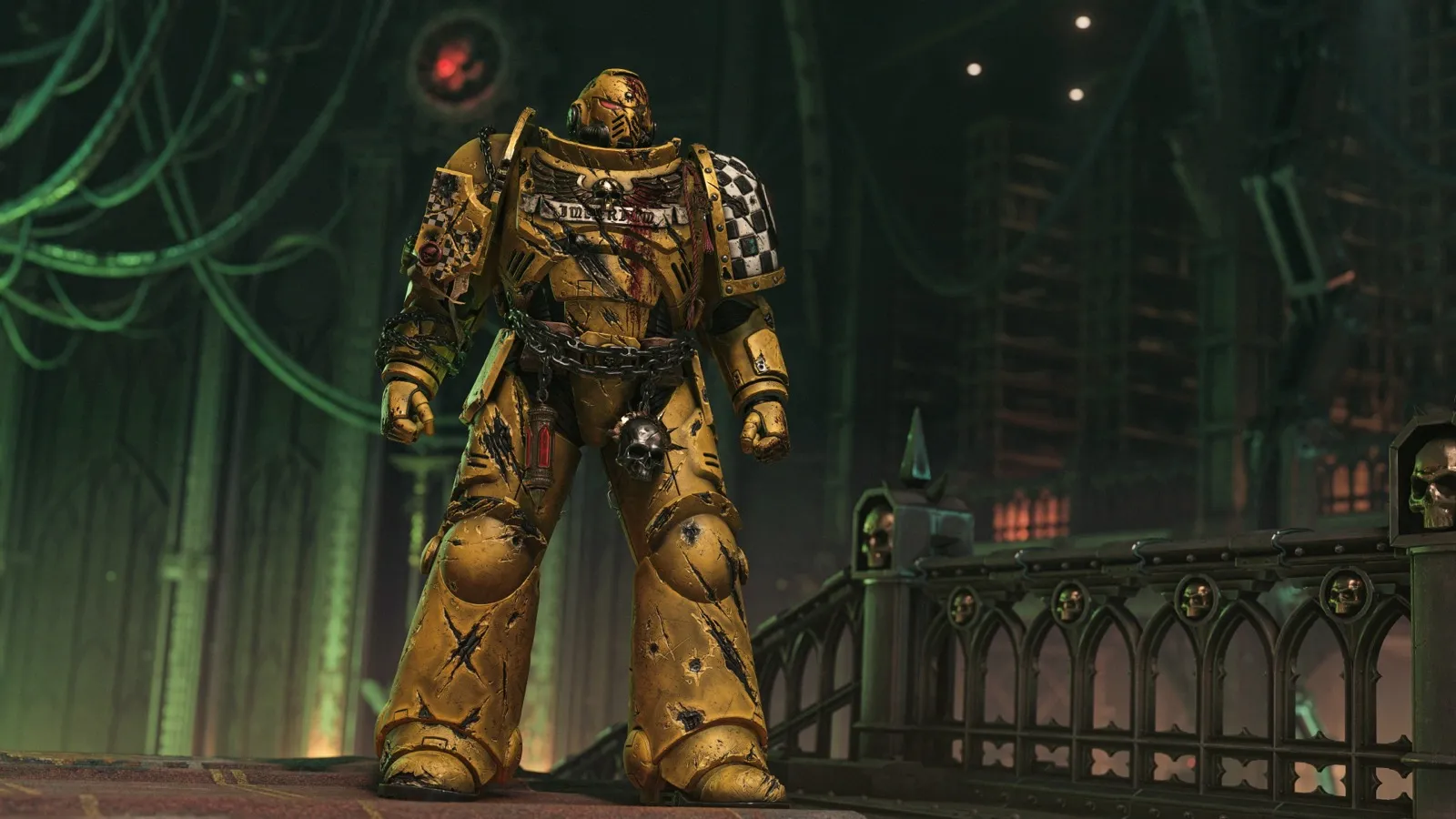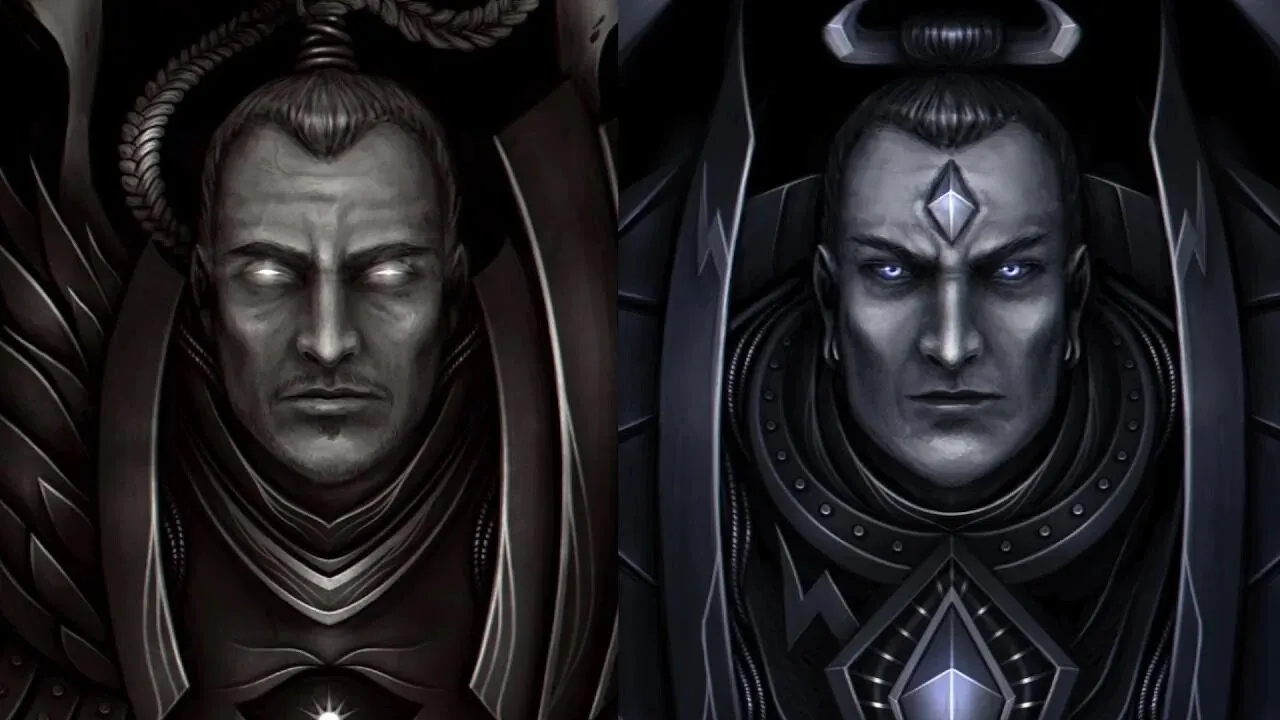
In the Imperial Palace on Terra, there are twenty pedestals for the twenty Primarchs. Eighteen have statues (some defaced, some honoring traitors turned to Chaos). Two are empty. No names. No inscriptions. No records of who once stood there. The Primarchs of the II and XI Legions have been completely erased from Imperial history, and the Imperium has spent ten thousand years making sure they stay erased.
This is, without exaggeration, the most tantalizing mystery in Warhammer 40K. And I’m about 90% sure GW is never going to give us a definitive answer. That’s what makes it perfect.
What We Actually Know
Not much. And that’s the point. The lore gives us fragments, and every fragment raises more questions.
We know the Emperor created twenty Primarchs. We know all twenty were scattered across the galaxy by the Chaos Gods. We know eighteen were eventually found and reunited with their Legions. The other two… something happened. Something bad enough that the Emperor ordered their complete erasure from history. Their names, their deeds, their Legions. Everything wiped.
The remaining Primarchs were forbidden from speaking about it. In the Horus Heresy novels, whenever someone brings up the missing brothers, the conversation gets shut down immediately. Even Primarchs who were close to the lost two (Guilliman shows some emotion when the topic comes up, Russ goes silent) won’t break the silence. The only Primarch who uses them as leverage is Horus, and even he only hints.
Here’s what the lore does tell us, in fragments:
One was “forgotten.” One was “purged.” The distinction is deliberate. The forgotten one presumably did something that warranted being erased quietly. The purged one did something that required active destruction. Whether “purged” means the Primarch was killed, imprisoned, or something else entirely is unknown.
Their Legions were not destroyed. The Space Marines who served in the II and XI Legions were apparently redistributed to other Legions (the Ultramarines saw a suspicious growth in numbers around this period). This suggests the Legions’ soldiers weren’t considered tainted, just their Primarchs.
Malcador the Sigillite, the Emperor’s closest advisor, explicitly states in one conversation that the Lost Primarchs’ fates were a necessary sacrifice. He frames it as the Emperor making hard choices for the greater good. But Malcador says a lot of things, and he’s not always reliable.
The Theories
The community has been debating this for decades, and the theories range from plausible to completely unhinged. Here are the ones I find most interesting.
The genetic flaw theory suggests one or both Primarchs suffered from catastrophic gene-seed mutations that made their Legions unstable. The Emperor, unwilling to let flawed Primarchs threaten the Great Crusade, had them eliminated. This would explain why the surviving Legionaries were redistributed rather than destroyed (the gene-seed was fine once separated from the problematic Primarch’s influence). Supporters of this theory often point to the fact that several known Legions already had gene-seed problems (the Blood Angels’ Black Rage, the Space Wolves’ Wulfen curse), and those Legions survived. Whatever happened to the Lost Primarchs’ gene-seed must have been categorically worse, something unfixable rather than merely inconvenient.
The rebellion theory proposes that one or both Primarchs turned against the Emperor before the Heresy. Not to Chaos (that would make them traitors, not forgotten), but out of genuine moral disagreement with the Crusade’s methods. The Emperor couldn’t afford open dissent during the Crusade, so he eliminated the threat and wiped the evidence. This is interesting because it implies the Emperor’s perfect sons could reject him for legitimate reasons, which is a much more troubling idea than simple corruption.
The xenos contamination theory suggests one Primarch was corrupted or absorbed by an alien species. Maybe the Primarch landed on a world controlled by something incompatible with human civilization, and what came back wasn’t fully human anymore. The Emperor, recognizing that this Primarch could never serve the Imperium, had them erased. There’s a passage in The First Heretic by Aaron Dembski-Bowden where Lorgar visits a place outside of normal time and sees visions of the Primarchs’ scattering. He witnesses something happening to two of the capsules that horrifies him, but the specifics are deliberately left vague. Whatever he saw, it was enough to shake a Primarch who had already begun his slide toward Chaos, which says something about the scale of what happened.
The Rangdan Xenocides, a series of devastating wars fought during the Great Crusade against a mysterious alien threat called the Rangdan, are sometimes connected to the Lost Primarchs theory. The lore hints that the Rangdan wars were so catastrophic that the Imperium nearly lost the entire galactic north, and that the resolution of the conflict involved “unprecedented losses” and decisions that were later classified. Some fans believe one or both Lost Primarchs were involved in the Rangdan wars, either falling to the alien influence or being sacrificed to end the threat. The timing lines up suspiciously well with the Ultramarines’ sudden increase in numbers.
The sacrifice theory, which is my personal favorite, proposes that the Lost Primarchs didn’t fail or rebel. They were deliberately sacrificed by the Emperor for some greater purpose. Maybe their deaths were necessary to fuel the Golden Throne, or to seal a Warp breach, or to accomplish some other cosmic objective that required a Primarch’s life force. This would explain the silence: the surviving Primarchs can’t talk about it because the truth would undermine faith in the Emperor. What makes this theory so compelling is what it implies about the Emperor’s relationship with all twenty of his sons. If he was willing to sacrifice two of them for a strategic objective and then erase every trace of their existence, then every other Primarch is right to wonder whether they’re next. It reframes the entire Great Crusade as a project where the Primarchs were always expendable components rather than irreplaceable sons, and it gives the traitor Primarchs a grievance that’s harder to dismiss than simple jealousy or corruption. If your father already killed two of your brothers and made everyone pretend they never existed, your loyalty is built on fear as much as love, and fear is a terrible foundation for anything.
Why GW Will Never Answer This
I genuinely believe the Lost Primarchs are one of the smartest creative decisions GW has ever made, and the reason is simple: any answer would be less interesting than the mystery.
If GW reveals that the II Primarch was a mutant, that’s a good story once. If they leave it open, it’s a good story forever. Every fan has their own theory. Every Horus Heresy novel that drops a hint generates weeks of community discussion. The empty pedestals are more compelling than any statue could be.
There’s also a practical reason. The Lost Primarchs are an intentional gap in the lore for players to fill. If you want to create a homebrew Space Marine Chapter with a mysterious origin, you can trace it back to the II or XI Legion. If you want to write fan fiction about a Primarch nobody else has claimed, the Lost ones are yours. GW has explicitly said they’re leaving this space open for the community.
And commercially, the mystery is worth more than any reveal could be. Every time a Horus Heresy novel drops even a vague reference to the Lost Primarchs, forums and Reddit threads erupt with analysis. YouTube lore channels get hundreds of thousands of views on Lost Primarch speculation videos. The mystery generates engagement in a way that a definitive answer simply wouldn’t. GW knows this. The slow drip of hints across decades of publications keeps the community coming back to the topic like moths to a flame. It’s genius marketing disguised as narrative restraint.
That said, the Horus Heresy novel series has gotten closer to the truth than ever before. Dan Abnett’s The End and the Death contains some of the most explicit hints yet about what happened. I won’t spoil the specifics, but if you’re interested in the Lost Primarchs mystery, the final Siege of Terra novels are essential reading. There are moments in those books where characters come close to naming what occurred, and the emotional weight of the scenes makes it clear that the Lost Primarchs’ fate wasn’t some bureaucratic housekeeping. It was a wound that never healed.
Earlier in the series, The Chamber at the End of Memory by James Swallow is a critical piece. In it, a remembrancer aboard the Ultramarines’ flagship has her memories of the Lost Primarchs forcibly suppressed. The process reveals that at least some people outside the Primarchs’ inner circle did know what happened, and that the cover-up was an active, ongoing operation rather than a one-time event. The implication is chilling: the Imperium didn’t just erase two Primarchs, it maintained a continuous program of memory alteration to keep the secret buried.
The Community Debate Culture
I want to acknowledge something about the Lost Primarchs discourse that I find genuinely endearing: the community has been arguing about this for literally decades, and the passion hasn’t dimmed at all. I’ve seen forum threads from the early 2000s debating the same theories that people argue about on Reddit today. The evidence hasn’t changed much, but the interpretations keep evolving as new novels add crumbs to the pile.
There’s a specific kind of lore fan who treats the Lost Primarchs like a solvable puzzle, cross-referencing every passage in every novel, building timelines, mapping contradictions. And there’s another kind who insists (correctly, I think) that GW hasn’t written a definitive answer and that the contradictions are features, not bugs. The tension between these two camps produces some of the best discussions in the fandom. People get genuinely heated about whether a particular line in Vengeful Spirit is a clue or a red herring, and the arguments are conducted with the seriousness of academic peer review. It’s one of the things I love most about this community.
The Meta Appeal
What makes the Lost Primarchs work as lore isn’t the mystery itself. It’s what the mystery reveals about the Emperor and the Imperium. The fact that the Emperor was willing to erase two of his sons from history tells you everything about his character. He’s not a benevolent father figure. He’s a utilitarian who will sacrifice anything, including his own children, if the math works out.
The silence of the other Primarchs is equally telling. These are demigods who disagree about everything. They’ve fought wars over doctrine, pride, and personal grudges. But on this one topic, they all shut up. Whatever happened to the Lost Primarchs was bad enough to create a consensus among beings who agree on nothing else.
And there’s the detail that Horus used the Lost Primarchs as a recruiting tool during his rebellion. In several novels, he references their fate when trying to turn his brothers against the Emperor, essentially arguing that any of them could be next if they displeased their father. The fact that this argument worked on some Primarchs suggests they believed the Emperor was capable of doing to them what he did to the lost two. That fear, more than any Chaos corruption, might be the real poison that made the Heresy possible. The Lost Primarchs weren’t just erased from history. They became a threat, a reminder that the Emperor’s love was conditional and his judgment was final.
For players, the Lost Primarchs are also an invitation. GW has explicitly stated that the II and XI Legions are left open for the community. If you want to create a homebrew Chapter with a mysterious origin, tracing your lineage back to one of the Lost Legions is the ultimate blank canvas. Nobody can tell you you’re wrong about your Chapter’s history, because nobody knows what the real history is. It’s one of the few areas where the lore actively encourages personal creativity rather than constraining it.
Two empty pedestals. Two questions that will probably never be answered. And ten thousand years of an empire built on the assumption that asking those questions is itself a crime. That’s about as 40K as it gets.