The Imperium of Man is the largest human civilization in the history of the galaxy. It spans roughly a million worlds (nobody’s sure of the exact number, which tells you a lot about the Imperium’s organizational abilities). It’s been running for over ten thousand years. And it is, without question, one of the most horrifying governments ever depicted in fiction.
The Imperium isn’t the good guys. But it’s what humanity has. And in a galaxy full of things that want to eat, corrupt, or exterminate the human species, “not great but better than extinction” is the best pitch available. Understanding Warhammer 40,000 starts with understanding the Imperium, because everything in the setting exists in relation to it.
How It Works (Barely)
The Imperium is a feudal theocracy held together by three things: the Emperor (who’s been a corpse on a machine for ten millennia), the Astronomican (a psychic beacon that enables interstellar travel), and sheer bureaucratic inertia. The central government on Terra (the Adeptus Terra) is a nightmare of overlapping jurisdictions, competing institutions, and paperwork so dense that planets have been lost in administrative errors. There are documented cases of Imperial worlds paying tithes to a department that no longer exists.
Individual worlds have enormous autonomy as long as they pay their tithes (soldiers, resources, psykers) and don’t practice heresy. A planetary governor can run their world however they want, from enlightened democracy to brutal tyranny, and the Imperium won’t care unless the tithes stop coming or someone starts worshipping Chaos.
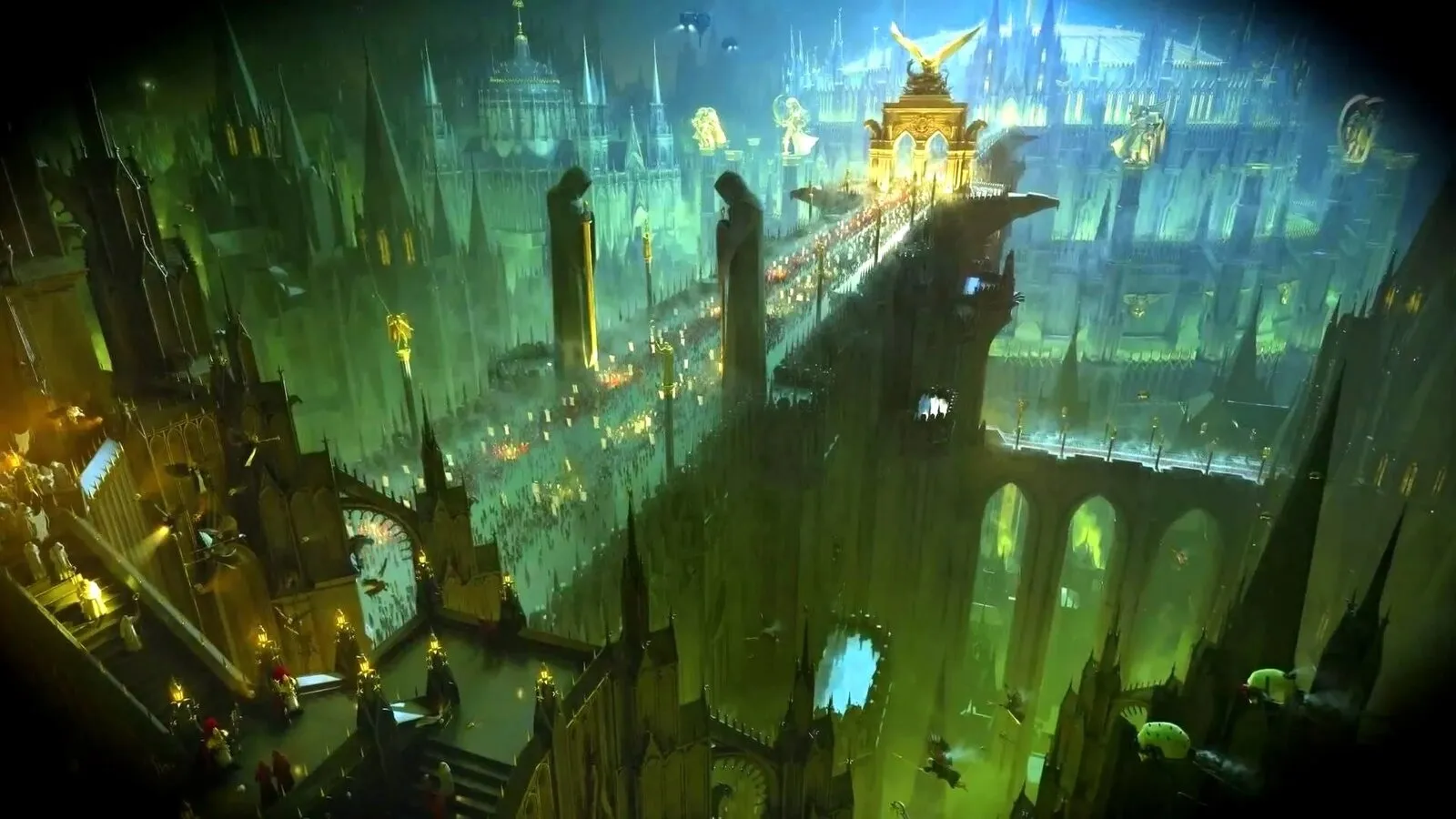
And the variety of those worlds is staggering. Hive worlds are the Imperium’s most common population centers, planet-sized urban nightmares where billions of humans are stacked in mile-high cities called hives. The upper spires house the nobility in something approaching luxury. The lower levels are industrial hellscapes where workers breathe recycled air and never see natural sunlight. Below that are the underhives, essentially lawless zones where gangs, mutants, and worse things fight over scraps. Most Imperial citizens who aren’t from an agri-world or a feral planet were born in a hive, and most of them will die in one without ever seeing the sky.
Agri-worlds are the opposite extreme: entire planets given over to food production. Every continent is farmland. Every ocean is a fish farm. The populations are small by Imperial standards, maybe only a few million, and their entire existence revolves around meeting the food quotas that keep the hive worlds from starving. Forge worlds belong to the Mechanicus and are basically planet-sized factories. Shrine worlds are pilgrimage destinations run by the Ecclesiarchy. Death worlds are planets so hostile that simply surviving on them counts as military training. Feral worlds are pre-industrial, left that way on purpose because they produce tough recruits for the Astra Militarum and Space Marine Chapters. The Imperium has a classification for everything, and every classification exists to serve the war machine.
Overseeing all of this, theoretically, is the Administratum. I say theoretically because the Administratum is both the largest organization in the Imperium and the most dysfunctional. Imagine a bureaucracy so enormous that it employs more people than some worlds have total inhabitants, and then imagine that this bureaucracy has been running continuously for ten thousand years without anyone ever performing a full audit. Messages take decades to arrive. Census records are centuries out of date. There are documented cases of tithes being levied on worlds that were destroyed by Tyranids years earlier, and the Administratum simply classified the missing payments as “delinquent.” Entire departments exist whose original purpose has been forgotten, but nobody can authorize shutting them down because the authorization form requires approval from the department being shut down.
Above the Administratum sit the High Lords of Terra, a council of twelve that theoretically governs the Imperium in the Emperor’s name. The composition shifts over time, but it usually includes the Master of the Administratum, the Fabricator-General of Mars, the Ecclesiarch, the Grand Master of the Assassins, and representatives of other major institutions. They spend roughly equal time governing the Imperium and sabotaging each other. Political assassination among the High Lords isn’t a scandal; it’s practically a tradition. The fact that this dysfunctional council has kept humanity alive for ten millennia is either a testament to the Imperium’s resilience or evidence that the galaxy is so chaotic that even incompetent leadership is better than none.
The major institutions include:
The Adeptus Mechanicus controls technology and manufacturing from their forge worlds. They worship the Emperor as the Machine God and maintain a semi-independent relationship with Terra.
The Ecclesiarchy runs the state religion, which teaches that the Emperor is a living god. They control the spiritual life of trillions and maintain the Adepta Sororitas (Sisters of Battle) as their military arm.
The Astra Militarum is the main military, numbering in the billions of soldiers across millions of regiments.
The Space Marines are the elite shock troops, organized into roughly a thousand Chapters of about a thousand warriors each.
The Inquisition investigates threats from Chaos, aliens, and internal heresy, with unlimited authority to act.
The Adeptus Custodes are the Emperor’s personal bodyguard, ten thousand golden super-warriors who until recently never left Terra.
And dozens more: the Administratum (bureaucracy), the Navigators (who steer ships through the Warp), the Astropaths (psychic communication), the Arbites (federal law enforcement). Each one is massive, each one is essential, and each one is quietly plotting against the others.
Why It’s So Awful
The Imperium runs on human suffering. That’s not hyperbole. The Astronomican, which enables interstellar travel, is powered by the sacrifice of a thousand psykers per day. The Golden Throne requires similar sacrifices to keep the Emperor alive. Servitors (lobotomized humans wired into machines) perform labor that could be done by AI, except the Imperium banned AI after the Men of Iron nearly caused human extinction. Entire worlds exist solely to produce soldiers who will be shipped across the galaxy to die in wars they’ve never heard of.
Freedom of thought doesn’t exist. The Ecclesiarchy enforces religious orthodoxy with inquisitorial enthusiasm. Mutation (however minor) is persecuted. Psykers are rounded up and either soul-bound to the Emperor (agonizing), fed to the Astronomican (fatal), or executed on the spot. Alien species are exterminated on principle, even when diplomacy might be possible.
The Imperium’s defenders argue (with some justification) that these measures are necessary. Chaos corruption is real and insidious. Alien species genuinely do threaten human survival. Unsanctioned psykers really can become portals for daemons. The galaxy is trying to kill humanity, and the Imperium’s cruelty is the price of survival.
Whether that justification holds up is one of the central questions of the setting. The Imperium is simultaneously the shield that protects humanity and the prison that oppresses it. It’s both necessary and monstrous. 40K doesn’t resolve that tension, and that’s what makes it interesting.
The day-to-day experience of an Imperial citizen varies so wildly that it’s almost meaningless to generalize. A nobleman on a civilized world might live in genuine comfort, with servants, education, and access to reasonable technology. A hive worker on Necromunda breathes filtered sludge and eats corpse-starch recycled from the dead. A soldier conscripted from a feudal world might not even understand what a starship is until they’re loaded onto one. The Imperium contains everything from medieval serfdom to quasi-modern industrial civilization, and the common thread isn’t quality of life. It’s obligation. You owe the Emperor. You owe your governor. You owe the Imperium. Pay your tithes, worship properly, don’t ask questions, and you might live long enough to die of something other than war.
For the average hive worker, daily life is a loop of exhaustion and devotion. You wake in a hab-block so cramped that the concept of personal space is a luxury reserved for the spire nobility three miles above your head. You eat a ration bar made of reconstituted protein that the Administratum insists is nutritionally complete, and you don’t ask what the protein source is because you already know and you’d rather not think about it. You work a twelve-to-sixteen-hour shift on a production line manufacturing something you’ll never use, maybe bolter casings, maybe uniform fabric, maybe components for a vehicle you’ve never seen. You pray at the shift change because the Ecclesiarchy mandates it, and honestly the prayers are the closest thing to a break you get. You go home, you sleep, you do it again. If you’re lucky, you live in a hive where the water recyclers work properly. If you’re not, you’re buying filtered water from gangers at a markup that eats half your earnings. Entertainment is whatever the local Ministorum broadcasts on the vox-screens: sermons, propaganda reels about glorious Imperial victories on worlds you’ll never visit, and the occasional public execution to remind everyone what heresy looks like. Your children will do the same work you do. Their children will do the same work they do. The Imperium doesn’t need you to be happy. It needs you to be productive and faithful, in that order.
The Emperor’s Dream vs. Reality
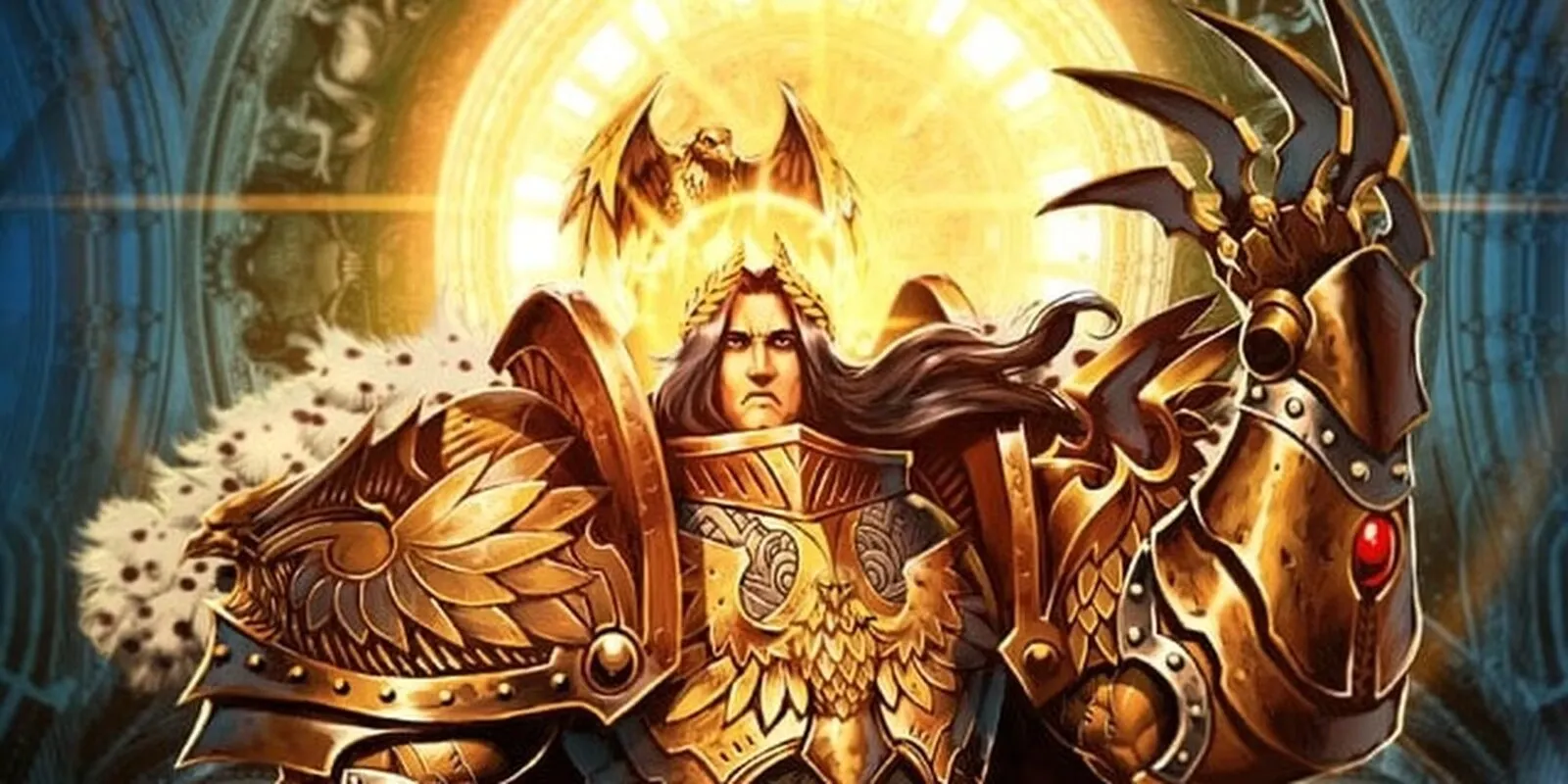
The irony is that the Emperor didn’t want any of this. His plan (the Imperial Truth) was a secular, rational empire built on science and reason. No religion, no superstition, no worship. He wanted humanity to evolve past those things.
Instead, he got the opposite. The Horus Heresy broke his empire in half, crippled him, and left him unable to guide humanity’s development. In his absence, the Imperium calcified into exactly the kind of stagnant, superstitious nightmare he was trying to prevent. The Ecclesiarchy worships him as a god against his explicit wishes. The Mechanicus treats technology as sacred mystery. Innovation is heresy. Progress is apostasy.
The Emperor is trapped on the Golden Throne, aware but unable to communicate clearly, watching his Imperium become everything he despised. Whether that’s tragic, ironic, or just darkly funny depends on your perspective. Probably all three.
The Mechanicus is arguably the most ironic example. They were supposed to be the keepers of human knowledge, the engineers who would build the Emperor’s vision of a technologically advanced civilization. Instead, they’ve turned science into religion. They don’t understand most of the technology they maintain. They perform rituals and recite litanies to activate machines, and if a machine breaks in a way that isn’t covered by the maintenance prayers, they often can’t fix it. The production of certain weapons and vehicles depends on a single forge world that has the template, and if that world falls, the knowledge is gone forever. The Imperium’s technological base is shrinking, one lost schematic at a time, and the institution responsible for preserving it considers curiosity a sin.
The Current State
In the 42nd Millennium, the Imperium is in worse shape than ever. The Great Rift (a massive Warp storm) has split the galaxy in half. The Imperium Nihilus (the dark half) is cut off from the Astronomican and essentially on its own. Tyranid hive fleets are closing in. Necron dynasties are waking up. Chaos warbands pour through the Rift constantly.
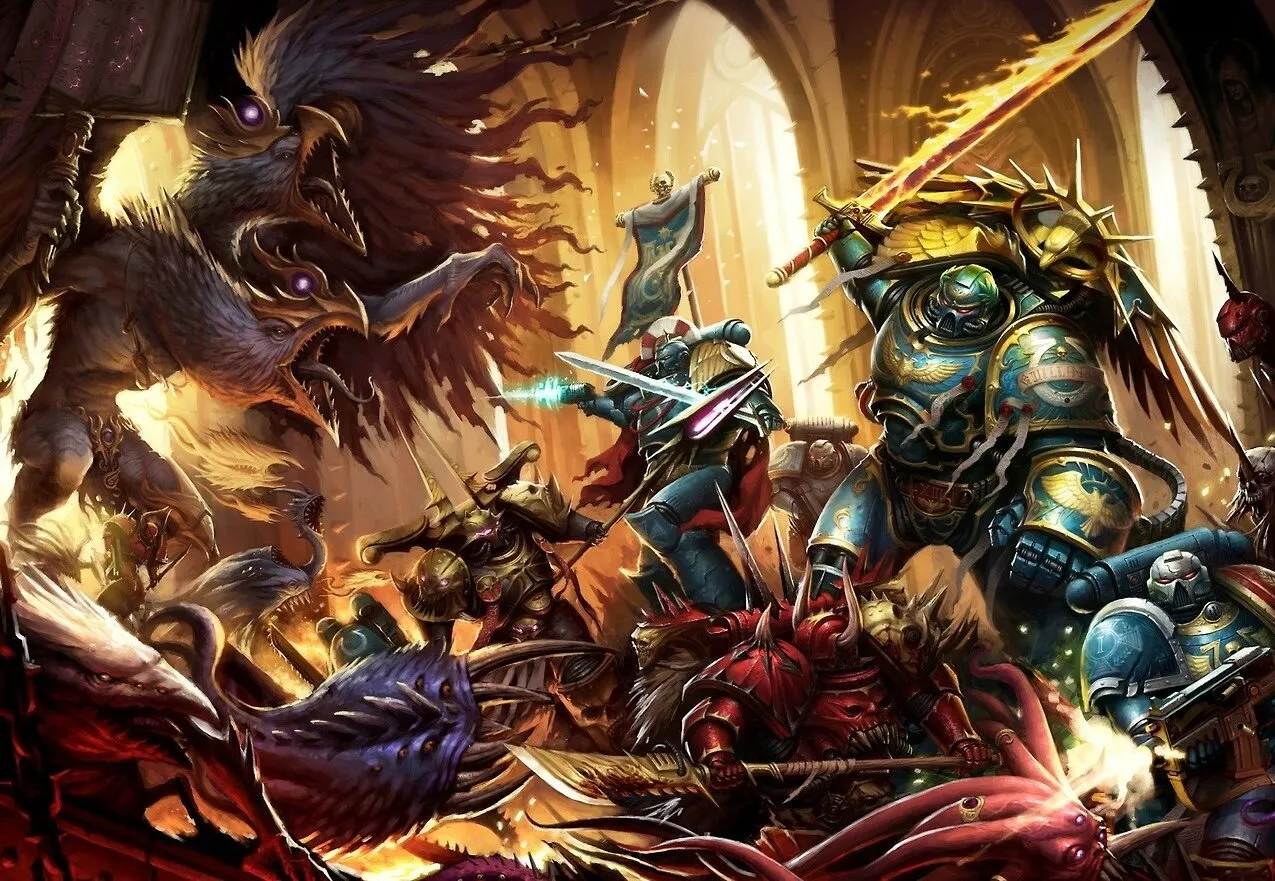
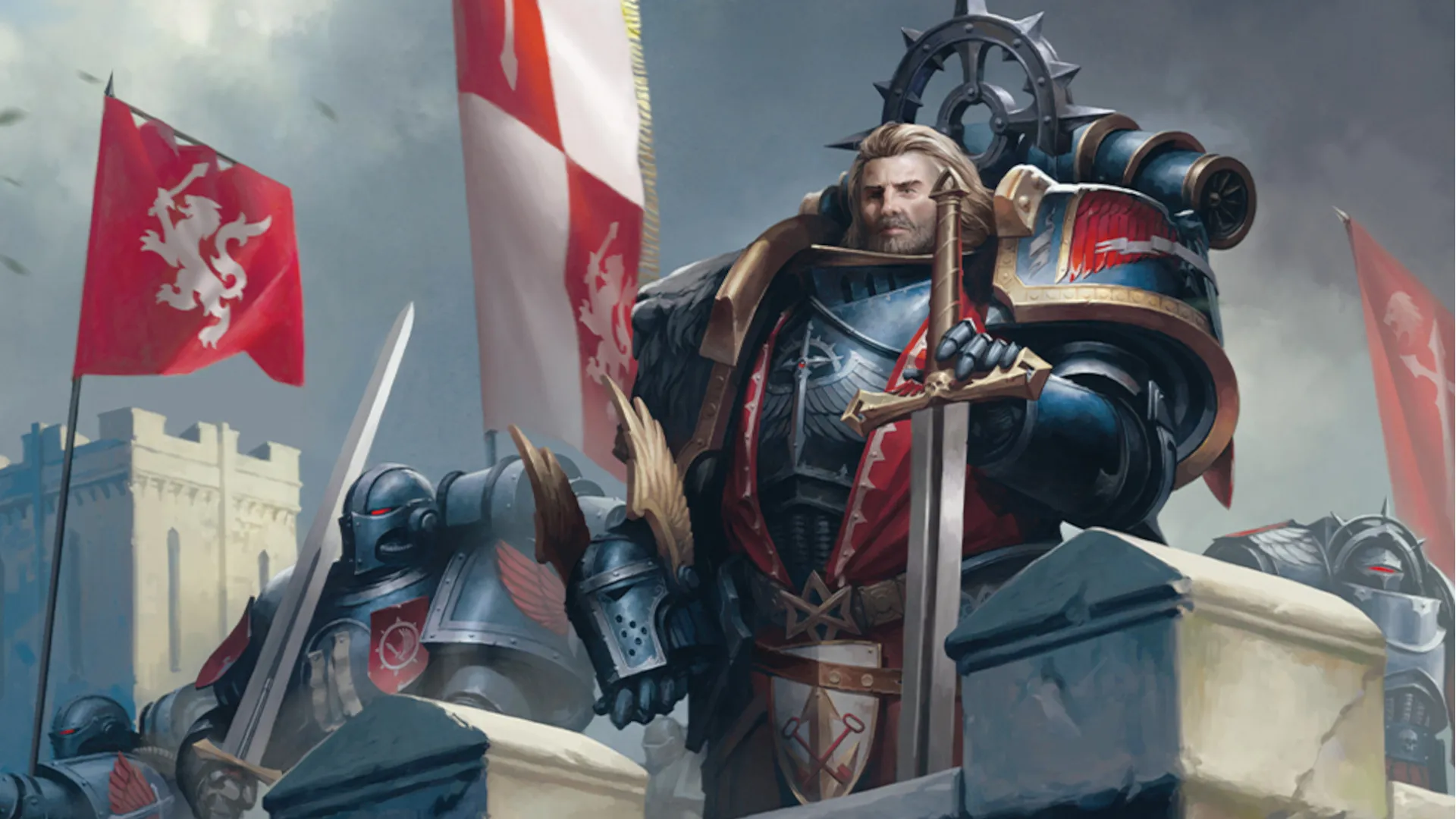
The one piece of good news is that Roboute Guilliman, Primarch of the Ultramarines, has been resurrected and is trying to reform the Imperium. He launched the Indomitus Crusade, introduced Primaris Space Marines, and is attempting to bring some rationality back to Imperial governance. He’s also clearly horrified by what the Imperium has become in his absence, which makes his lore some of the most interesting in the current setting.
Whether Guilliman can actually fix anything, or whether the Imperium is too broken and too entrenched to change, is the big narrative question driving the current era of 40K. My bet is on “he’ll make things a little better while everything else gets worse.” That’s the 40K way.