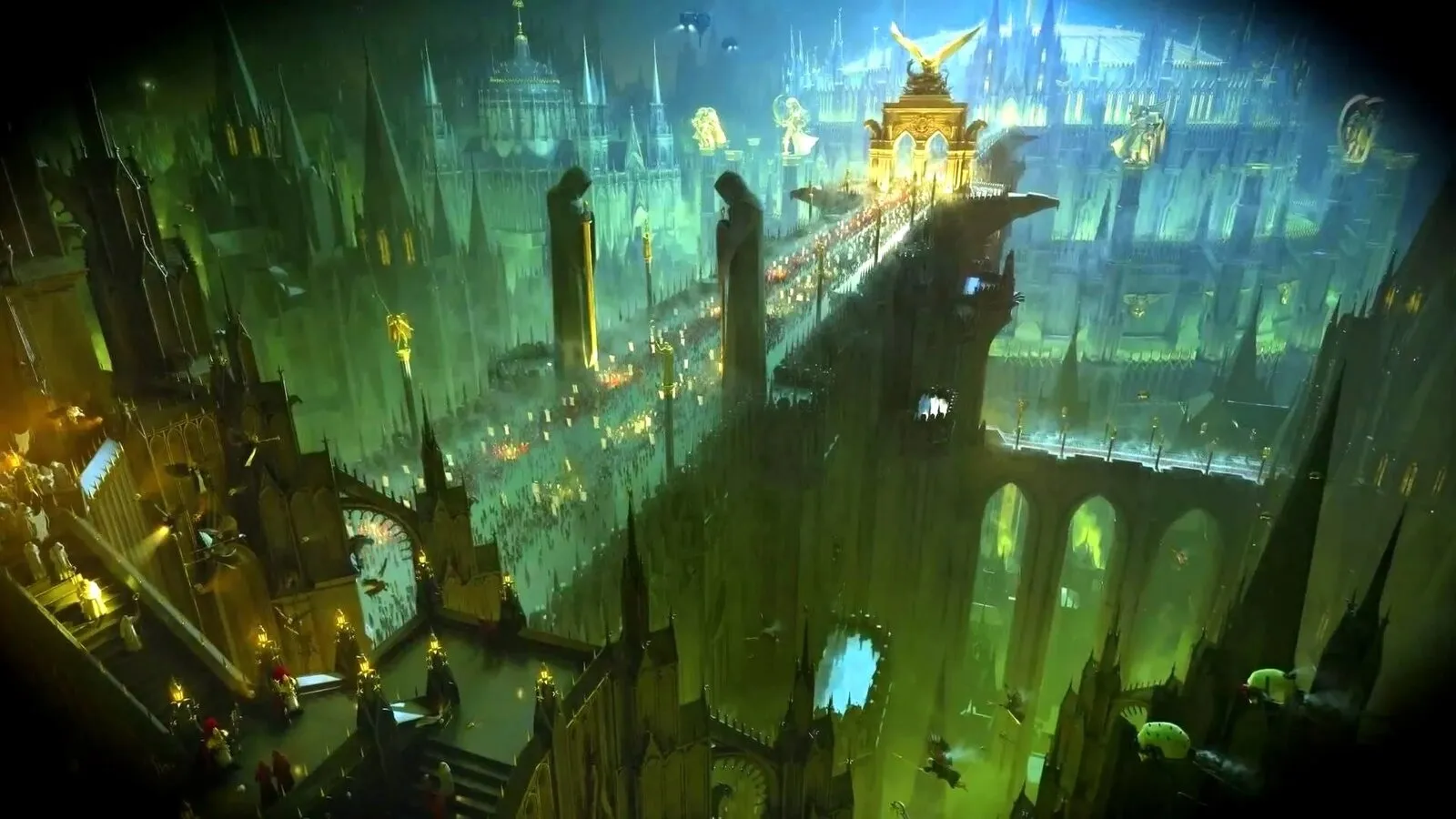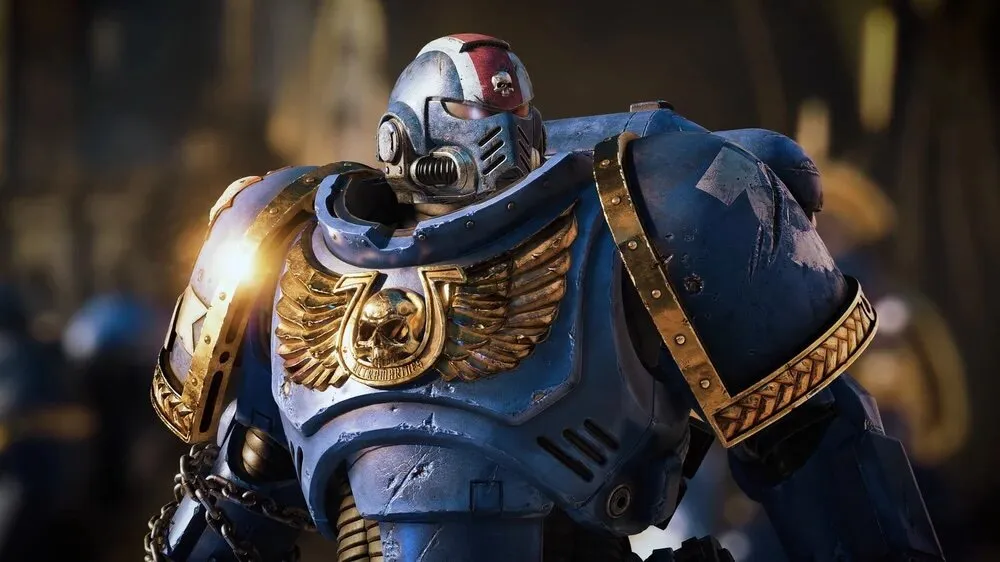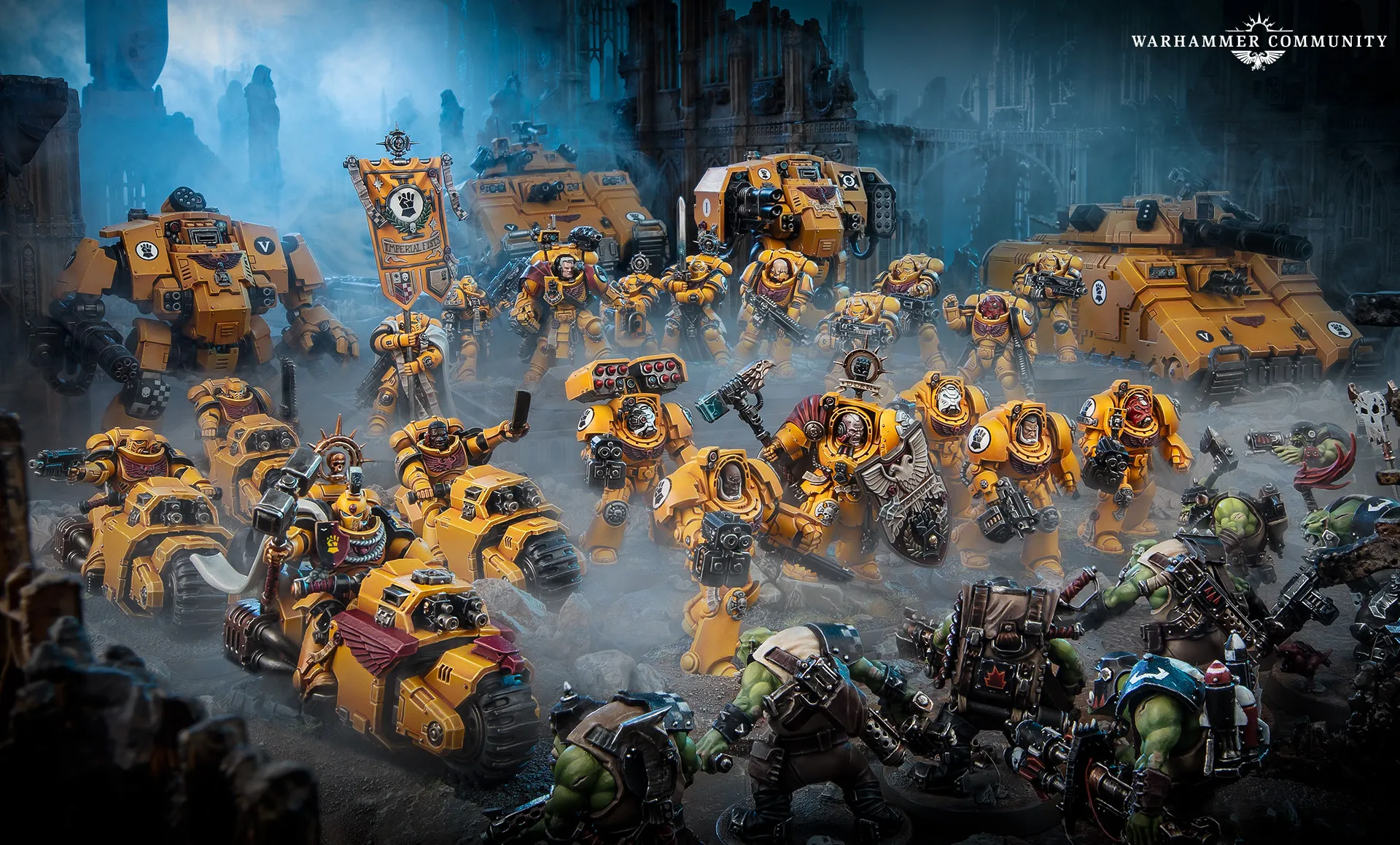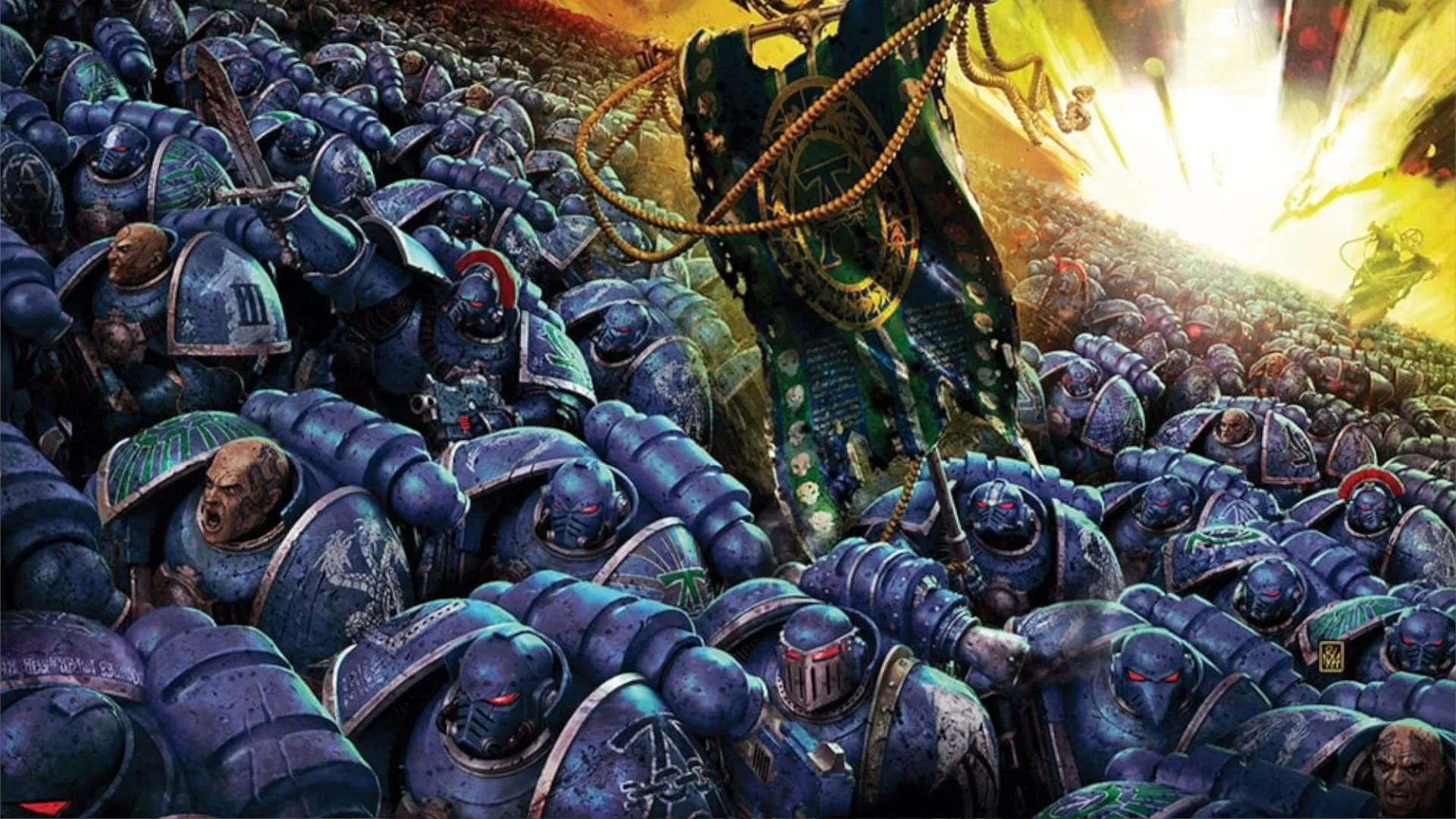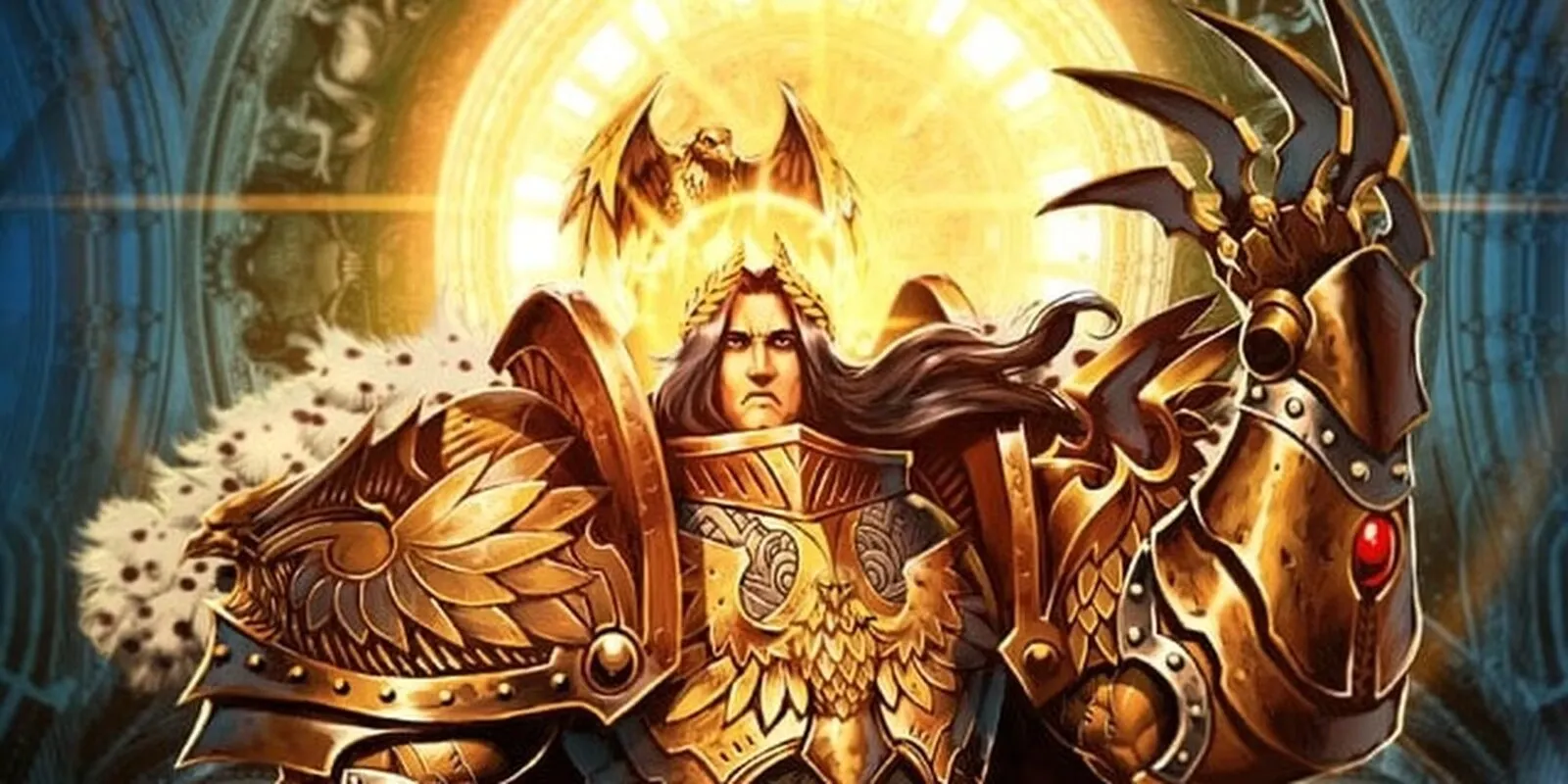
The Emperor of Mankind is the most important character in Warhammer 40K, and also the hardest to pin down. He’s simultaneously the savior of humanity and the architect of its misery. A visionary who dreamed of a secular, rational civilization and whose legacy is a fascist theocracy that worships him as a god. He’s been sitting on the Golden Throne for ten thousand years, technically alive but unable to communicate clearly, while the Imperium he built rots around him.
Whether the Emperor is a hero, a villain, or something in between is one of 40K’s best arguments. I don’t think the setting wants you to have a clean answer.
Origins
The Emperor’s origin story has shifted over the decades of 40K lore, but the current version goes something like this: tens of thousands of years before the Imperium, all of Earth’s human shamans (who had psychic abilities and could reincarnate after death) realized that Chaos was growing in the Warp and would eventually threaten humanity. So they collectively killed themselves in a mass ritual, pooling their psychic power into a single being. That being was the Emperor.
He lived for thousands of years in secret, guiding humanity from the shadows. Recent lore has connected him to the Perpetuals, a group of immortal beings who cannot die permanently. Figures like Ollanius Pius, Erda, and others have been revealed as Perpetuals who knew the Emperor personally across millennia. Some were allies. Some were enemies. Some were both at different points. The Perpetual lore adds a dimension to the Emperor’s pre-Imperial history that I find fascinating, because it means he wasn’t alone during those long centuries. He had peers, people who could argue with him on equal footing and call him out on his mistakes. The fact that most of them eventually turned against him or walked away says something about what he was like to be around.
When the Age of Strife tore human civilization apart (Warp storms, the Men of Iron rebellion, the birth of Slaanesh), the Emperor finally stepped into the open. The Unification Wars that followed are underexplored in the lore, but what we do know paints a picture of Terra as a post-apocalyptic hellscape ruled by techno-barbarian warlords, each commanding armies enhanced by crude genetic engineering and scavenged Dark Age technology. The Emperor conquered them one by one, sometimes through diplomacy, more often through overwhelming force. He built the Thunder Warriors, the proto-Space Marines who were more powerful but less stable than what came later, and used them as his hammer. When the wars were won, the Thunder Warriors were quietly disposed of, replaced by the more reliable Space Marine Legions. It was the Emperor’s first great betrayal of his own soldiers, and it set a pattern that would repeat with increasing consequences.
He struck a deal with the Adeptus Mechanicus on Mars and launched the Great Crusade to reunite humanity’s scattered colonies under one empire.
The Great Crusade and the Primarchs
The Emperor created twenty superhuman sons, the Primarchs, to be his generals. Chaos scattered them across the galaxy as infants, and the Emperor spent the Crusade finding them and giving them command of Space Marine Legions. Each Primarch was a demigod in their own right, but they were tools first and sons second. The Emperor loved them (probably), but he also engineered them for specific purposes and wasn’t above sacrificing their feelings for his plans.
This is where the Emperor’s character gets interesting. He kept secrets from the Primarchs. He didn’t tell them about Chaos. He didn’t explain the Webway project. He didn’t share his reasons for many of his decisions. And when Primarchs like Lorgar started worshipping him, he humiliated them publicly rather than explaining why worship was dangerous.
The individual relationships between the Emperor and his sons are where the tragedy really lives. He genuinely seemed to love some of them. His bond with Horus was the closest thing he had to a real father-son relationship, which made the betrayal devastating on a personal level. Sanguinius was perhaps the son he was proudest of, an angel in both form and temperament. But others got something closer to cold indifference. Angron was found too late, already brain-damaged by the Butcher’s Nails, and the Emperor just put him to work anyway instead of trying to fix him. Perturabo was given the worst assignments and no recognition. Mortarion was left to stew in resentment. Lorgar wanted nothing more than to worship his father, and the Emperor responded by burning Lorgar’s perfect city to the ground and forcing an entire Legion to kneel in the ashes. Each Primarch who turned traitor had a grievance that traced back, in one way or another, to their father’s failures.
And then there’s the Webway project, which might be the Emperor’s greatest failure of communication. He was building a portal into the Eldar’s Webway network beneath the Imperial Palace, an initiative that would have freed humanity from dependence on the Warp for interstellar travel entirely. No more Navigators, no more Gellar Fields, no more risking daemonic incursion every time you moved a fleet. It would have been transformative. But he told almost nobody. He retreated to Terra, locked himself away, and left the Crusade in Horus’s hands without explaining why. From the Primarchs’ perspective, their father abandoned them. The Webway project’s failure, caused when Magnus the Red accidentally shattered the psychic wards protecting it, is one of the great “what if” moments in 40K. If it had succeeded, the Heresy might never have happened. Instead, its destruction forced the Emperor onto the Golden Throne just to contain the Warp breach it left behind.
The Emperor’s defenders say this was necessary. The truth about Chaos is itself a vector for corruption. Telling the Primarchs everything might have made the problem worse. His critics (including several of his own sons) say his secrecy and emotional coldness directly caused the Horus Heresy. If he’d just talked to his sons like people instead of managing them like assets, half of them might not have turned traitor.
I think both sides are right, which is what makes the Emperor such a great character. He’s a being of unimaginable power and intelligence who made the most human mistake possible: he thought he could control everything through planning alone, without accounting for the fact that his sons needed a father, not just a commander.
The Heresy and the Throne
The Horus Heresy was the direct consequence of the Emperor’s failures. Horus, his most trusted son, was corrupted by Chaos and led half the Space Marine Legions in rebellion. The galaxy burned. The Siege of Terra nearly destroyed the Imperium entirely. The Emperor killed Horus in a final duel aboard the Vengeful Spirit, but was mortally wounded in the process.
His last conscious instructions were to be placed on the Golden Throne, where his psychic power could continue to sustain the Astronomican (the beacon that enables interstellar travel) and seal a Warp breach beneath the Imperial Palace. He’s been there ever since.
And then there’s Malcador the Sigillite, the one person in the entire Imperium who might have truly understood the Emperor as something other than a weapon, a god, or a father. Malcador was the Emperor’s right hand for the entirety of the Great Crusade, an incredibly powerful psyker in his own right, and the architect of the Imperium’s administrative structures, including the foundation of what would become the Inquisition. He was old beyond reckoning, possibly a Perpetual himself, and he was the only person the Emperor consistently treated as a confidant rather than a subordinate. During the Siege of Terra, Malcador took the Emperor’s place on the Golden Throne for a brief period so the Emperor could lead the final assault on Horus’s flagship. The effort destroyed him. When the Emperor returned, Malcador crumbled to dust in his arms. The Emperor is often criticized for treating people as tools, and fairly so, but his grief at Malcador’s death is one of the few moments in the lore where he seems genuinely, personally devastated. Malcador was the one relationship where the Emperor might have been something close to human, and losing him meant the Emperor faced the Throne alone, without the one advisor who could have helped the Imperium avoid the worst of what followed. Ten thousand years of psychic agony, sustained by the daily sacrifice of a thousand psykers, unable to die and unable to truly live.
Whether the Emperor is still conscious in any meaningful sense is debated in the lore. Some sources suggest he’s aware and still influencing events (the Living Saints, miracles of faith, and occasional psychic communications might be his doing). Others suggest his mind has fragmented and what remains is more a psychic force than a person. The Horus Heresy novels hint at multiple aspects of the Emperor’s personality existing simultaneously, which is appropriately weird for the most powerful psyker who ever lived. There’s a reading of the later Siege of Terra books that suggests the Emperor effectively shattered himself during his final confrontation with Horus, splitting into different facets: the Warlord, the Father, the Scientist, the God. If that’s the case, what sits on the Golden Throne isn’t one mind but several, all trapped together, possibly disagreeing about what the Imperium should become. That’s a hell of a concept, and it explains why the Emperor’s “guidance” over the millennia has been so inconsistent and contradictory.
Is He a God?
This is the big question, and the lore is deliberately ambiguous. The Emperor spent his life insisting he wasn’t a god. The Imperial Truth (his official ideology) was aggressively secular. He punished Lorgar’s Word Bearers for worshipping him.
But in the current era, faith in the Emperor demonstrably has power. The Adepta Sororitas manifest miracles through belief. Living Saints are resurrected by what appears to be divine intervention. Prayers and relics repel daemons. Whether this means the Emperor actually IS a god now, or whether the collective belief of trillions of worshippers has created a god-like presence in the Warp that isn’t really “him” anymore, is one of 40K’s most interesting philosophical questions.
The Chaos Gods consider him their enemy. They call him the Anathema. That alone suggests he’s something more than a very powerful psyker. But “something more” doesn’t necessarily mean “god” in the way the Ecclesiarchy teaches.
I think the most interesting reading is that the Emperor has become something he never intended to be. He denied his divinity. His followers ignored him. And now, ten thousand years of accumulated worship has transformed him into a deity whether he wanted it or not. The man who rejected religion became its ultimate object. That’s tragedy on a cosmic scale, and it’s the kind of irony that makes 40K’s setting work.
What Comes Next
Guilliman is back. The Primarch of the Ultramarines has met the Emperor (sort of, through psychic communion) and came away deeply shaken. He described the experience as terrifying and ambiguous. Whether the Emperor communicated actual instructions or whether Guilliman interpreted psychic impressions through his own expectations is unclear.
What Guilliman did take away was a sense of purpose. The Imperium needs to be reformed. The Emperor’s original vision wasn’t this. Something has to change. Whether Guilliman can change it, or whether the Emperor’s Imperium is too broken to fix, is the central drama of the current 40K narrative.
The Emperor is 40K’s heart. Everything in the setting orbits around him: the Imperium, Chaos, the Heresy, the Golden Throne. And the fact that he’s a character you can simultaneously admire, pity, and condemn is what makes the setting more than just “cool guys with guns in space.” He’s a warning about what happens when even the best intentions meet the reality of power, ego, and a universe that doesn’t cooperate with grand plans.