There’s a bit of Harlequin lore I’ve never been able to shake. If you touch a Solitaire by accident, the kindest thing anyone standing near you can do is kill you on the spot, because the Solitaire carries something the rest of the Aeldari spent their entire existence running from, and getting too close is supposed to rub off. So the etiquette is murder. That’s the faction we’re talking about. A travelling theatre company whose lead performer is so far gone that saying hello to one is a capital offence.
I kept coming back to that this week, because the Aeldari Faction Focus, the final one in the whole 11th edition rollout, gave two of its four new detachments to the Harlequins. For a sub-faction with about five datasheets and a model range that hasn’t seen a new kit in a decade.
Two of four. I had to read it twice. Five datasheets, give or take, and they get the same number of detachments as the entire rest of the army that actually turns up to tournaments. Sorry. Still not over it.
The other two went to the mainline Asuryani, and they’re fine. Armoured Warhost lets your grav-tanks fire at full effect after moving flat out, which on the terrain-heavy 11th edition tables is going to make Aeldari skimmers even more of a nightmare to pin down. Path of the Outcast turns Rangers and Shroud Runners into snipers who see through cover and stay hidden while they shoot. Useful, on-brand, the sort of thing you’d expect from a modular detachment system trying to give every flavour of an army its own toy box. Then GW spent the back half of the article on the clowns, with a pull line about how fighting them “is like battling bladed smoke.”
Who Cegorach’s clowns actually are
The Harlequins worship Cegorach, the Laughing God, who according to White Dwarf #474 is reckoned to be the only member of the old Aeldari pantheon that actually survived the Fall. Everyone knows the broad strokes by now: the ancient Aeldari sank so deep into excess and cruelty that the psychic runoff birthed Slaanesh, and the newborn god promptly devoured most of the species and most of its gods along with it. Khaine got shattered into pieces. The rest got eaten. Cegorach slipped the noose, and the Harlequins are his.
The thing the Solitaire carries, by the way, is the role of She Who Thirsts in the Masque. Of all the parts in all the Harlequin performances, only the Solitaire ever plays Slaanesh, and the lore is fairly blunt that taking the role costs them their soul. So nobody touches them.
What I find genuinely strange about the Harlequins is the social position. Every other branch of the Aeldari survives Slaanesh in its own grim way. The craftworld Aeldari wear spirit stones to catch their souls at the moment of death. The Drukhari postpone the bill by torturing other people to death in their stead. The Exodites went back to the dirt and bonded with the world-spirits of their paradise planets. The Harlequins, per the Gathering Storm books, simply stay one step ahead of her, perpetually, forever. And because they belong to none of those factions and answer only to Cegorach, they’re the one group welcome everywhere. They perform on the craftworlds, in the dark city of Commorragh, out among the Corsair fleets, on the Exodite worlds. They’re the relative who somehow stayed on speaking terms with both halves of a messy divorce and still gets invited to everyone’s Christmas.
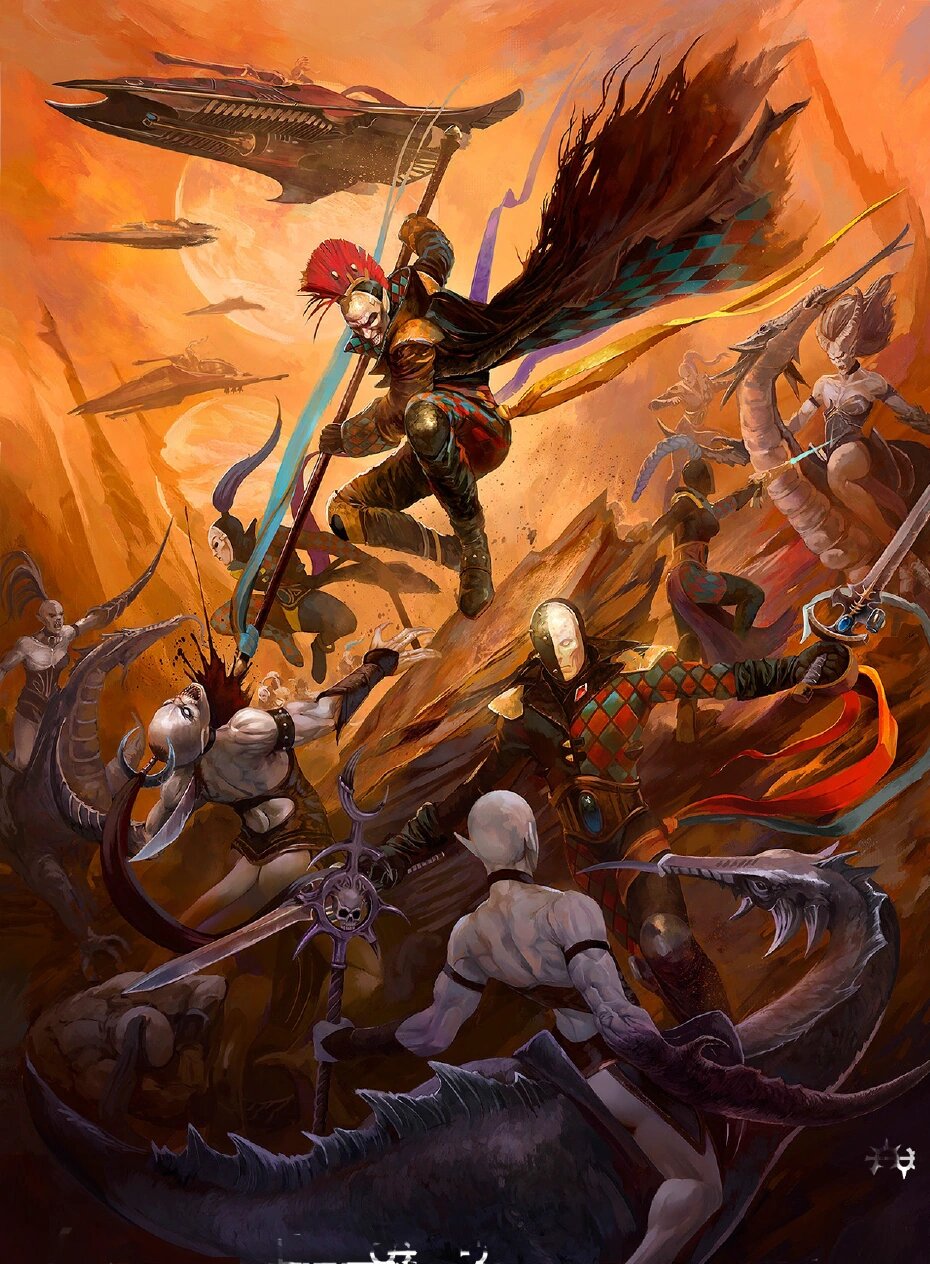
Their performances aren’t entertainment, or not only. The big one is the Dance Without End, and an old White Dwarf piece from 2007 describes it beautifully: nine dancers, the Shadowseers ringed around the edge psychically amplifying the crowd’s emotions, the whole thing retelling the Fall so the Aeldari never forget what they did to themselves. It ends mid-struggle, Cegorach and Slaanesh still locked together, the outcome left open on purpose. The crowd doesn’t applaud at the end of that one.
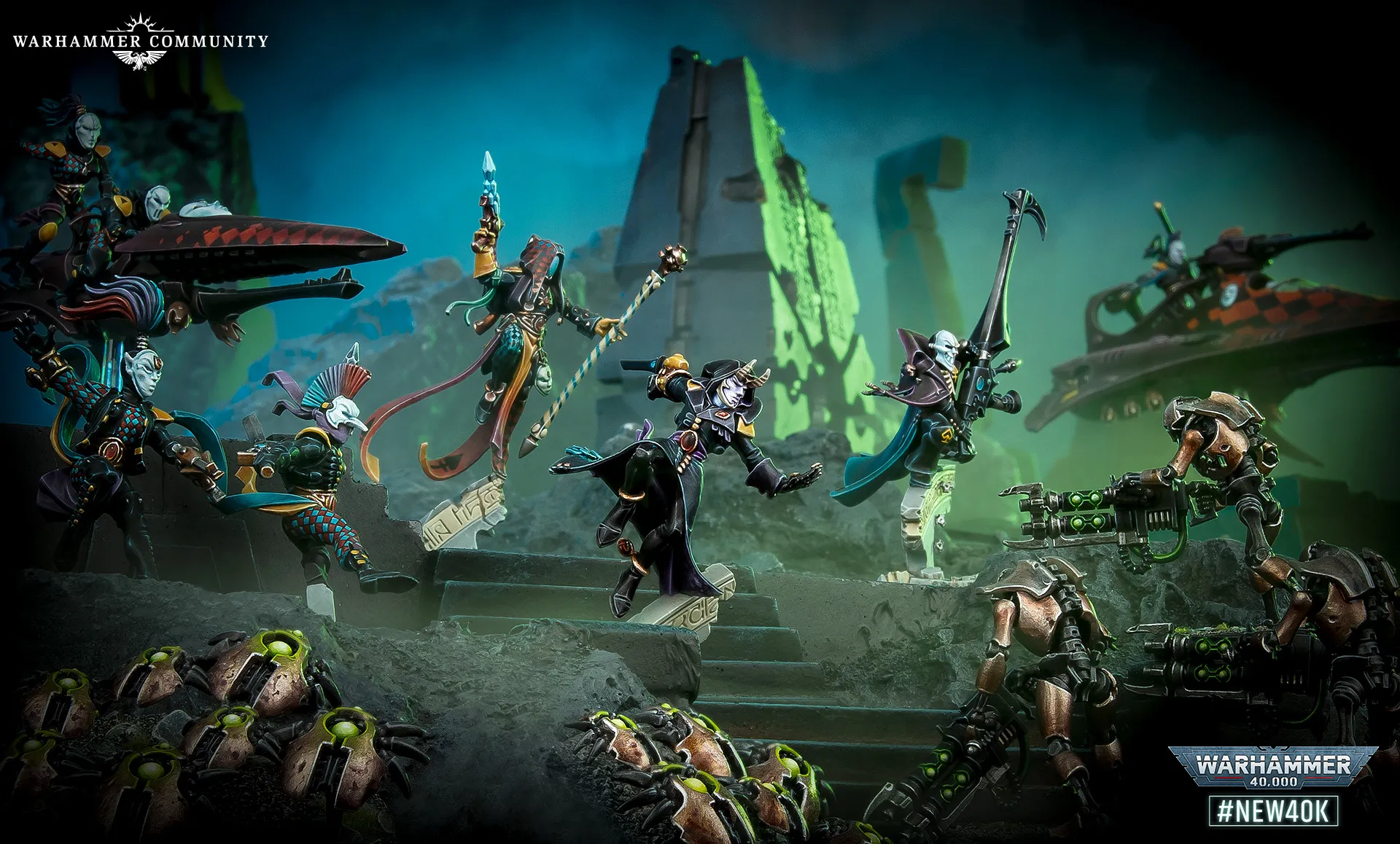
In the field they’re a sensory assault. The holo-suits, dathedi in their own tongue, shatter the wearer’s outline into fractal smears of colour so your eye can’t lock onto them. The masks are worse. They’re called false faces, and the lore says an enemy who looks at one sees their own worst fear staring back. The close-combat weapons have names like the kiss, the embrace and the caress, which sound twee until you read what they do, the caress being a phase field that lets a Harlequin reach through armour and pluck out your organs by hand. The grim joke is that the ones carrying a caress often fight as if unarmed, to lull you in close.
They’re also the doorkeepers of the Black Library, the hoard of forbidden knowledge sitting deep in the webway, and this is where I have to declare an interest, because I play Thousand Sons. My entire faction’s most famous son, Ahriman, has spent the better part of ten thousand years trying to break into that library, and the Harlequins have spent the same ten thousand years turning him away at the door, usually by killing whichever warband he sent ahead. Every time I read about the place I picture a bouncer in a diamond bodysuit. It does not make me like them more.
A model range older than my car
The Harlequins got a standalone codex back in 2015, in 7th edition, and for a brief moment they were their own army. Plastic Troupe, plastic Skyweaver jetbikes, the Starweaver and Voidweaver transports, the characters. Then 8th edition arrived, the standalone book quietly got folded back into the Aeldari, and the range basically stopped dead. A Troupe, a Troupe Master, a Shadowseer, a Death Jester, a Solitaire, two transports. That’s the whole faction. Ten years on, it hasn’t moved an inch.
I bought the Troupe box on launch in 2015, full of standalone-codex enthusiasm, and then I made the mistake of trying to freehand the diamond harlequin pattern on the holo-suits. If you’ve never attempted it: you lay down the base colours, then you grid out tiny diamonds by hand in alternating shades, on a curved leg, on a model the size of your thumb. I finished two. The third has bare legs to this day. They’ve been in a drawer for ten years, which means I’ve now owned those unpainted Harlequins for longer than I’ve owned my car, and the car has a name.
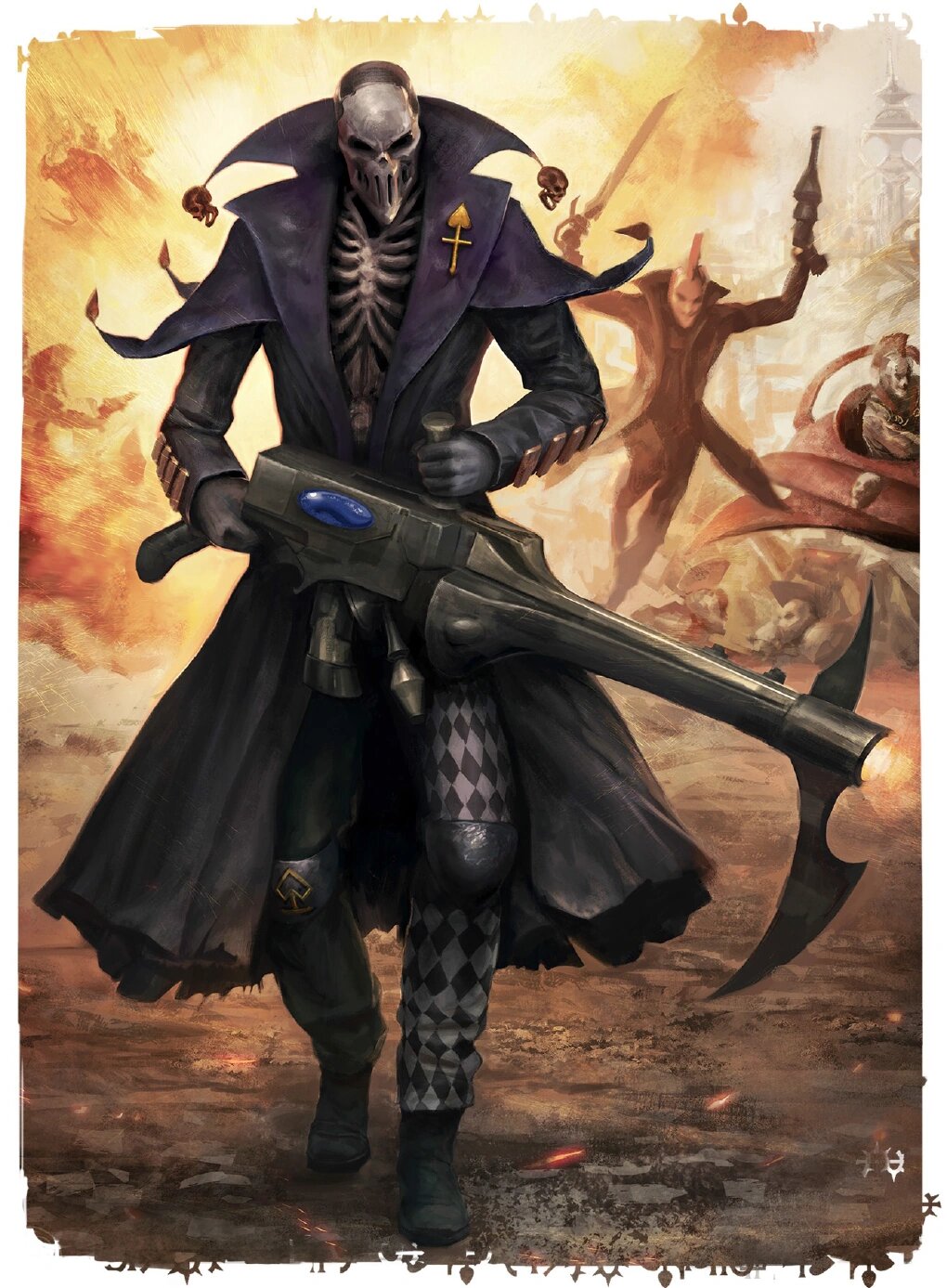
So my first reaction to the faction focus was sour. Two detachments for five datasheets reads, on a cynical day, like GW lavishing rules on a model line they have no intention of ever updating.
Except I don’t actually think that’s fair, and I’d talked myself out of it before I finished the thought. Harlequins were close to unplayable as a standalone army for most of their existence. Too few bodies, too fragile, no margin for a single bad roll. Folding them into the Aeldari and then handing them their own dedicated detachments is, honestly, the most functional these models have been in years. Kiran reckons a small Harlequin core inside a craftworld list is going to be a genuine problem at our next local event, and Kiran plays Death Guard, so he’s allergic to anything that hits hard and then isn’t there when he swings back. I think he’s right. It still doesn’t get me a new Solitaire sculpt, mind.
What the Aeldari Faction Focus actually does for them
You can only run one of the two Harlequin detachments. They share the ACROBATIC keyword and lock each other out, so picking one is really picking how your Harlequins behave on the table.
Fateful Performance is built around close combat. Its core ability, Acrobatic Onslaught, lets the Harlequins move through enemy models when they charge, which is the bladed smoke line turned into a rule. You don’t go around the screen, you go through it and come out in the soft target behind. For a melee unit that lives or dies on landing the charge cleanly, that’s a big deal.
Twilight Flickers does something else entirely. It hands the army Stealth through an ability called Dance of Distortion, lets a unit reposition before the first turn with Prelude Performer, and leans hard into grabbing and holding objectives. It’s the harder one to shift off a point. It’s also a reworked version of one of last December’s Grotmas detachments, finally given a proper home rather than living as a seasonal curiosity.
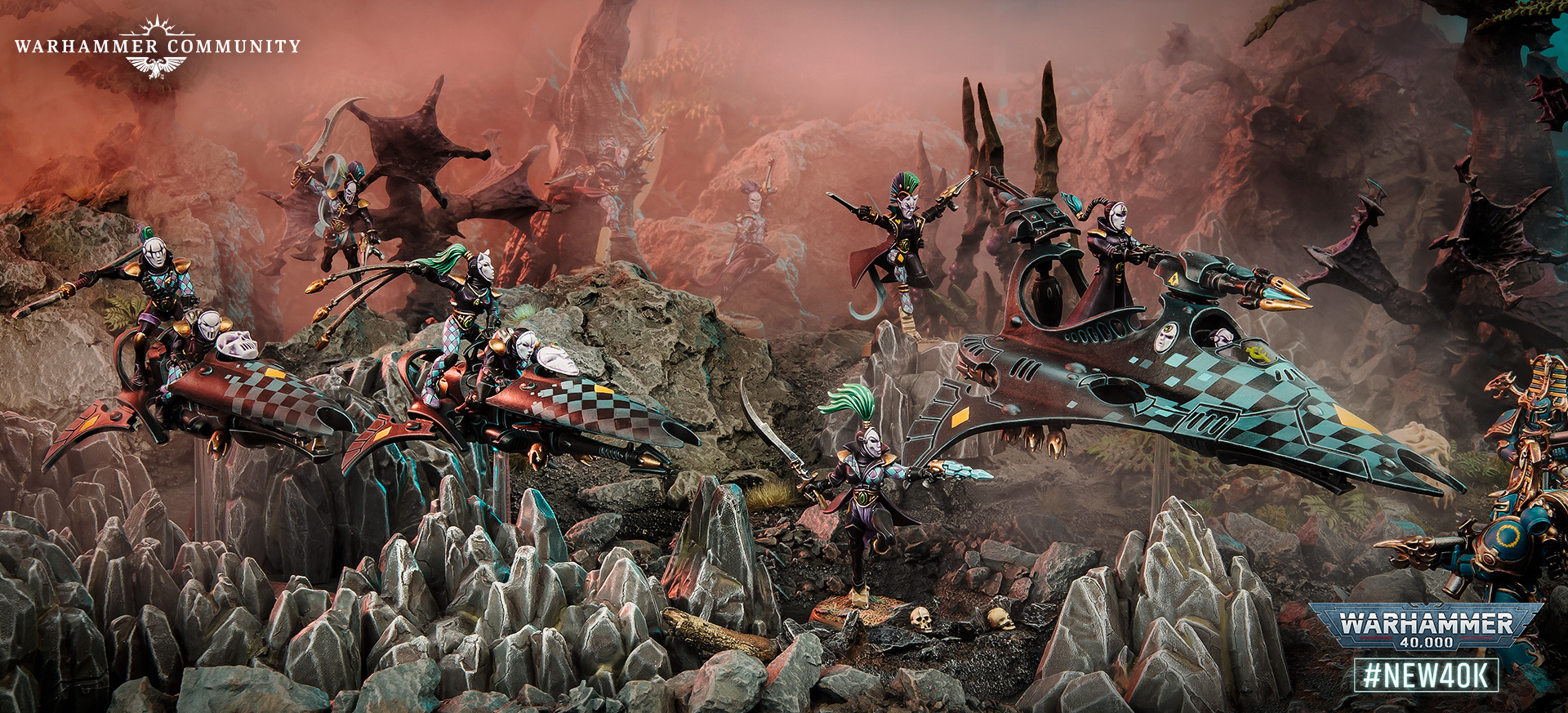
The detection rules are the quiet bit doing the heavy lifting under all this. 11th edition handed a lot of armies tools to spot hidden units, and both the Harlequin and the Ranger detachments plug straight into that system, either by being impossible to detect or by stripping cover off whatever they’re shooting. Whoever wrote the Aeldari book clearly sat down with the core detection mechanics and built around them on purpose, which is more thought than a five-datasheet faction usually gets out of anyone.
The 11th edition rollout has been faction focus after faction focus, Genestealer Cults and Thousand Sons and Orks and the rest, and the Aeldari were always going to close it out because they’re the oldest, fiddliest xenos in the box. I genuinely didn’t expect the murder-clowns to walk off with half the article. I’m going to dig those two-and-a-half painted Troupers out of the drawer this weekend and have another go at the holo-suits. I don’t fancy my chances.