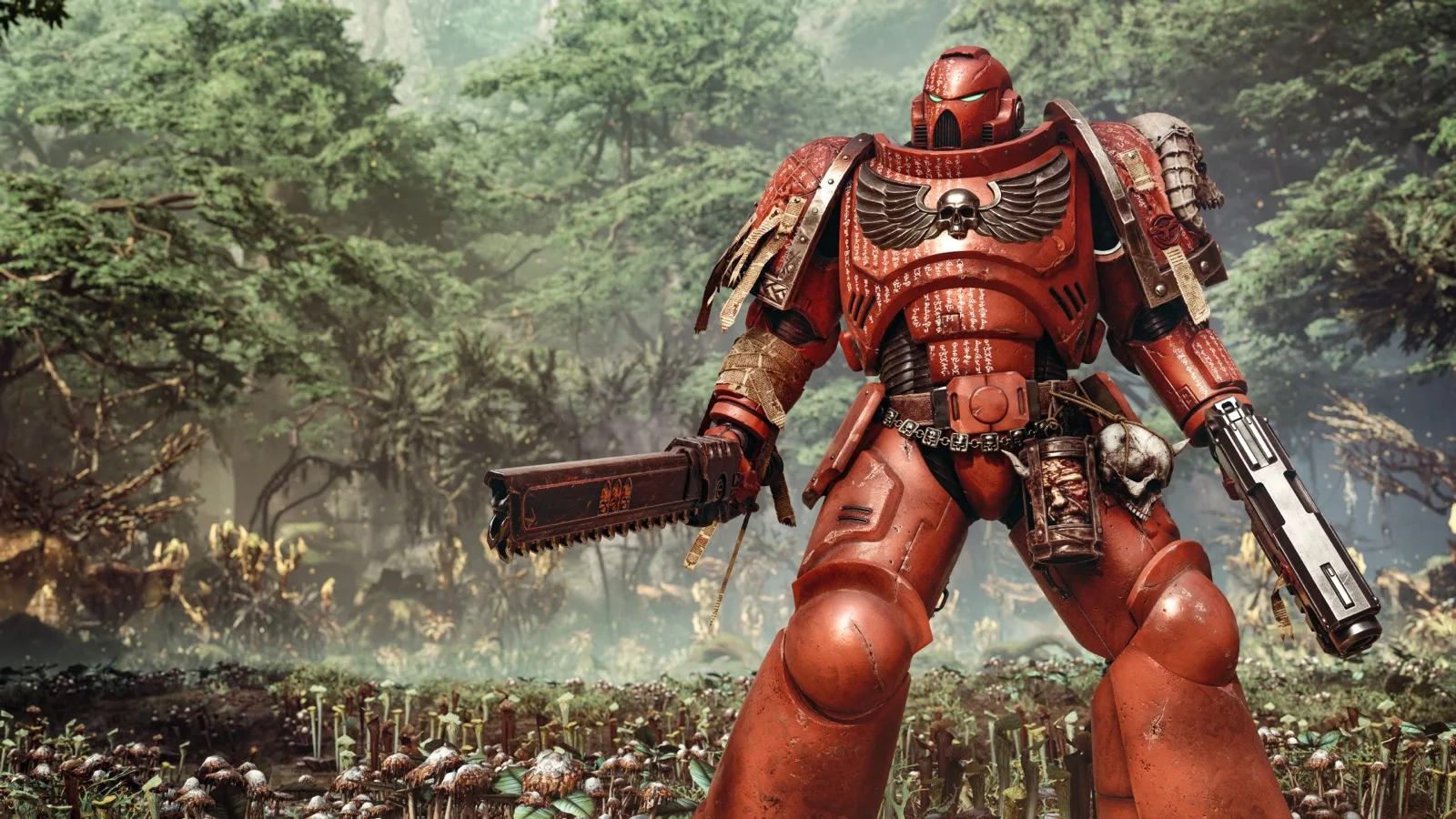
Captain Erasmus Tycho died because of a dice roll. Not in the fiction. In real life. In a White Dwarf battle report.
Back in October 1993, Andy Chambers deployed his Blood Angels against Jervis Johnson’s Orks for the big 2nd Edition launch report in White Dwarf 166. Chambers placed his Captain directly across the table from an Ork Weirdboy. Turn one, bottom of the round, Johnson rolled his psychic attack, and Tycho went down. Dead. The finest officer in the Blood Angels 3rd Company, killed before he’d done a single thing in the game.
Chambers must have been livid. I would’ve been. But Games Workshop did something brilliant with that humiliation. When the 2nd Edition Angels of Death Codex arrived a few years later, Tycho was in it, alive but scarred. The lore said he’d survived the Weirdboy’s psychic assault but half his face was paralysed. Frozen in a rictus grin. He wore a golden mask to hide it, and he carried a hatred of Orks that ate at him for decades until it opened the door to something worse.
That’s where the Blood Angels at Armageddon story really starts. With a dead captain who refused to stay dead, on a planet that refuses to let the sons of Sanguinius go.
The War That Made Tycho
The Second War for Armageddon kicked off in 941.M41 when Ghazghkull Thraka brought his first Waaagh! crashing into the hive world. The Blood Angels were part of the relief force. Tycho took command of the 3rd Company after his predecessor died in the fighting, and by most accounts he was brilliant at it. Aggressive, tactically creative, the kind of officer you’d expect to lead the Chapter someday.
But the war had already gotten inside him. Specifically, the Weirdboy had. The psychic attack that disfigured him wasn’t just a wound. For a Blood Angel, it was something much crueller. These are Space Marines who value beauty. Their Primarch was literally called the Angel. Their fortress-monastery on Baal is full of murals and sculptures their battle-brothers painted between deployments. The Blood Angels aren’t warriors who happen to appreciate art. Art is how they hold back the beast in their blood. So when Tycho looked in the mirror and saw what Armageddon had done to his face, it wasn’t vanity. It was watching the thing that kept him human crack.
He couldn’t stand being on Baal after that. The beauty of the place reminded him of what he’d lost. Commander Dante assigned him to permanent battle duty, which sounds like a promotion if you don’t think about it too hard. Tycho’s tactics got reckless. His temperament got worse. The Chaplains noticed but Tycho was still Tycho. Still brilliant. Still winning.
Fifty-seven years later, Ghazghkull came back.
Returning to the Planet That Broke You
I fell down a wiki rabbit hole about this once, maybe three in the morning, starting from the Tycho page and ending up reading about the geological composition of Armageddon’s ash wastes, which tells you everything about how interconnected this lore is. But the thing that stopped me was the timeline. Fifty-seven years between the Second and Third Wars. For a Space Marine, that’s nothing. Tycho would have remembered every detail of his first time on Armageddon. The jungles between Prime and Secundus where the Weirdboy hit him. The smell of the hives. Everything.
During the Third War for Armageddon, the Chaplains saw it in his eyes before it happened. He was having visions. Seeing Sanguinius instead of his own reflection. Confusing the present with the last hours aboard the Vengeful Spirit. The Black Rage had finally taken him.
Tycho asked to lead the assault on the Ork defences at Hive Tempestora. He went in as Death Company, black armour, red crosses over the gold he’d once worn. Records say he fought like Sanguinius himself, which is what every Death Company marine thinks they’re doing, because in their minds they are Sanguinius, and everything around them is the Siege of Terra. Tycho cut through the Ork lines and his sacrifice let the Blood Angels take the position. His last words, shouted across the battlefield: “For the Deus Sanguinius!”
His body was brought home to Baal. The warship Tycho was named after him, and a portrait of the dead captain hangs over the entrance to its chapel.
What gets me about this story isn’t really the tragedy, though it is tragic. It’s that Games Workshop built one of their most emotionally resonant character arcs out of what was essentially a joke. Andy Chambers’ guy died to bad luck in a demo game. That became a facial scar, which became a psychological wound, which became the Black Rage, which became a hero’s death fifty years of fictional history later. I don’t think they planned any of it. The best 40K lore always feels accidental in that way.
The Mephiston Exception
While we’re on the Second War for Armageddon, it’s worth talking about the other Blood Angel whose life changed on that planet. Mephiston. He was Calistarius then, a Librarian who succumbed to the Black Rage during the fighting at Hades Hive. He was trapped under a collapsed building for seven days and nights, and somewhere in the rubble, Sanguinius himself (or a vision of him, or a psychic echo, or something nobody fully understands) helped him fight the Rage off.
Nobody else has done this. I mean, a few others in the lore have technically beaten the Black Rage, but Mephiston is THE example, the one who became the Lord of Death and possibly the most powerful psyker in the Imperium outside the Emperor himself. And he did it on Armageddon, in the ruins of Hades Hive, while the world was burning.
So Armageddon broke Tycho and made Mephiston. Same war, same Chapter, opposite outcomes. That’s the thing about this planet for the Blood Angels. It’s the place where their curse is most active, most dangerous, and most transformative. Maybe it’s the proximity to so many Orks, whose latent psychic field might amplify emotional states. Maybe it’s the sheer scale of the violence. Or maybe, and I think this is actually closer to it, it’s that Armageddon is the kind of war that strips away everything except what you really are. And what the Blood Angels really are, underneath the gold and the art and the discipline, is a Chapter one bad day away from losing themselves entirely.
Actually, I’m not sure that’s fair. Dante has held it together for over a thousand years. Lemartes walks the edge every single battle. The Blood Angels aren’t fragile. But Armageddon seems to test them in a specific way that other campaigns don’t.
The Angels Keep Coming Back
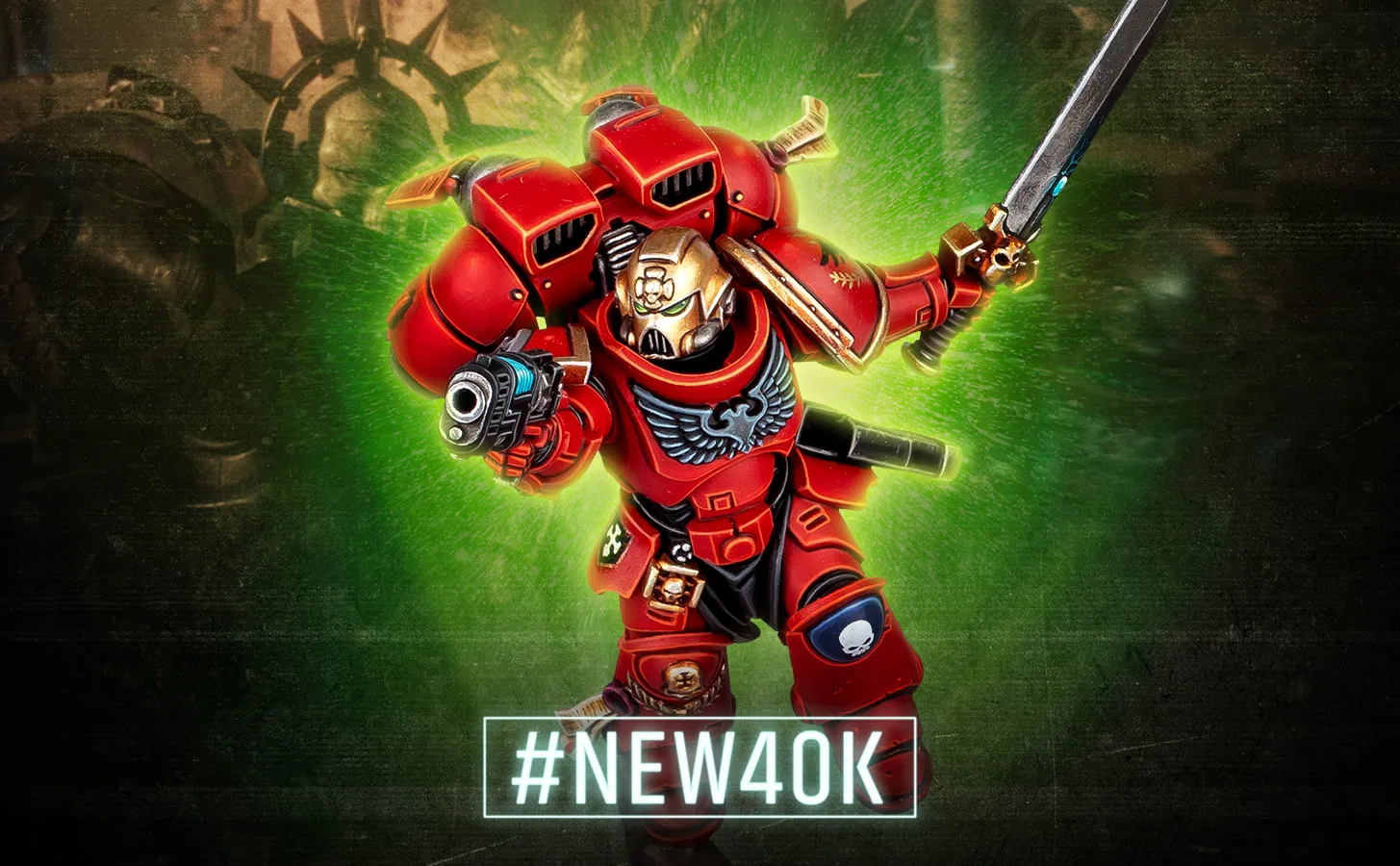
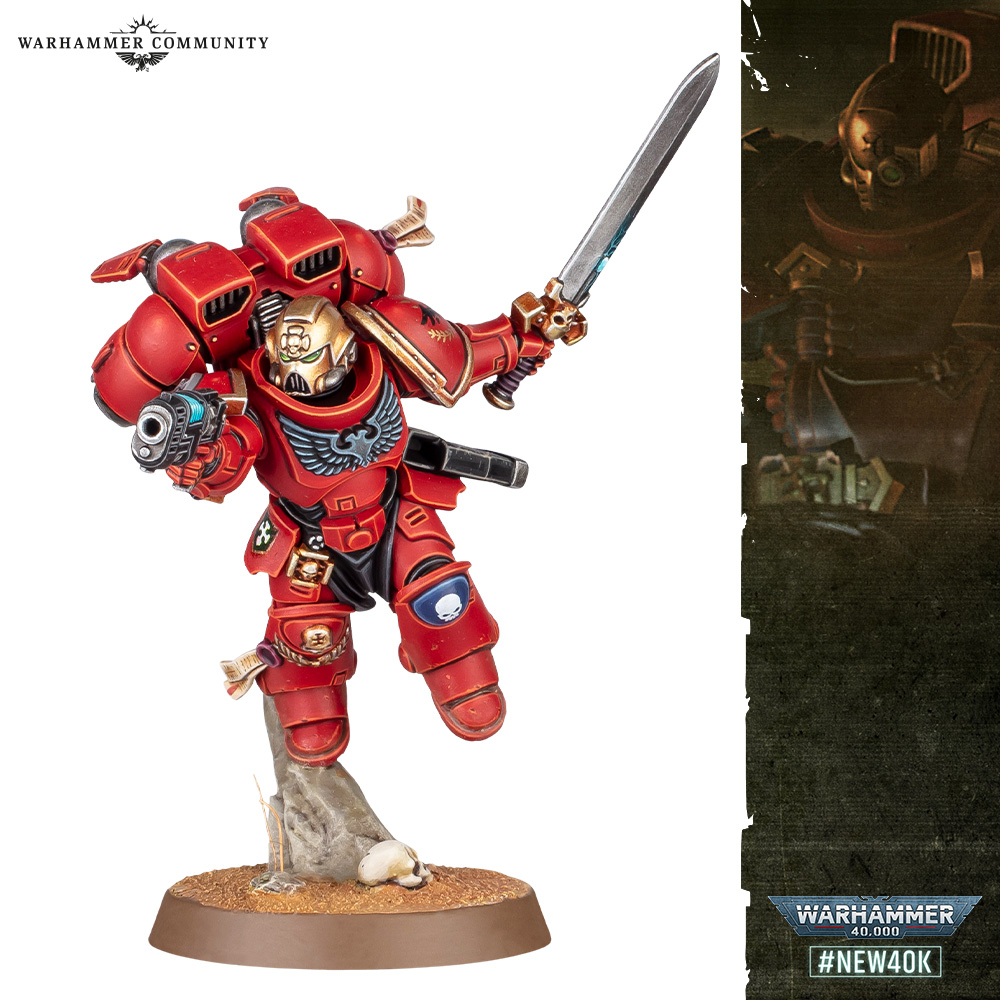
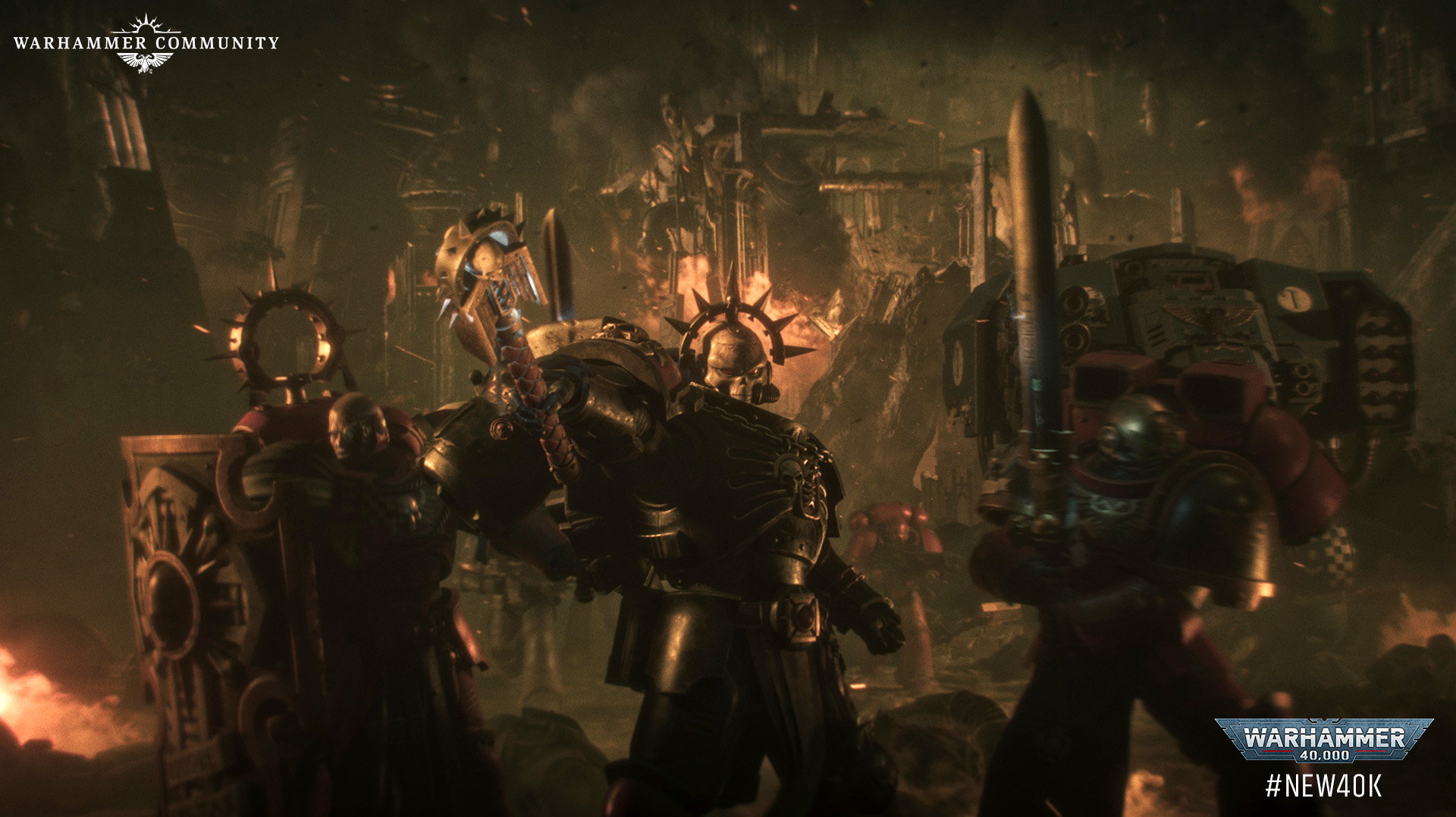
So yeah, Vanguard Veterans. GW dropped the new model yesterday and it’s a Blood Angel. Golden helmet, crux terminatus on the shoulder, jump pack, plasma pistol. He’s from the Armageddon boxed set that launches 11th Edition, and the cinematic trailer shows a Blood Angels Chaplain leading these guys into the thick of it. Operation Imperator. Blood Angels, Salamanders, Space Wolves, Ultramarines, a dozen more Chapters surging toward Armageddon to answer Yarrick’s distress call.
The Blood Angels have been at every major Armageddon conflict. Second War, Third War, and now whatever this one turns out to be. GW isn’t subtle about this. They even said it in the reveal article: “The Blood Angels have a long history of defending Armageddon.” It’s not an accident that they’re the poster faction for the launch box. The Orks define Armageddon as a battlefield, but the Blood Angels define it as a story.
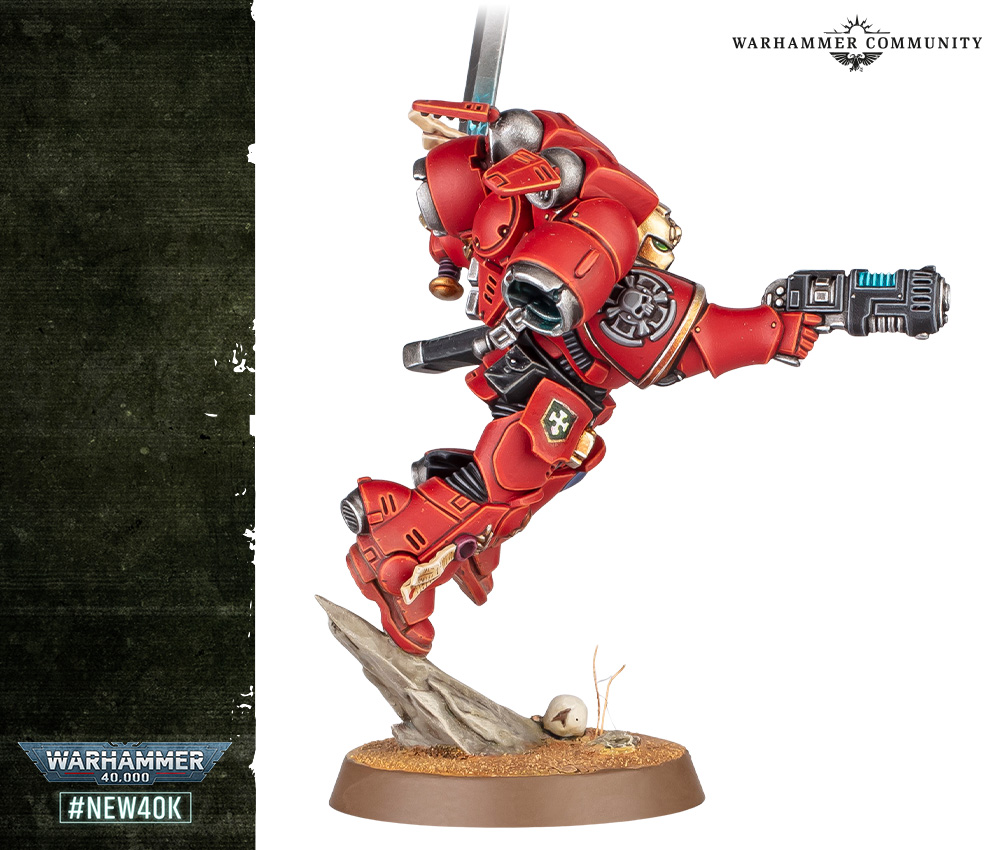
I like the detail on the new Vanguard Veteran where the armour is a mix of Mk X and older marks. WarCom explained it as battlefield attrition, Tacticus plate getting supplemented with whatever’s available, and that’s a subtle storytelling choice that fits the Blood Angels perfectly. Their armour is supposed to be ornate and beautiful. Seeing it patched together with mismatched parts says something about how long this war has been going. Even the Chapter that venerates aesthetics can’t maintain appearances when the fighting won’t stop.
The model also has this massive gold helmet, which I can’t look at without thinking about Tycho’s golden mask. I know it’s a veteran’s helm and not a death mask. But for a Chapter where gold face-coverings carry that much symbolic weight, putting one on the first 11th Edition Blood Angel model feels deliberate. Or maybe I’m reading too much into it. Hobbyists do that. I once spent twenty minutes arguing with a mate at my local store about whether the blood drop on a Sanguinary Guard’s chest was supposed to represent the Red Thirst or Sanguinius’s final wound and neither of us knew the answer and neither of us was willing to concede the argument.
What I do know is that Armageddon is the Blood Angels’ defining battlefield in a way that no other location is for any other Chapter. The Ultramarines have Macragge, sure, but Macragge doesn’t test them. It’s home. Armageddon isn’t home for the Blood Angels. It’s the place that reveals whether the Flaw will take them or whether they’ll master it. Every time they go back, some of them don’t come back as themselves. And every time, they go back anyway.
A New War, an Old Curse
The Armageddon launch box has a Blood Angels Chaplain in it. That’s not confirmed as an individual character, but the cinematic trailer shows him with the Vanguard Veterans, directing the Death Company energy, keeping the Rage pointed at the enemy. That’s what Chaplains do for the Blood Angels. They’re not just spiritual leaders. They’re handlers for marines on the edge. Lemartes, Astorath, whoever this new Chaplain turns out to be, their job is to stand between their brothers and the abyss and decide who can still fight and who needs the Emperor’s Peace.
With Wazdakka already planetside and Ghazghkull’s main force inbound, the Blood Angels are walking into the same nightmare that broke Tycho and forged Mephiston. The question isn’t whether the Black Rage will claim brothers in this new war. It will. It always does on Armageddon. The question is who’s next. Whose golden mask is waiting to be painted black.
I keep thinking the Siege of Terra resonance must be part of it. Armageddon’s campaigns are always desperate last stands. Always defending a world against overwhelming odds. The Blood Angels who carry Sanguinius’s genetic memory, who dream his death in their sleep, marching into another siege, another last stand, another moment that rhymes with the worst day in their Chapter’s history. Of course the Rage hits harder there. Every Armageddon campaign is the Siege of Terra happening again for a gene-line that can never forget the original.
Anyway, the Vanguard Veteran model looks great and I’m going to paint one as a Death Company marine just to make myself sad about it.