I finished The End and the Death Part Three at about two in the morning on a work night. Put the book down on the nightstand, stared at the ceiling for a while. There’s this hollow feeling after you finish a long series, not sadness exactly, more like vertigo. The Horus Heresy ran for 54 novels plus the Siege of Terra sequence. That’s a decade and a half of reading. Some of it brilliant, some of it filler, most of it somewhere in between. And the question I kept coming back to was: what happens now? Chris Wraight answered it with Ashes of the Imperium, the first novel in the Horus Heresy: The Scouring, and I don’t think any of us were prepared.
The Traitors are fleeing. The Emperor is broken. The Palace is in ruins. But the Imperium we know from 40K doesn’t exist yet. The paranoid theocracy, the Inquisition, the slow rot of a civilisation that forgot why it was fighting. Something goes catastrophically wrong between the end of the Siege and the setting we actually play games in. And for thirty-odd years, that gap was just empty. A few paragraphs in Index Astartes articles. Some implications in codex lore. Nothing you could really sink your teeth into.
Wraight filled it. And I think he might’ve written the best Black Library novel since Know No Fear.
The Uninvited Saviour
The central problem of the novel isn’t military. The Traitors are broken, scattered across the Sol system in dying ships. The Warp has gone genuinely silent. Not calm. Empty. Psykers can’t use their powers. The Chaos Gods themselves seem to have been wounded when the Emperor obliterated Horus’s soul. The war, in the kinetic sense, is effectively over.
What remains is politics. And the biggest political problem on post-Siege Terra has a name: Roboute Guilliman.
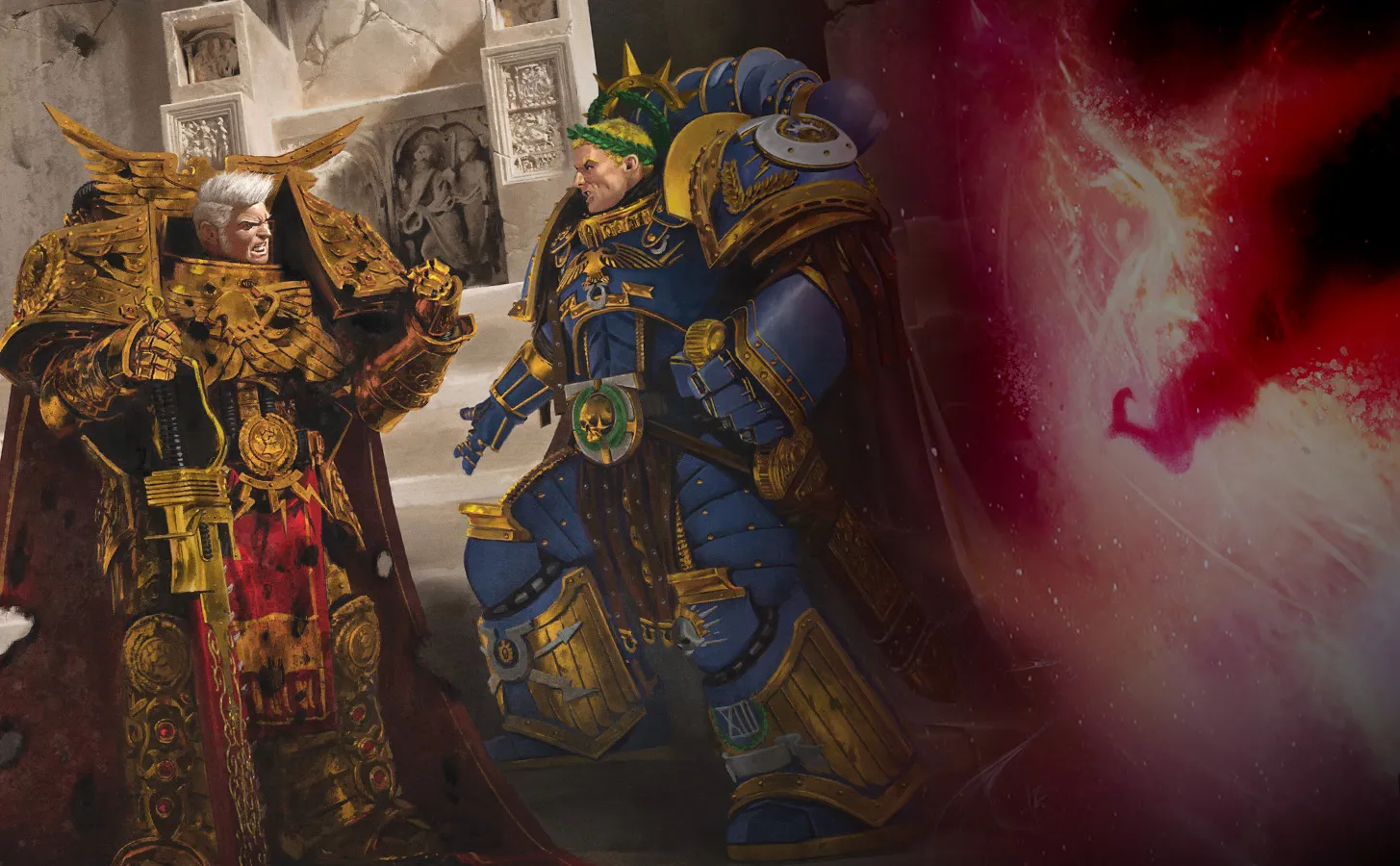
He arrives with the largest fleet in the Imperium. He wasn’t there for the Siege. That’s the wound nobody can get past. The people who bled for Terra watch the Ultramarines sweep in after the victory and start reorganising everything with Macraggian efficiency. Dorn, the Imperial Fists, the Custodes, the broken remnants of the Blood Angels and White Scars. They held the walls. They watched their brothers die. And now Guilliman’s people are placing administrative personnel into every government building on Terra like it’s a hostile acquisition. One of the chapter epigraphs puts it this way: “They had banished the nightmares, those Ultramarines, preserved the home of the species, kept us all alive, and all people did was wish that, somehow, for some reason, someone else had done it.”
Guilliman doesn’t technically claim authority. He doesn’t need to. He controls the fleet, the supply lines, the forges on Luna. He’s already cold and calculating here in a way that feels closer to his Know No Fear self than the weary regent we get in Dark Imperium. There’s a scene where all six surviving Primarchs debate the path forward, and it’s the most uncomfortable meeting in the entire Heresy saga. Nobody trusts anyone. The defenders resent the rescuers. The rescuers think the defenders are too traumatised to make rational decisions. And Guilliman just quietly positions his pieces until the others have no choice but to agree.
Actually, I want to push back on my own read there. Because Guilliman isn’t wrong. Somebody has to organise the rebuilding, and Dorn is clearly not in a state to do it. The novel makes that painfully clear.
What Dorn Saw
Wraight gives Dorn the most devastating thread in the book.
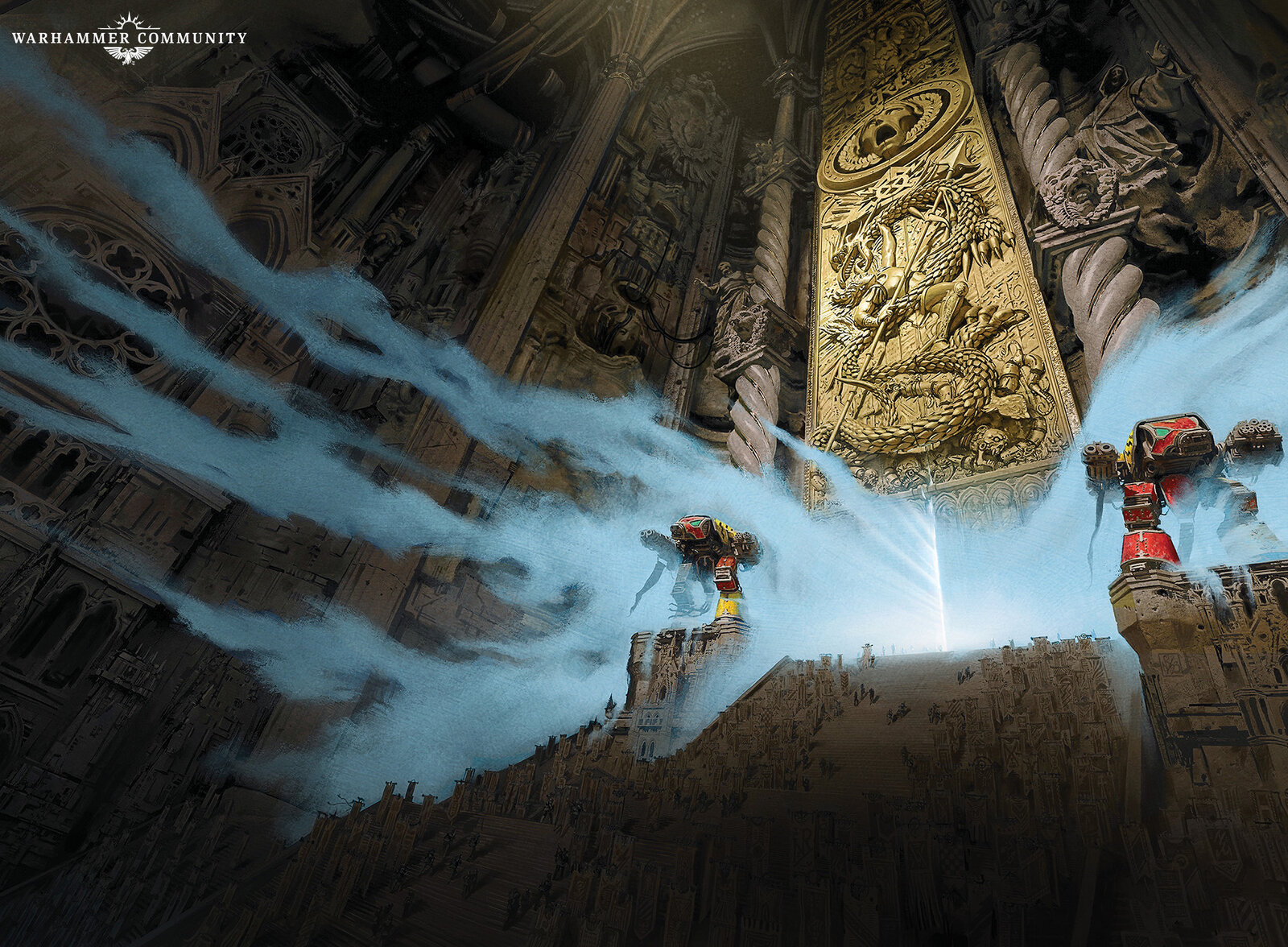
He’s the one who placed the Emperor on the Golden Throne, and the novel reveals a detail I haven’t been able to stop thinking about since I read it: when Dorn set the Emperor into the Throne, the Emperor looked at him with sheer horror. Dorn confides to his huscarl Archamus that he doesn’t know whether the Emperor’s last words were “do it” or “don’t do it.”
The entire Imperium. Ten thousand years of suffering, the Astronomican, the daily sacrifice of psykers to keep the beacon lit. All of it might be built on a misheard command. Dorn carries that weight through the novel, channelling it into rage and purpose. He wants the Scouring to begin immediately. Hunt every Traitor. Burn every world they’ve touched. You can feel him using the crusade as anaesthesia, something to drown out the memory of what he saw.
And what he saw. The Golden Throne as described in this novel isn’t gold. It’s black and grey, only twenty percent intact after the Siege, consuming colossal energy while giving nothing back. One of Malcador’s surviving agents, Khalid Hassan, gets taken close enough to see the Emperor, and he describes a one-eyed skull screaming in agony behind a wall of failing machinery. Compare that to the radiant psychic beacon we saw during the Heresy. The machine is already broken. The whole thing was broken from day one.
I spent an hour on Lexicanum after reading those chapters, falling down a rabbit hole about the Golden Throne’s power requirements and how many psykers get fed into it daily. I knew the number was high. I didn’t know it had been increasing over the millennia because the machine keeps degrading. There’s a whole article on the Astronomican’s fuel consumption that I’d somehow never read. Got to bed at three. Worth it.
Sigismund in the Dark
So yeah, Sigismund. I need to talk about Sigismund because the community has been losing its collective mind over his scenes in this book, and they’re right to.
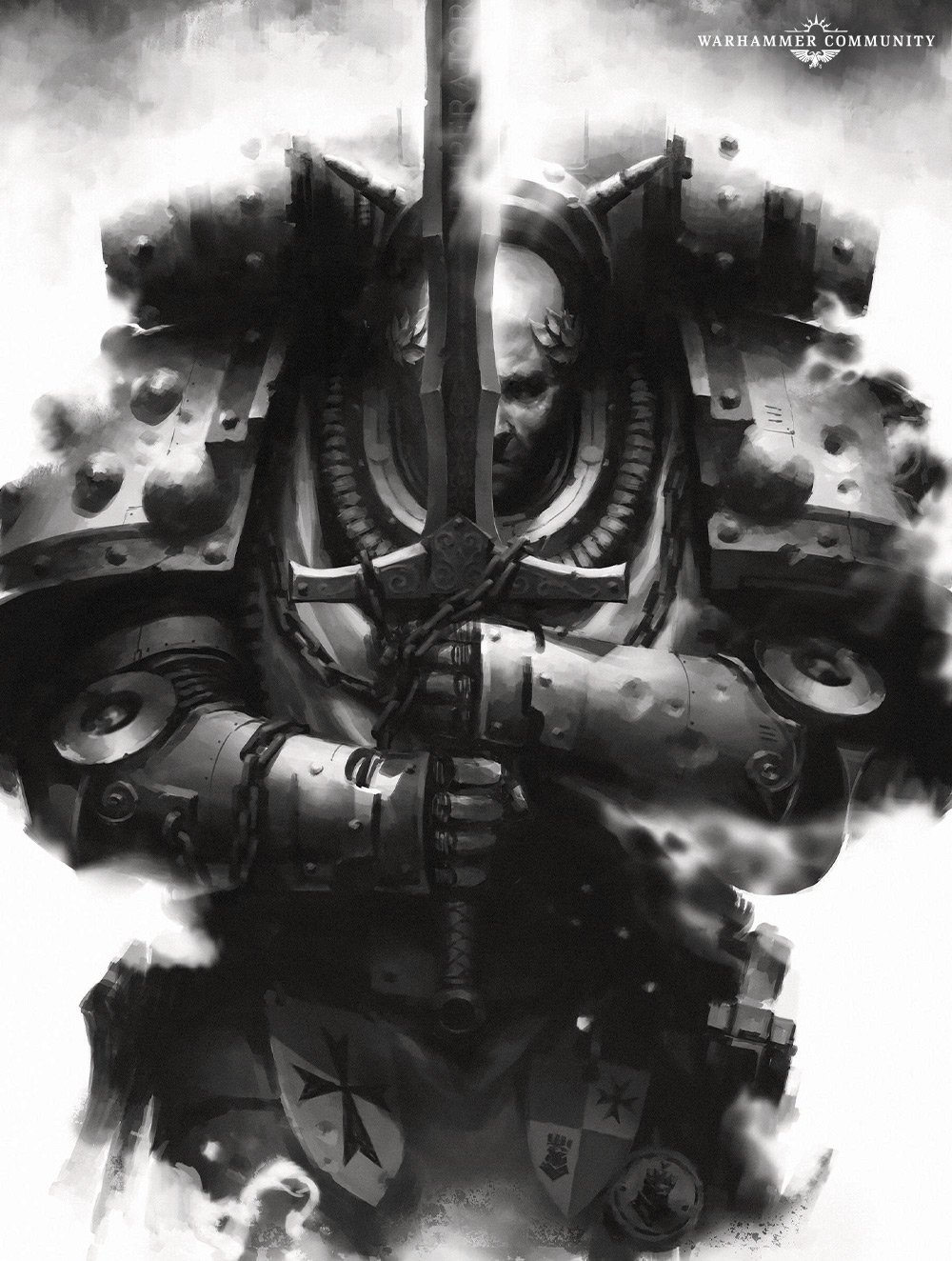
Archamus finds him deep in the void, alone on a ship, sitting on a throne in a candlelit nave. Severed Traitor Astartes heads hang from chains around him. His armour has been repaired so many times it looks like patchwork, spider’s webs of weld-lines across every plate. And the Black Sword, the one the Emperor gave him personally, seems to warp reality around it. Pull light inward, make things slower and heavier in its presence. Archamus asks what he wants, and Sigismund says he wants Abaddon’s head on a pole. He says if the politicians in the Palace won’t give him the order, he’ll start the crusade himself. At one point he talks about wrapping his fingers around their necks until their eyes pop.
It reads like the birth of the Black Templars, right? Everything that makes that Chapter what they are. The eternal crusade, the intolerance, the religious fanaticism. You can see it forming in real time. Sigismund has already become something other than an Imperial Fist. He’s a weapon that’s forgotten how to be anything else.
Warhammer Studio apparently collaborated with Black Library on a full seven-year Scouring master timeline, covering events from mid-014.M31 through 021.M31. The Iron Cage. The Second Founding. The transition from Legions to Chapters. That’s all coming, presumably across multiple novels. I don’t know how many they’re planning.
The Empire of Nobody
The thread I didn’t expect to care about was the mortal one.
Khalid Hassan, one of Malcador’s Chosen, meets with the other surviving agents, and they discover something awkward: without Malcador, they have essentially no political power. They’re four people with a dead patron and a mandate nobody recognises. Hassan argues that knowledge of Chaos should be preserved and weaponised. Kyril Sindermann, the iterator from Horus Rising who is still alive somehow, thinks it should be destroyed entirely.
That argument is the embryo of the Inquisition. You’re watching people with no authority, no resources, and no consensus try to build an institution that will eventually become the most powerful secret police force in human history. The novel doesn’t play it as destiny. It plays it as exhausted, traumatised people making it up as they go.
Meanwhile, the Keelerites, the proto-Emperor-worship cult, are already organising on Terra even though Guilliman has ordered the Arbites to suppress them. You know how that ends. Ten thousand years from now the Imperial Creed will be the state religion, and Guilliman will wake up from stasis to discover that everything he tried to prevent happened anyway. That’s a thing I keep circling back to with the Heresy. The loyalists won. They won and it didn’t matter.
There’s a quote from one of the mortal administrators that lodged in my head: “They were created for a purpose, and that purpose has gone. Allow them to rule, and we’ll never see an end to the crisis.” He’s talking about the Legiones Astartes. The age of the Primarchs is already ending and nobody’s told the Primarchs yet.
Traitors Running Silent
I won’t spend long on the Traitor threads because they’re better experienced fresh, but one detail: the Iron Warriors and the Word Bearers despise each other. The Iron Warriors mock the Word Bearers for cheating, relying on daemons instead of doing actual work. It’s petty and vicious and exactly how you’d expect two Traitor Legions trapped on a broken space station to behave. Then the Warp goes silent, and suddenly the Word Bearers’ entire toolkit vanishes, and the Iron Warriors are the ones with transferable skills.
There’s also a mortal Traitor thread following Julatta, a cult demagogue leading surviving followers across Terra’s toxic wasteland. They pass a waterfall of blood and industrial chemicals pouring from the ruined Palace walls. They try to steal food from villages and tell the villagers they’re being punished for defying the true gods. It’s pathetic and sad and convincingly human in a way that Traitor perspectives rarely manage.
I’ve seen people call this novel the connective tissue between 30K and 40K. That’s accurate but it makes it sound like a structural component, something functional. It’s a novel about what happens when the heroes win and immediately start fighting each other over the ruins. Wraight wrote it with the same understated political sensibility he brought to the Vaults of Terra series, and if you’ve read those, you know that’s the highest compliment I can give.
The Scouring timeline runs through 021.M31. The Battle of the Iron Cage, the Second Founding, the retreat into the Eye of Terror. All of it’s on the table. If you’ve read even a few of the Heresy novels, this one’s essential. And if you’ve only ever known 40K, this is the book that explains how all of it went wrong.