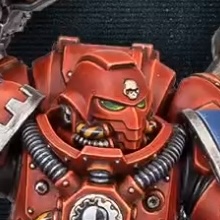
A Novamarine expects to carry a record of his service into death. Over the course of his life, tattoos accumulate across his skin, marking battles he fought and stars he travelled to. In Forge World’s Imperial Armour Volume Nine, the Chapter believes those marks protect the soul from dark spirits. It also believes the Emperor will judge each brother by the deeds recorded on his body.
The practice comes from Honourum, where the Chapter draws its recruits. That makes the tattoos an unusual inheritance for a successor that treats the Codex Astartes as divinely ordained law. The Chapter’s quartered colours are thought to come from an Ultramarines officer who fought in the Horus Heresy. Underneath those colours, a Novamarine carries a custom from the people who live below his fortress.
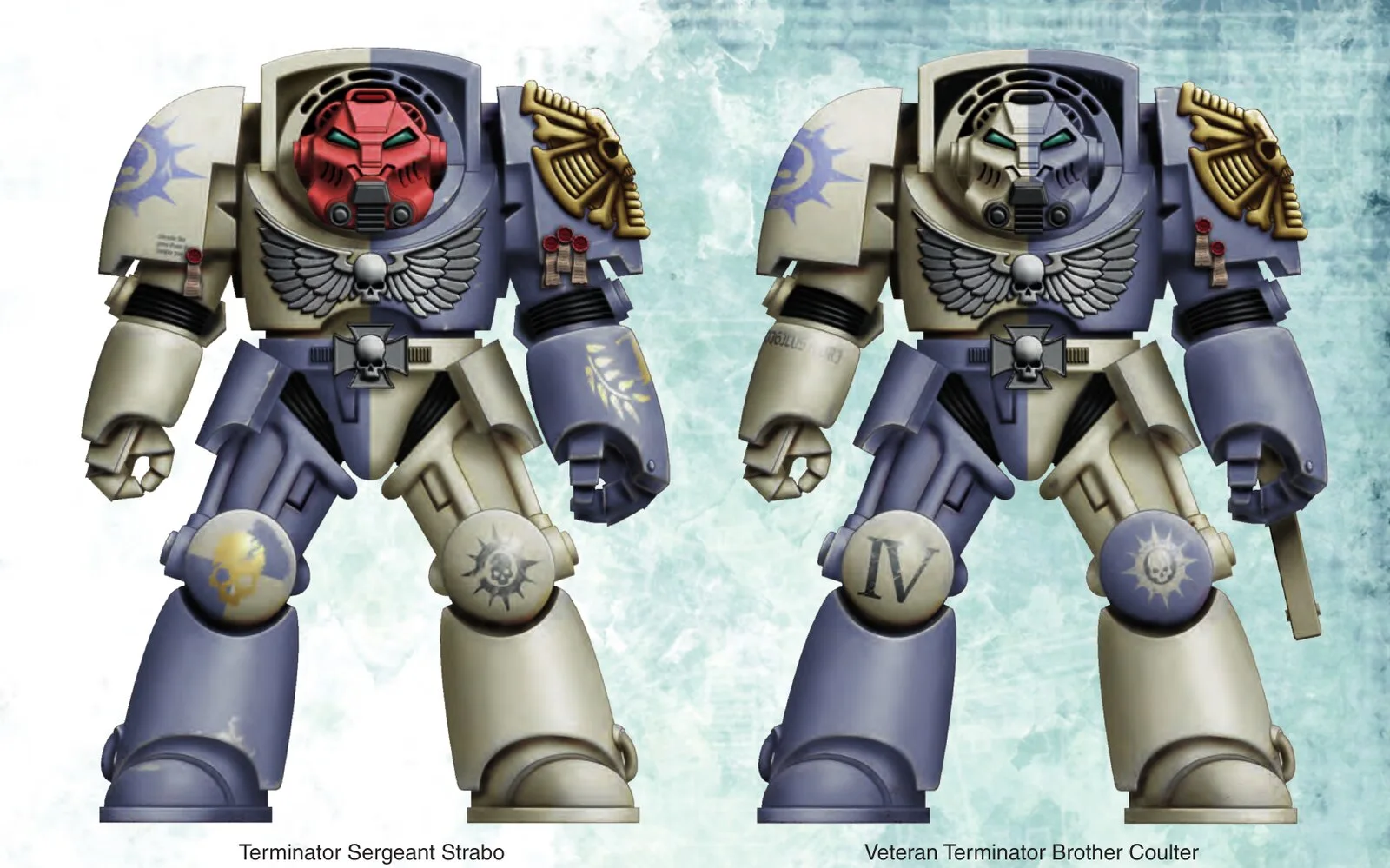
Header artwork shows Terminator Sergeant Strabo and Veteran Brother Coulter, from Forge World’s Novamarines armour plates.
The custom that survived recruitment
Honourum is a world of bare stone, jagged mountains, and violent storms. The account describes small groups of hunter-gatherers travelling across that terrain and looking up at Fortress Novum, built into the mountains. Its void shields cast rippling lights into the sky. To the people below, the fortress is the home of gods and the lights are openings into the halls of the dead.
Those are the people who supply the Novamarines with recruits. As Forge World describes their indoctrination, a recruit’s old beliefs and customs are stripped away and replaced with a culture familiar to anyone from Ultramar. Ritual tattooing is the exception singled out in the account. The Chapter keeps the practice, and the marks become a record of the Marine’s service.
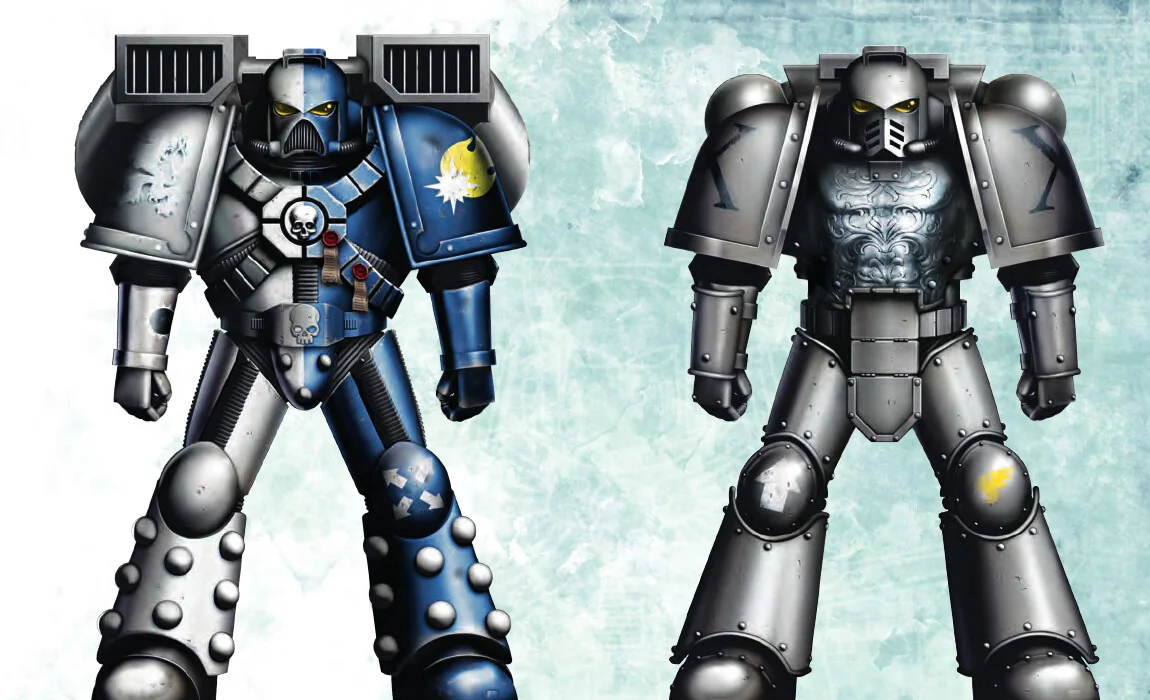
The Novamarines’ badge as shown in Forge World’s Chapter profile.
It’s easy to see why the custom fits, even if we don’t know who first carried it into the Chapter. Honourum’s people already understand the world around Fortress Novum through their ideas about the dead. Among the Novamarines, a rite learned from those people has a place in the story of what happens to a brother after he dies. In the Chapter’s version, it’s the Emperor who weighs the life that the marks record.
What a brother carries beneath his armour
The marks are sigils and abstract designs. Their subjects include the stars a brother has travelled to, alongside the battles he fought. That detail gives the record some breadth. The Novamarines swore to defend the Segmentum Ultima, and Imperial Armour describes their forces spending much of their history scattered across a vast patrol area. Two brothers can serve under the same Chapter badge and spend whole stretches of their careers fighting on different fronts.
The War of Badab offers an example. Novamarines reinforced the loyalist effort after the Executioners struck at the Khymaran Drift. The Forge World account then follows them into smaller task forces that guarded shipping and fought across frontier worlds. That kind of service is easy to compress into a line in a Chapter history. A tattoo can record an episode from the career of the brother who was there. The book leaves the designs of particular veterans’ tattoos to the imagination. It does tell us what brought the scattered task forces home. When the threat to the loyalist supply lines had largely passed, the Novamarines left Badab to defend Honourum from a growing Ork Waaagh! The same campaign that shows how far a brother’s service could take him ends with the Chapter called back to the world that gave him the rite.
On the armour plates in the same volume, you can see how the Chapter records service publicly. Veteran Sergeant Cyranus is shown in quartered armour and credited with a posthumous Order of Guilliman after the Relief of Bale. That is an honour the Chapter can record for him. The tattooing rite gives each brother a more personal record beneath the armour.
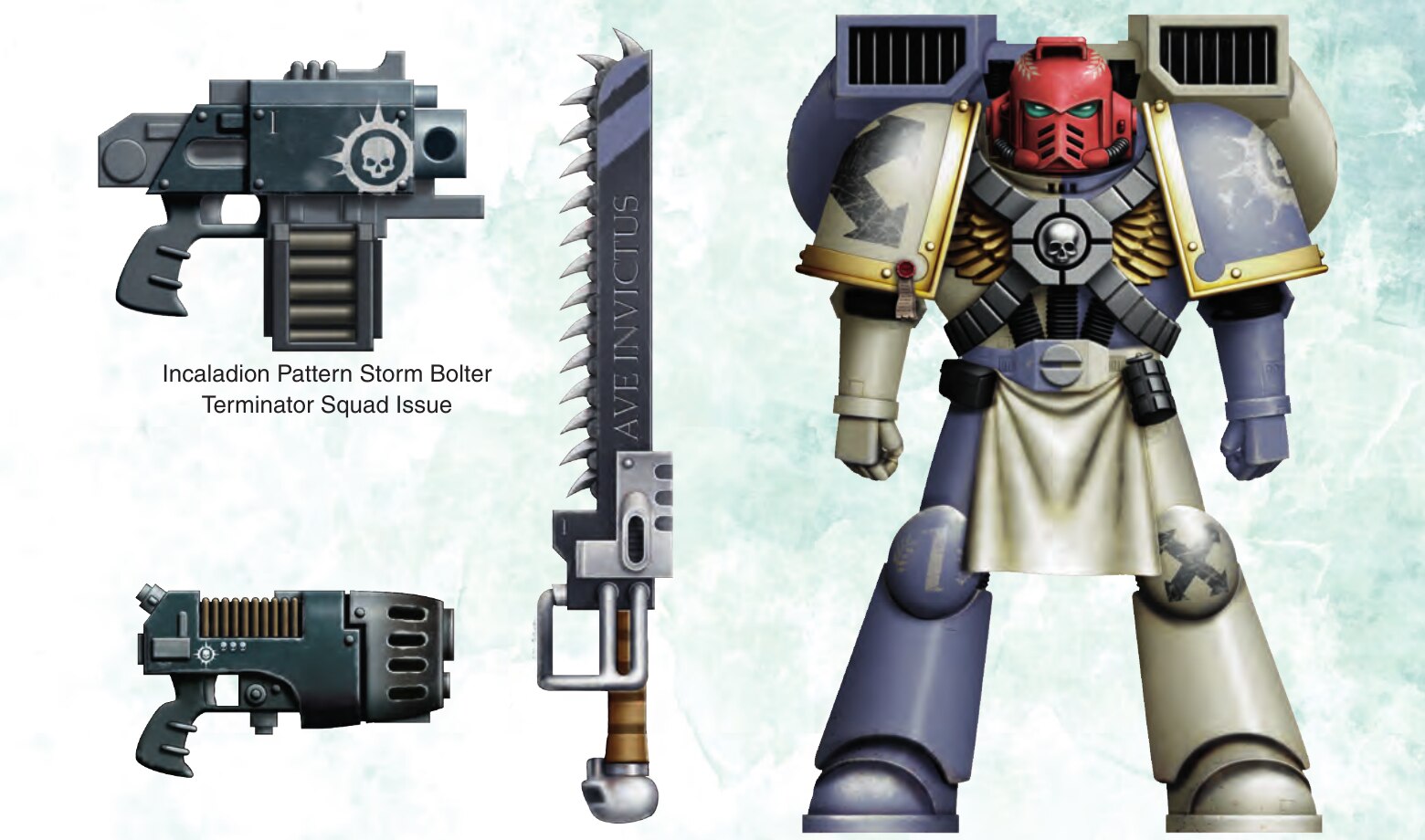
Forge World’s plate identifies Veteran Sergeant Cyranus and records the honour awarded after his death.
Who judges the record?
The Chapter has been preserving older honours since the Second Founding. Its first master, Lucretius Corvo, was an Ultramarines captain who fought the Word Bearers at Astagar. Corvo’s force held out for six days before he and a chosen band destroyed the Warlord Titan Fellghast in a counterattack. Guilliman awarded him a Laurel of Defiance for his part in breaking the siege. According to Forge World’s account, the Novamarines still keep it at Fortress Novum, and the Chapter’s quartered colours are believed to come from Corvo’s heraldry.
Corvo’s laurel has a home in the fortress. His colours can be painted onto every brother’s armour. Both keep the founding story visible to recruits who arrived thousands of years after Astagar. A tattoo builds up over the course of one life. The Chapter’s common badge tells you whom a brother serves, while the designs under it tell the story of where that service took him.
The two beliefs about the tattoos belong together. In the Novamarines’ understanding, the marks guard the soul against whatever might prey on it and carry the record by which the Emperor will judge it. That is why an old custom from Honourum fits a Chapter so devoted to Guilliman’s book. A Novamarine spends his life serving an institution that demands uniformity. He expects to answer for that service as an individual, with his own deeds written on his skin.
Sources
- Forge World, Imperial Armour Volume Nine: The Badab War — Part One (2010), pp. 116–119. “The Novamarines,” “Organisation,” and “Badab War Disposition” cover Honourum, the tattooing rites, and the Chapter’s service. The Chapter badge and armour illustrations are from pp. 116–117.