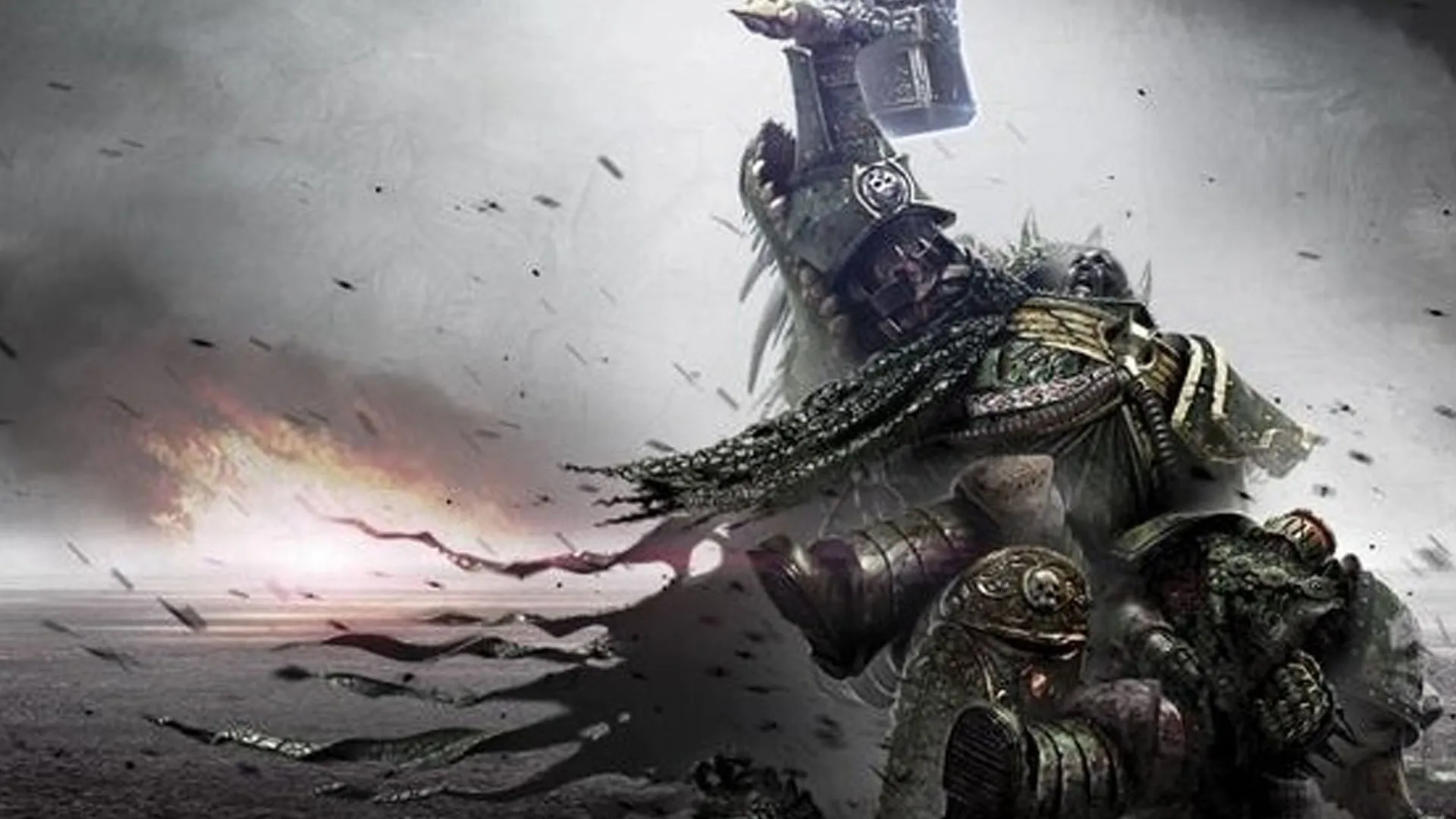
Konrad Curze beheaded him. Then he ripped his throat out with a piece of cutlery. Then he stabbed him through the chest, took him apart with those claws, had him eviscerated, had him shot at point-blank range by hundreds of bolters, fed him into the ventilation shaft of a starship’s engine, and finally stripped him naked and threw him out of an airlock into vacuum.
None of it took. He regenerated each time, airlock included.
The lore is deliberately vague about how many times this happened, and I think that’s the right call, because the number stops meaning anything after about the fourth entry on that list. Curze wasn’t interrogating his brother. He’d already established that Vulkan couldn’t be killed, and the rest of it was him trying to prove the galaxy wrong through sheer repetition. Eventually Vulkan escaped using a teleporter that Curze had, with spectacular carelessness, left inside the warhammer he’d placed at the centre of the maze as bait.
Vulkan found out he couldn’t die by accident
He’s a Perpetual. Same condition the Emperor has, and the same one that lets characters like Ollanius Pius keep turning up across ten millennia looking mildly inconvenienced. Visions of Heresy is fairly direct that this made Vulkan unique among his brothers, saying that as far as anyone knows, not one of the other primarchs possessed anything like the same immortality. Whatever the Emperor did when he built the eighteenth son, the records suggest it happened once and wasn’t repeated, though the Imperium’s records on primarch engineering are hardly what you’d call complete.
The thing I find genuinely good about this is that Vulkan had no idea. He went through the entire Great Crusade not knowing. He only found out at the Dropsite Massacre, when an Iron Warriors orbital strike went off close enough to atomise him and he woke up afterwards anyway. Imagine getting three hundred years into a career and discovering that a fundamental fact about your body is not what you assumed it was.
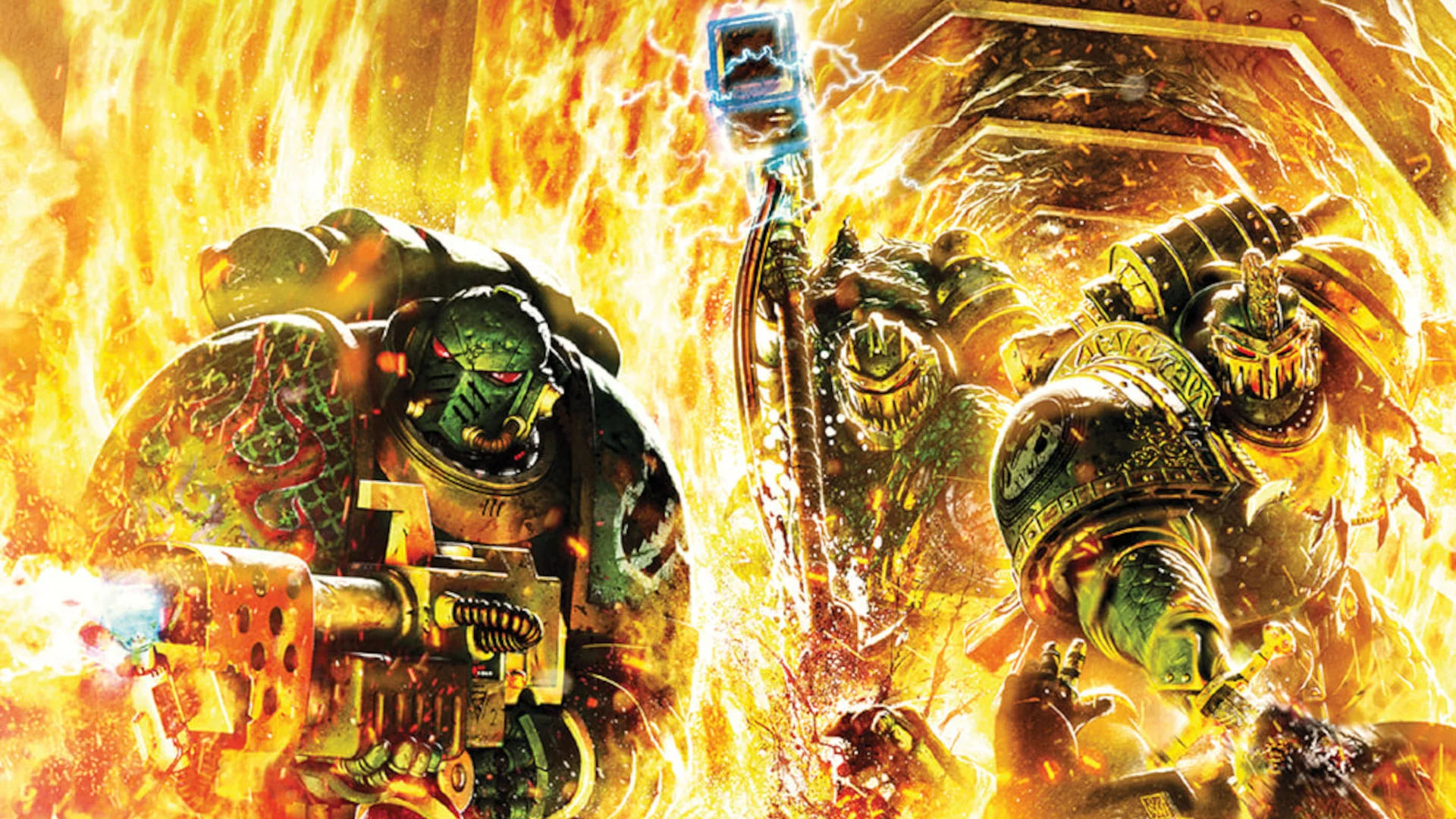
His Legion took the worst of Isstvan V. Around 83,000 Salamanders went down to that planet, and the Horus Heresy Model Masterclass puts their losses as high as 98%. Survivors were counted in the hundreds. They assumed their father was dead along with everyone else, right up until a kind of collective certainty took hold and “Vulkan lives!” replaced their old battle cries. They were, as it turns out, correct, though they had no way of knowing it and were essentially guessing.
The nine artefacts are a return date with the serial numbers filed off
Here is the part that I think gets underplayed whenever people argue about which primarch comes back next.
Roughly a thousand years after the Heresy, Vulkan scattered nine artefacts he’d made across the galaxy, left behind a book explaining that he’d done it, and disappeared. The book is the Tome of Fire. The instruction in it is that when the Salamanders’ Forgefather has recovered all nine, Vulkan will return and lead them in the last war. Five are in. Three of them, the Spear of Vulkan, Kesare’s Mantle and the Gauntlet of the Forge, are carried by Vulkan He’stan, who is a lovely lumpy old metal sculpt and has been lugging that spear about since the 2009 codex. Two more, the Chalice of Fire and the Eye of Vulkan, sit in the vaults on Prometheus. The outstanding four are the Engine of Woes, the Obsidian Chariot, the Unbound Flame and the Song of Entropy.
So the return already has a mechanism, a prophecy, a progress bar sitting at five out of nine, and a named character whose entire job is to finish it. No other loyalist primarch has anything remotely this tidy waiting for them.
And that, I’m fairly sure, is why it hasn’t happened.
A primarch’s return is the single biggest narrative card GW holds, and the value of playing it comes almost entirely from the setup. Guilliman’s return worked because ten thousand years of stasis and a Chapter’s worth of Cawl’s tinkering had to be spent to buy it, and because the Imperium had a different shape by the end of the week. Vulkan’s return is cheaper than that in every direction. He’s alive. He’s been alive the whole time. Somebody finds four objects and he walks back in, and the entire dramatic weight of the moment rests on a courier reaching Prometheus with the right parcel.
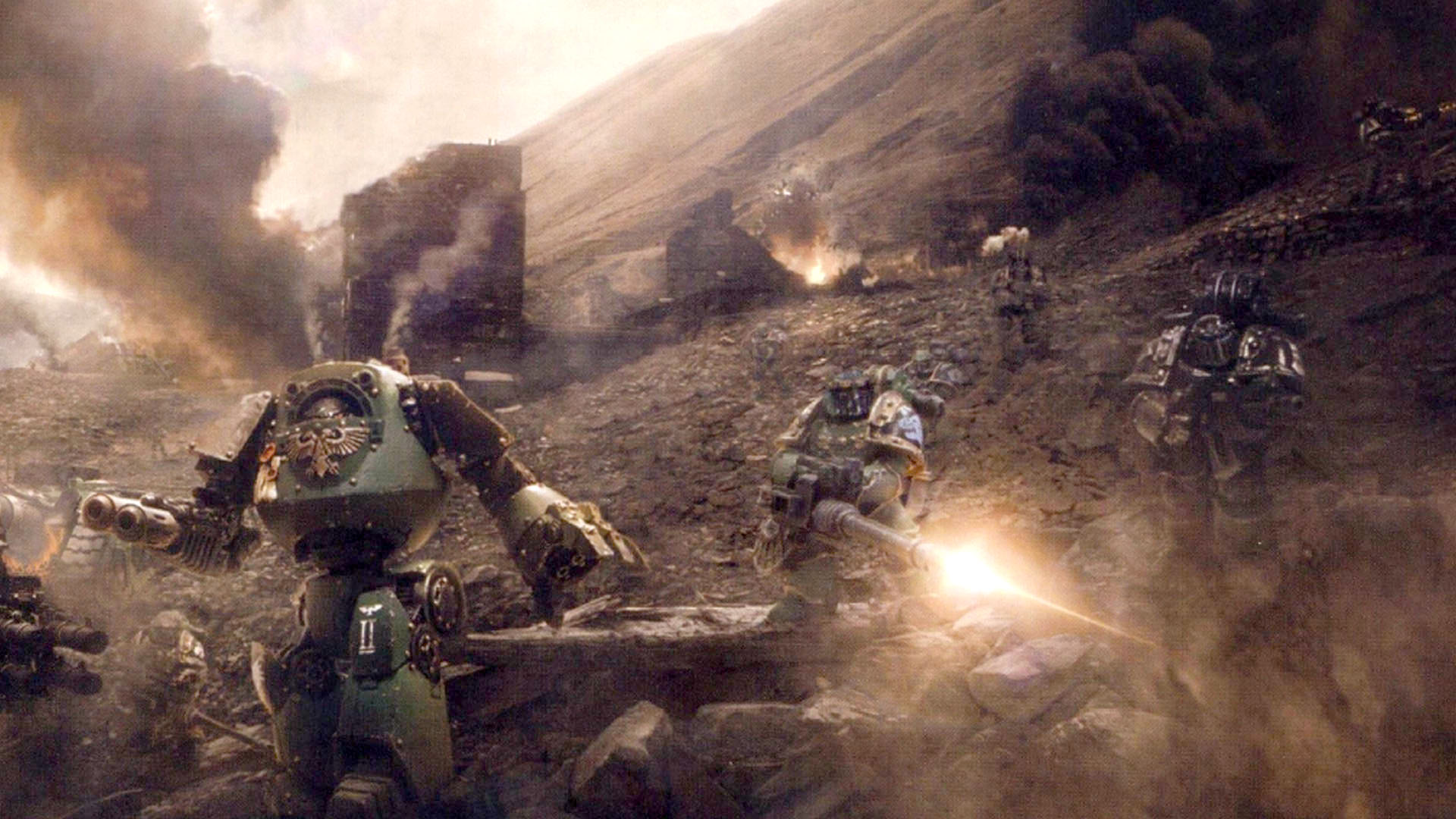
I go back and forth on this, honestly. There’s a version where the pre-written return works in GW’s favour, where they get a full campaign out of hunting down the last four relics and the Salamanders finally get the kind of multi-book event treatment the Ultramarines and Dark Angels have been hogging for years. That would be great. I’d buy it on day one. But the Forgefather quest has been sitting there since the 2000s with nobody in Nottingham showing the slightest urgency about closing it, which either means they’re saving it or they’ve quietly forgotten it’s there.
Primarch season
BoLS has run two separate pieces this month asking where all the loyalist primarchs have got to and arguing it’s time for another one. Eleventh edition has been reset-shaped from the start, the codex schedule is rebuilding the whole line, and every forum thread on the subject converges on the same three names within about a dozen posts.
The smart money is on Rogal Dorn, and the smart money is probably right, because Dorn’s return requires an actual event to explain it and events are the thing GW sells. The Lion needed a whole novel and a Great Rift before he could stand up.
There’s a related question about what “dead” even means for these characters, which I’ve poked at before, and Vulkan sits so far outside the usual categories that he almost breaks the framework I was using. He’s alive, located somewhere specific, aware of the situation, and declining to do anything about it. That’s a fourth state that the setting has basically no other examples of.
Sixty-seven men carried a body across a galaxy
The best Salamanders material is about the people around Vulkan who had no idea he was unkillable, and who made enormous decisions in that ignorance.
After Vulkan was struck down on Macragge by a fulgurite spear, sixty-seven surviving Salamanders formed a brotherhood called the Pyre and asked Guilliman for permission to take the body home to Nocturne. Guilliman said no, then relented. The voyage was catastrophic. By the end, twenty of them were left, and they got the casket down to the surface in a Thunderhawk that crash-landed on the Acerbian Plain.
Then they put him into the caldera of Mount Deathfire, with the spear still in his chest because nobody had been able to pull it out, and nothing happened. No miracle. Vulkan went into the volcano and did not come back out, and the Legion held a funeral and started working out who would lead them next.
Artellus Numeon, the first captain, refused it. He walked out into the Time of Trials without armour or weapons, climbed the mountain, and threw himself into a fire crevasse as a trade. His life for his primarch’s. He had no reason to believe this would work and no way of finding out whether it had.
Three Salamanders went looking for him once the Time of Trials had died down enough to travel, riding jetbikes out across the ash plains. They found a man kneeling in the dust, weak and disoriented, with a spear tip still lodged in his chest.
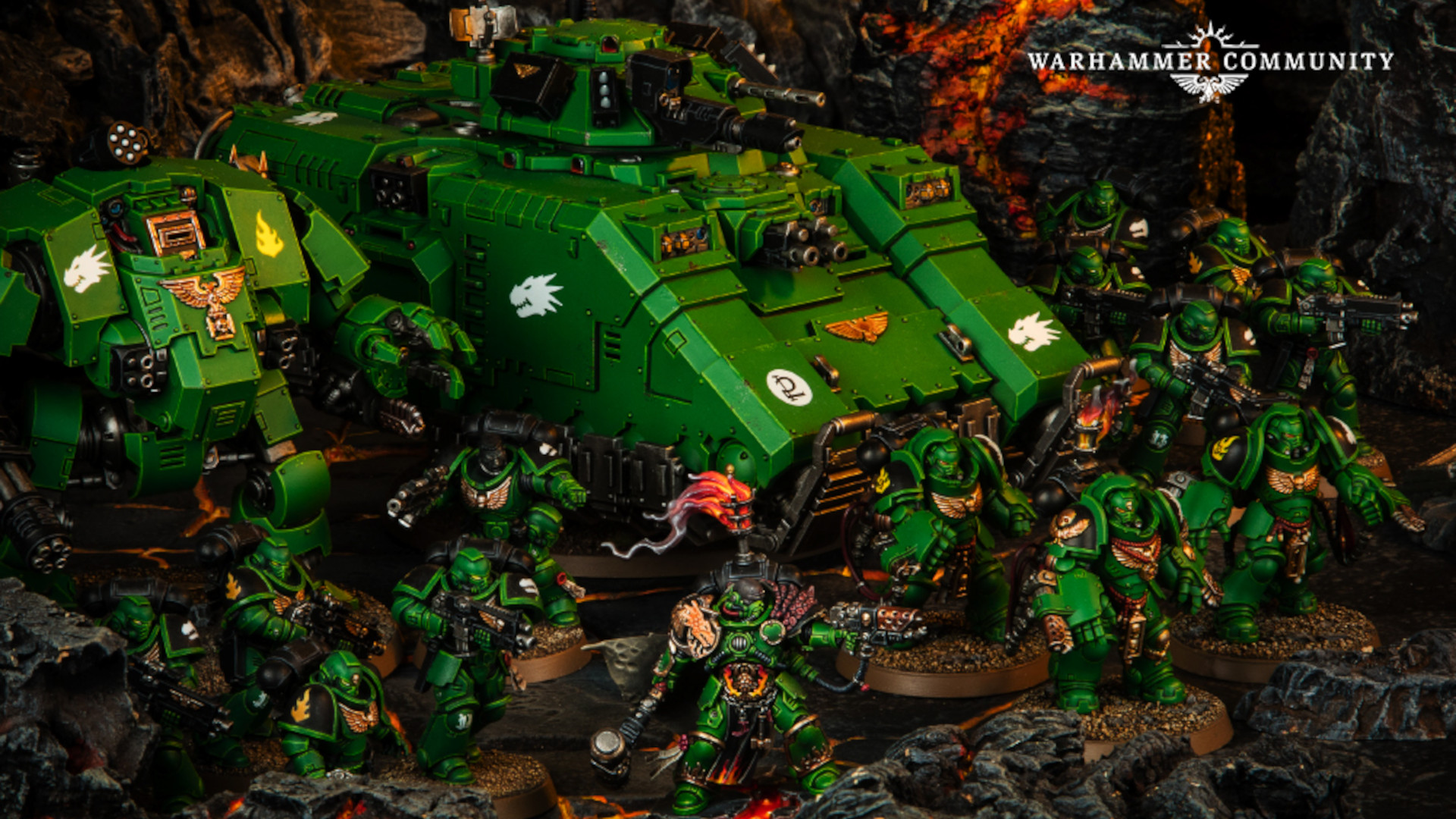
I read Deathfire on audiobook during a stretch of commuting a few years back and I’ll admit I bounced off most of Nick Kyme’s Salamanders run, which is a bit of a confession given how much of the modern Chapter he wrote. The prose never quite clicked for me. But that ending sat with me for weeks, and not for the reason I expected. Numeon’s sacrifice does nothing. Vulkan was always coming back, the Perpetual biology handles it on its own, and the fire crevasse is just a man dying in a hole on a volcano while believing he’s paying for something.
Pete has painted Salamanders since before I knew what a Salamander was, going on twelve years now, and when I put this to him in the garage one evening he was having none of it. His view is that Numeon didn’t know, so the choice was real, so it counts. Which is obviously correct and I still don’t like it. We went round on that for the better part of an hour while he batch-shaded about forty Firedrake shoulder pads and I made no progress on anything at all.
There’s been a Salamanders battleforce sitting on the shelf at my local store since before Christmas, same box, spine gone slightly pale on the side facing the window. I wrote up what’s actually inside one of those a while back and I still haven’t bought it. Some of that is the backlog, which is its own ongoing humiliation. Most of it is that Pete’s green is better than my green would be, and buying the box would mean admitting I’m doing a worse version of a thing happening ten feet away from me. It’s the same reason I’ve never learned to make my mum’s roast potatoes.
The Chapter that came out of all this is organised around waiting. Seven warrior houses instead of ten companies, because Vulkan didn’t want to break up his Legion after the Heresy and nobody has overruled him since. The Promethean Cult, which is a whole religion built on endurance, on being tempered rather than rewarded. A Forgefather whose job description is “keep looking.” The Iron Hands did something structurally similar with Ferrus and turned grief into doctrine, which makes for a useful comparison right up until you remember that the Salamanders are running the same machinery on a man who is demonstrably still breathing somewhere.
Bring Vulkan back and all of that becomes backstory. He walks into the fortress-monastery on Prometheus and ten thousand years of institutional patience resolves into a bloke with a hammer, and the Chapter has to become something else, and I don’t know what that something else would be. Neither, I suspect, does GW.
The nine artefacts have been out there since Rogue Trader-era lore, which is to say the Forgefather has been at this for slightly longer than I’ve been alive, and he’s found five. At that rate the last four land sometime around the heat death of the setting. Which for a Chapter whose entire theology is about outlasting things is, I suppose, on brand.
Anyway. Four to go.