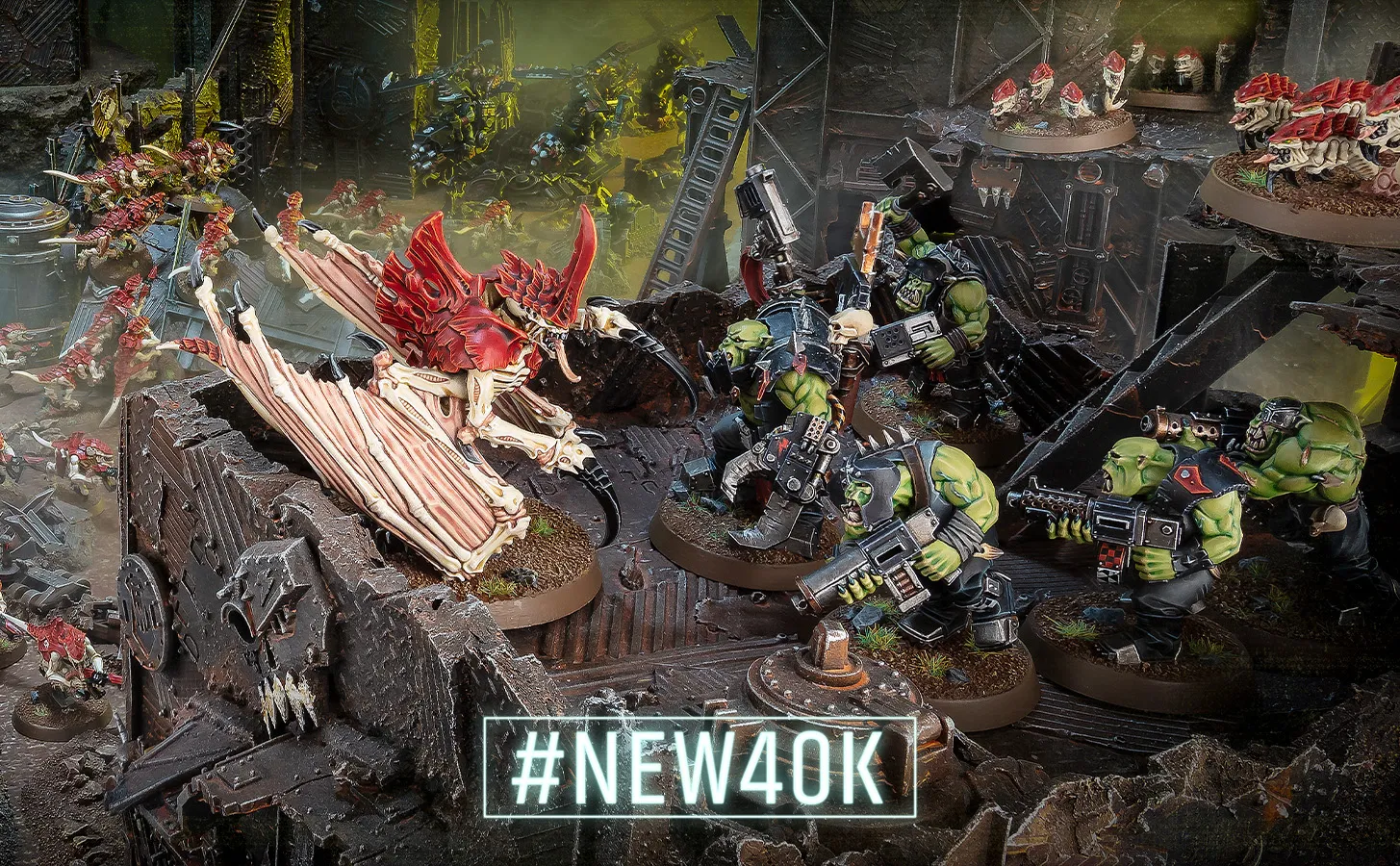
I put a squad of Devastators on top of a ruined hab block in a game last year and they didn’t make it to turn two. My opponent had a full firebase set up across the table, and the moment those guys crested the second floor they were the tallest thing on the board. One volley later — two heavy bolter squads and a plasma cannon, all rotating to face my newly elevated, newly visible, newly dead heavy support choice. It was completely predictable. I knew it was going to happen and I did it anyway, partly because the models looked right up there and partly because I kept thinking that surely this time the high ground would matter.
It never matters. The upper floors of ruins have been a trap since at least 8th edition. They look like they should give you an advantage — elevation, firing lanes — but in practice you’re trading the only protection you had for a marginally better view of the table and a significantly better view from your opponent’s perspective. The game has always punished verticality for infantry.
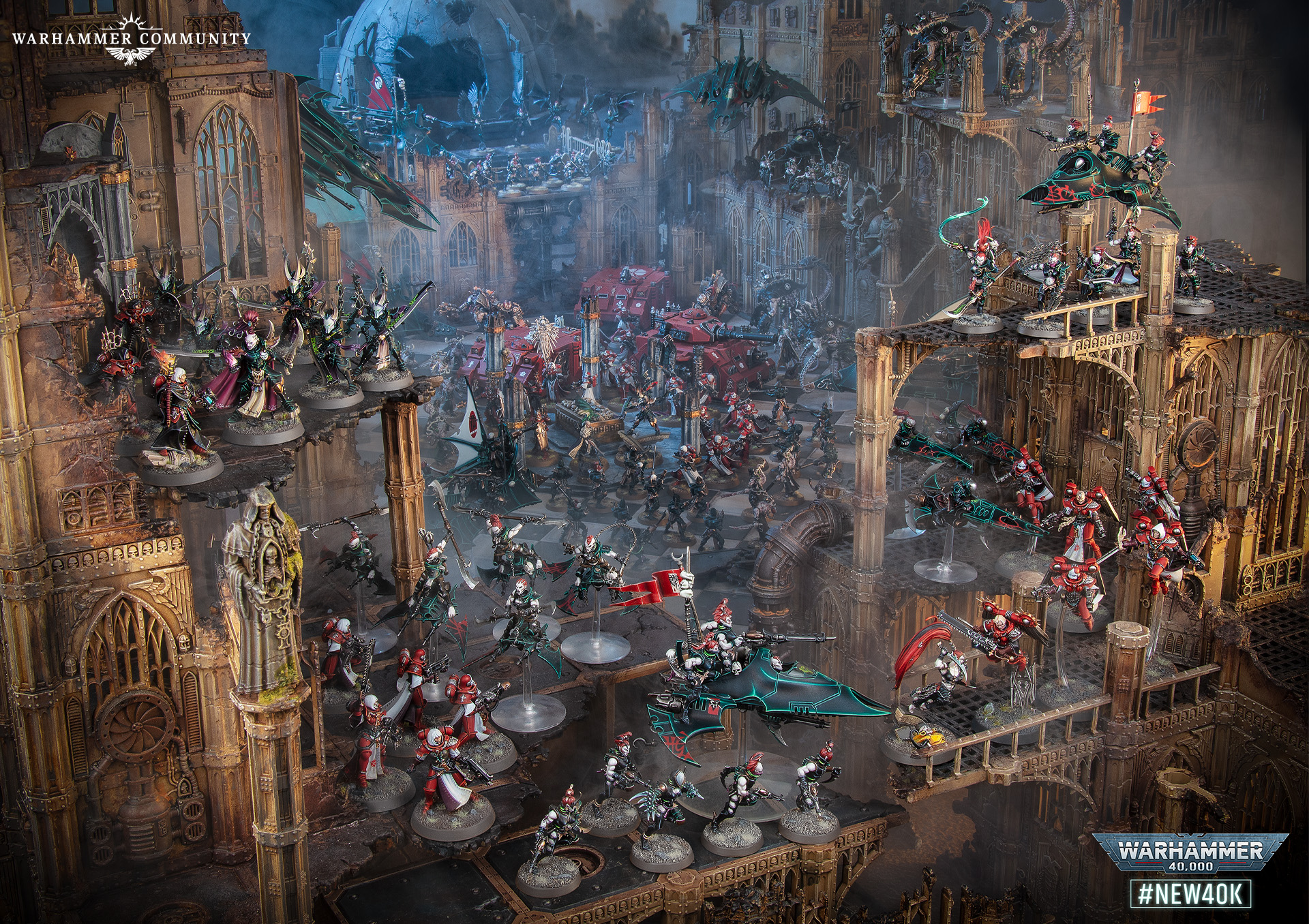
11th edition is quietly fixing this. The terrain rules dropped this week and got somewhat buried under the army building and detachment previews — understandably, those changes are bigger in scope — but the new terrain system touches something that affects every single game of 40K you’ll play. The Hidden rule changes something fundamental about how infantry use terrain, and the secondary shifts to cover, layout standardization, and Plunging Fire all stack on top of it.
What Hidden Actually Does
The rule is simple enough. Infantry, Beasts, and Swarms inside a terrain area can’t be targeted by enemy models beyond 15” detection range, as long as they didn’t fire in the current or preceding turn. The moment they shoot, they break cover and become visible again. Hold fire, and they sink back into the terrain footprint.
What this changes for an Astra Militarum infantry squad: right now, bare infantry in ruins are mostly speed bumps. They’re cheap enough to accept dying in large numbers, but they don’t actually threaten anything with their presence in cover because anyone with sufficient range can delete them from across the table before they ever act. With Hidden, a squad of guardsmen in a ruin becomes genuinely threatening. An opponent has to close within 15” to engage them, which might mean stepping into other firing lanes, which means the infantry in the ruins are actually doing something — controlling space, forcing decisions — even before a shot is fired. A cheap unit can influence positioning by its presence alone.
That was always true in the lore. The 41st millennium runs on exactly this kind of warfare. The Siege of Terra was fought in fortifications, through corridors, across killing grounds the defenders had spent decades preparing. Commissars hold lines in ruined cities. Guard regiments dig into rubble and dare entire armies to advance into them. The game has always gestured toward this logic in its narrative while offering limited mechanical support for it. Hidden is the closest we’ve gotten to “infantry in ruins are actually hiding.”
The upper floors pay off now too. A unit can ascend to elevation and be Hidden until they fire. When they fire, they get Plunging Fire — a +1 to their Ballistic Skill from terrain 3” or higher — which cancels the -1 BS that cover now gives their targets. So the exchange from elevation is: attacker gets cover, elevation cancels it out, and then the unit is visible afterward and has to decide whether to relocate or accept the exposure. There’s actually a choice worth making. Which building, which target, which turn — the puzzle has real teeth now.
How Cover Changed
The cover mechanic is also being revised. In 10th edition, infantry in terrain get +1 to armor saves. In 11th, the attacker takes -1 to their Ballistic Skill instead. Same intent, different distribution of who benefits.
The armor save bonus always skewed toward armored units. A Terminator in cover goes from 2+ to 1+. A guardsman goes from 5+ to 4+. The -1 BS penalty applies the same regardless of what’s being protected — your Terminators and your guardsmen both make opponents miss at the same rate. Whether that’s better for the game depends heavily on what you were building toward.
And honestly, I go back and forth on this one. The armor save approach had its own internal logic — cover makes you harder to wound, which makes physical sense even if it disproportionately rewarded well-armored units. The BS penalty is more egalitarian but strips one of the compounding benefits that elite infantry used to get from combining strong armor with cover. Custodians in ruins used to be almost impossible. They’ll be a bit less impossible now, because the bonus no longer stacks with their already-absurd saves in the same way. Whether that’s a balance improvement or a narrative cost, I genuinely can’t decide.
A Brief History of GW Trying to Get This Right
So, terrain rules. It’s one of those things that sounds completely unglamorous when GW announces it and ends up mattering enormously once you’ve actually played with the new system. Sixth edition, if anyone’s willing to revisit it charitably, had terrain rules that collapsed almost immediately — half the time nobody could agree on what category a piece of terrain fell into, and whether your forest counted as “area terrain” determined huge chunks of the game before the first dice were rolled. The Cityfight supplement back in 3rd edition was probably the first time GW seriously tried to build a terrain ruleset specifically for dense urban warfare, and it was ambitious and required a separate book and enough terrain to fill most of the table, which is why almost nobody actually played it properly.
10th edition settled into something functional but slightly flat. Cover worked, terrain blocked line of sight reliably enough, but the whole system lacked dynamic. There was no tension in positioning because all cover was equal and visible to everyone all the time. The Hidden rule breaks that open.
The Layout Problem
The other half of the terrain update is about setup, not mechanics. 11th edition introduces recommended terrain layouts tied to specific missions. The layout itself is part of the scenario design.
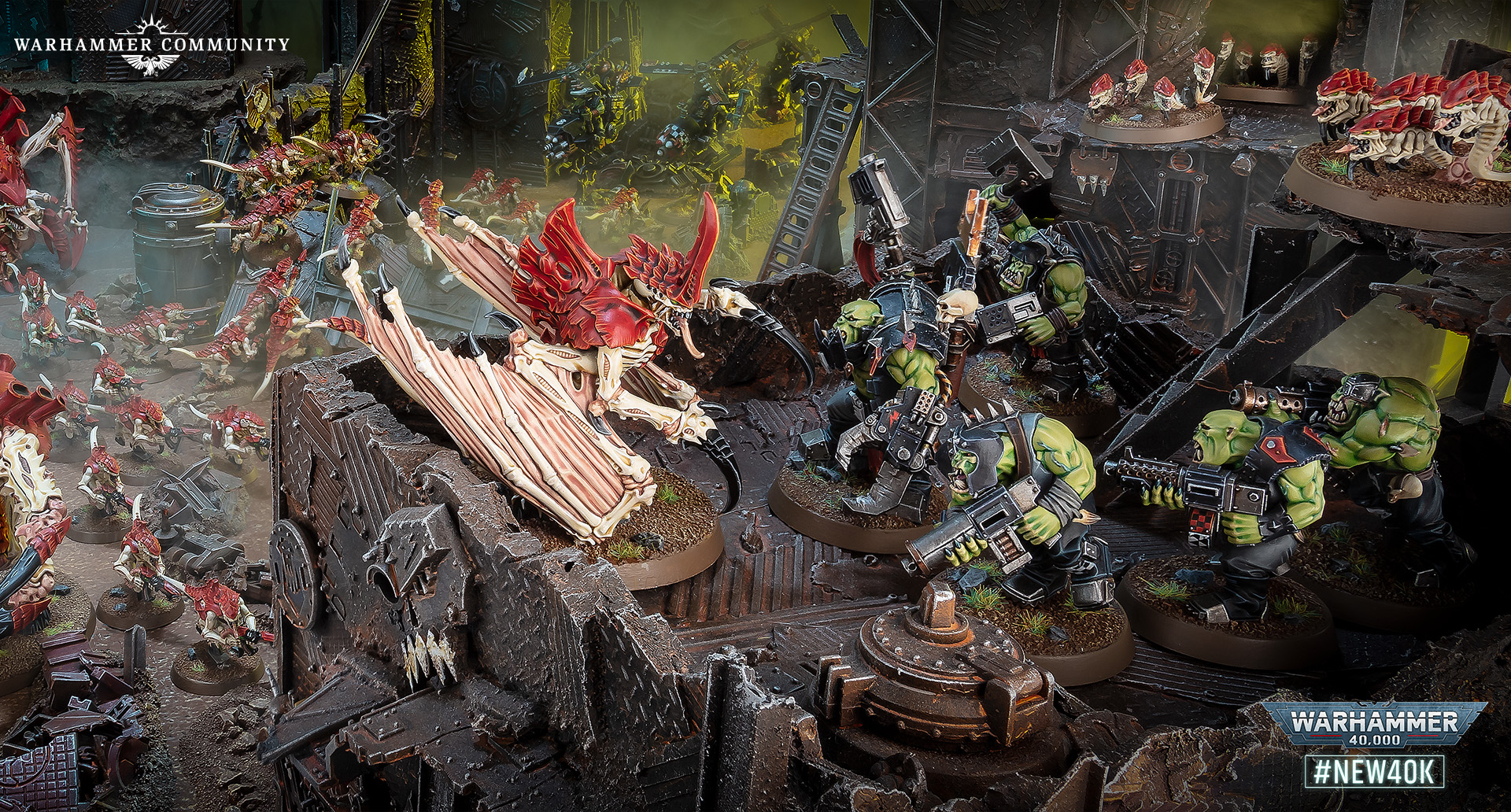
GW showed two layouts for the Crucible of Battle mission — the scenario that applies when one army plays Disruption Force Disposition against Take and Hold. Both layouts have clearly designed sightlines. There are long, thin terrain areas running across the midfield that create hard stops on long-range shooting corridors. There are asymmetric positions that make the attacker’s approach feel different from the defender’s setup.
The long thin areas are the most interesting detail. Because Obscuring terrain allows units to remain out of line of sight behind the footprint — not just behind the physical model — a strip of barricades with a 10” x 2.5” footprint creates a genuine LOS break, not just a waist-high wall that everyone shoots over. GW called this out specifically in the reveal: these areas “create new opportunities for different types of terrain,” because anything can occupy them. Trees, rocks, xenos growth, collapsed statues. The footprint dimensions are the rule. Whatever sits on top is your call.
Armageddon has always been the template for what mass 40K warfare actually looks like — the Hive Cities, the ash waste corridors, the industrial districts where three separate wars have turned every building into a fortified position and every street into a documented killing ground. The new layout system feels like it’s trying to capture that logic in abstract geometry rather than specific model sculpts. The terrain positions in a given mission layout reflect the tactical logic of that mission. An attacker needs to cross open ground to reach objectives. A defender needs positions that let them hold ground without being flanked from three angles at once. The table is designed with the battle’s logic in mind, rather than being set up neutrally and then used as the background.
GW is selling physical terrain area footprint templates alongside the new edition — flat markers in the shapes needed for each standard layout. They work with existing War Zone terrain sets, and future scenery kits are being designed around these template shapes from the start. It’s standardization at the footprint level rather than the model level, and it’s more interesting as a design approach than anything previous. Whether tournament organizers embrace the templates as written or spend six months arguing about edge cases is a question for the competitive scene. But as a design philosophy for narrative play — your table tells the story of the battle you’re fighting — it’s the most intentional terrain approach I can remember GW attempting.
Back to the Second Floor
The Plunging Fire rule closes the loop. A unit on terrain 3” or more high shoots at +1 BS, canceling the -1 cover the target has. Imperial Knights with the Towering keyword get this automatically from ground level when shooting at anything within 12” — a hundred-ton war machine looking down at infantry through rubble is, geometrically, already Plunging Fire.
The full calculus for upper floors now runs: ascend, be Hidden until you fire, get Plunging Fire when you do, accept visibility afterward. You’ve committed to the position. You can try to move back down, accept being exposed, or hold fire for another turn and wait for a better target. There’s actually something to decide.
I still think the Devastators would have died. You put four heavy weapons on a second floor and sooner or later someone’s walking in underneath them. But at least they’d have gotten their shots off first. That’s a meaningfully different problem to have.