The first time I lost a game of 40K because of engagement range, I was in a damp upstairs room above a GW store in Birmingham in 2018. My Khorne Berzerkers (back when they were a Chaos Space Marines unit and not a faction of their own) rolled a nine on a charge they needed a seven for, and I managed, through some act of geometric malice, to place the lead model one-and-a-quarter inches away from the nearest Space Marine. Out of engagement. The Berzerkers sat there, out in the open, at the end of the charge phase, not actually in combat with anything. Next turn they were deleted by two squads of Devastators and a plasma cannon. My opponent, a Salamanders player I mostly liked, shrugged and said “should’ve moved them closer.” I have thought about that sentence at least once a month for seven years.
Games Workshop is taking the one-inch dance away. The 11th edition combat reveal landed last week and I have been rereading it every day since, mostly because it’s the first rules change in a very long time that feels aimed at how the game actually gets played instead of how GW pretends it gets played. Engagement Range goes from 1” to 2”. You now declare a charge, roll the dice, and then pick a target within that distance. Pile-in moves happen for your entire force at the start of the combat phase, before a single attack is rolled, not unit-by-unit as you activate. It’s three separate changes, all of them pointed at the same thing, and the thing they’re pointed at is the melee army.
The 2-inch rule quietly breaks the 1-inch dance
The 1-inch gap was always a weird bit of the game. It pretended to be a simulation of close combat and was actually a measurement exercise. If you watch a competitive game at 1,000 points, you will see two grown adults, both of whom have jobs, spending thirty seconds of genuine concentration on whether a model’s base is 0.95” or 1.05” from an objective, because that fractional inch is the difference between being shot off the table and being in cover with an enemy squad hugging you. I’ve done it. I’ve watched my wife do it. The dance is real and it dominates mid-game positioning in ways new players don’t notice until they’ve been burned by it.
Making that gap 2” doesn’t sound like much until you try to visualise it. Put two fingers on the table, a V shape, and you’ve already covered the old engagement distance. Two inches is a chunk of terrain. It’s a doorway. It’s the distance from the edge of a ruin to the middle of the first-floor footprint. Suddenly you don’t have to tuck a unit into the exact right spot to be safe from a charge. Any decent piece of cover is big enough to matter. Suddenly a shooting unit that backs up 1” after firing is still in combat. The whole positional language of 40K gets redrawn, and every melee army benefits because the thing melee armies were worst at (getting over that last stubborn inch to tag a target) just got cheaper.
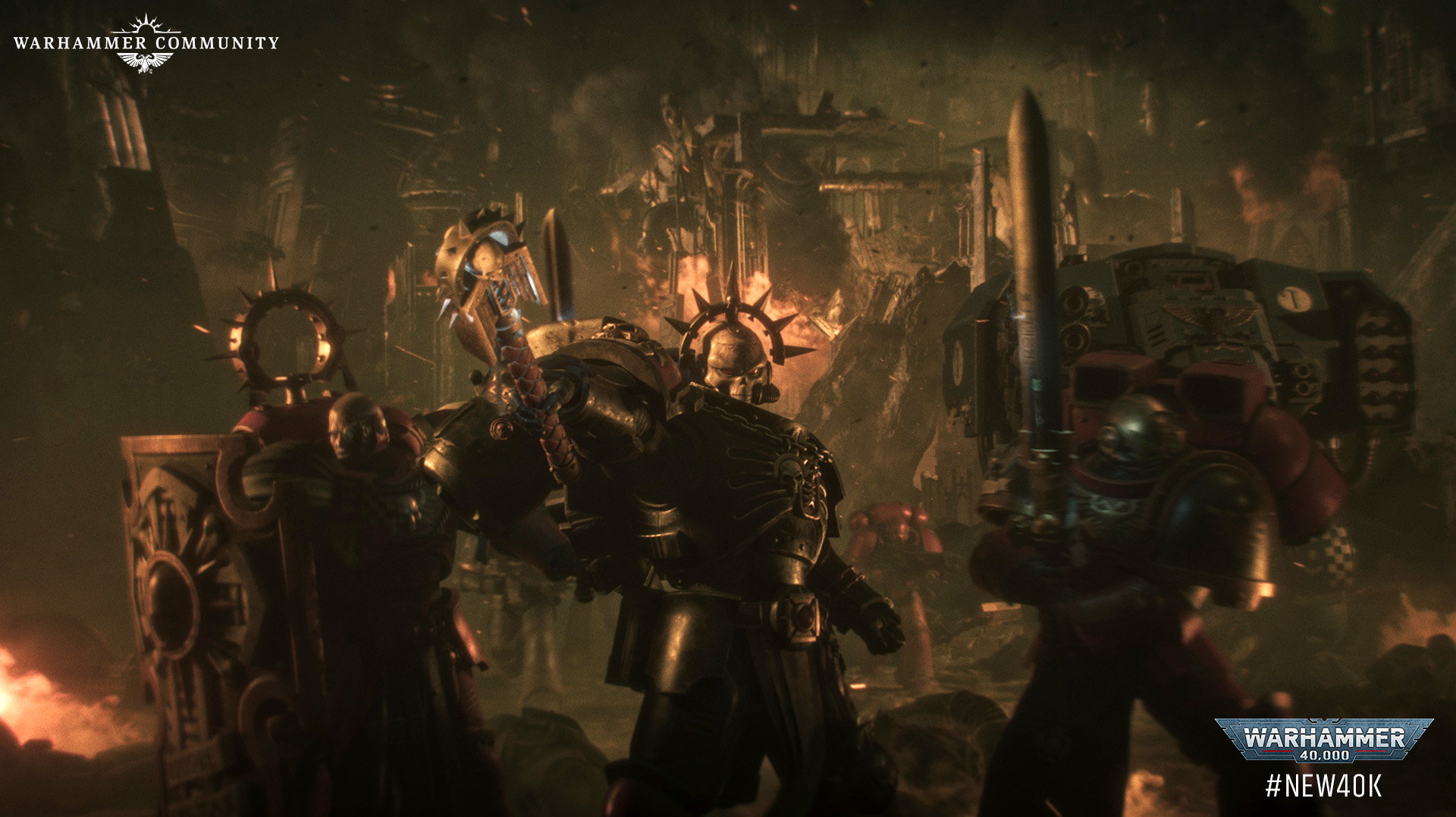
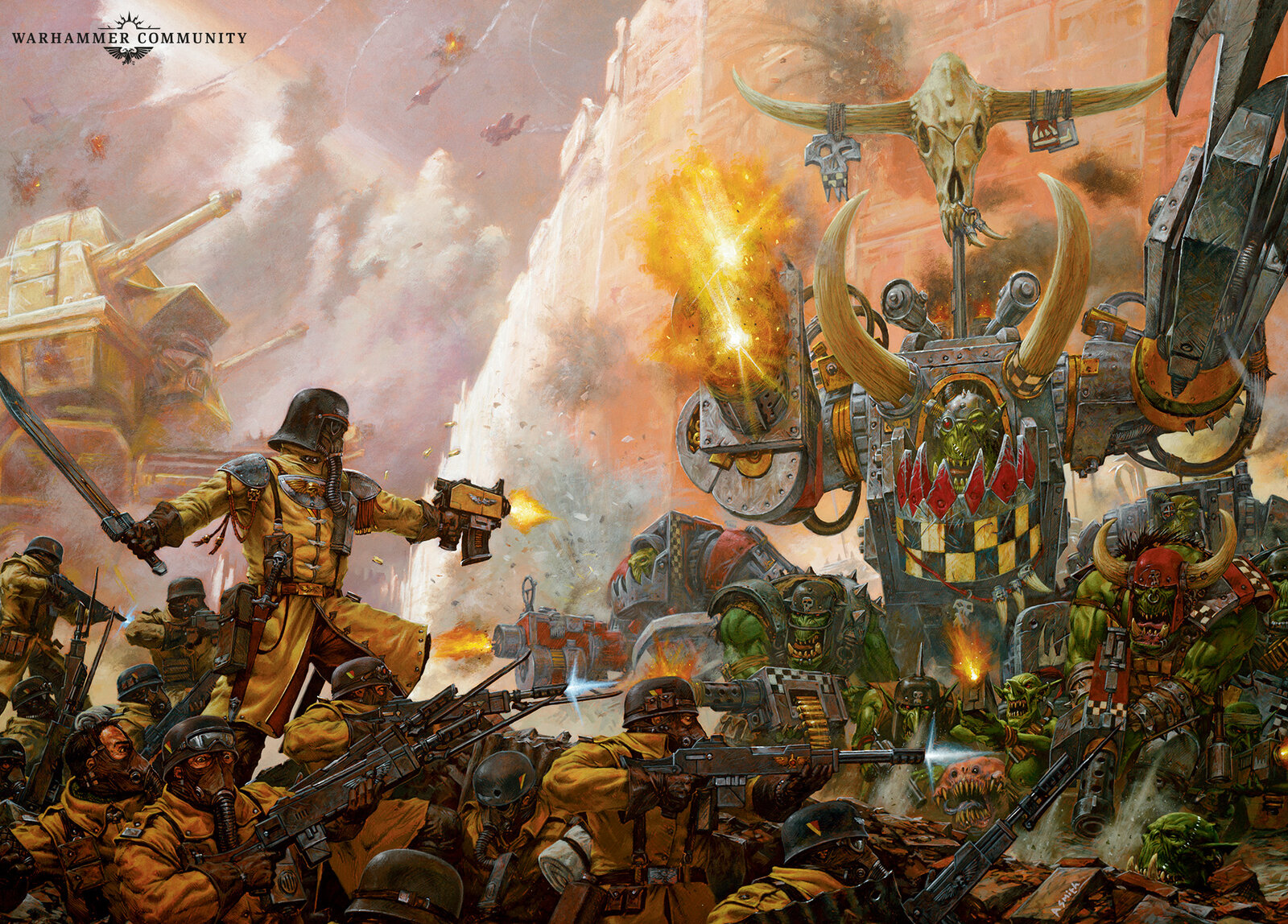
The Blood Angels are the clearest winner here. They’ve always been a faction that’s trying to make its money in melee and paying for it in the movement phase — you slam a Death Company off a Stormraven, roll the charge, and watch one model pose in the middle distance looking photogenic while your opponent’s overwatch kills the two guys who were supposed to finish the job. Under the new rules, that Death Company is in range of both target units, not one. The Armageddon box launches with a Blood Angels force and it’s not a coincidence. GW is previewing a faction that will feel radically improved to anyone who’s been bouncing off chip-damage overwatch for two editions.
I should caveat something. I don’t actually know whether 2” is going to feel like a lot in play, or whether it’s going to feel like 1” did in 9th edition — “slightly generous but still needs measuring.” Two-inch engagement was the Age of Sigmar standard forever and Sigmar players haven’t exactly stopped complaining about charge distances. Maybe the thing that actually mattered in 10th edition wasn’t the inch itself but the culture of measuring the inch, which won’t go anywhere. You can’t rules-change a tournament meta’s wrist habits.
The roll-then-pick charge reframes commitment
The second big change is easier to describe and harder to talk about. You used to pick a target, then roll to see if you’d make it. Now you roll 2D6 and any enemy unit within that distance can be the target of the charge. In practice this means charges stop being a yes/no question and start being an optimisation problem. You rolled a seven. You have three enemy units within seven inches. Which one do you actually want to fight?
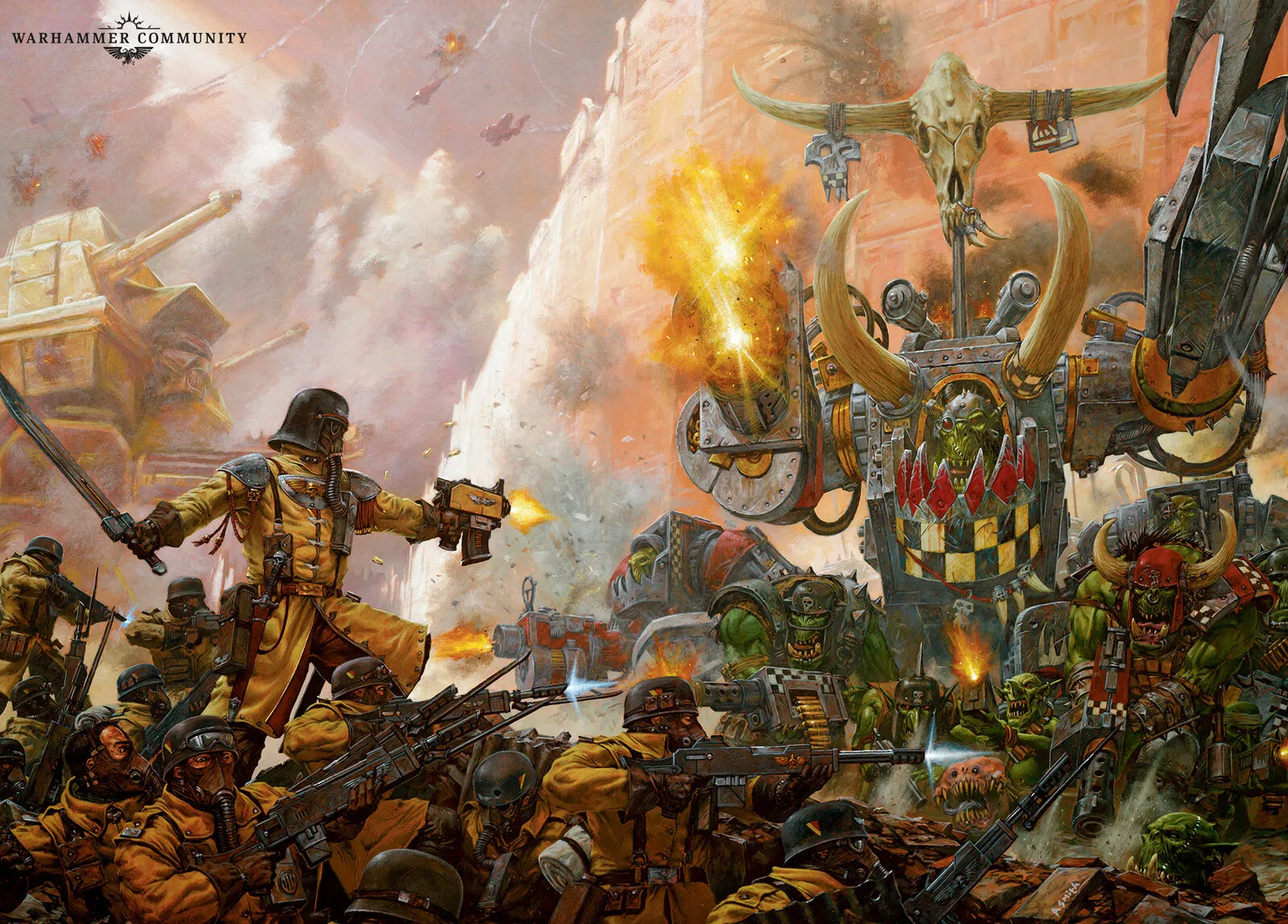
It’s the kind of change that sounds small and will rewire entire faction playstyles. For the Orks, it means a Boy mob that rolls hot gets to pick between hitting the weak gunline on the flank or the big tough squad that was the primary target, depending on what else has happened that turn. No more “I declared on the Intercessors, rolled an eleven, and now I’m stuck fighting Intercessors when the Terminators walked into range in the meantime.” The commitment moment moves from before the dice to after the dice, which is how Age of Sigmar has done it for five years (and I promise that’s the only time I’ll bring up Sigmar). It works there. 40K is finally admitting that Sigmar got there first on combat.
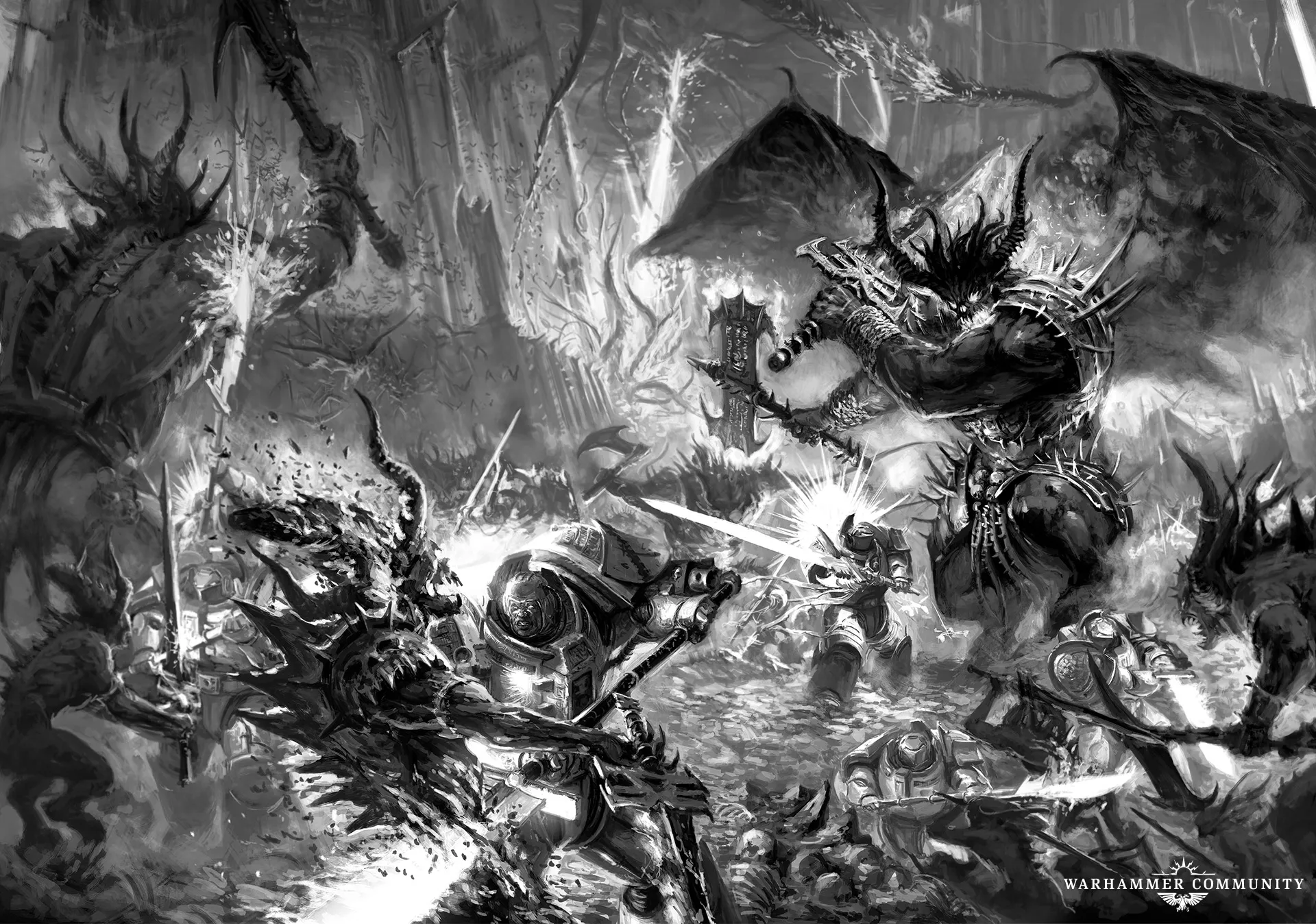
World Eaters are where the rolled-then-picked charge gets properly interesting. Khorne Berzerkers in 10th got Relentless Rage (+2 strength, +1 attack on the charge) and Blood Surge, and they’ve always been a faction that punishes you for standing slightly too close to a hedge. What they’ve never had is the ability to reach the target they actually wanted. The Index version of the army had universal Advance and Charge, and when that got stripped out of the Codex a lot of us quietly rebuilt our lists around Jakhals and World Eaters Chosen because Berzerkers just weren’t delivering. Under the new charge rules, a rolled charge that looked like a failure in 10th (a seven when you needed a nine) can now redirect into a weaker unit you weren’t planning for, and that turns a wasted turn into a saved one. Berzerkers don’t need to get better to get better. The rules around them just stop punishing misreads.
And honestly? Sometimes I’m not sure the Berzerkers deserve the help. They’ve had eighteen months of Angron rules being either busted or useless with nothing in between, and I don’t know if buffing their charge mechanics is going to fix the army or just make the broken version slightly more broken. I’ll believe it when I see a tournament meta that isn’t either “all Angron, no Berzerkers” or “all Berzerkers, no Angron.” GW’s World Eaters internal balance is the single most cursed thing in 10th edition and I am not optimistic 11th fixes it. But the charge change helps, at minimum.
Whole-army pile-ins are the sneakiest change
Everyone’s talking about the 2” and the rolled-then-picked charge. The pile-in change is getting less attention and it might end up mattering more. Here’s the new flow: you charge, you make your charge moves, and then before anyone swings a weapon, both players — starting with the active player — do their pile-in shuffles for the entire force. Everyone jockeys into engagement range. Only then do the attacks begin.
In 10th edition you’d see this sequence: your unit activates, piles in, fights, dies. Enemy unit activates, piles in (moving into the now-empty space), fights, dies. Models at the back of a squad would spend the whole combat just standing there because they couldn’t reach anybody. It was messy and it rewarded whoever had the initiative in the fight phase in a really lopsided way.
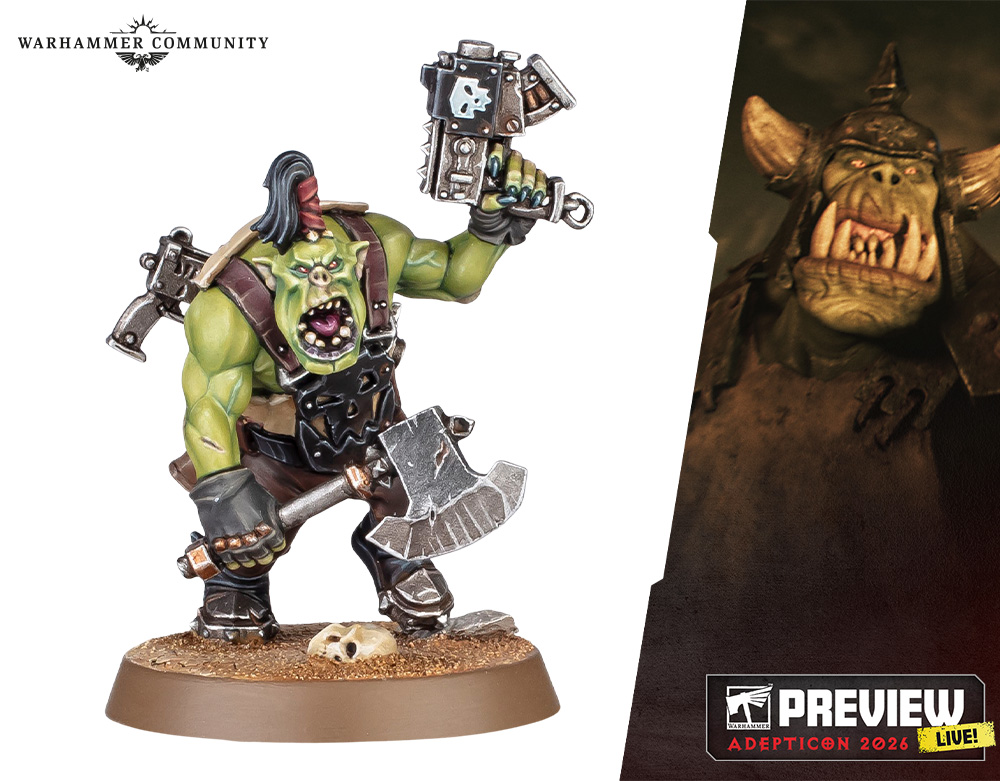
Now the pile-in is frontloaded. Your whole squad gets to shuffle forward before the first dice roll. Your opponent’s whole army gets to do the same. Everyone’s in combat, everyone’s swinging. This is a huge buff for horde units that used to leave half their attacks on the table because rear models couldn’t reach, and I think it quietly rewrites how you build Ork boy mobs. Twenty Boyz all getting to swing (now carrying choppa, slugga, and shoota each, which is a whole other conversation) is a different unit than ten Boyz swinging and ten Boyz standing behind them looking confused.
So yeah. Pile-ins. Big deal. Whole army moves at once. Everyone gets to fight. Feels right. Feels like how the fight phase should’ve worked all along.
One extra thing I keep thinking about
Strikes First is changing too, and in a way I think more people should be talking about. On your turn, your Strikes First units go before your opponent’s — even if the opponent’s unit also has Strikes First. That’s a significant shift for Blood Angels Death Company, for Striking Scorpions, for anything that used to rely on the tie-breaker of “I charged, so I go first even if you also have Fights First.” Now the rule is simpler: active player picks first, full stop. The charge bonus is a real bonus again, not a tie-breaker against another ability doing the same job. It’s buried in the patch notes but it’s going to matter in the first week of 11th edition when two Fights First armies meet and someone discovers the interaction at the worst possible time, which will probably be me, in a tournament, at 11pm, after two pints.
I don’t know how all these changes sum. That’s the honest answer. You can reason about each rule independently (longer engagement helps melee, roll-then-pick helps melee, whole-army pile-in helps hordes) but 40K has a long history of rules-on-paper effects not matching rules-on-table effects. Maybe 2” combined with Fights First changes means Berzerkers double down on the Charadon Chosen list that was already overtuned. Maybe the longer engagement range lets shooting armies screen more effectively because a 2” chaff unit does more work. Stuff interacts in ways you can’t predict from reading the preview.
The thing I am reasonably sure about is that the 1” dance is over. The basement-upstairs-in-Birmingham scenario doesn’t happen anymore, or at least happens a lot less. You don’t roll a nine, land a hair short, and watch your squad die in the open. The geometry of “almost in combat” stops being a thing. I’ll take that. Worth every other edge case it might introduce.
Right, Armageddon launches in June. Codexes stay valid. The detachment system and the codex roadmap are the big-picture changes, the terrain rules are the under-the-hood changes, and this one, the fight phase, is the one you’ll feel every turn. I’m going to dust off my Berzerkers.