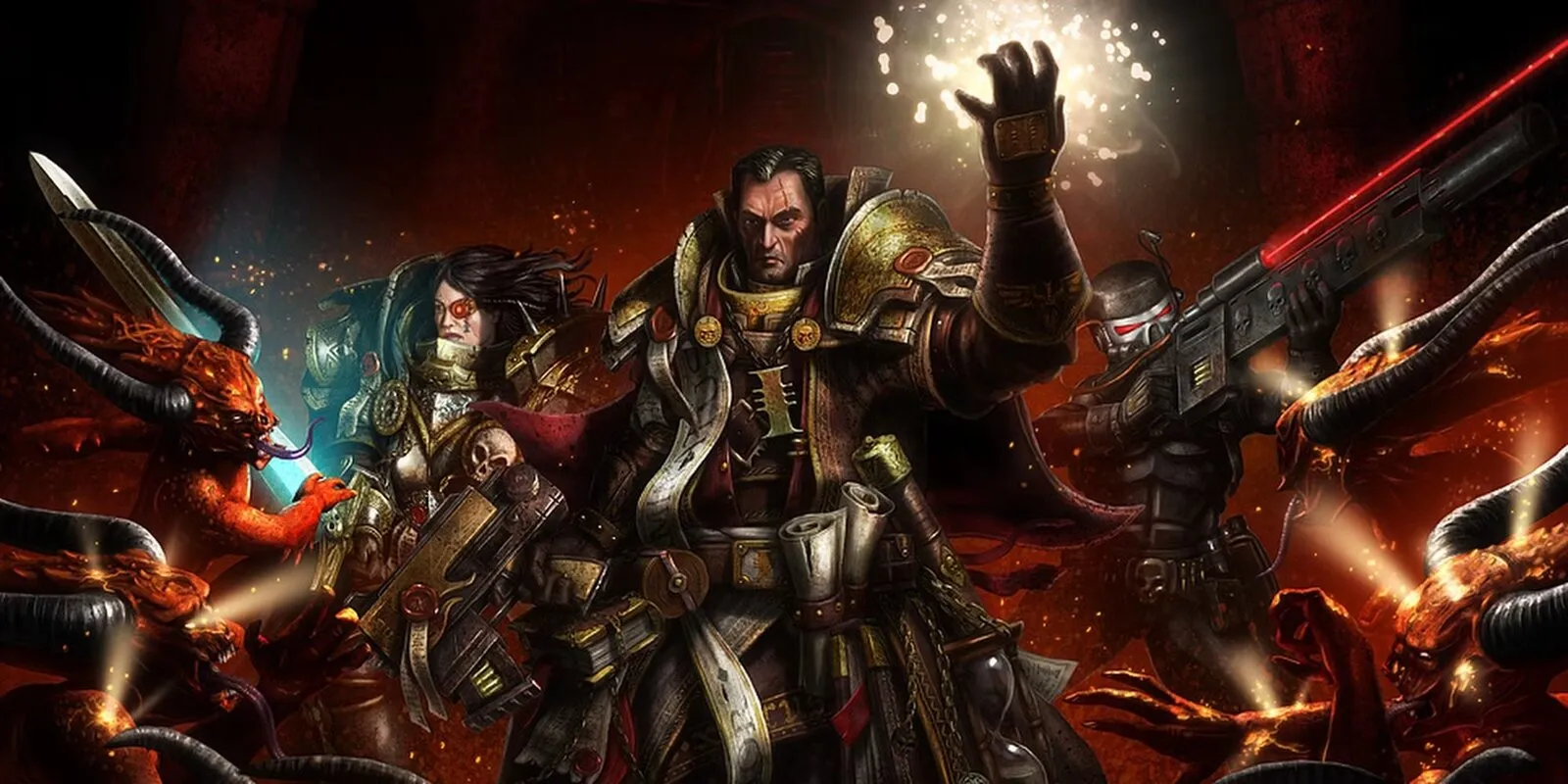
The Inquisition is the institution that makes the Imperium work and also the institution most likely to destroy it from within. Individual Inquisitors have the authority to condemn planets, commandeer Space Marine Chapters, and execute anyone they deem heretical. They answer to nobody except other Inquisitors and theoretically the Emperor himself. And they disagree with each other about basically everything.
If that sounds like a recipe for disaster, it is. The Inquisition’s history is full of Inquisitors fighting other Inquisitors, declaring each other heretics, and launching private wars that kill more Imperial citizens than the enemies they’re supposedly protecting everyone from. It’s one of the most fascinating institutions in 40K because it’s simultaneously essential and broken.
Origin: Malcador’s Parting Gift
The Inquisition was founded by Malcador the Sigillite, the Emperor’s most trusted advisor, during the final days of the Horus Heresy. As Terra burned, Malcador gathered a small group of individuals he trusted and gave them a mission: protect humanity from the threats that the Heresy had revealed. Chaos corruption. Alien infiltration. Internal treachery. Things the Imperium’s existing military couldn’t handle because the military itself could be compromised.
Malcador died on the Golden Throne shortly after, and his hand-picked agents became the foundation of the Inquisition. From the start, they operated outside normal Imperial authority. They had to. The whole point was that nobody should be above suspicion, which meant the people doing the suspecting had to be above everyone.
The problem, which has played out over ten thousand years, is obvious: who watches the watchers?
The Three Ordos (and Why They Hate Each Other)
The Inquisition is divided into three major branches, called Ordos. The Ordo Malleus hunts daemons and Chaos corruption. The Ordo Hereticus hunts witches, heretics, and internal corruption. The Ordo Xenos hunts alien threats and xenos influence. There are smaller, more obscure Ordos too (Ordo Machinum watches the Adeptus Mechanicus, Ordo Chronos studied time anomalies before they mysteriously vanished, which is suspicious).
On paper, this sounds organized. In practice, the three Ordos have wildly different philosophies, constantly overlap in jurisdiction, and frequently work at cross-purposes. An Ordo Xenos Inquisitor might be studying alien technology to use against Chaos, which an Ordo Hereticus colleague considers heretical use of xenos artifacts, leading to the second Inquisitor trying to arrest the first. This happens constantly.
Puritans vs. Radicals
The real fault line in the Inquisition isn’t between Ordos. It’s between Puritans and Radicals.
Puritans believe the Inquisition should enforce Imperial orthodoxy strictly. Chaos artifacts should be destroyed, not studied. Aliens should be exterminated, not negotiated with. Psykers should be controlled with extreme prejudice. Any compromise with the enemy is itself heresy.
Radicals believe that the threats facing the Imperium are so severe that any tool should be used against them, including tools that look an awful lot like the threats themselves. Radical Inquisitors use daemon weapons, ally with Eldar, study Chaos rituals to understand how to counter them, and generally do things that Puritans would burn them alive for.
Both sides think the other side is going to get humanity destroyed. Puritans think Radicals are one bad day from becoming the very heretics they hunt. Radicals think Puritans are so rigid that they’d watch the Imperium burn rather than pick up an alien sword to defend it. They’re both right.
The most extreme Puritans (Monodominants) believe the only acceptable response to any threat is extermination. Virus bomb the planet. No exceptions. The most extreme Radicals (Xanthites) believe you can literally use Chaos energy against Chaos, which is like trying to fight a forest fire with more fire. Sometimes it works. Usually it doesn’t.
The most extreme Puritans (Monodominants) believe the only acceptable response to any threat is total extermination. Virus bomb the planet. No negotiation, no subtlety. The most extreme Radicals (Xanthites) believe Chaos energy can literally be turned against itself. Horusians believe the Emperor can be reborn through Chaos, which is exactly as dangerous as it sounds. Recongregationist want to reshape Imperial institutions entirely. There are dozens of subfactions, and they spend as much time fighting each other as fighting actual threats.
Dan Abnett’s Eisenhorn trilogy is the best exploration of this tension in fiction. Eisenhorn starts as a Puritan and gradually slides toward Radicalism, and the reader is never quite sure when he crosses the line because there isn’t a clean line to cross. By the end of the trilogy, Eisenhorn is doing things that the version of himself from book one would have executed someone for. And the terrifying part is, you can follow his logic at every step.
The Retinue
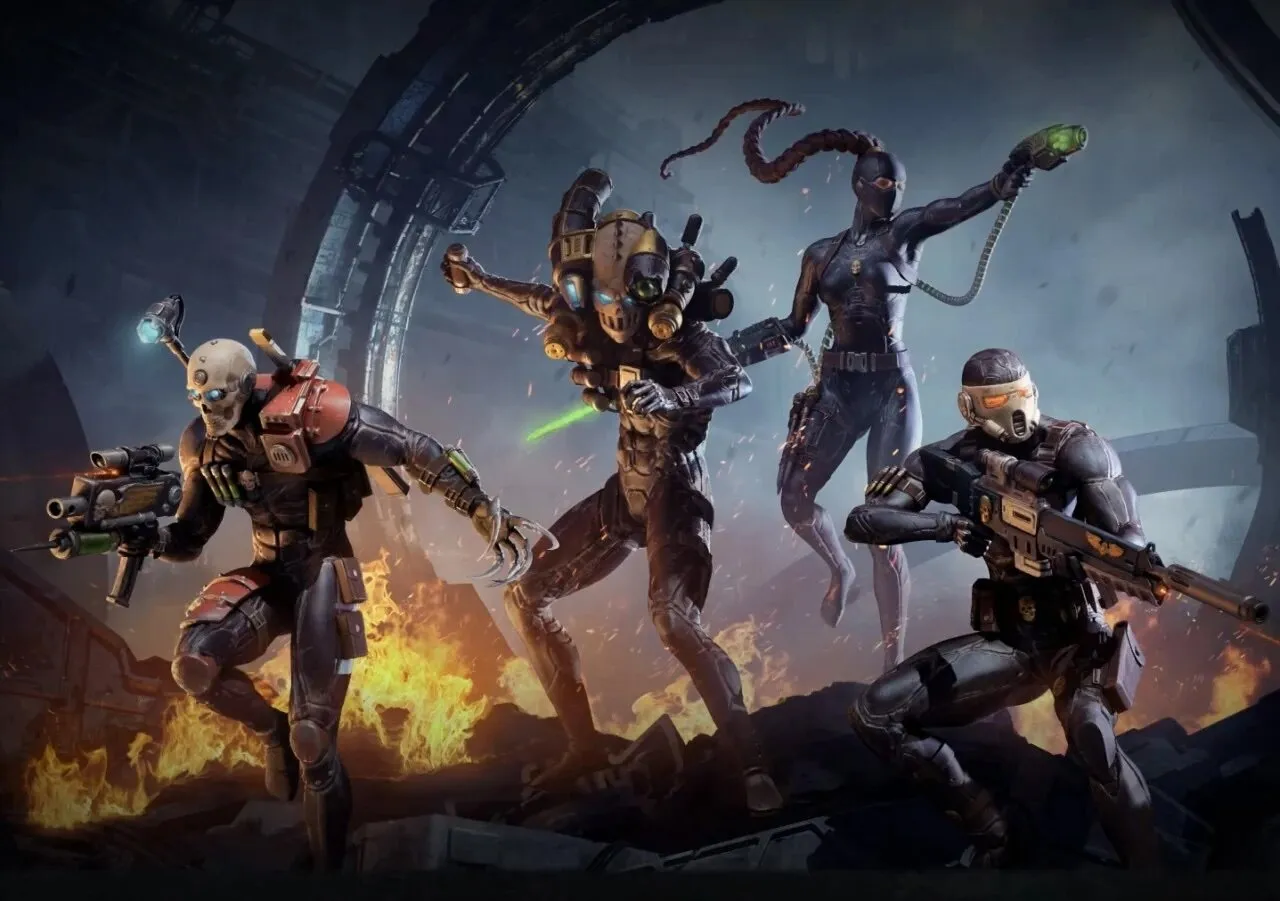
An Inquisitor doesn’t work alone. Each one assembles a retinue of specialists tailored to their methods and focus. A retinue might include former soldiers as bodyguards, sanctioned psykers for divination and combat, tech-adepts for electronic warfare, savants with encyclopedic knowledge, death cult assassins for wet work, and whatever else the Inquisitor decides they need.
The retinue system is one of my favorite aspects of Inquisition lore because it creates natural storytelling teams. Eisenhorn’s group (Bequin, Fischig, Aemos, Medea) reads like a classic RPG party, and the dynamics between an Inquisitor and their team are endlessly compelling. An Inquisitor with absolute authority over people who know what that authority actually means creates trust issues, loyalty tests, and moral dilemmas in every relationship.
On the tabletop, Inquisitors can be added to any Imperial army as an Imperial Agents attachment. It’s a great way to add flavor to an existing force, and modelling a custom Inquisitor with a unique retinue is one of the hobby’s most creative conversion opportunities.
What They Actually Do
The day-to-day reality of an Inquisitor’s job is less dramatic than “condemning planets” (though that does happen). Most Inquisitorial work is investigation. Following leads. Infiltrating cults. Interrogating suspects. An Inquisitor and their retinue might spend months or years tracking a single thread of heresy through a hive city.
When they do find something, the response scales with the threat. A small Chaos cult might get a discreet raid and some executions. A Genestealer infiltration might require mobilizing local Astra Militarum forces. A full-blown daemonic incursion could mean calling in the Grey Knights (the Ordo Malleus’s personal Space Marine Chapter, who are a whole other conversation) and possibly condemning the entire world to Exterminatus.
Exterminatus, the complete destruction of a planet’s biosphere, is the Inquisition’s ultimate authority and also its most controversial one. The decision to kill billions of innocent people to prevent a Chaos or xenos contamination from spreading is the kind of call that defines an Inquisitor’s character. Some do it too readily. Some agonize over it. Some refuse and then watch the contamination spread to neighboring worlds, which is arguably worse.
The Grey Knights are the Ordo Malleus’s personal Space Marine Chapter, and they’re worth mentioning here even though they deserve their own article. These are Space Marines specifically engineered to fight daemons, with psychic abilities and wargear designed for anti-Warp warfare. Every Grey Knight is a psyker. Their existence is classified at the highest level. And their standard operating procedure after a daemonic incursion is to memory-wipe or execute every non-Inquisitorial witness, because knowledge of daemons is itself a vector for corruption. The Space Wolves nearly went to war with them over this policy, and honestly, I see both sides of the argument.
Notable Inquisitors
The Inquisition’s history is full of legendary (and infamous) figures. Inquisitor Kryptman of the Ordo Xenos is both celebrated and condemned for his response to Hive Fleet Leviathan: he ordered the Exterminatus of dozens of worlds in the Tyranid’s path to create a firebreak, denying them biomass. It worked (sort of), but he also redirected the hive fleet toward Ork space, effectively creating an even larger war. He was later declared a renegade for exceeding his authority, which is saying something given that Inquisitorial authority is almost unlimited.
Inquisitor Czevak is the only human to have entered the Black Library of the Aeldari (the secret Harlequin repository of all knowledge about Chaos) and survived. What he learned there has made him one of the most hunted men in the galaxy, pursued by the Inquisition, the Aeldari, and Chaos forces simultaneously.
And then there’s Eisenhorn and Ravenor, whose novels are essentially the definitive 40K thriller fiction. If you’re reading this article and you haven’t read Abnett’s Inquisition books, that’s genuinely the next thing you should do. They’re the best entry point for 40K fiction and some of the best sci-fi thriller writing in the genre.
The Inquisition in the Era Indomitus
Guilliman’s return has thrown the Inquisition into an identity crisis, and it’s one of the most fascinating political dynamics in current 40K. For ten thousand years, the Inquisition operated with essentially no check on its authority. The High Lords were too fractured to rein them in. The military couldn’t challenge them. The Ecclesiarchy needed them. Then a Primarch walked back into the picture, and suddenly the Inquisition has to deal with someone who outranks them in every way that matters and doesn’t share their worldview.
Guilliman is a rationalist governing an irrational empire. He finds the Inquisition’s methods distasteful, its internal conflicts wasteful, and its obsessive secrecy counterproductive. But he also recognizes that the threats the Inquisition fights are real and that disbanding or restructuring the organization mid-crisis would be suicidal. So the relationship is tense. Guilliman tolerates the Inquisition because he needs it, and the Inquisition tolerates Guilliman because they can’t stop him. Some Inquisitors have embraced the returned Primarch as a sign of the Emperor’s will. Others view him with deep suspicion, questioning whether a ten-thousand-year-old Primarch who consorts with Aeldari (his resurrection involved Ynnari aid) is truly loyal to the Imperium’s interests.
The Ordo Hereticus in particular has a complicated stance on Guilliman. He rewrote Imperial law, bypassed established institutions, and created the Primaris Marines without Inquisitorial oversight. Any lesser figure would have been declared a heretic for a fraction of that. But you can’t declare a Primarch heretical without fracturing the Imperium, and the Inquisition knows it. So they watch. They place agents in his retinue. They monitor his alliances. And they wait, because the Inquisition is very good at waiting.
The Great Rift has also forced a practical reckoning. With the galaxy split in half and the Astronomican dimmed on the far side, Inquisitorial networks in the Imperium Nihilus have been cut off from central authority. Inquisitors stranded beyond the Rift are operating on their own judgment with no oversight whatsoever, which is exactly the scenario the institution was designed to prevent. Reports filtering back through Nachmund suggest that some of these isolated Inquisitors have gone fully rogue, building personal fiefdoms or falling to the very corruption they were meant to fight. Others have held the line with nothing but their retinues and their wits, which is the Inquisition at its best and its most desperate.
Why They’re Great for the Setting
The Inquisition is the perfect 40K institution because it embodies the setting’s central paradox. The Imperium needs the Inquisition because the threats are real and the consequences of missing them are extinction-level. But the Inquisition itself is so powerful and so fractured that it causes almost as many problems as it solves.
Inquisitors are great protagonists for exactly this reason. They have absolute authority but face impossible choices. They know more about the galaxy’s true horrors than anyone except maybe the Custodes, and that knowledge warps every one of them. Some become zealous. Some become cynical. Some go mad. Some become the very thing they were created to fight.
If you want to get into Inquisition lore, Eisenhorn is the obvious starting point. After that, the Ravenor trilogy follows Eisenhorn’s student and explores the detective/investigation side. For the Ordo Malleus, Ben Counter’s Grey Knights novels show the daemon-hunting side. And for a darker take, the Horusian Wars series by John French digs into the Radical factions that believe the Emperor can be reborn through Chaos.
The Inquisition motto is “there is no such thing as innocence, only degrees of guilt.” Ten thousand years in, that philosophy has produced an institution that’s saved the Imperium countless times and also committed atrocities that would make the Chaos Gods blink. If that’s not peak 40K, I don’t know what is.