The Equatorial Jungle of Armageddon runs in a belt across the planet’s middle: dense, toxic vegetation hundreds of kilometres wide, full of thermal vents, razor-edged megafauna, and enough electromagnetic interference to make standard auspex gear unreliable. It’s one of the few parts of Armageddon that isn’t ash waste or hive sprawl. The Guard has a name for it: the Green Hell. They’ve been trying to clear it since the First War, three hundred years ago, and haven’t managed it.
Someone has been in it for years. Several thousand of them, and none of them are Imperial.
Boss Snikrot, commander of the Red Skull Kommandos, has been operating out of the Equatorial Jungle long enough that Imperial Intelligence can’t agree on when exactly he arrived. They agree on one thing: before Ghazghkull’s fleet even translated out of the Warp for the Third War, Snikrot was already in position.
What Happens to the Reports
The first sign of contact is usually silence. A forward outpost goes dark, or a supply convoy arrives without its escorts, or a patrol due back at dawn hasn’t radioed in by noon. By the time a response force reaches the jungle edge, there’s nothing left to engage, just dead soldiers and a treeline nobody wants to push deeper into.
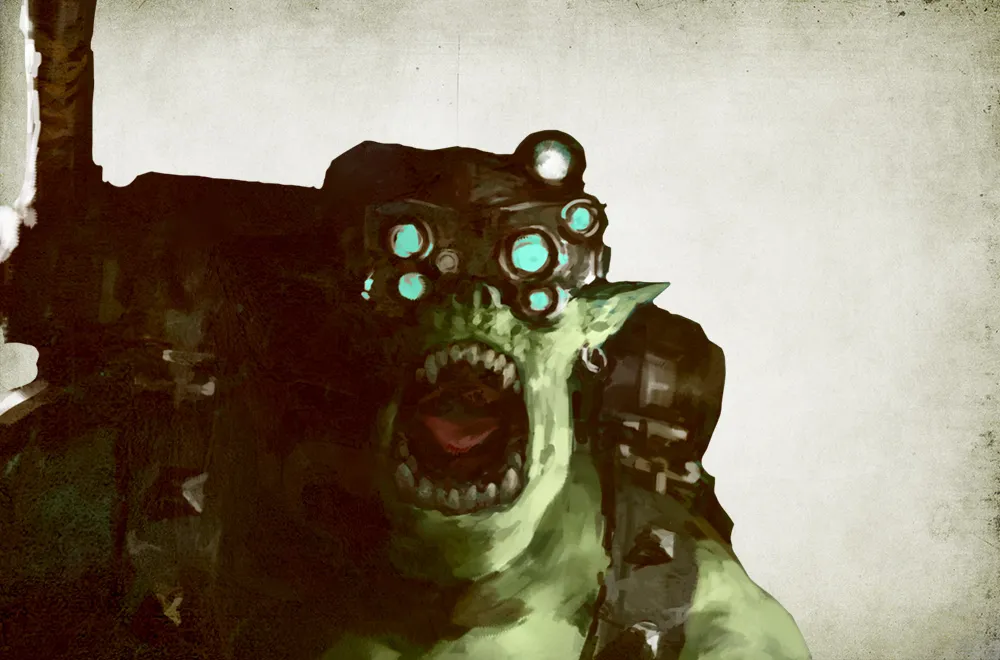
Warhammer Community’s Lore of Armageddon series describes Snikrot’s Kommandos as able to “melt back into the trees before guns can be trained on them.” Imperial commanders have taken to categorising these incidents as “ghost contact” in their dispatch logs, because there are no follow-up engagements to learn from, no captured equipment, and nothing useful to be gleaned about unit size or composition. The Kommandos hit something and vanish into the jungle. The next contact typically comes days later somewhere else entirely.
This is deliberate. The whole operational pattern is deliberate, and Imperial doctrine for fighting Orks was not written with patient ambush campaigns in mind.
The Clan That Makes Other Orks Uncomfortable
So, Blood Axes. The Ork clan that thinks too much. They had a separate clan army list in older editions, though I’ve read about it more than played it, since I got into 40K around 8th edition and the system had moved on by then. And I’ll be honest: there’s something about them I’ve always found slightly hard to get excited about. The appeal of Orks is the chaos of them, the noise and momentum and total commitment of a proper Waaagh. Kommandos creeping up on someone in the dark don’t scratch that particular itch for me.
But the clan’s philosophy is genuinely interesting on its own terms. Blood Axes use camouflage (actual camouflage, applied to armour and equipment with the explicit goal of being harder to see), they make feigned retreats, they negotiate mercenary contracts with other factions, they loot Imperial gear and use it correctly, and they execute coordinated withdrawals when the numbers are unfavourable because being available to fight tomorrow matters to them.
Every one of those habits makes mainstream Ork culture deeply uncomfortable. Goffs, Evil Sunz, and Snakebites look at Blood Axes and see Orks whose habits read as alien: they plan ahead, they wait for moments, they dress in human patterns. Other clans call it “umie thinking” and mean it as a slur. Some refuse to campaign alongside Blood Axes on principle.
Snikrot is a Blood Axe. His patience (years in a jungle, no visible tally of victories, no dramatic charge to recount) is completely consistent with his clan. He accumulates effectiveness, and Blood Axe culture is fine with that even when the victories aren’t celebrated.
I didn’t really understand how frustrating this makes them to fight until Kiran accidentally demonstrated it. We were playing Kill Team in 9th edition, his Tempestus Scions against my Kommandos, kitchen-table stuff at around fifty power level. There were sessions where his guys spent so much energy watching their flanks, pulling units back to cover objectives I might appear near, that they never applied any forward pressure. I had the Infiltrators keyword wrong for the first four games and we didn’t notice until Kiran looked it up mid-session. Even wrong, the pressure it put on his playstyle was substantial at that scale. I think about it whenever the Armageddon jungle sector comes up.
Snikrot’s Role in the Third War
Ghazghkull’s invasion looks like a deliberate multi-vector operation with distinct commanders filling distinct roles: Nazdreg Ug Urdgrub on resources and materiel, Ugrokk Glitztoof in Hive Tempestora, Orkimedes running engineering, and Snikrot holding the terrain nobody has been able to shift him from.
Every Imperial unit within range of the jungle belt has to account for the possibility of Kommando strikes on their flank or rear. Supply convoys need escorts, communication relays need watch details, reinforcement routes have to go the long way around, and all of that is combat power diverted from the front. Formations assigned to rear-area security can’t be pushed offensively elsewhere.
Armageddon’s hive cities are the campaign’s obvious focus, massive fortified sieges that eat whole campaigns by themselves, and the Equatorial Jungle has always been the part the wider lore covers least. It’s terrain that sits outside Imperial large-formation doctrine entirely. Clearing it would require levelling the whole belt or fighting through metre by metre, and commanders have historically done neither. Snikrot picked terrain where the Imperium’s usual playbook can’t really be run.
Snikrot wasn’t part of the landing force. He was in the jungle during the years between the Second and Third Wars, running low-intensity operations while the Imperium tried to consolidate. The Red Skull Kommandos haven’t started a new campaign with Ghazghkull’s return; they’ve had one running continuously, and the current war has just changed the tempo and given them more Orks to coordinate with.
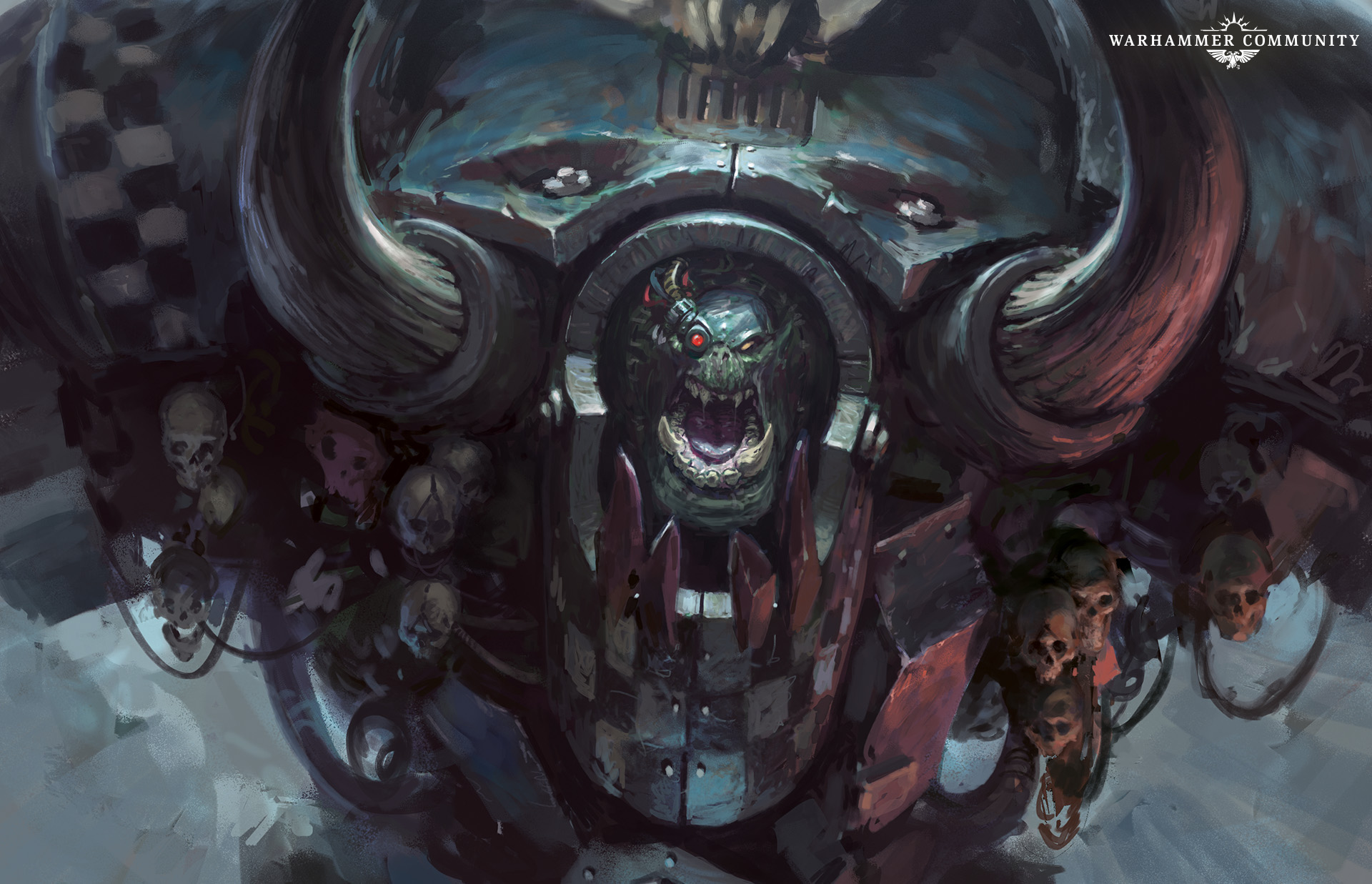
Whether that was under explicit orders (stay in the jungle, we’ll come back) or Snikrot’s own decision, I can’t say. The WarCom articles don’t cover it, and Ork command structures don’t operate the way Imperial ones do. The relationship between Snikrot and Ghazghkull has always been depicted as something more personal than formal in the lore. It’s possible he stayed because he was ordered to, or it’s possible he stayed because the jungle is good territory and there are always enemies nearby, though thinking about it those might not be meaningfully different reasons for an Ork…
What This Costs
Blood Axes don’t accumulate political capital the way other clans do. Ork cultural standing rises through visible, celebrated violence: charges that get witnessed by whole warbands, victories shouted across rival clans, skulls stacked where everyone can count them. A Kommando unit that cleared an Imperial position and left no surviving witnesses has nothing to hang a story on afterwards.
Snikrot has been in that jungle for what the evidence suggests is well over a decade (longer than I’ve been in the hobby, though I’m not sure that comparison reflects well on either of us). He has no formal warboss title. What Imperial commanders have recorded is that he’s the most persistent and least quantifiable threat in the campaign zone, and Ork society isn’t built to translate that kind of record into standing.
I keep wanting to call Ghazghkull’s decision to build the invasion’s flank suppression around Snikrot’s continued jungle presence an unusual move, and then I remember that Ghazghkull’s entire career has been full of things other Orks don’t do. The mega-tellyshokka, the coordination of four distinct lieutenants with distinct roles. Snikrot in the jungle might just be the same philosophy applied to terrain, which is a different kind of observation than the one I started out trying to make.
Wazdakka’s Speedwaaagh is getting coverage in the lore series, and the hive city fronts are where WarCom has been reporting the decisive battles. Snikrot’s jungle operations show up mostly as ghost-contact dispatches with little else attached.
Cultural rehabilitation in a Waaagh usually means doing something undeniable in front of a large enough audience to be talked about. Snikrot’s method for the last decade hasn’t been built around audiences.
Still There
The Lore of Armageddon series notes that whenever Imperial forces think Snikrot might have left on one of his periodic missions for Ghazghkull, another outpost in the jungle sector stops transmitting. The Kommandos maintain operations without him present. Dispatches from that sector keep arriving with gaps.
The current campaign around Armageddon’s hive fronts will eventually resolve in some direction, probably several directions at once. The jungle has been contested since the First War, and the reports coming out of it haven’t changed much across any of those decades.