“All empires must fall to ruin and despair, as mine has now done. Yet, when your own wars are won and you stand amid your triumphs, remember that the fate which has befallen me will in turn be your own. Look for me then, for at the edge of ruin I shall return to remind you of the fate of empires.”
That’s apocryphal, attributed to somebody called the Unspeakable King on the evening he lost his war, back in Old Night. Forge World stuck it at the head of the Thramas chapter in The Horus Heresy Book Nine: Crusade, the last of the Black Books, published 2020. It’s where the phrase “the edge of ruin” comes from, and it’s a bit of throat-clearing that most people skim past on the way to the fleet lists.
WarCom pulled that section out on the 13th for their Pages from the Black Books run, having just finished a stretch on the forge worlds that backed the Warmaster. Their framing was that the Heresy took years of groundwork, that allegiances had to be secured and legions brought to heel, and that certain belligerent brothers needed convenient new assignments at the far edge of Imperial space. Then they signed off with “Have fun on the eastern fringe of the galaxy, Lion El’Jonson.”
It reads as a gag. It’s also an accurate summary of a three-year war that killed a Legion. The first battle of the Horus Heresy got fought on an assignments sheet, years before Isstvan, and the casualty figures for it sit in a Forge World book most people own for the army lists.
What the Edge of Ruin section is actually doing
Book Nine names three primarchs as the genuine problems. Lion El’Jonson, described as a warrior without equal whose loyalty couldn’t be subverted. Sanguinius, who held the trust of every one of his brothers, a thing Horus had envied for a long time. And Roboute Guilliman, who had the biggest army in the Imperium and the strategic brain to use it. Turning, buying, bullying and outfighting covered the rest of the roster. These three got orders.
The mechanism is the part I find genuinely nasty. Ullanor made him Warmaster, which meant authority over every Expeditionary Fleet in the Great Crusade, second only to the Emperor. The Black Book’s wording is that the Lion and the bulk of his forces were sent beyond the borders of the Imperium “by official writ and warrant of the Warmaster.” It was a legal order, correctly issued, and the Lion’s own staff would have logged it on the way in.
Anyone who has worked in an office has watched a version of this. You don’t argue with the awkward colleague, you just make sure the rota puts them on the far site the week of the meeting where the decision gets made. Horus was doing that at galactic scale, with fleets, and it worked for years before anyone noticed there was a pattern.
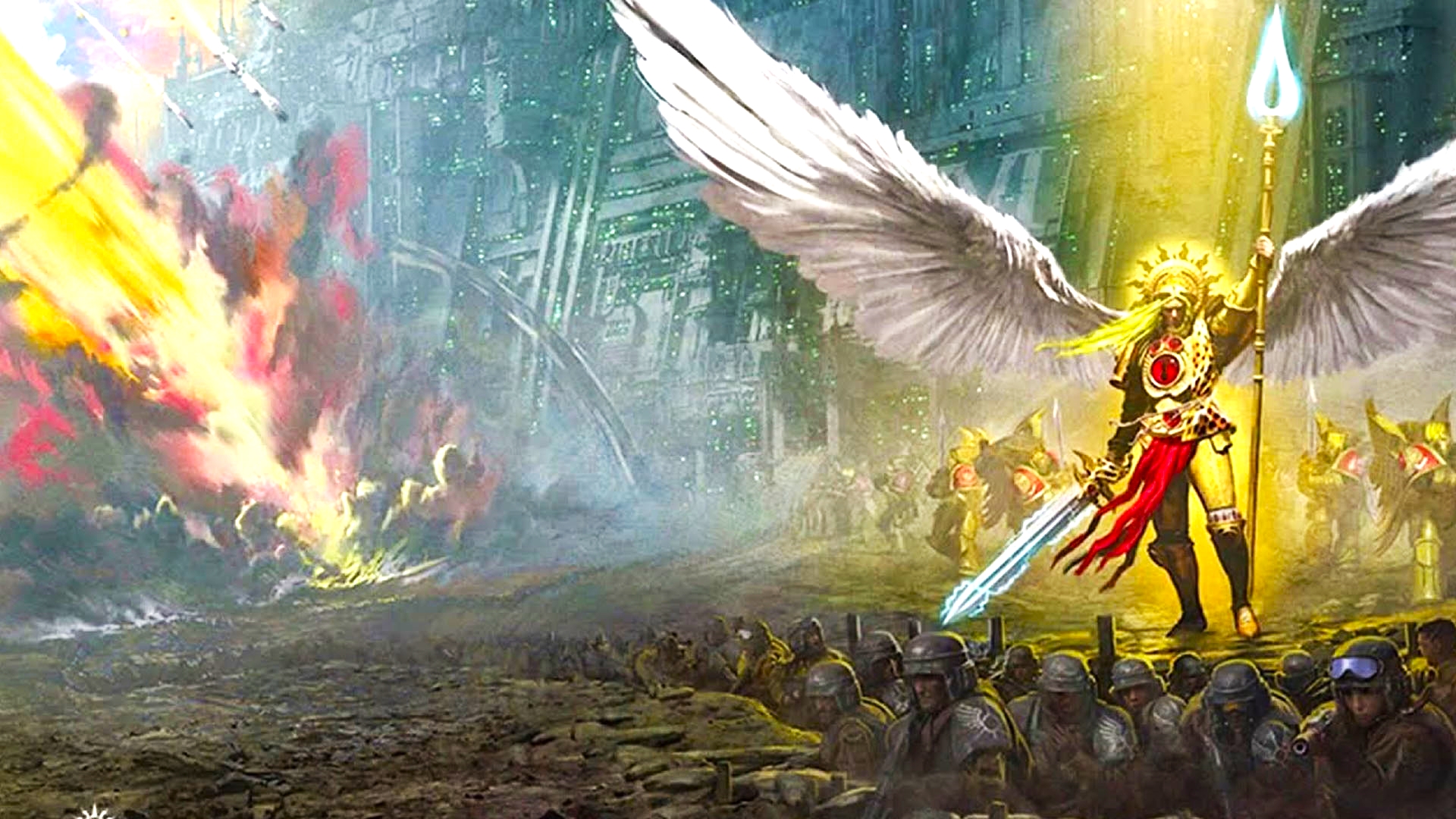
Sanguinius got the worst version. The IX Legion was ordered to the Signus Cluster to put down what was described as an uprising, and Signus had already been seeded with cultists and witch-cabals answering to Horus, waiting on a signal. By the time the Blood Angels arrived, a Greater Daemon of Slaanesh called Kyriss ruled the system and the population was either dead or livestock. Sanguinius fought Ka’bandha there, got his legs crushed, and lost roughly five hundred marines in the seconds after.
Guilliman was too big to send chasing something small, so the orders brought him somewhere instead. The Ultramarines were told Calth needed defending against orks out of the Ghaslakh Empire, which is a completely reasonable thing for a Warmaster to say, and Guilliman assembled his Legion at a muster point the Word Bearers already had covered. Jaghatai Khan is the odd one out. Horus didn’t want the Khan dead, he wanted him parked, so the White Scars sat on Chondax killing greenskins until somebody could get round to recruiting him.
The Lion took the posting and didn’t say a word
The line from Book Nine I keep going back to: isolated as ever, the Lion “made little complaint at such a task, accepting the grim duty as if it was his due.”
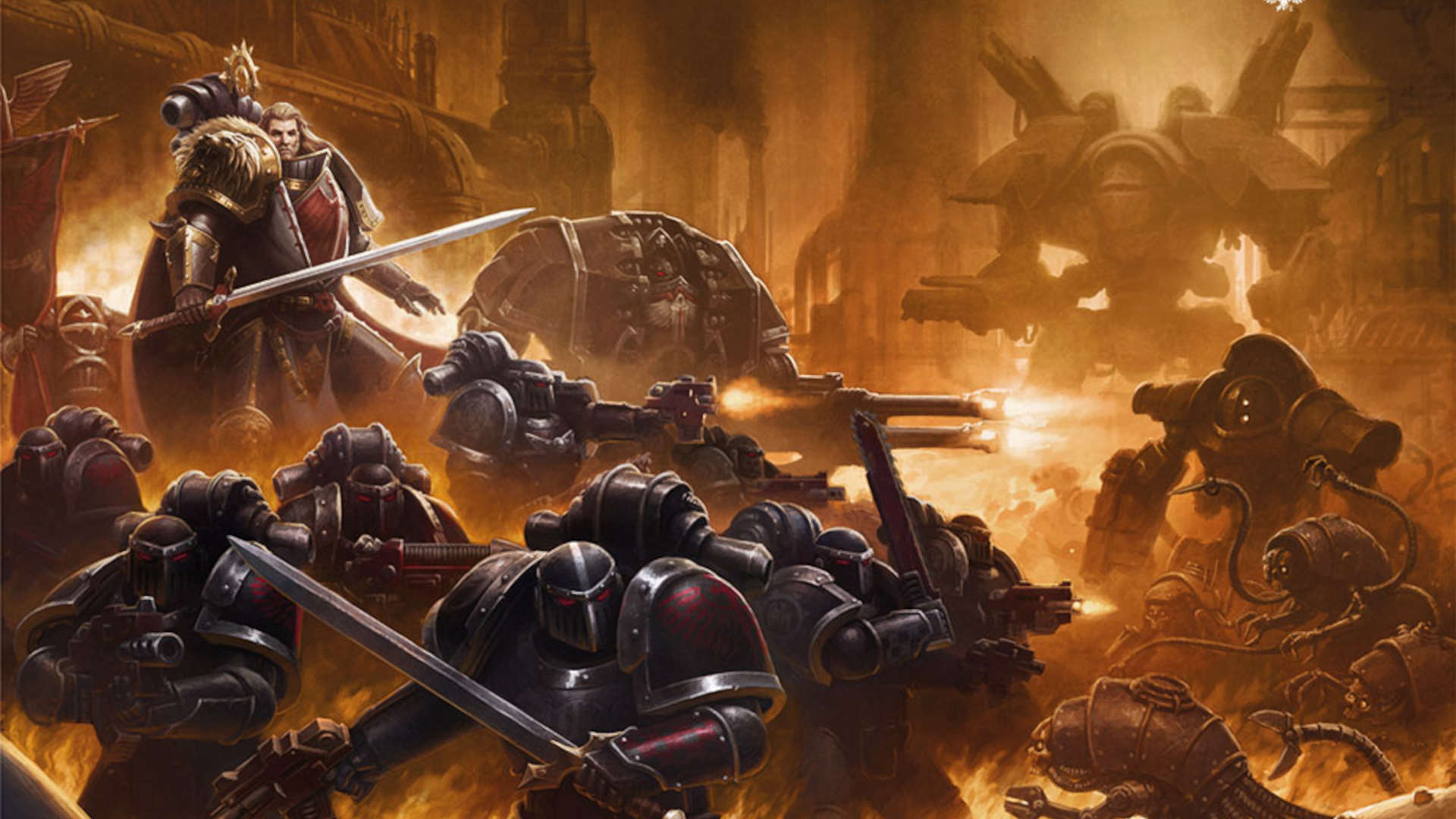
That is such a precisely miserable piece of characterisation. Horus needed the most dangerous swordsman in the galaxy to remove himself voluntarily, and the Lion’s own personality did the job. He’d been given the unglamorous, unwatched, out-past-the-lamplight work his entire career, he’d built an entire Legion culture around not explaining himself to anyone, and when the trap came dressed as another thankless assignment he took it, because that’s what he always took. There’s no scene anywhere of Horus having to work at it.
So yeah, the Lion. Sent away. Doesn’t complain, never does, that’s sort of his whole deal. And then he’s gone for, what, the entire first act? He turns up at Terra after it’s finished. Which everyone kind of knows, but nobody says out loud that it’s because of an admin decision made before the war even started.
I read most of this off Pete’s copy of Book Nine, at his kitchen table, on an evening I’d driven over specifically to play a game. He’s had the black hardbacks since Forge World was still shipping them, and I’ve never bought a single one. I got about forty minutes into the Thramas fleet strengths and casualty tables and the game never happened, and I handed it back with a bent dust jacket and a coffee ring that I did not mention. Anyway, I’ve since been that bloke at the store confidently explaining the Heresy plot to people, having read perhaps a fifth of the novels and skimmed one campaign book at somebody else’s kitchen table…
They go for silly money now, by the way. There was a copy of Book Six on the secondhand shelf at my local store in the spring, no slipcase, corner dinged, and the sticker said £110. It sat there for about a fortnight and then it didn’t.
Three years of Thramas cost Horus a Legion
After Isstvan V, Horus called the traitor primarchs together aboard the Vengeful Spirit, five in person and three as hololiths. Curze got the eastern fringe. Take the VIII Legion and the whole of the Legio Ulricon to Tsagualsa, burn Heroldar and Thramas, protect the flank of the coming push on Terra, and above all keep the Dark Angels busy. Thramas mattered because it held Mechanicum forge worlds still loyal to the Emperor, and because the Dark Angels were already reported operating in the sector.
The numbers are worth having in front of you. More than 100,000 Night Lords, 200 capital ships, 600 escorts, plus an entire Titan Legion. Against them, around 70,000 Dark Angels with 300 capital ships and a similar screen of escorts, some White Scars, a few Ultramarines, and the local Thramassi Nightwatch. It ran from 007 to 009.M31. Three standard years, which is longer than my Cadians have existed as a painted force and roughly as long as my daughter has been able to hold a conversation.
Curze tried to win it with a conversation first. He left a beacon in a Dark Angels patrol lane, both primarchs came down to Tsagualsa under parley with two warriors each, and it stayed civil right up until the Night Haunter said something unforgivable and the Lion hit him. Curze got on top and was strangling him when Corswain put a sword through Curze’s back from behind.
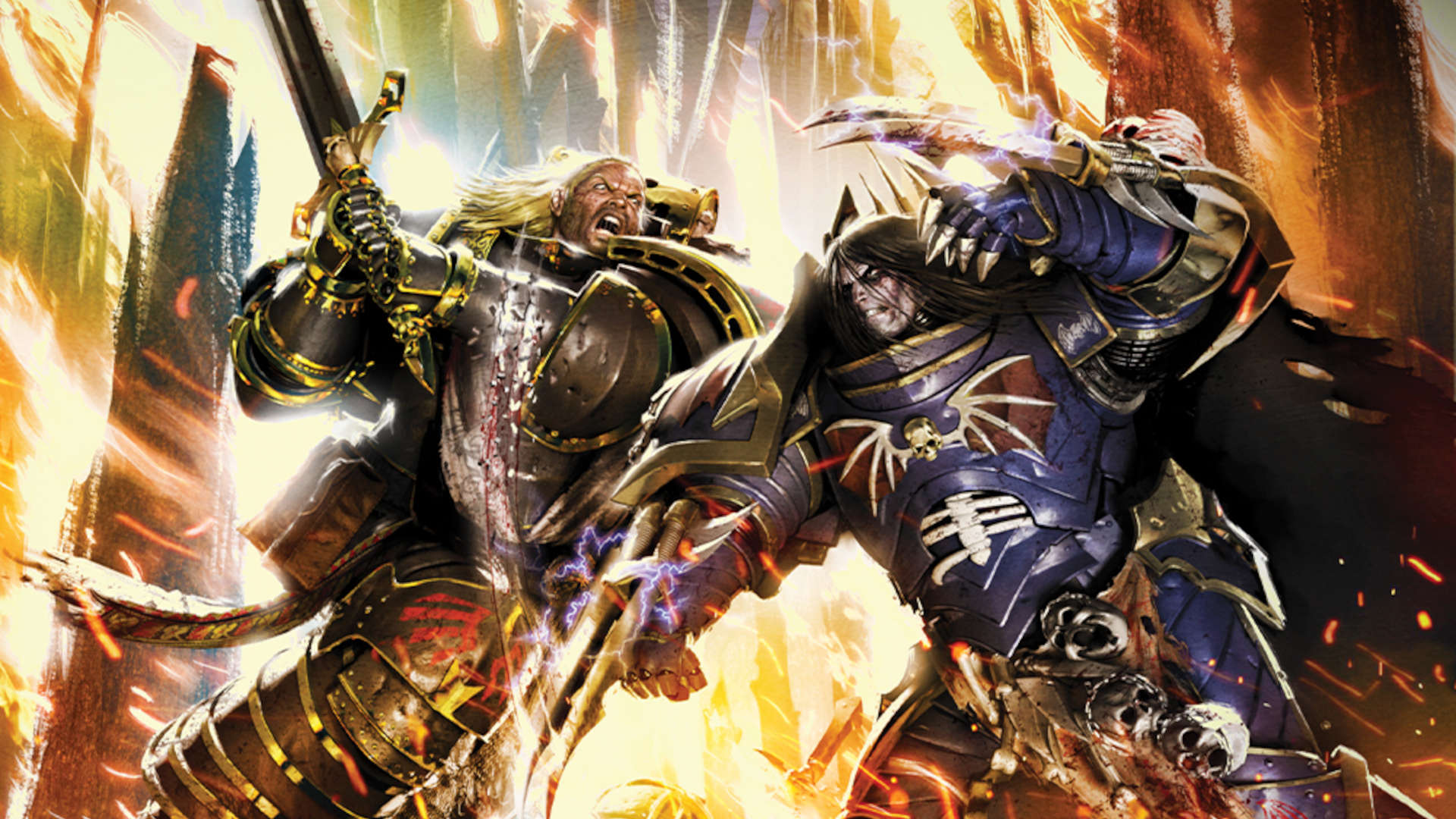
Then the Lion set his ambush, and the VIII Legion stopped being an army. The Legio Ulricon was annihilated in transit, its transports cracking open and spilling Titans into the void, which then went through the Night Lords fleet like shrapnel. A quarter of the Legion’s ships gone. Sevatar captured aboard the Invincible Reason along with what was left of the Atramentar, all but a dozen of them dead in the boarding action. Curze himself spent months loose in the guts of the Dark Angels flagship, hiding in the maintenance decks from search parties and from his brother, until the fleet reached Sotha and he slipped away.
Sixty thousand Night Lords died at Thramas. The Legion never fought at full strength again after it, and what survived came apart into warbands, some following Horus to Terra and some just going pirate. Horus filed that as a success. The Dark Angels missed the Siege entirely, which was the stated objective, and nothing in the record suggests he ever went back and looked at the price.
I’ve been writing this like the roster was a masterstroke, and I want to push back on myself for a second. The Ruinstorm was going to happen. Astropathic communication across the galaxy was about to fail comprehensively, the Lion got tangled up in Imperium Secundus for years afterwards regardless, and there’s a decent argument that the warp would have kept the Dark Angels away from Terra without Horus lifting a finger. So maybe he spent a Legion buying something he’d have got for free. I don’t fully believe that, because the Night Lords being at Thramas is why the Lion stayed in the east chasing them rather than turning for home, and you don’t get the second thing without the first. But I sat with it for a while.
Caliban was on the other end of the same order
The bit that doesn’t get counted. While the Lion was three years deep in a knife fight on the eastern fringe, then years further into the Imperium Secundus mess, nobody senior was watching Caliban. Luther had been left behind there with a garrison, a grievance, and no supervision for the better part of a decade.
Horus wrote an order to keep one primarch away from a siege. It also left the Dark Angels’ homeworld unsupervised long enough to rot, produce the civil war that cracked the planet, and hand the I Legion the ten-thousand-year secret its successors are still chasing across the galaxy. Nobody at that conclave aboard the Vengeful Spirit mentioned Caliban at all. It isn’t in the orders, it isn’t in the objectives, and Book Nine doesn’t raise it until the aftermath section a long way further on.