There’s a Kroot Hunting Pack box on my desk that I haven’t opened. Been there three weeks. I keep thinking about the Shaper model inside. From the photos, the way he holds his staff is different from the old metal sculpts, angled wrong in a way that suggests he might actually use it rather than carry it.
The Kroot absorb genetic material from whatever they consume. That’s been in the lore since 3rd Edition — it was always the “cool weird fact” I filed away and immediately forgot because I was too busy thinking about Fire Warriors and whether the T’au gun line was worth the entry fee. The implications are stranger than I gave it credit for. A Kroot who eats a predator starts developing predator traits over generations. A kindred that hunts specific prey for long enough shifts in that direction physically. The Shapers manage this deliberately, across decades, across multiple generations of warriors. So they’re doing something closer to directed genetic engineering, using mealtimes as the mechanism, and the Shaper caste has been running this programme for longer than the T’au have had interstellar travel.
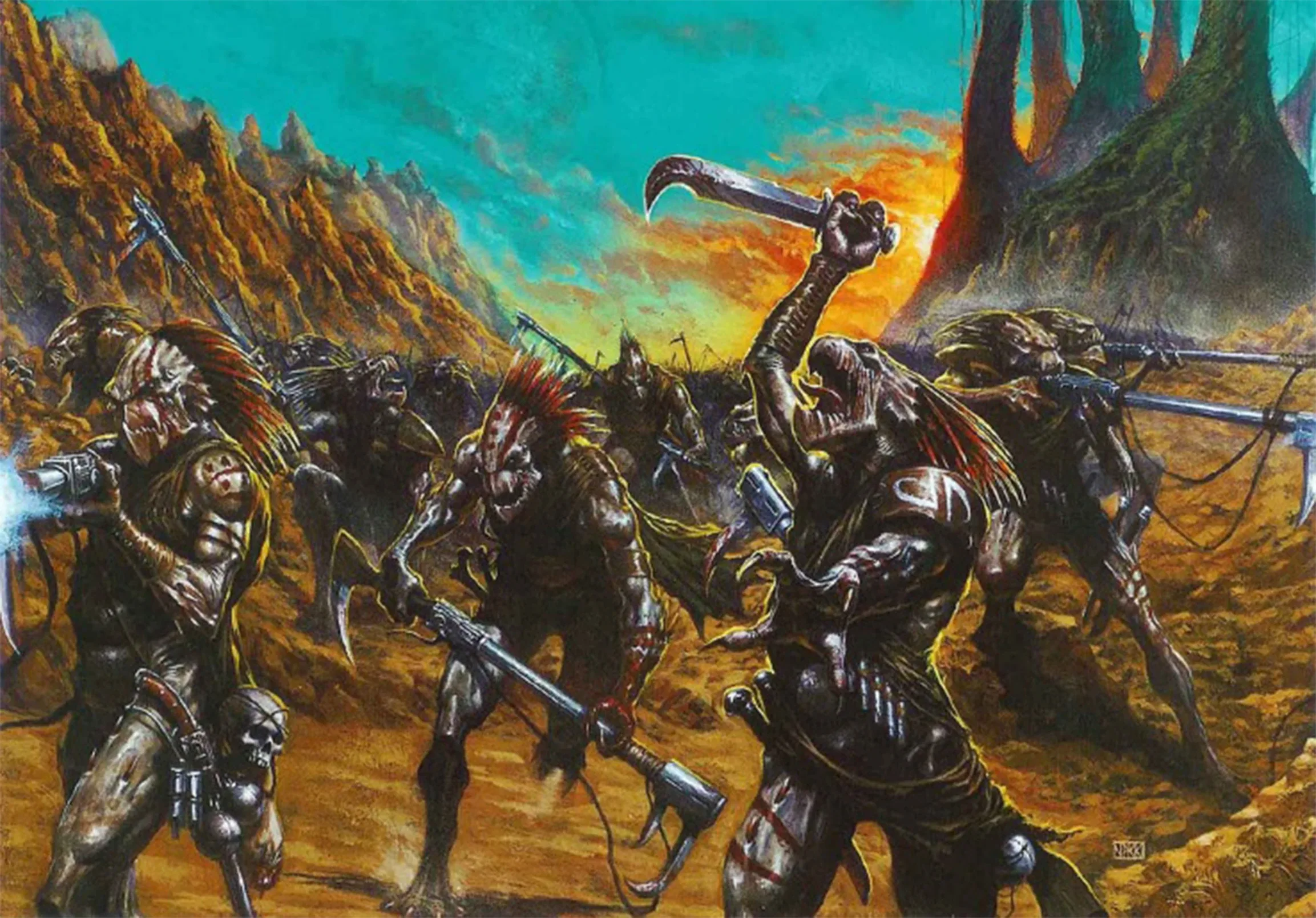
A Kroot Hound is the same underlying genetics as a Kroot warrior, just a lineage that ate canine prey for too many generations and crossed a threshold it couldn’t return from. Krootox are the same story in a different direction: Kroot who consumed something brutish and degraded into lumbering quadrupeds. The Shapers carry this history as a warning. Their actual role in Kroot society is preventing it from happening again to anyone who isn’t already a Krootox. Some of the older model sculpts showed Krootox as recognisably similar in body plan to Kroot warriors, just altered and enlarged. I noticed this last year, holding an old metal Kroot Carnivore next to a Krootox from a bits box at my local store, thinking: same skeleton.
The Direction of Descent
The Kroot once had something more than a collection of wandering mercenary kindreds. The lore holds the specifics back (GW has been deliberate about this across every codex and Black Library piece that covers them) but there are hints of a past age, something approaching a coherent interstellar civilisation, before a significant portion of the population made the wrong dietary choices and devolved. The Shapers, across every kindred, across every war they fight for whoever pays, are working backward from that point. They track which prey produces which traits. They guide entire bloodlines toward outcomes that won’t be visible for generations. The Kroot have institutional memory that spans centuries, for a species with no written records the T’au have ever managed to decode.
The Greater Good is a partnership of convenience. T’au space is enormous and full of biologically interesting prey. Kroot kindreds fighting T’au wars get access to alien genetics they’d never encounter otherwise. The T’au provide infrastructure; the Kroot use it for their own purposes. The Ethereals have probably worked out that the Kroot serve for pragmatic reasons rather than philosophical ones, and decided that’s fine as long as they keep showing up. The actual scope of what’s being run alongside the alliance seems to have gone unexamined.
Kiran, who plays Death Guard and has strong opinions about every faction in the game that isn’t Death Guard, thinks I’m wildly overthinking this. We had this argument a few months back while he was building a Tallyman and I was failing to get a Rubric Marine’s shoulder pad to stay put — the kind of session where nothing goes right and you spend most of it just holding things together and hoping the glue cooperates. He reckons the Kroot serve the T’au because mercenaries go where the money is, end of story. I pointed out that Kroot kindreds have fought for Chaos warbands, Ork waaghs, and individual Rogue Trader expeditions when the terms suited them. Kiran said that proved his point. We went back and forth for twenty minutes longer than either of us meant to. He’s probably not entirely wrong. I just don’t think it’s the full story.
Mercenaries Across the Galaxy
Kroot, right. They fight for basically anyone. Always have. The payment isn’t usually money — it’s the right to eat what they kill. Their own dead too, in some accounts, which the T’au find unsettling even after centuries of working together. Canonical records put Kroot Kindreds in Chaos raids, Ork waaghs, Rogue Trader expeditions. They show up, fight, eat what they’re allowed to eat, and move on.
What this makes the Kroot in the broader alien threats landscape of 40K is genuinely unusual: a species with no permanent allegiance, no homeworld they’re fighting to defend in any deep sense, and a long-term agenda that doesn’t require any of their employers to win. The T’au are useful because they’re stable, have good hunting grounds, and expose Kroot kindreds to a wide variety of prey. The philosophical dimension of the Greater Good is a framing the Kroot seem to have accepted as part of the deal without necessarily believing it.
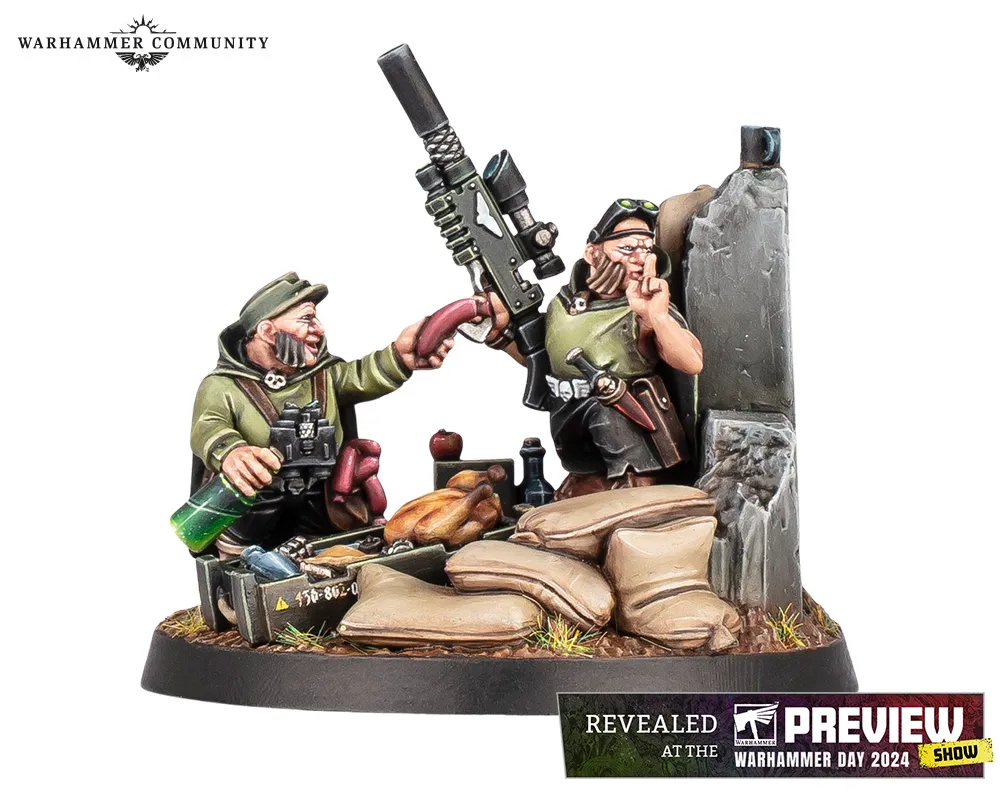
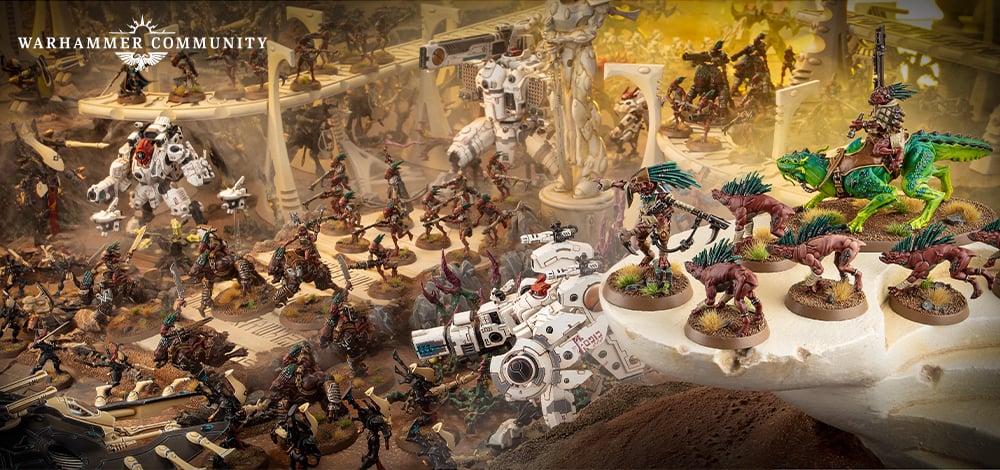
The 2024 model range update gave the Kroot something they’d been missing for a long time, since before I got into the hobby. The Kroot Hunting Pack collected Warriors, Hounds, and Krootox Riders into new plastic sculpts for the first time in about twenty years. The Hounds (great little nightmare dogs, those) are posed mid-sprint rather than standing around looking vaguely predatory. Tournament players noticed: they’re fast, surprisingly durable relative to their points cost, and Krootox Riders hit harder in melee than anything else in the T’au roster. Goonhammer started calling the resulting army list “Kroot Cocktail” — T’au forces that de-emphasise battlesuits and lean into Kroot auxiliaries instead. The detachment has been performing well in 11th Edition army-building, in a way nobody predicted.
I specifically told Kiran, probably a year ago, that running Kroot-heavy lists was a waste of points. I have not raised this subject with him since.
The Cocktail and the Lore
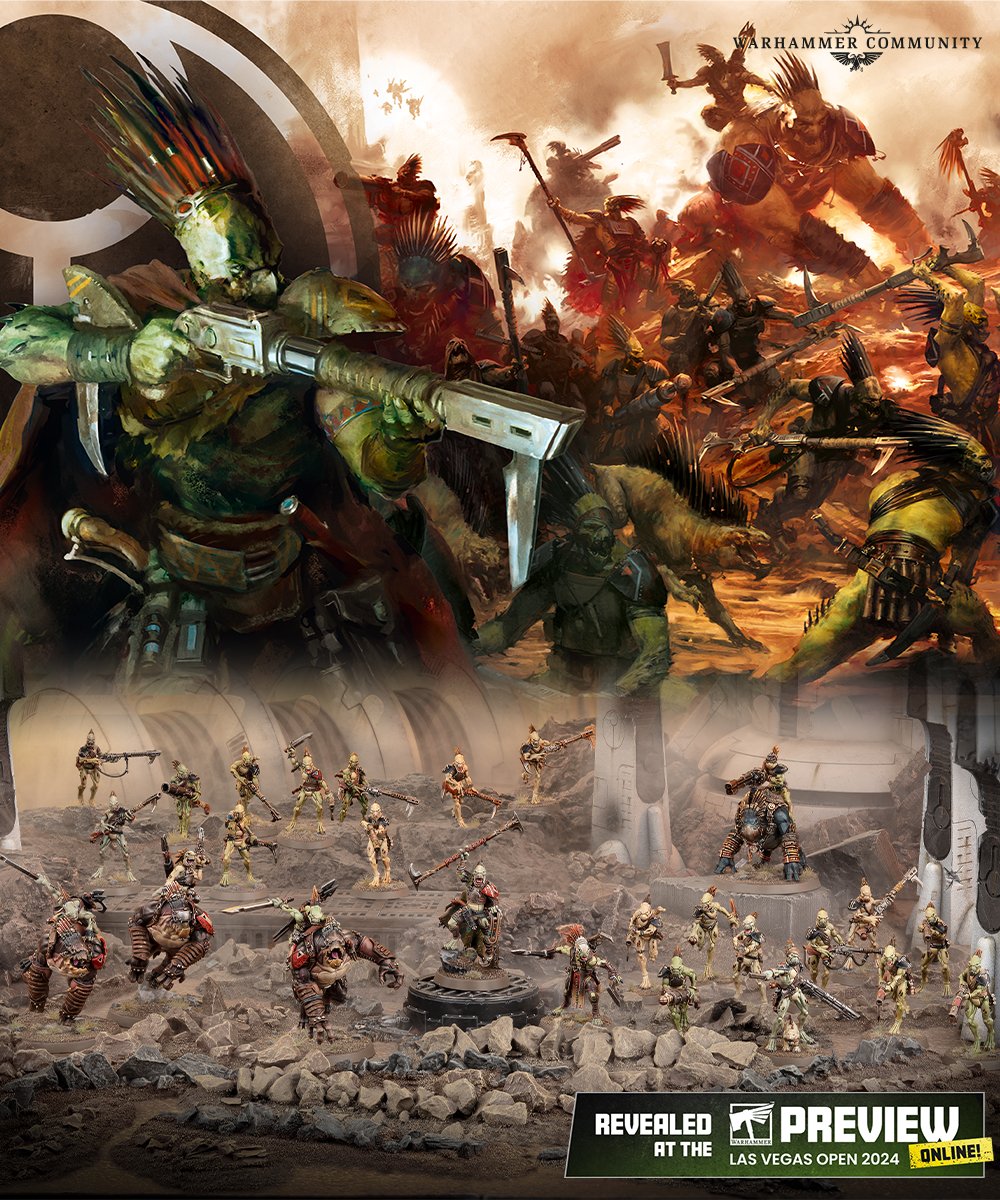
T’au commanders in the lore have always used Kroot as shock troops and forward elements, because Kroot are better in close quarters than Fire Warriors. The T’au philosophy frames everyone’s contribution as equal under the Greater Good, but the battle plans consistently put Kroot at the front absorbing melee contact while T’au fire from range. That’s how the alliance actually functions in the fiction. The competitive meta, apparently independently, reached the same arrangement.
There’s something to connect here to the Inquisitor Kroyle situation. Kroyle is the Ordo Xenos radical who studies Xenos biology rather than just cataloguing kill counts. The Kroot are interesting precisely because studying what they’re doing changes the picture considerably. A T’au commander who understood what the Shapers are actually managing across centuries might have a very different read on the alliance than one who just sees reliable melee auxiliaries.
I keep wanting to say the Kroot are the most interesting Xenos faction in 40K, and I’d be overstating it. The Jokaero are genuinely stranger, and the Necrons have a fully-developed ancient-empire arc that makes the Kroot’s “lost civilisation” angle look thin. I’m probably just excited that they finally have a model range that matches what the lore has been describing since before I got into the hobby.
The new Kroot Shaper is a good sculpt. Holds that staff like he might actually use it. Given what the Shapers have been doing — running centuries of selective evolutionary management while nominally serving an empire that hasn’t quite asked why…
Yeah. That tracks.