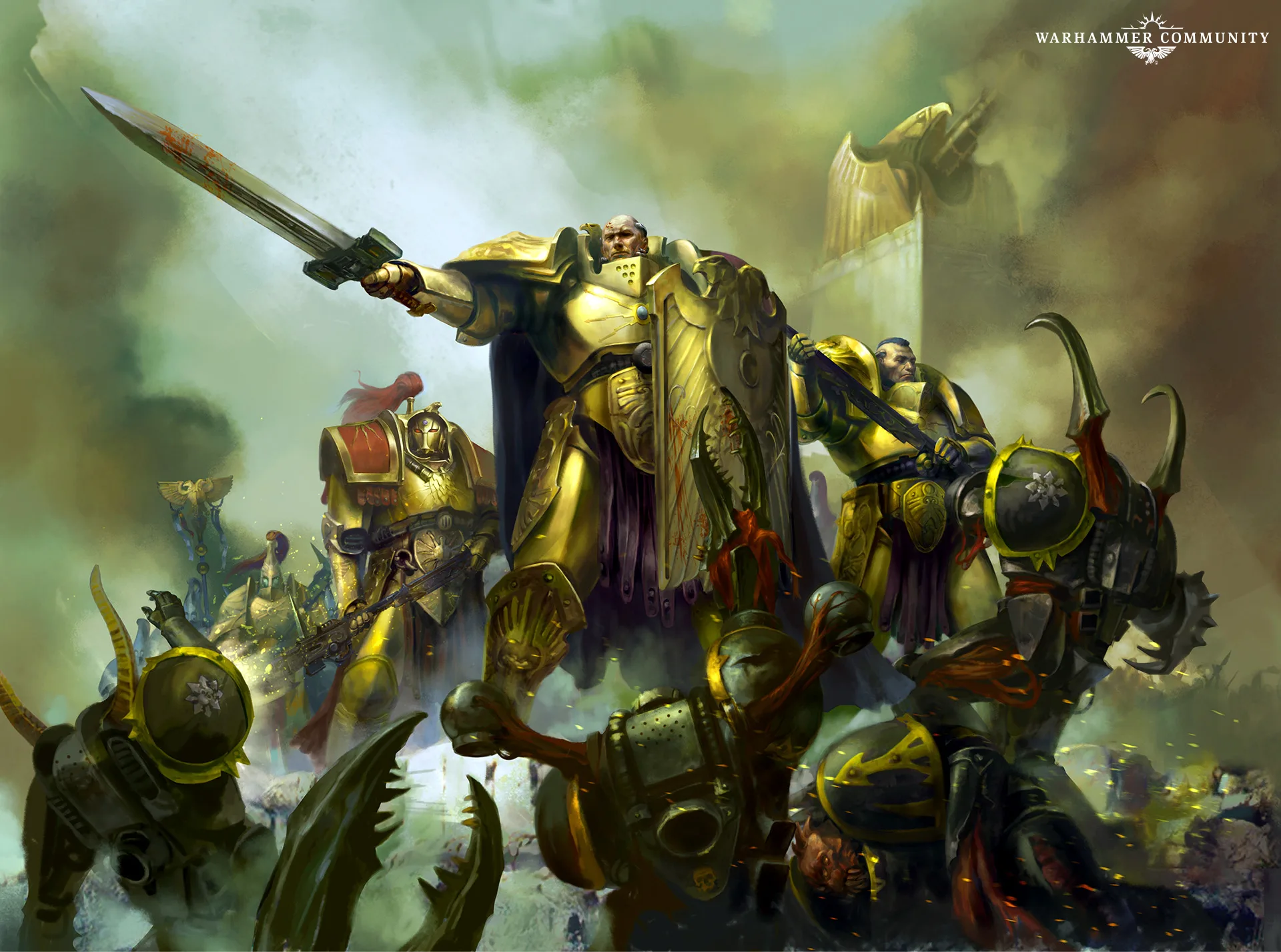
The Lion came back from a ten-thousand-year sleep on the Rock and looks like he’s pushing seventy. That’s the detail that keeps coming back to me whenever someone on Reddit asks what the natural lifespan of a Primarch actually is. Mike Brooks wrote it that way in The Lion: Son of the Forest. Jonson wasn’t in stasis. He was asleep. He aged. The face on his current GW model has visible weathering, even though Brooks describes his combat capability as undiminished.
Then there’s Vulkan, who literally cannot die. Killed at Isstvan. Killed by Curze repeatedly across an entire novel. Killed by Magnus thousands of times in the Webway during the climax of The Master of Mankind, and he just keeps coming back. Same genetic stock as the Lion. Same Emperor. The lore puts them on opposite ends of the same lifespan question.
So which is it.
The number nobody wrote down
Black Library has never given us a number. There’s no codex page that says a Primarch lives this many years and then dies. What we have instead is a scattered set of clues across forty-odd novels that point at something deliberately ambiguous. The closest thing to a foundational answer is in Aaron Dembski-Bowden’s The Master of Mankind, which establishes that the Emperor used a Perpetual called Erda as the genetic mother of the twenty Primarchs. Perpetuals are an old, mostly unexplained breed of human whose deaths don’t stick. The Emperor is one. Oll Persson is one. John Grammaticus is one. Vulkan, of all the Primarchs, is the only one named explicitly as one.
The Primarchs are grown from immortal stock.
ADB has said in interviews, and hammered it into the text of The Master of Mankind itself, that nothing the Emperor says about his sons should be taken at face value. He calls them “the creatures that call themselves my sons.” He frames the Triumph of Ullanor as something he assembled “for glory, to honour the creatures that call themselves my sons.” The phrasing is clinical. ADB has said in interviews that the framing is deliberate.
Tools designed for a war that was meant to end
The Great Crusade had a finish line. The Emperor was withdrawing from the field after Ullanor. He’d named Horus Warmaster, he was returning to Terra to finish the Webway, and the implication across the Horus Heresy novels is that the Primarchs were meant to govern what came after. Sanguinius is the most-named candidate for the heir, and Fear to Tread leans into it.
The text doesn’t say whether the Primarchs were supposed to outlive the Emperor by a generation, by a millennium, or forever. Horus, when he turns, doesn’t accuse his father of planning to discard them past their usefulness. He accuses him of using them as tools, which is almost the same accusation but routes around the lifespan question entirely.
I have a half-formed pet theory that the Emperor didn’t have a number in mind because the Emperor doesn’t think in those terms. He’s a Perpetual. Death is something that happens to other people, conceptually. He designs tools that work and worries about retirement plans never. But that’s me extrapolating from Dembski-Bowden’s portrait, not canon.
Vulkan literally cannot die
Pete plays Salamanders. Has done since fifth edition, paints his big lads faster than I’ll ever paint mine, currently has a 4000-point army with new additions every quarter while my Imperial Fists sit grey on a shelf and I keep telling him I’ll have them painted by the end of the year. I’ve been telling him this since at least 2023. We were having a beer at my local store about a year ago and he was explaining the Vulkan Lives reveal to me. He’d just finished re-reading the Heresy in publication order. His exact words were “Vulkan is the one. The only one.”
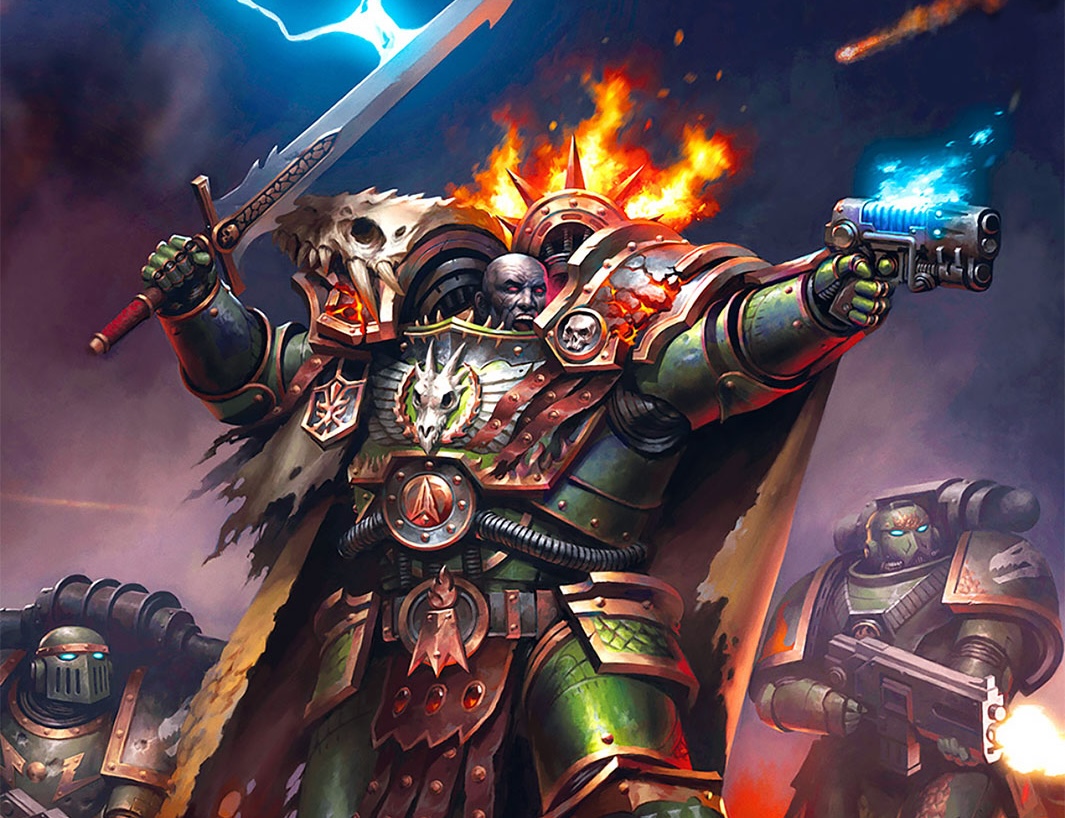
He’s not wrong. Vulkan Lives by Nick Kyme has Konrad Curze imprison Vulkan after Isstvan and execute him over and over to break him psychologically. Vulkan revives every time. Deathfire picks up the same thread. Then in The Master of Mankind, Vulkan is fighting in the Webway when Magnus the Daemon Prince catches him and kills him thousands of times in succession, and Vulkan keeps standing back up. The thing the Cabal eventually uses to threaten him with permanent death is the Fulgurite, an anti-Perpetual psychic relic from before the Cabal’s records.
Pete’s read on it is that Vulkan is exceptional even among his brothers. Ferrus Manus stayed dead when Fulgrim took his head. Sanguinius stayed dead when Horus broke him at the Siege of Terra. Konrad Curze stayed dead when M’Shen drove the blade in, although Curze allowed it. None of them came back through Perpetual genetics.
Pete reckons the Emperor either wasn’t able to give all twenty the full Perpetual phenotype, or he chose not to, or he gave it to all of them and only Vulkan ever activated it. Pete doesn’t actually know. I don’t either. Whatever ADB thinks about it, he’s never put it in writing.
What the Lion tells us about aging
The Lion is the cleanest piece of evidence we have that Primarchs age. Mike Brooks’ The Lion: Son of the Forest is explicit. Unlike Guilliman, who spent the ten thousand years between the Heresy and the Indomitus Crusade in stasis with time literally stopped inside the field, Jonson was alive. Asleep on the Rock. Breathing, dreaming, slowly metabolising. Ten thousand years of that. About five hundred times as long as I’ve been buying plastic crack and complaining about the price.
When he comes back, he looks old. The 2023 model has weathered features, grey in the beard, the face of a man who has actually lived through what he’s lived through. Brooks describes his combat capability as undiminished, although that part is harder to verify from a model alone.
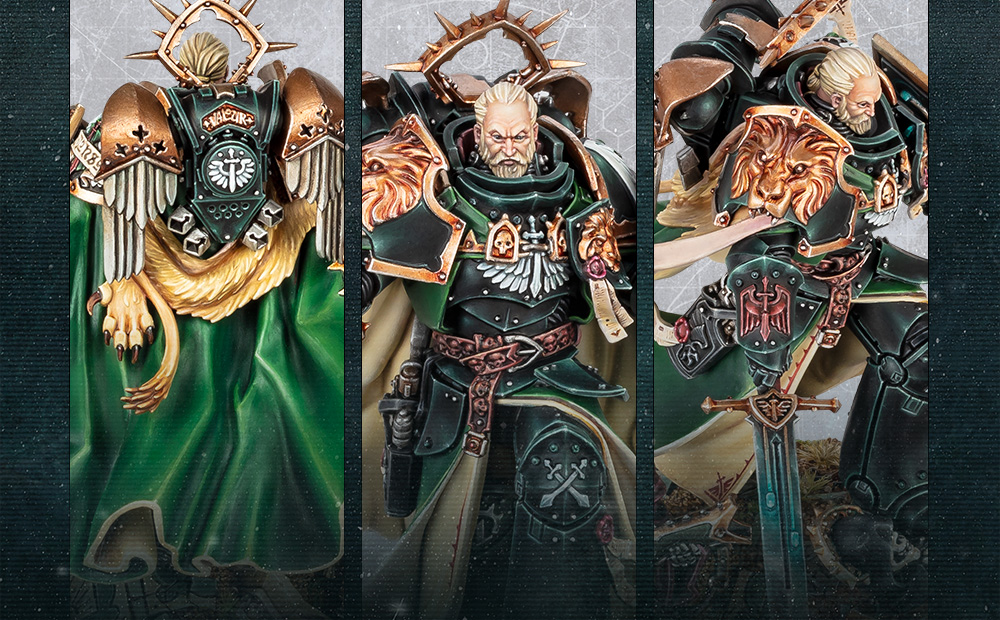
This is the cleanest single data point on the question, and it cuts a particular way. The Lion came back at his original combat capability. The aging was in the visual register, in the surface details that make a body look weathered. If you take that as a clue about how Primarch aging works, the implication is that they age cosmetically over millennia while their underlying systems hold up across timescales that would have killed any normal organism a hundred times over.
I should admit I’m extrapolating wildly from one model and one novel. It’s a thin dataset. Mike Brooks could have written the Lion’s appearance to look old purely for visual storytelling reasons, with no biological subtext intended at all. GW’s design teams answer to a brief. A weathered-Primarch silhouette is what reads as “returned hero” in marketing imagery, with or without a biological reason underneath.
The traitors went daemon
There’s a half-cynical reading I keep coming back to. The dataset is wrecked. The traitor Primarchs who survived the Heresy mostly ascended to daemonhood and operate now as warp entities. Magnus is a daemon. Mortarion is a daemon. Angron is a daemon. Lorgar, Fulgrim, Perturabo, all daemons. They are all operational in the present day of the setting. The Ruinous Powers have a continuing investment in keeping them around.
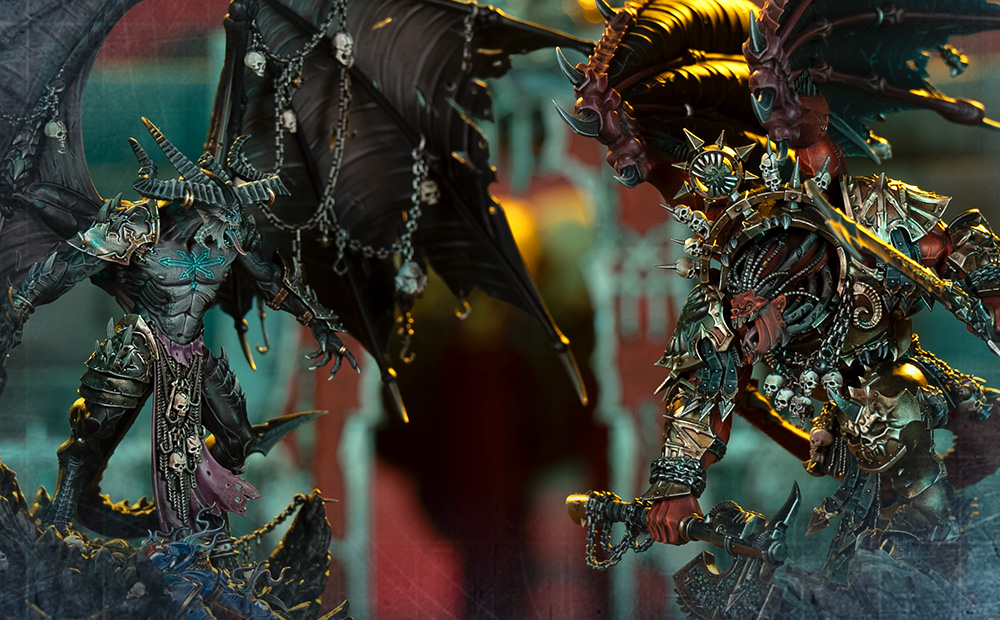
What this tells us about Primarch lifespan is mostly that we’re not getting clean data anymore. Almost everyone we’d want to ask about how long a Primarch can naturally live has either died at someone else’s hands during the Heresy or sidestepped the question entirely by becoming something other than a Primarch. The traitors aren’t using their original biology anymore. They are warp creatures inhabiting a primarchal silhouette, anchored to the material universe by the Ruinous Powers’ continuing investment in keeping them around.
Guilliman doesn’t have his original biology working anymore either. The Armour of Fate is a life-support system. He was poisoned by Fulgrim’s blade and the wound never properly healed, so what came out of stasis was a man who needs his suit to function. Dark Imperium by Guy Haley is unambiguous about this. Cawl’s regenerative compounds keep him alive. Without them he goes back to dying.
The natural lifespan question routes through this strange filter. We don’t know how long Guilliman would have lived if Fulgrim hadn’t stabbed him. We don’t know how long Sanguinius would have lived without Horus killing him. Most of the loyalists who could have answered the question got cut down by their own brothers, and the one walking around as proof of long-term Primarch viability is a daemon prince.
What’s actually in canon
What we actually know is short. Primarchs are grown from Perpetual genetic material. Vulkan is a confirmed full Perpetual. Stasis preserves a Primarch indefinitely. Warp-sleep changes their appearance over a hundred centuries; the Lion came out of it with full combat capability and a weathered face. Daemon-Primarchs are functionally immortal as warp entities. The Emperor never specified a lifespan in any text we have access to, and most of what gets said online is people extrapolating to fill the silence.
I lean toward “engineered for indefinite operational lifespan,” with the caveat that this is a thesis I’ve assembled rather than a fact I can quote. The Emperor designed his sons for a war that was supposed to end and never wrote down what they were meant to do afterwards.
I keep going back and forth on whether that’s actually the right read, though. The counter I find harder to dismiss the more I think about it is that the Emperor knew exactly how long he intended his sons to last and simply chose not to share it. He’s a Perpetual who has lived for tens of thousands of years and operates on timescales that make a millennium feel short. It’s plausible he had a ceiling in mind and never wrote it down because it wasn’t relevant to anyone but him. Maybe a thousand years of governance, then quiet retirement. Maybe ten thousand. Maybe a single human generation past the Crusade. The text is silent, and the reason it’s silent might be that the Emperor was fully decided and just didn’t tell anyone.
I keep coming back to the original answer though. Engineered for indefinite operational lifespan, no fixed number. The text is silent because the design is open-ended.
And the question that’s actually live
Now that the loyalists are coming back, Lion in 2023, Russ rumoured for the Wolftime, Dorn maybe in 11th edition, Guilliman already operational, the question the Reddit thread was really asking is whether they’re going to be around for the long haul or whether the next narrative arc is going to start picking them off again. GW has form for both. They like having Primarchs on the table. They also like killing characters when it sells novels.
I read the Wraight Sanguinius novel last week and there’s a passage where the Great Angel wonders, briefly, whether the Emperor designed them to know when their own ending was coming. He doesn’t reach a conclusion. The narration just moves on to the next thing.