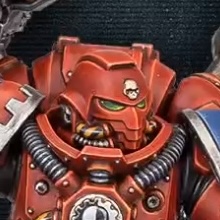
The Emperor used to have children who wandered the galaxy getting into trouble with the Inquisition. Natural children, born during the long stretch of human history before he put on the gold armour and started collecting planets. Early Warhammer 40K called them the Sensei. Some became outlaw heroes, gathering companions and fighting the sort of Imperial authorities who would feature quite comfortably as villains in most other settings.
Then there were the people trying to keep those children safe. In the early scheme, the Illuminati collected the Sensei for a sacrifice at the moment of the Emperor’s death.
I like this corner of 40K enormously. There’s a whole campaign in that arrangement before you’ve added a Space Marine. It also takes some untangling, because the original books disagree on basic details, an Inquisitor later reports destroying a Sensei cult, and the Star Child keeps turning up in discussions of newer fiction. The contradictions need some space, especially when following the material across editions.
The Emperor’s other family
The relevant early books are Realm of Chaos: Slaves to Darkness (1988) and The Lost and the Damned (1990). For the details here I’m using Lexicanum’s Sensei entry and its source notes, which distinguish the versions. The second book’s Sensei material is indexed to pages 184–191. I haven’t got an original copy open beside me, and I don’t want a confident-sounding summary to imply otherwise.
The broad premise gives the Emperor a family history from his years living among ordinary humans. His descendants could inherit extraordinary longevity, looking human while remaining ageless. Violence could still kill them. The later account allows the Sensei trait to emerge through his descendants’ lineages, which makes the family tree considerably more sprawling than a single surviving generation of sons.
That alone changes the scale at which I imagine him. The Primarchs have given us an enormous amount of family history to argue about already. I’d happily follow a Sensei living under an assumed name in a port town, having outlived everyone who knew their previous one. You could write a very small story about that person trying to keep a friend alive. The immense family secret could remain undiscovered for most of it.
The powers are where a neat description starts to fall apart. Lexicanum identifies Slaves to Darkness’s version as sterile direct sons, psychically hidden even from their father. The Lost and the Damned develops psychically gifted descendants with a connection to the Emperor’s spirit. The infertility and psychic-power claims need to stay attached to the books that make them.
I’d choose which book’s version I was using for a game and put that in the campaign notes. The concealment idea has obvious appeal: an Emperor who can perceive so much, with people of his own blood passing beyond his notice. The spiritual connection gives you a different kind of story, especially once a wandering hero begins to understand where their gifts come from. For a campaign I’d write the chosen version on the character sheet.
A warband with somebody worth rescuing
The adventurer-band material is the bit I’d keep closest to hand. The later Sensei account allows a company of outsiders, including rebellious humans, abhumans and Eldar. It puts their activities in the places a huge military campaign might pass over: hiding places, settlements and ships. Their opposition to oppression brings them into conflict with Imperial power as well as Chaos, according to Lexicanum’s account of The Lost and the Damned.
I can picture the models before I’ve worked out the rules. A battered human leader with a sword. An Ogryn who’s acquired a coat several sizes too small. Someone carrying the ammunition and looking deeply unhappy about it. An Eldar companion whose reasons for staying are a recurring source of arguments. You could give the entire group a place to hide under a manufactorum and spend several games trying to keep it.
There’s a pleasing nuisance in making the leader responsible for other people. In the old reward material catalogued by Lexicanum, the Star Child can give a Sensei protective and rescuing abilities; the Rescuer boon obliges the hero to try to save a fallen companion. I’d enjoy having an important objective halfway across the board when the least convenient member of the band needs help. It would probably be the fellow with all the ammunition.
Those relationships give the group something to lose as the leader becomes more powerful. The same material describes eventual apotheosis into a Sensei Master, with the possibility of returning to help former comrades. I’d want to spend some time on that attachment to the old band. Imagine being the person who still recognises a friend after they’ve disappeared into whatever passes for divinity in the Warp. Would you ask them to stay for dinner?
My Imperial Fists tend to acquire names after I’ve painted their shoulder pads, which is a fairly low standard of character development. A little band like this would make me start with the relationships. I’d want to know who trusts the leader, who knows too much, and who joined because the next transport off-world was unaffordable. My favourite scruffy Guard models could do several of those jobs with very little conversion work.
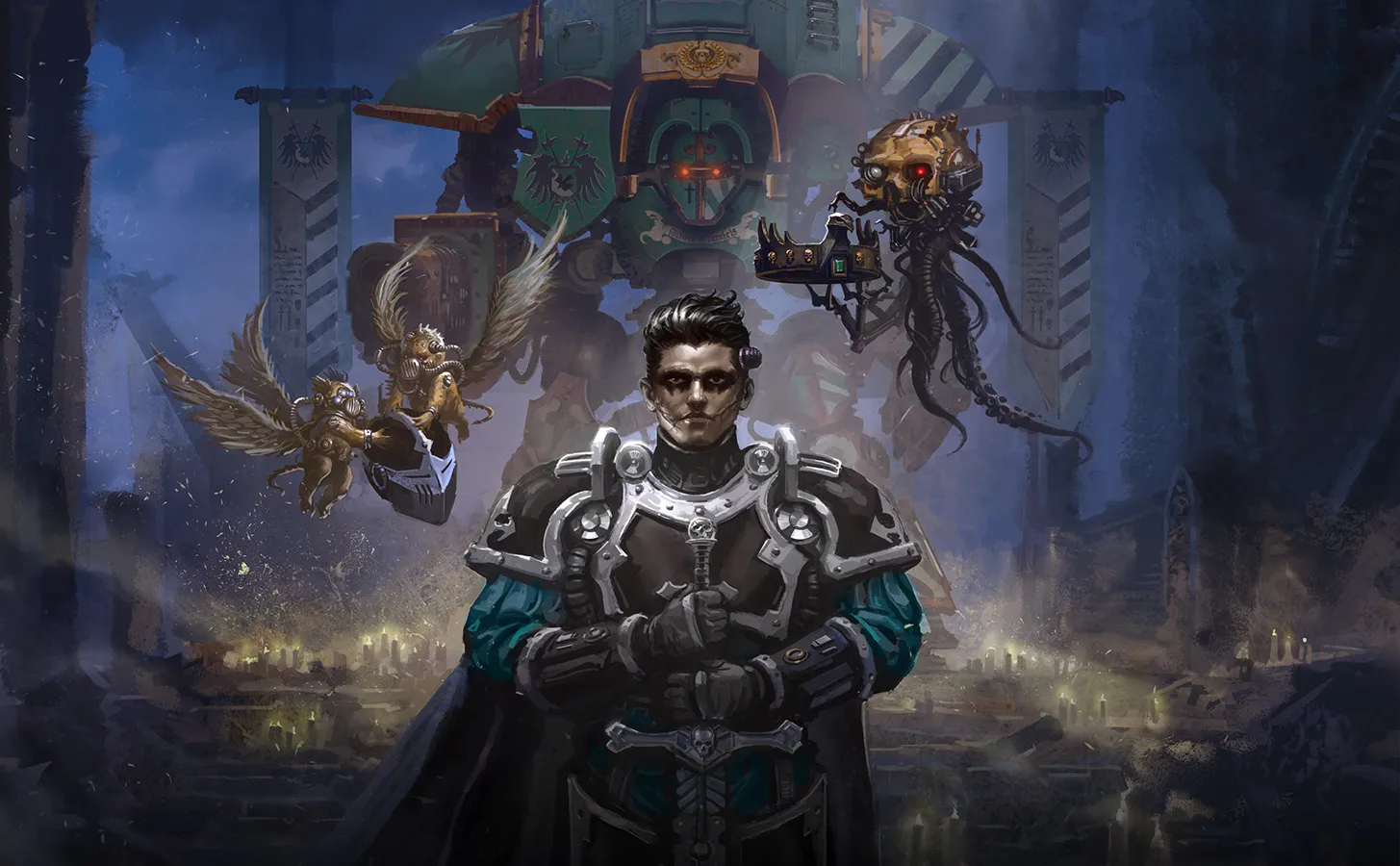
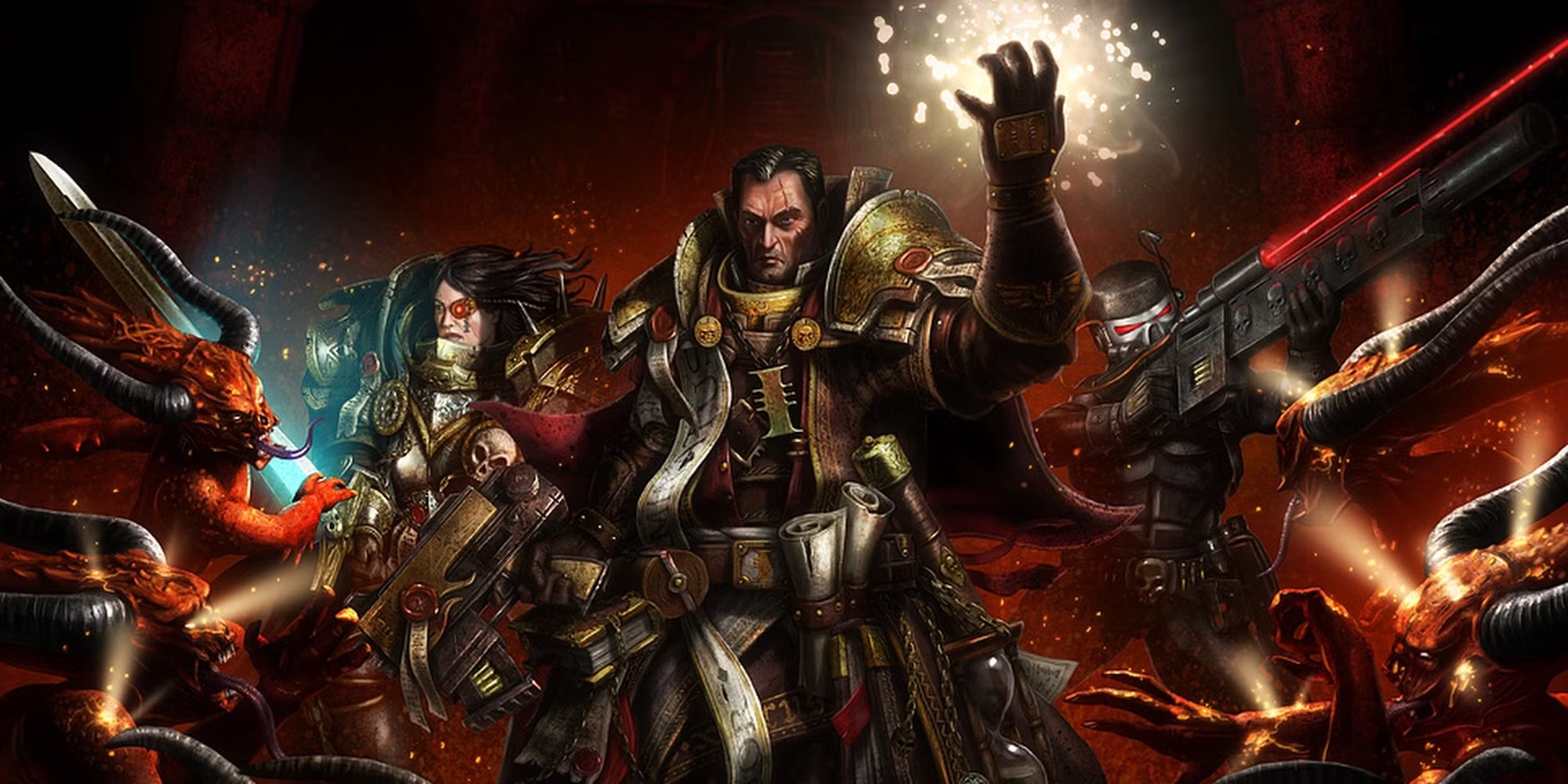 The Inquisition and its agents: opponents a Sensei band could attract. This illustration doesn’t depict the Sensei or the Illuminati.
The people arranging the rescue
The Illuminati account brings in people who’ve survived possession and expelled their daemons through their own will. Their experience supposedly gives them exceptional understanding of Chaos. Ian Watson’s Inquisition War fiction explores the secret society and its schemes; Lexicanum traces much of its overview to Draco and Harlequin. Watson gives them an intimate experience of possession to draw upon.
Their project is the Emperor’s renewal. They gather and protect the Sensei while concealing a planned sacrifice at the moment his remaining strength fails. The details vary across the early material and fiction, but the children are being collected for an eventual use they haven’t agreed to. The Illuminati’s precautions include hiding their intentions from the Emperor himself, in the account Lexicanum attributes to Draco.
I’ve covered the wider Golden Throne failure scenarios elsewhere. The part that holds my attention here is the long period of protection beforehand. Somebody really does save you from an Inquisitorial execution. They find shelter, give you information about your ancestry and explain that you have a place in humanity’s future. You could owe them your life many times over before discovering the proposed ending.
And discovering it would make every earlier kindness horrible to think about. Was a particular rescuer personally attached to their charge? Did they keep postponing a conversation they knew they ought to have? I’d happily read several chapters about an Illuminatus trying to explain the plan to the person they’ve spent decades protecting. I’d also want the Sensei to be allowed a substantial answer.
The scheme depends on its organisers’ beliefs about the Emperor and resurrection. It gives us a motive for gathering his descendants, with plenty of room for misplaced confidence. If I used it in a campaign, the people pursuing the sacrifice would have evidence they considered persuasive. The players would have to decide how much of it they trusted, perhaps while somebody was already preparing a transport to Terra.
I don’t actually know whether I’d enjoy playing the conspirator. Keeping that secret from the rest of a group for several sessions sounds exhausting. I’d be the one accidentally leaving the wrong page of the campaign notebook open beside the dice tray.
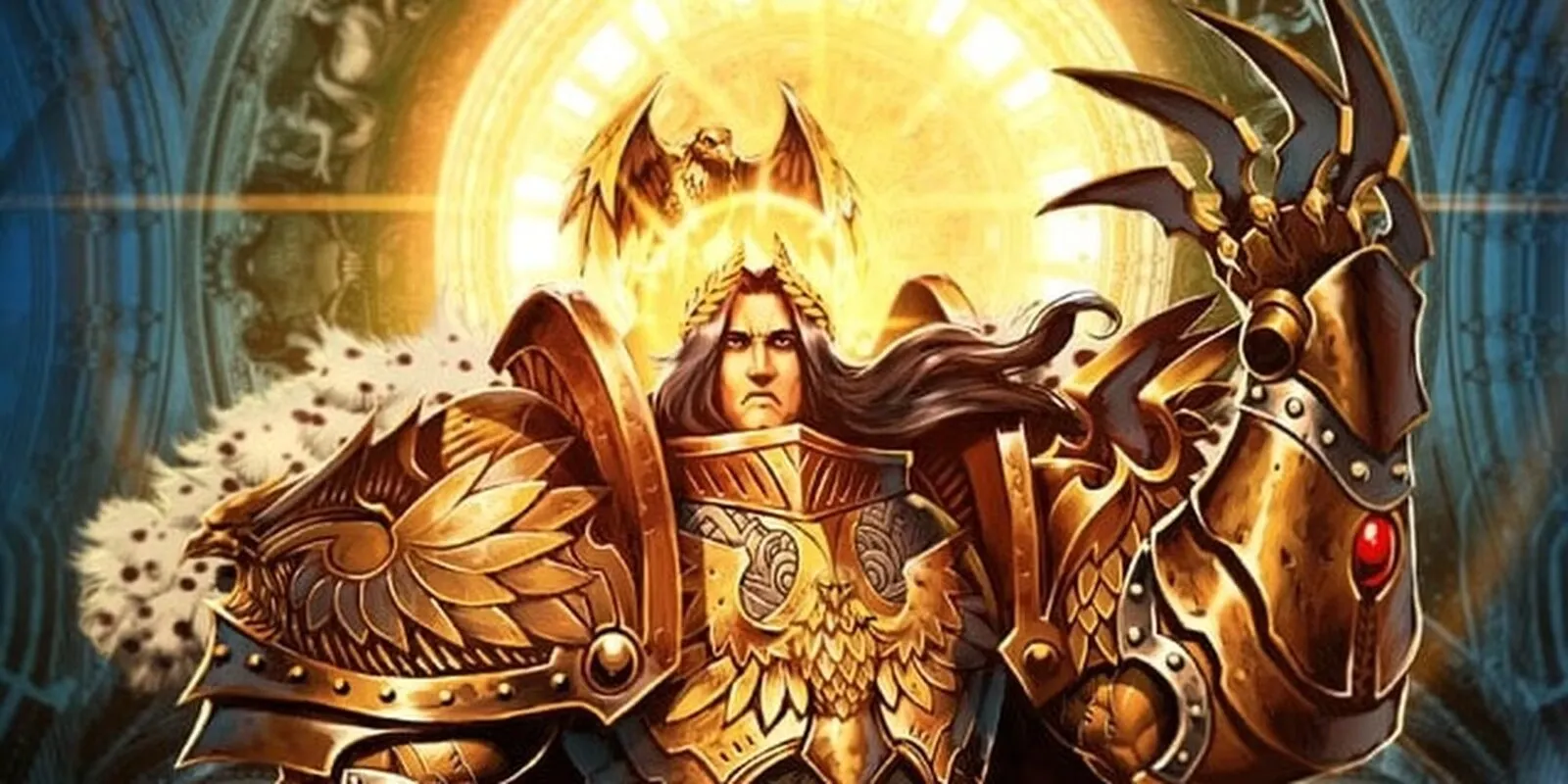
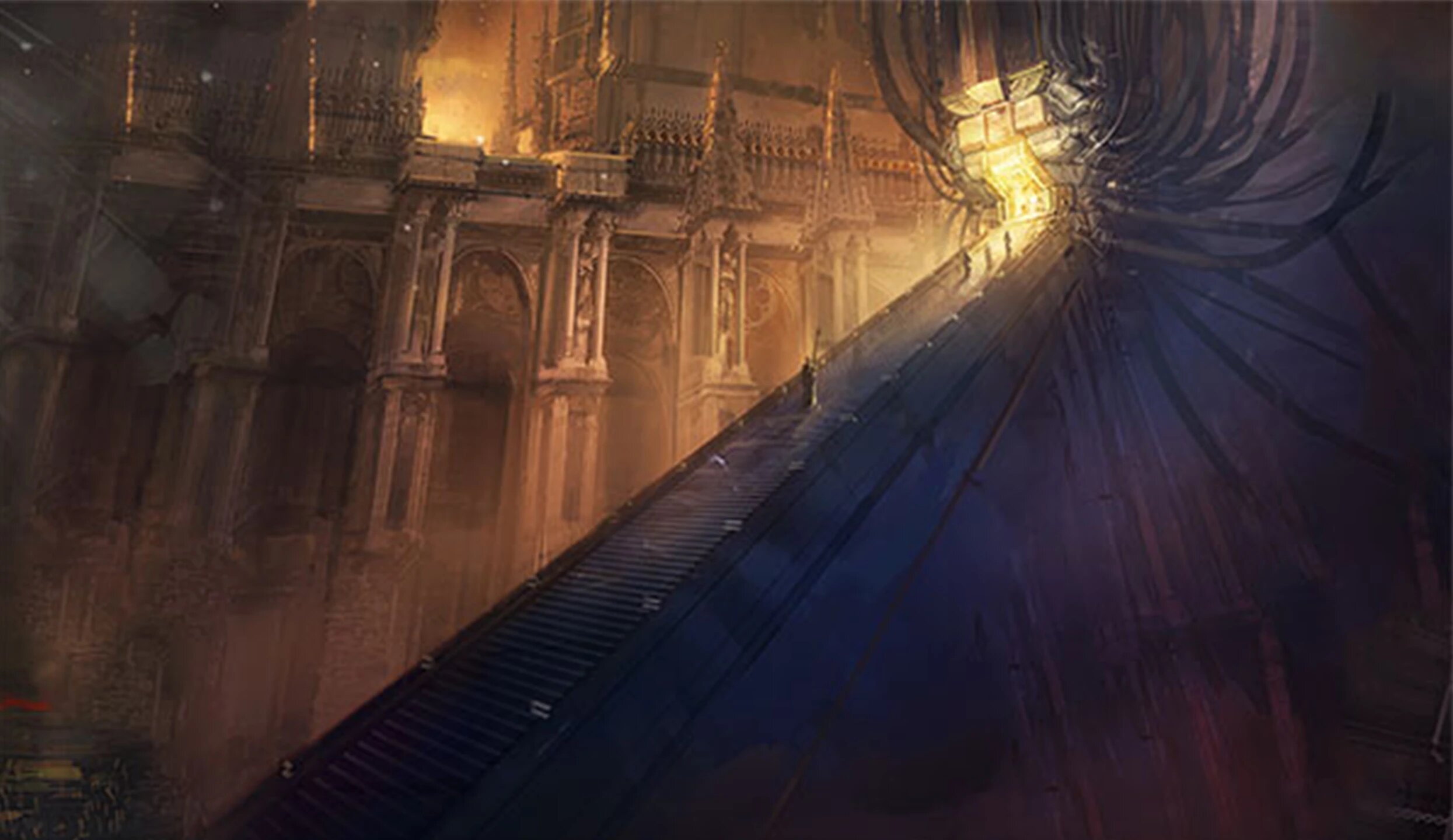 The Golden Throne, whose occupant’s survival gives the Illuminati’s plan its urgency.
Fortez writes the report
The third-edition rulebook has a particularly useful complication on page 273. Lexicanum’s Star Child entry records Inquisitor Fortez investigating a cult led by people claiming to be Sensei. Their association with abhumans and Eldar helps persuade him to reject the claim. He suspects Tzeentchian involvement, calls in assistance, and the Salamanders destroy the cult. All but four of its Sensei are reported killed.
I nearly treated that as the paragraph where GW shut the whole idea down. It’s a tempting reading, especially when you’re trying to explain why a once-elaborate strand of background became obscure. But Fortez supplies an accusation and an account of a purge. His position inside the fiction limits what his report can establish about every Sensei, including those who were elsewhere.
The alien association is a lovely nasty detail. The earlier adventurer-band concept already made room for Eldar companions. An investigator encountering the kind of company the reader has been told to expect can interpret it as evidence against the group’s identity. In an imagined dossier, the Eldar travelling with the group would have their own page.
Whether the cult was genuine remains part of the uncertainty. It could have been a deception. Fortez could have destroyed something he misunderstood. The report leaves those possibilities available. Fortez’s suspicion should stay attributed to him when we discuss it. Your opinion of the Inquisition will probably affect which possibility you reach for first.
As an adventure ending, it’s very usable. Four people unaccounted for, a ruined refuge, and a file that somebody considers closed. You could start a game with the survivors trying to recover something from the site after the soldiers have left. I’d keep the investigating Inquisitor off the board for a while and let the players worry about whether their escape had been noticed.
The Star Child still gets mentioned
The Star Child and the Sensei are connected in the early background, but they need separate treatment when following later references. The former is the possibility of the Emperor’s spiritual rebirth, developed in the Realm of Chaos material and Ian Watson’s fiction. The latter supplies particular descendants, powers and adventurer bands. A reference to a mysterious child in a later novel establishes very little about who’s currently wandering around with a sword.
Guy Haley’s Throne of Light (2022) is a useful example. Lexicanum indexes its appendix, titled The Star Child, as describing visions of a golden infant and a radiant figure rising from a throne, alongside the heretical interpretations those visions attract. The entry also points to another child vision in Chapter 50 of David Annandale’s The Martyr’s Tomb (2023). Readers following the later references have a named appendix and a chapter to look up.
The official WarCom introduction to Throne of Light is more guarded. It describes Inquisitor Rostov diverting his search after reports of miraculous visions, while Chaos’s followers try to extinguish the hope involved. That’s the extent of what that announcement tells us; the specific Star Child material belongs to the novel’s appendix, cited through Lexicanum here.
I want to resist assembling those references into a release schedule for the Emperor’s children. Nothing in the material I’ve used confirms the return of the old Sensei bands. The later Star Child references give us something specific to keep following. The interesting question is how much a future writer would choose to carry forward: the imagery, the resurrection beliefs, particular characters, or some combination of them.
For me, the descendants are the part worth another story. Give one of them a limited view of what’s happening, enough companions to worry about, and somebody offering suspiciously well-informed help. The mysteries around the Emperor could remain enormous while the immediate problem was getting five people through a checkpoint. I’d leave the golden armour off the leader, too. A worn coat would give me much less trim to paint.