I didn’t expect the Sternguard datasheet to be the one I read four times. Guilliman is the headline, obviously, and the Terminator profile is what my garage group actually argued about on Sunday night. But the Sternguard Veterans entry is where the new codex does something quiet to a bit of background I’ve been fond of for most of the time I’ve been playing.
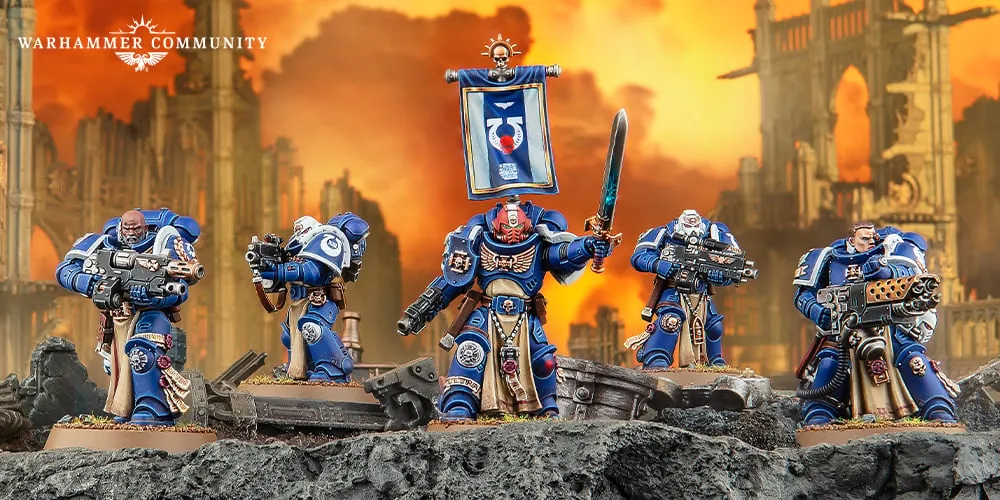
Sternguard now carry an Artificer Firearm. That’s the name of the weapon line itself, replacing the Sternguard bolt rifle they’ve had since 2023, and it comes with three profiles you pick between before you shoot: Infernus at 24” for Strength 5, AP -1, Rapid Fire 2. Purgatus at 24” for Strength 7, AP -2, 2 damage. Damnatus at 12” with Melta 2, Strength 9, AP -3, D3+2 damage. Every model in the squad gets one, sergeant included, and the little italic line under the weapons table tells you to choose your profile before you select targets.
Warhammer Community’s write-up on the 14th described these as encompassing “all kinds of special boltguns, combi-weapons, and ammunition their models are equipped with.” Which is an honest description. The tenth edition sheet had the bolt rifle, a combi-weapon row, a heavy bolter and a pyrecannon spread across four lines, and most of that now folds into one.
The bullets were supposed to be the rare bit
Here’s the sentence that’s been sitting in Sternguard background for years, and the Fandom entry still carries it almost verbatim: it takes a master artificer many Terran years of painstaking work to produce even a handful of these bolt-shells, and so they’re reserved for the veterans of a Chapter’s 1st Company, given to the Space Marines with a record of making every shot count.
Read that as a supply problem and the whole unit makes sense. A Chapter has a finite number of these rounds. Handing them to a line squad is a waste, because a line squad fires to suppress and to cover a movement and to make noise. So they go to the First Company, to the men who’ve been alive long enough to know when a shot is worth spending. The Sternguard aren’t elite because GW needed an elite shooting unit. They’re elite because somebody in the Chapter armoury is rationing.
It’s the same logic that keeps Terminator armour in the First Company. A Chapter holds a fixed number of suits, can’t readily make more, and issues them to the warriors least likely to waste one. Imperial Armour puts the Deathwing, the Dark Angels’ entire First Company, at somewhere around a hundred functioning suits, which is a smaller number than most people assume when they hear First Company.
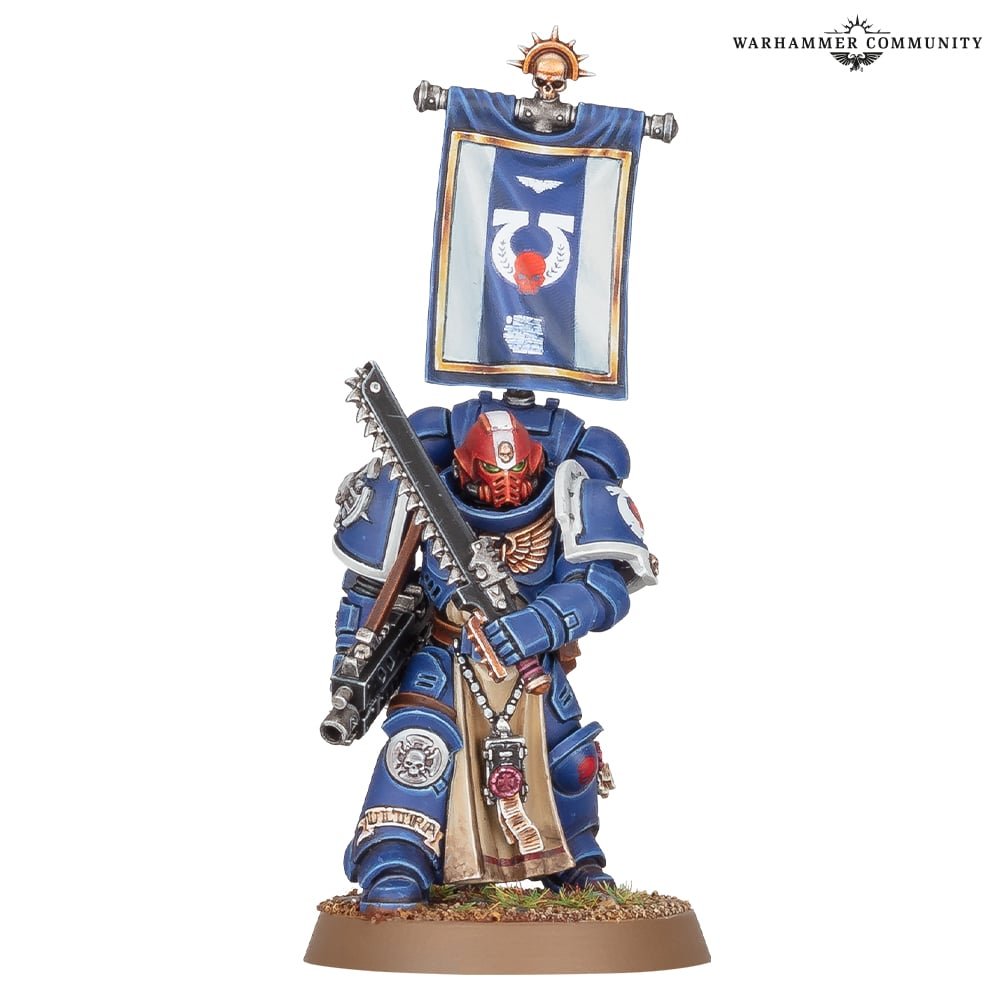
The rounds themselves have names, and the names are the good part. Vengeance rounds, built around an unstable flux core that the background describes as hazardous to the man firing it, for punching through ceramite. Kraken bolts, with an adamantium core and improved propellant, for reaching further than a bolter has any business reaching. Hellfire rounds, tipped with needles and a vial of mutagenic acid, which is what you load when the thing coming at you has more chitin than a Land Raider has armour plate. Dragonfire bolts, hollow-shelled, which burst in a gout of superheated gas and take cover out of the equation. Off to one side of the list sit Metal Storm frag bolts, which swap the mass-reactive fuse for a proximity one and burst into shrapnel before they hit, and Tempest bolts, produced nowhere but Mars and built to kill machines rather than men.
White Dwarf #518’s Bolt Rounds feature goes into how a bolt actually works, and it’s worth knowing before you decide the ammunition types are just flavour text. The shell is a small rocket. An ejection charge at the base throws it clear of the barrel, then a block of solid propellant lights and it accelerates on its way to the target, and a mass sensor in the diamantine tip fires the main charge once it’s inside. The same article says plainly that the bolters used by a Chapter’s Sternguard Veterans and by the Deathwatch “are often modified to allow the firing of highly specialised ammunition”, which puts the specialist engineering in two places at once, the weapon and the thing you feed it.
Three Latin words
Infernus, Purgatus, Damnatus. Ecclesiastical Latin, which at least sounds like something a Chapter serf would stencil onto the side of a crate.
None of the three maps onto a named round. Purgatus at Strength 7, AP -2 and 2 damage sits roughly where Vengeance sat conceptually, under a different word. Infernus is the volume profile, the one you point at infantry, and Hellfire was always the anti-monster shell. Damnatus at 12” with Melta 2 is the old combi-melta, folded into the line and given a Latin name.
None of this is new, either, which is the part I had backwards in my own head for most of last week. Choosing your round was a Sternguard mechanic across three editions, and then the 2017 codex flattened the lot into one gun, the special issue boltgun, 30” at Strength 4 and AP -2, with no selection at all. Tenth edition didn’t even keep the name, just a Sternguard bolt rifle and a wound re-roll. So the profile-switching turning up now is the same mechanic coming back after nine years away, under Latin names instead of English ones.
Which is presumably why the line is called an Artificer Firearm at all. The datasheet has stopped modelling what’s in the magazine and started modelling the gun as an object. The Sternguard box has always come with combi-weapons in it, and those combi-weapons had to live somewhere, so now they live inside the same weapon line as the special ammunition. Mechanically it’s tidy. I’ve built that box twice and the combi-weapon options were genuinely the most annoying part of list-writing, because you’d end up with one combi-melta doing nothing all game.
GW put a footnote on the paragraph, which I enjoyed more than I should have. The asterisk reads: “Superficially similar to Flash Gitz and Killa Kans, but don’t tell them that.” The design team knows exactly what it’s built. Pick-a-profile-before-you-shoot is an Ork idiom, the mechanic you get when a Mek welds six guns together and the gun decides each turn what it feels like being. The 1st Company now shares a rules language with Flash Gitz. I don’t hate it.
Where the names survive
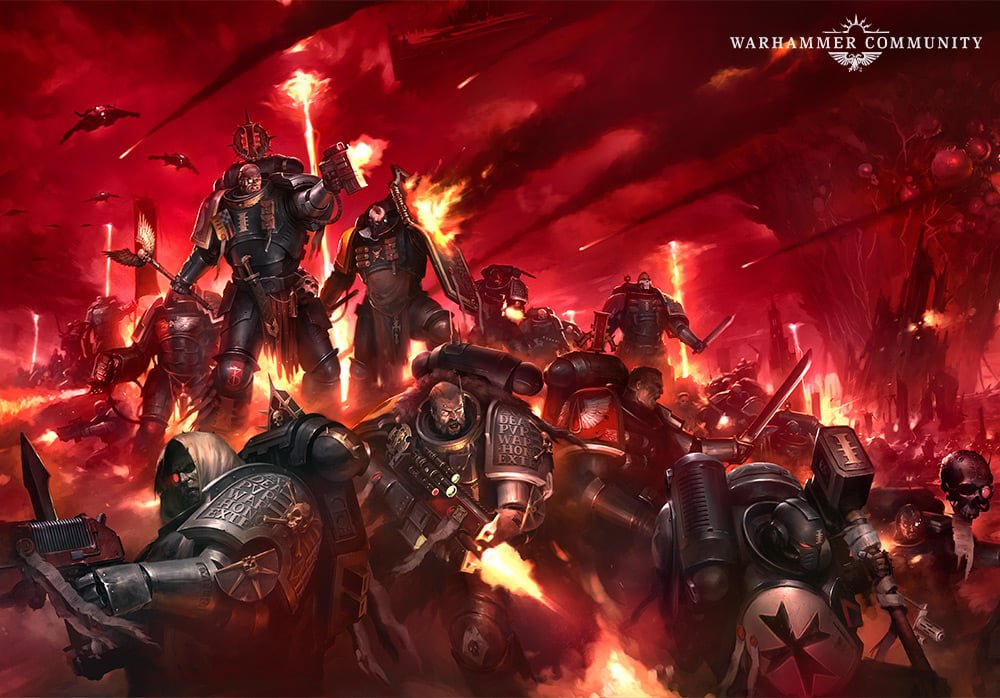
The Deathwatch still have them, and that’s a relief, because the named ammunition is closer to the centre of their identity than it ever was to a Chapter’s own 1st Company. White Dwarf #410’s Weapons of the Ordo Xenos spread lays them out as photographed props: the armour-piercing Vengeance round next to the long-ranged Kraken bolt, the explosive Dragonfire beside the acid-filled Hellfire, a stalker pattern bolter with audio and muzzle-flash suppressors, and the clavis.
A Deathwatch kill team gets assembled for one target species. The ammunition is how a squad of six answers a threat that would normally take a company, and taking the named rounds away would remove the reason the Ordo Xenos invented the Deathwatch in the first place. So they keep them. Sternguard were the same idea running inside a normal Chapter, a step down in specificity, and the abstraction landed on them first.
I’m not actually sure that’s a loss. I’ve gone back and forth on this all week. The named rounds read beautifully and I still had to look them up every single time, and there’s a version of this argument where flattening them is how you get people to actually field the squad…
I never once used the ammunition
So, 2009-ish. Imperial Fists, my first proper army, and I bought the Sternguard box because the sprue had more skulls per square centimetre than anything else on the shelf. Ten veterans, loads of bits, absolutely gorgeous kit for the time.
And then for about two years I fielded them as expensive men with normal bolters. I could never remember which round did what, the page sat in a different part of the book to the unit entry, and every time it came up I’d be two hours into a game with a cold cup of tea going scummy next to my dice and I’d just say “normal ones, it’s fine.” Two years is roughly as long as I spent learning to drive, and I have more to show for the driving. Pete noticed eventually, in the way he does, which is to ask an innocent question about your list three weeks running.
The models are in a foam tray in the loft now, painted to a standard I’d describe as “2009.” My favourite one has a combi-melta and a bare head with an enormous moustache and I have never once got value out of him.
Building the thing
A practical note, because the datasheet changes what’s in the box relative to what’s on the table. Every model gets an Artificer Firearm as standard, and for every five models in the unit, one Sternguard can swap theirs for a heavy bolter or a pyrecannon. The sergeant swaps his chainsword for a power fist or a power weapon and that’s it for options. Veteran Marksmen lets the unit re-roll hit rolls of 1 on ranged attacks, and the army rule at the top of the sheet is Combat Doctrines, which is where the rest of the squad’s flexibility now comes from.
The melee line is worth a glance while you’re in there. Every Sternguard has Ceramite Fists, four attacks at Strength 5 with no AP, so the squad has something to do when it gets charged without anyone buying a chainsword for it. The sergeant keeps his at six attacks. The pyrecannon is Blast 2 and Torrent, 12”, four attacks at Strength 6 and AP -1, which means the one model carrying it is doing a completely different job to the nine standing next to him. Unit size is four to nine veterans plus the sergeant, same as it’s been.
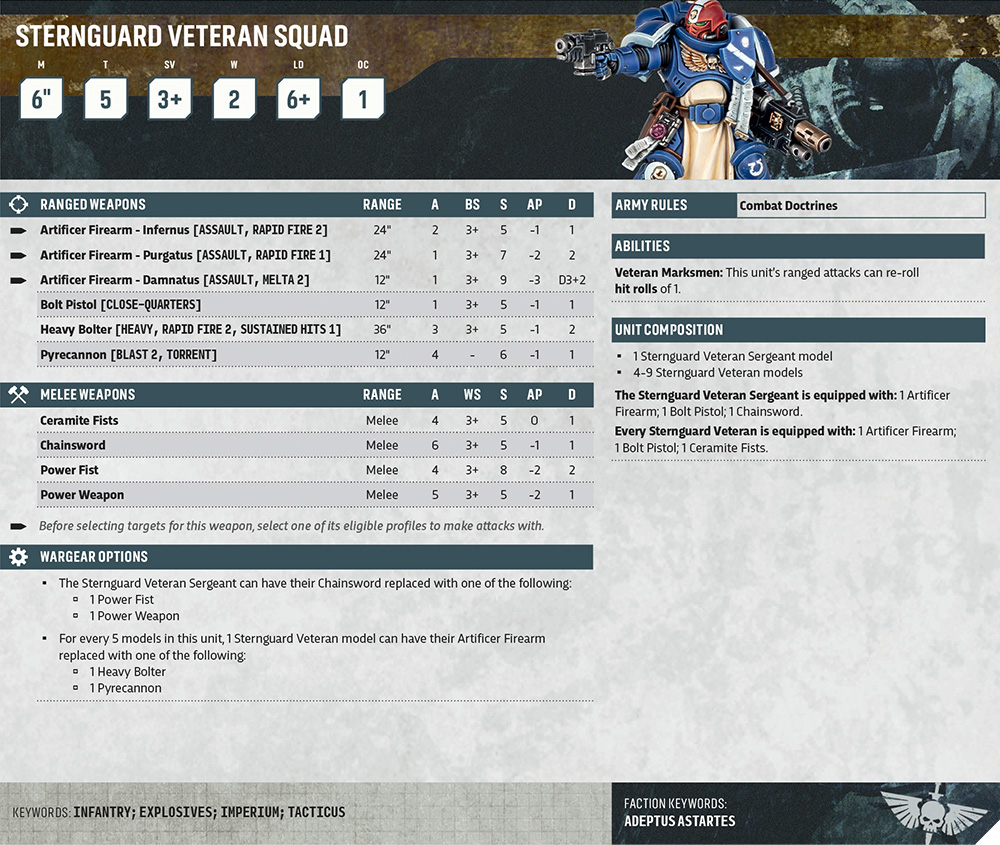
Keywords are INFANTRY, EXPLOSIVES, IMPERIUM, TACTICUS, which quietly means the Firstborn Sternguard in my loft aren’t the unit on this datasheet any more. That’s a separate conversation and one the codex has already had with sixteen other entries.
Went into my local store on Saturday to pick up a pot of Retributor Armour and the Sternguard box was still on the shelf at the old price, same three copies that have been there since spring, next to a wall of Infernus Marines. Nobody’s rushing. Pre-orders for the codex go up on the 20th, and I’d guess that box moves the week after, once people have read what an Artificer Firearm does at 12”.