In 789.M35 an Adeptus Mechanicus survey ship called the Land’s Vision logged a new world on the eastern rim and wrote its locals off as a lost cause. Stone tools, mastery of fire, the wheel, not much else. Nothing worth diverting a colony fleet for, so the Explorators filed the system away for later and moved on. Before anyone got back to it, a warp storm closed over the region and kept it sealed for the better part of six thousand years.
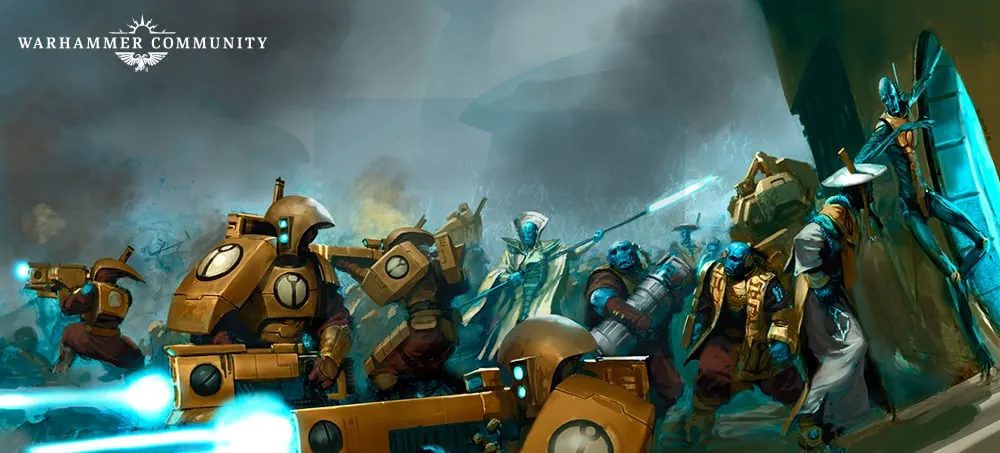
When the storm lifted and the Imperium looked again, the cave-painters had become a spacefaring empire fielding rifles that outrange the Imperial Guard. That’s the T’au Empire. Nobody in the Administratum had a clean explanation for it, and I’m not convinced GW has ever given us one either. That gap, six thousand years from firemaking to battlesuits, is the strangest thing about the whole faction, and it’s been sitting there unexplained for as long as the T’au have existed.
The first Codex: Tau came out in 2001. That makes this the T’au Empire’s twenty-fifth year on the tabletop, which GW has let slide past without a birthday cake. I was about three when it dropped, so I’ve got no release-day story for you, no memory of the smell of the pages. The blue guys with the good guns were just always there by the time I started playing, the army Kiran refused to take seriously because it didn’t have enough skulls on it.
The T’au Empire’s arithmetic problem
The oldest codices put the T’au at under two thousand years as a spacefaring people, packed into a dense globular cluster where the stars sit close enough that their sub-warp “hops” carry them between systems without the usual horrors of the warp. They can’t do proper warp travel. No Navigators, no psykers worth the name, and their minds barely register in the immaterium at all, which has kept them clean of the daemonic messes that swallow everyone else, at least so far. First real war with the Imperium was the Damocles Gulf Crusade, 742 to 745.M41, and it ground to a draw because a Tyranid fleet turned up and Terra suddenly had bigger things to worry about. They’ve been expanding in waves, or “Spheres”, ever since, folding minor xenos into the empire as they go, the Kroot being the ones everybody knows about.
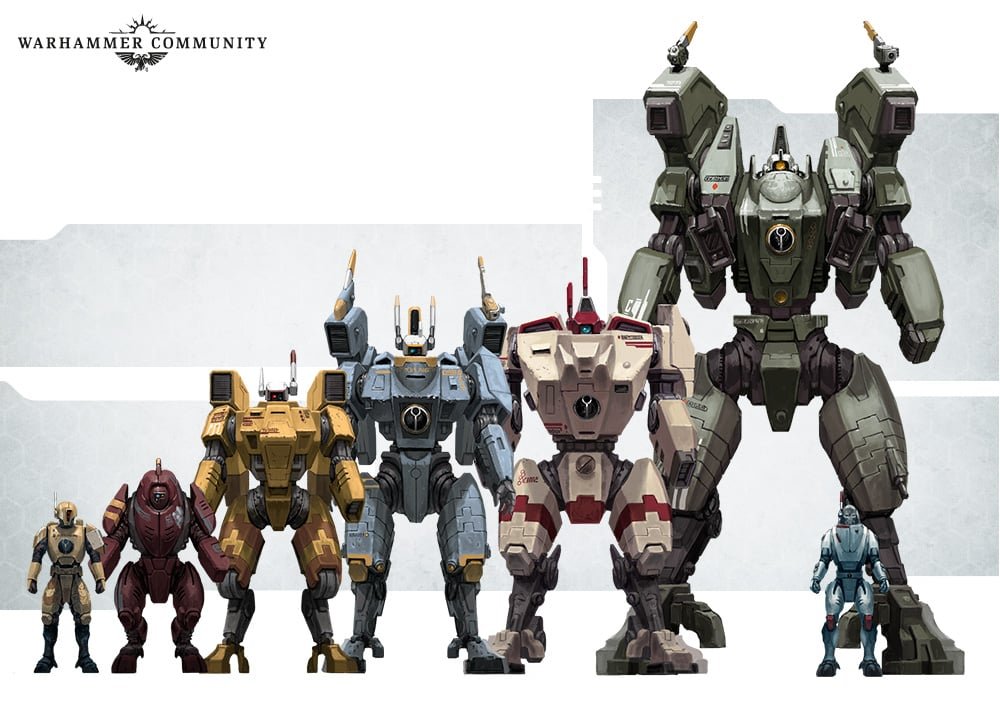
The bit that gets me is a line from an old White Dwarf, 2006 or thereabouts, where one of the designers called the T’au “almost an artificially dynamic race”. Artificially. He was talking about how the empire only ever seems to burn outward, wave after wave, and he wondered aloud what might happen if that energy ever turned inward instead. Throwaway line, magazine’s two decades old, and it’s stuck with me harder than most of the actual fluff. The people who write these aliens looked at their own creation and reached for the word artificially, then moved straight on to the next army entry like they hadn’t just said the quiet part out loud.
Nobody actually knows what an Ethereal is
Go back to the start and it gets stranger. Before the Ethereals, the T’au very nearly finished themselves off. The castes were at each other’s throats in a stretch they call the Mont’au, the Terror, war and plague dragging the whole species toward extinction. The legend, and the codices are careful to keep calling it a legend, has two identical strangers arriving at a siege on a mountain plateau called Fio’taun, one walking into the attackers’ camp and one into the fortress, talking both sides into laying down their weapons in a single night. They called themselves Ethereals. Inside a year the wars were done. Inside a few centuries the T’au were building rockets.
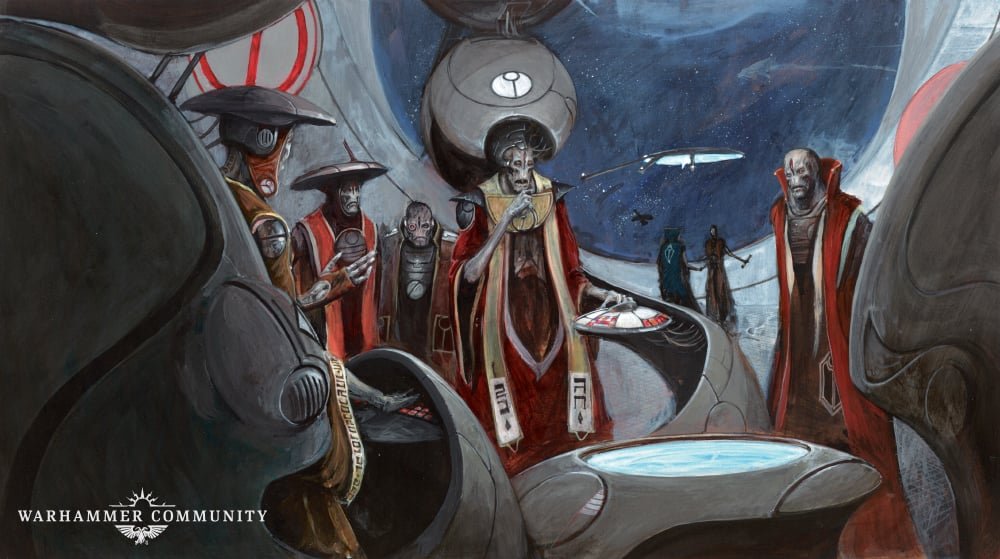
What an Ethereal actually does to a room has never been pinned down. What the T’au feel for one is absolute, immediate obedience, a full rung past the distant devotion a Guardsman holds for an Emperor he’ll never lay eyes on. The stock example is that an Ethereal could order another T’au to stop their own hearts and it would happen on the spot. The Adeptus Mechanicus, who are nosy about exactly this sort of thing, went digging. A Magos Biologis got hold of an Ethereal corpse, opened it up, and found a strange little organ in the forehead, a bigger version of something every T’au carries. Pheromones, he guessed. Some chemical signal. Then he studied the thing properly and reported that it had no functioning biological system he could find. He couldn’t tell how it worked, or whether it worked at all. The obedience carried on regardless.
The Greater Good has always struck me as a weirdly corporate thing. It’s the company that’s a shade too sincere about its mission statement, the all-hands where everybody genuinely believes the slides, the group project where one person has somehow convinced the other four that assigning themselves the worst jobs is an honour. Except the buy-in might be chemical, or psychic, or whatever the forehead nub is quietly doing, and nobody inside the system can tell whether the belief they feel is actually theirs. The T’au genuinely aren’t lying when they say they’re content. Whether that counts for anything is a question the setting mostly hands you and walks away from.
I lost a whole evening to this once. Started on the Ethereal wiki page after a game, meaning to check one thing about Aun’Va, and three hours later I was somehow reading about the Nicassar, these psychic bear-seal things the T’au picked up somewhere that drift around in gravity-ships, and I still don’t properly understand what they’re for… anyway. The T’au have a deep bench of weird under them that the blue-armour-and-drones surface never shows you.
I bought a T’au Combat Patrol about two years ago. Full price, on a whim, after losing three games in a row with Thousand Sons and deciding what I needed was a clean start with an army that just shot things instead of making me roll on psychic tables. It’s under my desk. Still shrink-wrapped. I have painted exactly zero blue men. Every so often I nudge the box with my foot and feel a small stab of guilt, then go back to fiddling with the same Rubric squad I’ve been failing to finish since 8th edition. So take my read on the Greater Good with the appropriate salt, given I’ve never once committed to them.
Twenty-five years of quietly getting darker
When the T’au turned up in 2001 they broke a rule the setting didn’t know it had. Everything else in 40K is some flavour of doomed. The Imperium’s rotting, the Eldar are dying, Chaos wins on a long enough timeline, the Orks are the Orks. And then in walk these earnest newcomers with clean lines and an honest belief that things can get better if everyone just cooperates, and it felt like someone had cracked a window in a room that had been sealed since 1987. Plenty of people hated it, and a fair few of them still bring it up.
What’s happened across twenty-five years is that GW has slowly let the cracks show. The dissidents who don’t take to the Greater Good have a habit of quietly disappearing. The caste system is maintained by selective breeding, which the codex states plainly, generations of shaping the Fire caste bigger and stronger and keeping everyone else in their lane. The famous friendly line about asking whether you’ll join them voluntarily comes with a tail about searing the flesh off anyone who says no. And then there’s the Fourth Sphere.
The Fourth Sphere Expansion is the one that gives the game away. The T’au fielded a new experimental slipstream drive, it misfired, and it flung an entire colonisation fleet into the warp, the one place their tidy materialist worldview has no answer for at all. What came back out was not fine. The survivors returned changed, carrying knowledge the Ethereals had no framework for and couldn’t allow to spread, and the official record on the whole affair got very quiet very fast.
Kiran’s take, and he plays Death Guard so weigh the source, is that I’m doing the thing where I make a faction more interesting than GW actually wrote it. He reckons the sinister reading is mostly Imperial propaganda getting laundered through the fanbase, that the Inquisition would obviously brand a happy blue commune as mind-control, because the alternative is admitting a xenos society simply runs better than theirs does. And honestly he might be right. Most of what we “know” about Ethereal control comes from Imperial sources with every reason to lie about it. The dissection, the pheromone theory, the whole mind-control framing, all of it filtered through people who’d exterminatus the empire tomorrow if they had the ships to spare. I started this paragraph meaning to knock his argument flat and I’ve mostly talked myself into it.
Except the forehead organ is real. The six-thousand-year sprint is real inside the fiction, a piece of established canon nobody has ever bothered to explain. The “artificially dynamic” line came straight from the people who build the game. Whatever’s actually going on with the T’au, part of the strangeness is baked in at the design level, and the Imperium didn’t have to invent any of it. So I end up roughly where I started, only a bit less sure of my footing.
Twenty-five years in, the T’au are still the only major faction whose central mystery hasn’t been answered, and the Imperium keeps meaning to deal with them and never quite manages it. Even Guilliman has been awake for years now and never said a public word about the young empire sitting on the galaxy’s eastern doorstep. The next codex could close the Ethereal question any time GW feels like it. I’d honestly rather they didn’t. Meanwhile the Combat Patrol’s still under my desk, and the anniversary went by without so much as a Warhammer Community article, which for the faction that once quietly broke the whole setting’s mood feels about right.