In 782.M41 an Astral Claw named Andar Scarion turned up at Watch Fortress Erioch to begin his Deathwatch service, and the welcome was frosty. His Chapter’s reputation had been curdling for decades by then. The Astral Claws had gone from trusted masters of the Maelstrom Warders to something the rest of the Imperium eyed sideways, all swagger and locked doors and a grip on the Badab Sector that was tightening past anything a Chapter is supposed to want. Handing one of that lot a place in the Imperium’s most secretive fighting order struck a fair few people as a mistake waiting to happen.
They let him in anyway. And he was good at it. Scarion served over five solar decades, rose to Watch Captain, ran his kill-teams to an exacting standard, and became a genuinely useful pair of hands liaising with the officers of the Achilus Crusade. By the records we have, he never put a foot wrong. Meanwhile, back home in the Maelstrom, his Chapter Master eventually torched an Imperial investigation fleet in a firestorm, started the Badab War, and dragged the whole Chapter down into Chaos.
So by the end of all that, what was Scarion? The Imperium never really has to answer that question, and the way the Deathwatch is built, it mostly never comes up.
The Long Vigil doesn’t come with a return date
Here’s the machinery. A Chapter sends its best to stand the Long Vigil with the Deathwatch as a duty and an honour, one or two brothers at a time, on secondment. They swear oaths of secrecy so tight that even their home Chapter isn’t told what they did out there. There’s no fixed term. A watch commander keeps a brother as long as he’s useful, and that might be a single mission or the rest of his natural life. When the work’s done he goes home under an oath of silence. When it isn’t, he stays on, or he dies out there.
The bit that snags me is that the secrecy runs both ways. A marine deep in a Vigil, chasing some Genestealer brood-lord across the Jericho Reach, might have no idea what his own Chapter is up to a thousand light years away. News crawls in the 41st Millennium. A Chapter can drift, dig in, refuse a tithe, and finally go over the edge entirely, and one of its sons could be standing a watch the whole time with no notion any of it is happening. It’s a bit like signing an NDA so airtight you can’t even tell your own family which building you clock into, then finding out years later the firm you left behind got raided.
Which leaves the Deathwatch holding a genuinely awkward object. If a brother’s Chapter turns while he’s away, is the Watch Fortress a sanctuary for him, a prison, or a death sentence he hasn’t been told about yet? The gene-seed is the same. The oaths he swore to the Emperor and to the Ordo Xenos are all still good. But his heraldry now belongs to a name the Imperium wants scrubbed from the records.
The setting keeps circling this without ever quite landing on it, and Scarion is the closest thing we’ve got to a real case, even if the timeline is fuzzy. He came from a Chapter everyone could already smell going bad, and he served with honour regardless. Whether he was ever formally told what his brothers had become, I genuinely don’t know. The sources go quiet exactly where you’d want them to talk.
Loyalty by the individual, not the batch
What the Imperium decides, in practice, is that loyalty is measured one marine at a time. This is a big deal in a setting where almost everything else about a Space Marine is inherited. Your Chapter, your gene-seed, your primarch, your rites, the colour of your pauldron. All of it handed down. And then the Deathwatch quietly runs on the opposite assumption, that a man can be judged on his own conduct with the Chapter icon taken off the table.
They even made an institution out of it. The Deathwatch has a rank, if you can call it that, for marines with no Chapter left to name: the Black Shield.
A Black Shield strips the heraldry from his shoulder guard, leaving nothing but the silvered skull of the Deathwatch, and by tradition nobody ever asks him why. Some come to it because their Chapter was wiped out and the lone survivor decides to spend his last decades hunting xenos rather than dying quietly. Others, and this is the darker version, are marines whose brothers turned away from the Emperor, and who walked out rather than fall with them. The blackened shield is a marine saying, in the only language the Adeptus Astartes really speaks, that his brothers’ choices stop at his shoulder guard.
You see the mechanism most clearly with Demetrian Titus. Ultramarines captain, hauled off by a paranoid Inquisitor on suspicion of being too resistant to Chaos, and when he finally surfaced from a stasis cell he’d convinced himself he’d shamed the Chapter just by being suspected. So he took up the black shield under the name Nullus and set out to die a nameless Deathwatch brother, killing Tyranids until the galaxy was done with him. Titus was no traitor and his Chapter still stood, but he believed his own name was tainted, and the Black Shield existed precisely to let a marine in that state keep fighting without dragging a Chapter’s name behind him. It took Tigurius personally reading his soul to drag him back to Ultramar. More recently you’ve got the Brazen Drakes, near enough hunted to extinction after their Chapter was declared heretic, their handful of survivors serving as Black Shields under Inquisitor Draxus. Same institution doing the same job, except the Brazen Drakes don’t get a redemption arc at the end of theirs.
The evening I lost an argument about all this
There’s a fella at my local store who only plays Deathwatch. Only Deathwatch, for years. Black kill-team, a different Chapter’s pad on every model, the whole lovingly nerdy business. We got into it once, properly into it, over exactly this question. His line was that a Black Shield could just as easily be a traitor hiding in plain sight, because if nobody’s allowed to ask where you came from, that’s a perfect place to bury a spy. Alpha Legion do this sort of thing in their sleep. I spent about forty minutes and most of a pint insisting the Deathwatch’s Chaplains and the Inquisition would sniff a wrong ‘un out long before he got near a Watch Fortress, and that the oath of silence isn’t the same as no scrutiny.
I was wrong, or at least I was overconfident, which for me usually amounts to the same thing. The lore doesn’t back me up as cleanly as I wanted it to. The Imperium takes marines on trust more often than an Inquisitor would like, and the whole Alpha Legion shtick works precisely because certainty about who’s loyal is the one thing 40K almost never hands you. He was right and I was defending a position because I’d already committed to it out loud. Happens more than I’d care to admit.
I’ll also cop to this: I bought the Deathwatch kill team box on a whim about two editions ago, entirely because the idea of painting one marine from every Chapter I liked sounded fun, and it is still sitting in its shrink-wrap in a drawer. Pete’s finished two whole Salamander companies in the time I’ve owned it. So my stake in this debate is, let’s say, theoretical.
The Watch keeps the machine turning either way
Step back from the individual marine and the Ordo Xenos has a colder reason to run things this way. The Deathwatch cannot afford to care about the politics of every Chapter that feeds it recruits. Its whole job is to have a veteran on hand who’s fought Necrons before when the Necrons wake up, and another who knows how a Hive Fleet thinks. If the Watch started refusing or executing brothers every time their home Chapter did something questionable, the kill-teams would empty out. Chapters go rogue, go silent, go extinct. The Watch has to be able to keep a good marine on the wall regardless of what his cousins are doing back home.
So there’s a reading of Scarion’s story that’s purely practical. A dangerous, arrogant, faintly unpleasant marine from a Chapter on the slide, put to work killing aliens for fifty-odd years, which is longer than I’ve been alive, and quietly retired from the record before his name became radioactive. The Deathwatch got fifty good years of alien-killing out of a marine whose Chapter was already rotting, and he was gone from the record before any of that mattered.
Does that mean a Black Shield who was once, say, a Red Corsair could be standing a watch somewhere right now, having genuinely turned his back on Huron and blackened his shield in earnest? The rules of the order say nobody’s allowed to ask, and I’d rather they stayed that way. I don’t much want GW to publish a ruling on whether the man in the black armour once fired on Imperial ships.
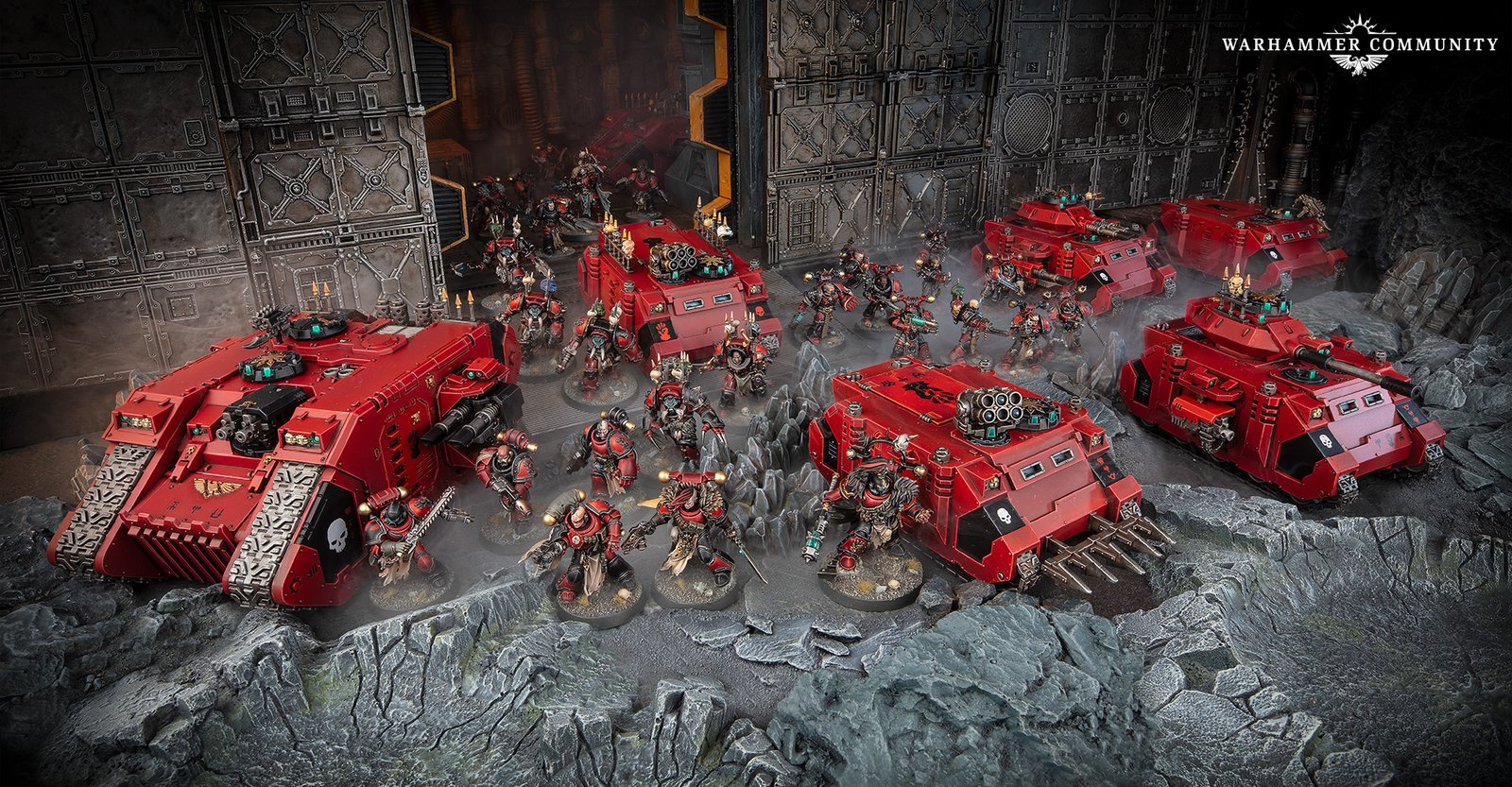
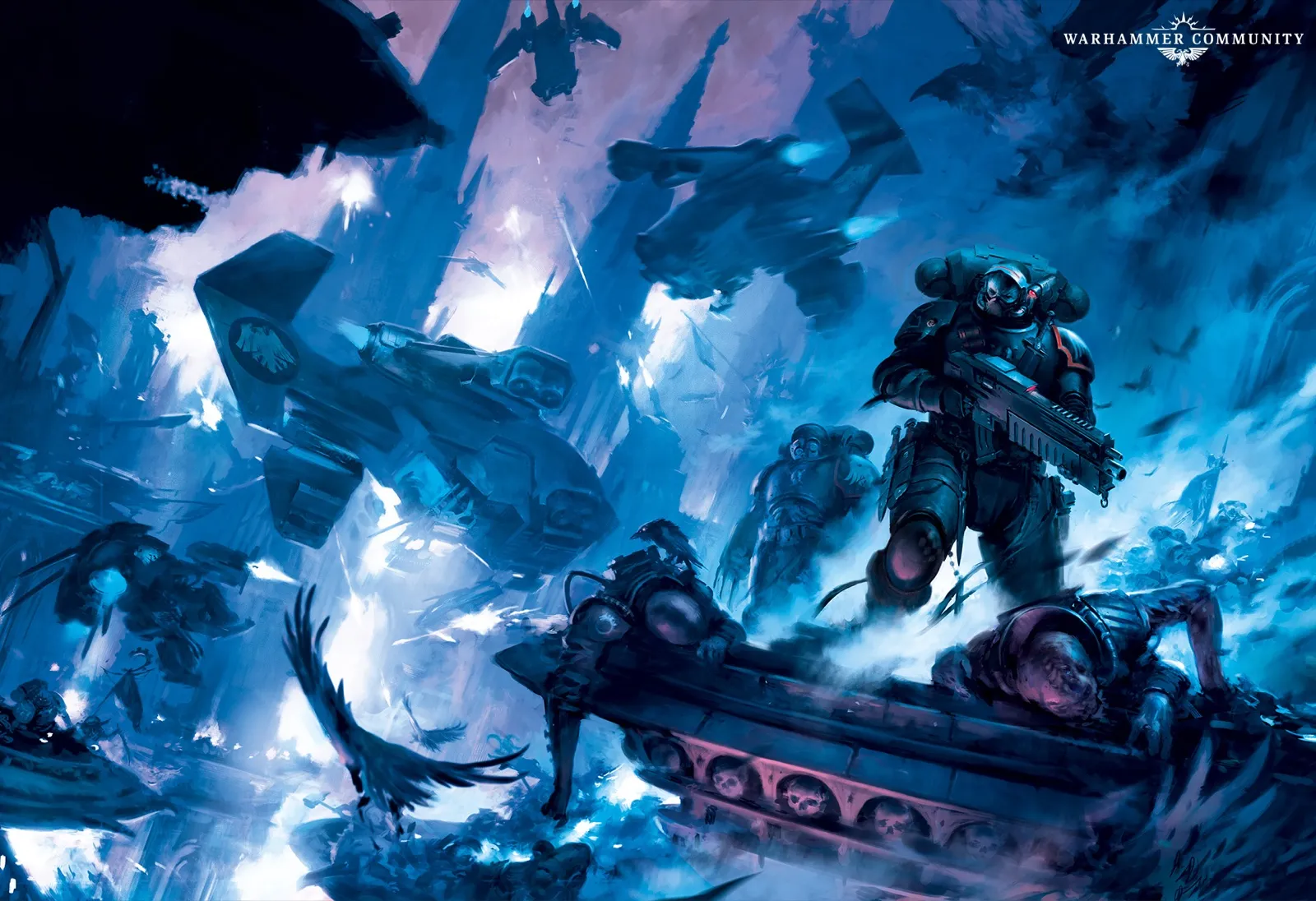
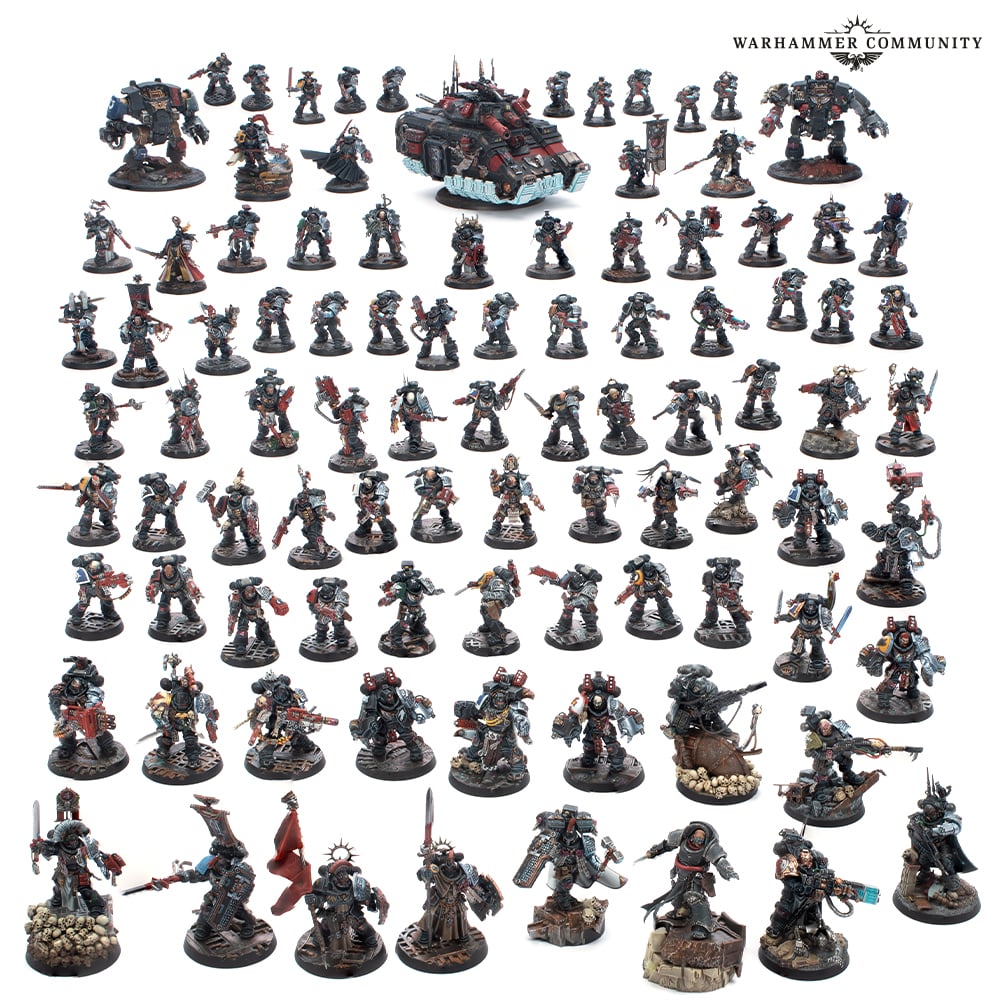
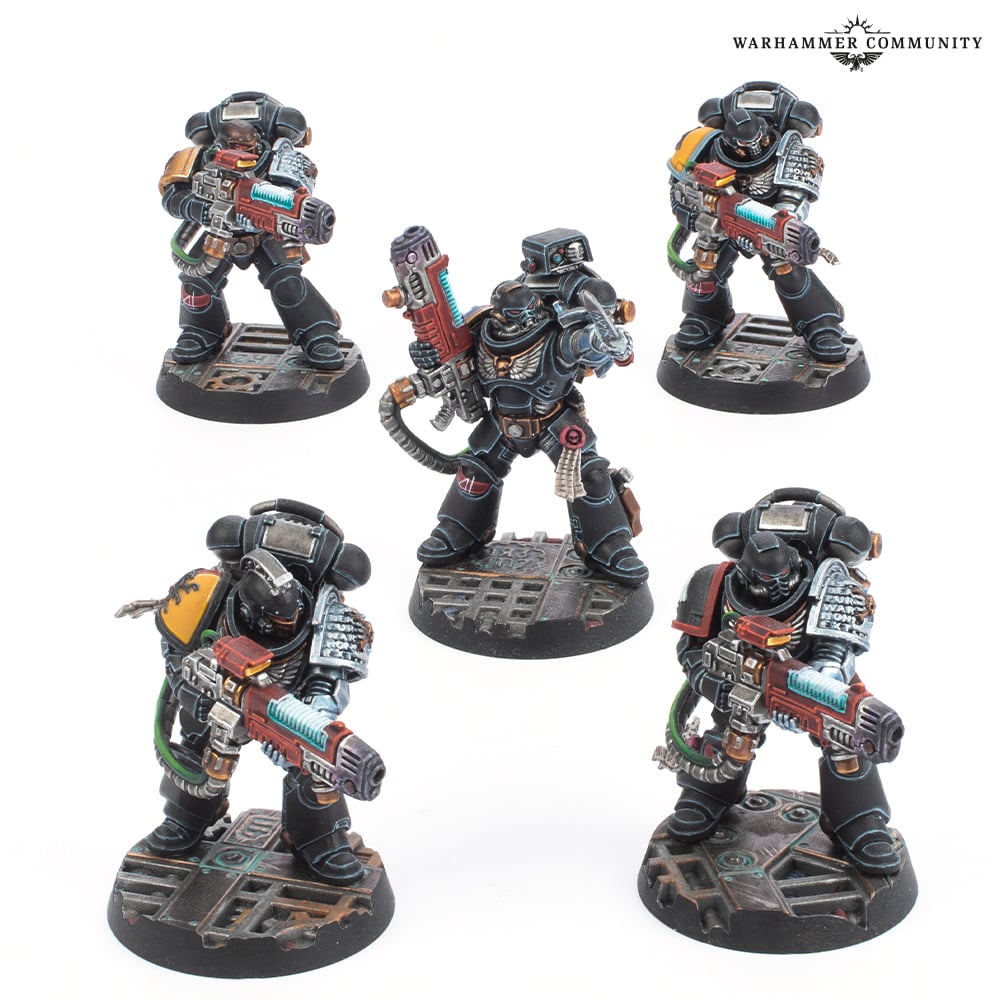
If you want the tabletop hook, the new Kill Team box leans right into it, a black-clad team of five where you pick the Chapter markings yourself, which means the choice of who your marines used to be is a decision you make with a paint pot. Build one as a Black Shield with no pad at all and you’ve got a whole backstory nobody at the table is allowed to interrogate. Which, for a hobby that runs on making up stories about little plastic men, is about the best prompt you could ask for.