“For 30 years I have dreamt of seeing a Warhammer universe in live action.” Henry Cavill posted that on Instagram in December 2022, the same month he lost Superman and got pushed out of The Witcher. He’s the executive producer and public face of the Amazon Warhammer 40K show, and by his own account he’s spent the years since sitting in rooms with Games Workshop, sifting through lore, trying to work out where a thing like this even begins. That was December 2022. My youngest was in nappies then. He’s reading now, and we still don’t have a director, a writer, or a confirmed cast.
The public record is thin. In December 2024 Amazon MGM and GW jointly announced the series was “moving forward,” which means roughly what it means when an estate agent tells you the sale is “progressing.” This January, GW’s CEO told investors the project remained in development with Amazon, Cavill, and Vertigo, and then said plainly that “delivery is not in our control.” A GW annual report chalked the wider silence up to a confidentiality clause with Amazon. Most people tracking it don’t expect anything on a screen before 2028.
I don’t think the hold-up is contracts. I think a Warhammer 40K show is one of the genuinely hardest adaptations anyone has ever signed up for, and the reason is the same thing fans love about the setting. There’s nobody to root for. The Imperium of Man, the obvious faction to build a series around, is a fascist theocracy that exterminates its own citizens for the wrong thoughts and feeds a thousand psykers a day into a rotting golden corpse to keep a navigation beacon lit. Those are the protagonists. Every other faction in the setting is either worse than the Imperium or too alien to write a scene of dialogue for.
And the setting assumes you already know all of it. Drop a normal viewer into the 41st millennium cold and they’ve got ten thousand years of backstory to catch up on before a single scene makes sense. Why the Emperor is a corpse. Why everyone hates the aliens. Why that man is screaming about heresy at a filing cabinet. The tabletop rewards that depth over years. A pilot has about ninety minutes to make a stranger care, and a straight 41st-millennium pilot would burn half of that just establishing why the galaxy looks the way it does.
None of the screen 40K we’ve actually got so far solves this. The video games get away with it because you are the Space Marine, and a game doesn’t need you to feel conflicted about painting a wall with heretics, it needs the trigger to feel good. Secret Level pulled the same trick in animated form: gorgeous, savage, twenty-odd minutes of a Space Marine being a Space Marine, no room and no reason to ask whether the Imperium deserves to win. A prestige series can’t hide behind that. Give an audience forty hours and they start asking who they’re meant to be cheering for, and “the space fascists” is a hard note to land in a writers’ room.
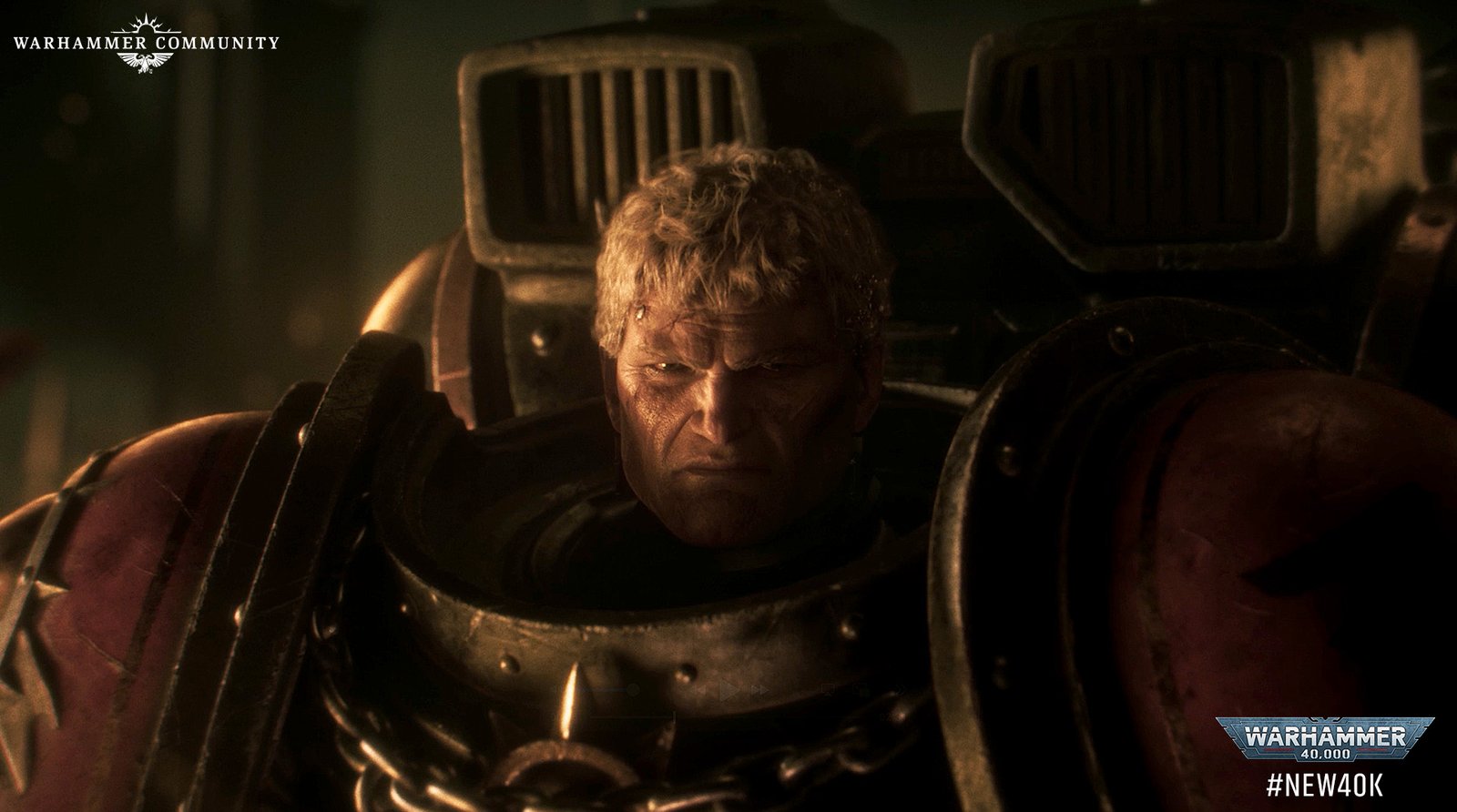
The fan-favourite fix has always been Eisenhorn, Dan Abnett’s inquisitor novels, and I understand the appeal. It’s a detective story. One man, a small supporting cast, a noir mystery that slowly opens out onto the horror of the wider galaxy. It might be the single most adaptable thing in the whole canon. But it’s also small, and Amazon didn’t pay Games Workshop franchise money for small. There’s a version where they shoot Eisenhorn first, cheap, as a proof of concept, and scale up from there… but Cavill isn’t signing a multi-year deal to play a wheezing old inquisitor in a cloak, and the studio wants the grimdark Lord of the Rings. So you’re back to Space Marines. And a Space Marine is eight feet tall, sealed head to toe in ceramite, and about as easy to read an emotion off as a forklift, which is a real problem when your lead has to anchor forty hours of prestige drama.
The one era a Warhammer 40K show could actually pull off
There’s a theory doing the rounds, kicked off by ScreenRant back in January, that reads Cavill’s cryptic 2022 teaser image, a cracked and decaying Imperial Aquila, as a nod toward the Scouring. I don’t put much stock in sigil-reading, and I think the image is a red herring. But the longer I sat with the idea, the more I came round to the destination. The Scouring is the only stretch of the entire timeline where you can start a newcomer from something close to zero.
The Scouring is the period right after the Horus Heresy, once the Siege of Terra ends and before the Imperium we actually play games in has hardened into its final paranoid shape. The Emperor has just been placed on the Throne. Half the Primarchs are dead or missing, and the survivors are stuck in a room together deciding what comes next. Chris Wraight built a whole novel in exactly this window, Ashes of the Imperium, and if you want the deep version of the lore I’m about to skate over, I went long on that book here.
What makes it work on screen is that the Primarchs are still people at this point. Guilliman hasn’t become the weary ten-thousand-year-old regent yet. He’s a competent, faintly cold man who arrived on Terra after the fighting stopped and immediately started reorganising everything, and everyone who bled for the walls resents him for it. Dorn is grief-stricken and furious. Sigismund is quietly turning into something frightening. These are characters an actor can actually play, with faces and motives and petty grudges you could build a scene around.
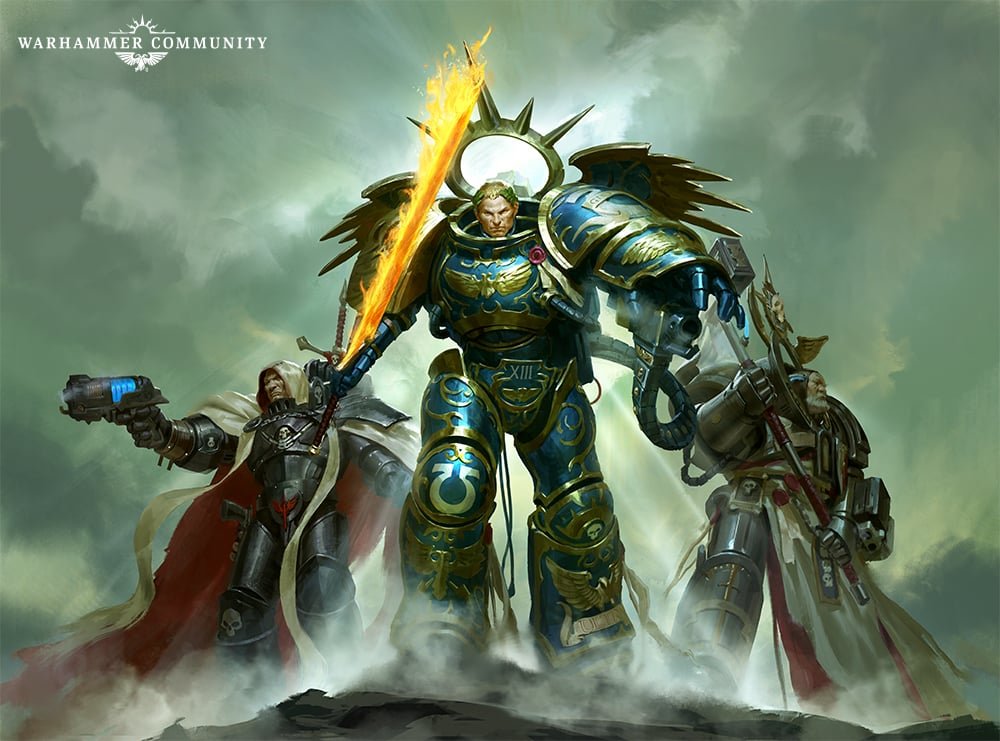
There’s a moment in the lore where the surviving Primarchs sit down together to decide the future, and it’s genuinely the most uncomfortable meeting in the whole saga. Nobody trusts anybody. The men who held the walls think the men who showed up late have no right to a vote. The men who showed up late think the defenders are too traumatised to make sane decisions. And Guilliman just sits there, quietly moving pieces, until everyone else has run out of options. You don’t need a war scene to film that. You need a table and eight furious demigods who each think they should be the one in charge.
I’ve got a soft spot for Dorn’s lot, which is almost certainly clouding my judgement here. I started an Imperial Fists army back in 5th edition purely because I liked the yellow on the box art, then spent the better part of a decade learning why nobody paints yellow. Averlander over a white undercoat, thin coats, and it still goes streaky if you breathe on it wrong. My big yellow idiots sat half-built in a drawer for years. I never did rebase them to match the newer kits, out of pure stubbornness. Watching Sigismund lose his mind in Ashes hit me harder than it had any right to, for a Chapter I mostly own in grey plastic.
The Scouring also lets you do something no other setting can. You get to watch the Imperium curdle into the thing everyone half-recognises. The proto-Inquisition is a handful of Malcador’s leftover agents with no authority, arguing about whether knowledge of Chaos should be preserved or burned. The Emperor-worship cults are already organising even though Guilliman has banned them. The Space Marine Legions are being carved up into Chapters. A viewer who knows nothing walks in on ordinary people building the machine, and a viewer who knows everything gets dramatic irony in every scene, because we already know how it all turns out. The Chapters, the Creed, the witch-hunts, ten thousand years of it, and it starts with a few hundred tired people improvising in the ruins.
It’s got natural act breaks built in, too. The traitor hunt gives you a season of pursuit. The argument over what to do with the Legions gives you the political spine. Somewhere down the line there’s the Iron Cage, where Dorn walks his whole Chapter into a trap Perturabo built specifically for him, knowing full well it’s a trap. That’s a finale. You could map five seasons of this out without inventing a single thing, which is more than most fantasy shows can say before they run out of book to adapt.
So yeah. The Scouring. Heroes win the enormous war, then immediately start circling each other over the rubble. Nobody trusts anybody. The one man who could hold it together is strapped to a life-support throne and can’t speak, and half the people in the room want his job. It plays like a political thriller that happens to have power armour in it. People, in a room, deciding who runs what’s left.
What Amazon actually paid for
Do I think they’ll do it, though? Probably not, and I want to be honest that my whole case has a hole in it the size of a Warlord Titan. Amazon paid for recognisability, and recognisability is a blue Space Marine punching an Ork, not a political drama set in a millennium most casual fans have never heard of. If you’re a studio protecting a nine-figure investment, you open on the iconography people already clocked from Space Marine 2, not on a Guilliman succession crisis. The Scouring might be exactly the sort of clever, lore-brained pitch that dies in the first development meeting because it won’t fit on a poster. I keep going back and forth on it.
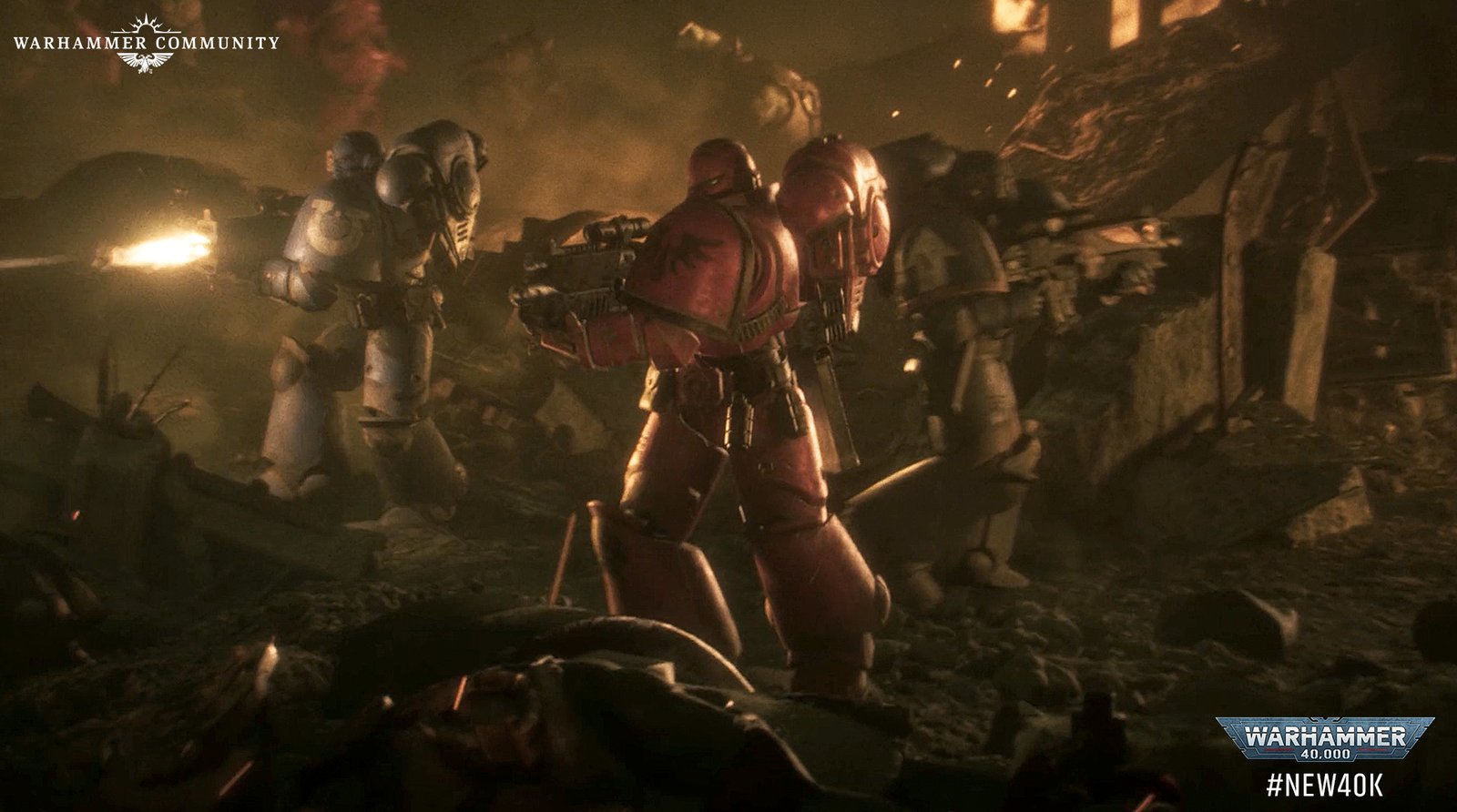
When Secret Level dropped on Prime a while back, the animated anthology with the one Space Marine 2 episode in it, half my local store treated it like a trial run for the real thing. Two lads at the paint station spent an entire evening arguing about whether the show should be live-action Space Marines or “something with actual people in it.” One of them wanted Titus. The other kept saying you can’t carry a whole series on a bloke who never takes his helmet off. They were still at it when I packed up and left.
Realistically we’re years out. No showrunner means no scripts, and no scripts means no shoot; the people who follow this stuff are saying 2027 at the earliest and more likely 2028. Cavill will be in his mid-forties by the time it airs, assuming it airs at all. Until then we get a few more years of “moving forward,” and I get a few more years to not finish my Primarchs reading.