Somewhere in the Warhammer Studio, somebody decided the Imperial Truth needed a spokesman, so they invented one. Alasteir Gundi, described as a rationalist Terran philosophist, one of the first scholars of the doctrine and an early contributor to its ideals, author of a magnum opus called Truth in all His Works. He gets about a page.
The chunk of Gundi’s essay that made it into print is a debunking. Daemons are fabrications, dreamed up by the tyrants of Old Earth to keep the lowest orders of humanity in servitude. The charms and trinkets peddled to ward off spirits are the mercantile exploitations of salesmen of serpents’ oils, “an economy of nonsense.” The Warp is a dimension nobody’s finished charting, no stranger than any other stretch of space. The things swimming around in it are drawn to ships the way fish are drawn to lights on a keel, and sure, some of them are predators, but predators with no malice in them. He signs off by conceding that sailors are a superstitious lot, and then restating for the room that there are no demons in the Warp.
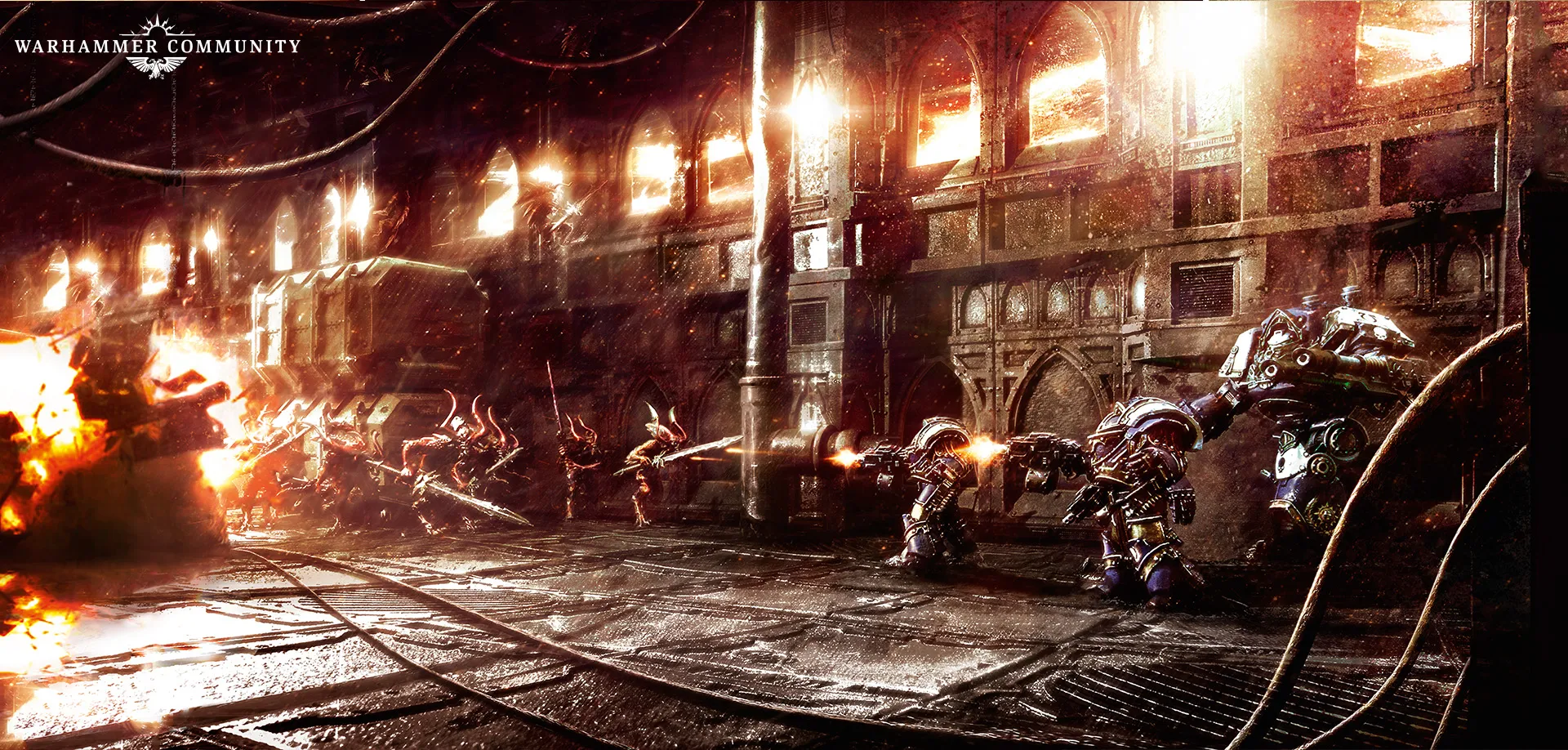
The Legions were fighting daemons in corridors at the time he was writing.
Gundi is one page of The Hidden War, which Warhammer Community put up as a free PDF on Thursday. It’s the latest instalment of Pages from the Black Books, the weekly dig through the old Forge World Horus Heresy sourcebooks, and this one is pulled from Book VIII: Malevolence, which came out in 2019, about as long ago as my kid has been alive. Twenty-six pages. Most of it is a compendium on what daemons are, how they get here, and what the Imperium did about them while insisting they didn’t exist.
What the Imperial Truth actually cost
The document doesn’t dance around it. There’s a section called The Great Lie, and its opening position is that the lie sat at the heart of the doctrine from the start, promulgated by the Emperor who now sits eternal upon His throne. The unnamed narrator, writing from somewhere after the Heresy, has clearly had enough of pretending otherwise.
Then it starts counting. Many billions of lives lost in the purges required to maintain the Truth. Ancient civilisations descended from Old Earth, carrying religions that were now anathema, murdered for their beliefs. Tens of thousands of cities burned, cultures put to the sword, whole worlds annihilated in the name of a doctrine whose central claim its author knew to be false. The phrase the document lands on is that ignorance was promoted hand in hand with enlightenment across the stars.
There’s a good bitter exchange in there too, about what actually broke Horus. Jaghatai Khan’s version is that Horus worked out the Emperor had concealed His true purpose from His favourite son, and that Magnus knew more of the Warp and Corax more of the darkness in mankind than he did. Garviel Loken, who survived Isstvan III, is recorded countering that it was simply Horus realising his father wasn’t infallible, the way all sons eventually do about their fathers. The narrator notes that we can’t settle it now, because Horus is dead and his ashes reveal nought.
Malcador’s Tallymen
I hadn’t seen this part before, and it’s why I’ve been thinking about the PDF for two days.
Suppressing knowledge of the Warp wasn’t a matter of iterators giving good speeches. There was an organisation. The Order Elucidatum, colloquially the Elucidators or the Tallymen, operating under Malcador’s personal seal, and they had two jobs. In public they were data scribes attached to the iterators, planetary governors and census takers, doing genuine Administratum work, sifting demographic returns from newly Compliant worlds. That access was the point. By reading the census data and the reports coming back from newly found human populations, they could work out which worlds had suppressed religious cults likely to resurface after Compliance.
Their covert function was assassinating demagogues, destroying proscribed texts, and, in the document’s words, suppressing any persons with knowledge of or contact with the manifestations of the Warp. Not the cultists. Anyone who’d seen anything. Their warrant let them commandeer any Imperial military command or asset they needed on the spot, with one exception carved out for the Legiones Astartes, which tells you roughly where they sat in the pecking order.
They burned fanes with the worshippers still inside them. They ran pogroms through the rural wilds of worlds nobody has ever named. And they were issued a nerve agent called seratoxin, the Brain Destroyer, dispersed to ensure that every witness to an immaterial incursion, man, woman or child, was expunged and placed beyond any hope of recollection. It leaves the survivors as withered husks, able to respond to nothing beyond autonomic instinct and phototropic cues.
Somewhere in this there’s a workplace comedy nobody will ever write. The Tallymen travelled with the fleets in the open, filing paperwork, sitting in on the iterators’ briefings, being colleagues. Their name got bad enough that elders in the lower decks of Crusade warships invoked it to frighten badly behaved children. The man doing your census forms was the same man.
They also spent a good deal of effort wiping out the early Emperor-worship cults springing up inside the Expeditionary fleets themselves, which is the sort of detail that makes the Ecclesiarchy’s eventual victory funnier than it has any right to be. And the document’s own verdict on all of it is blunt: their tally of murders is a direct contribution to the cost of the Great Lie. Had mankind been trusted to know about the outer dark and reject it, the Order wouldn’t have been needed at all.
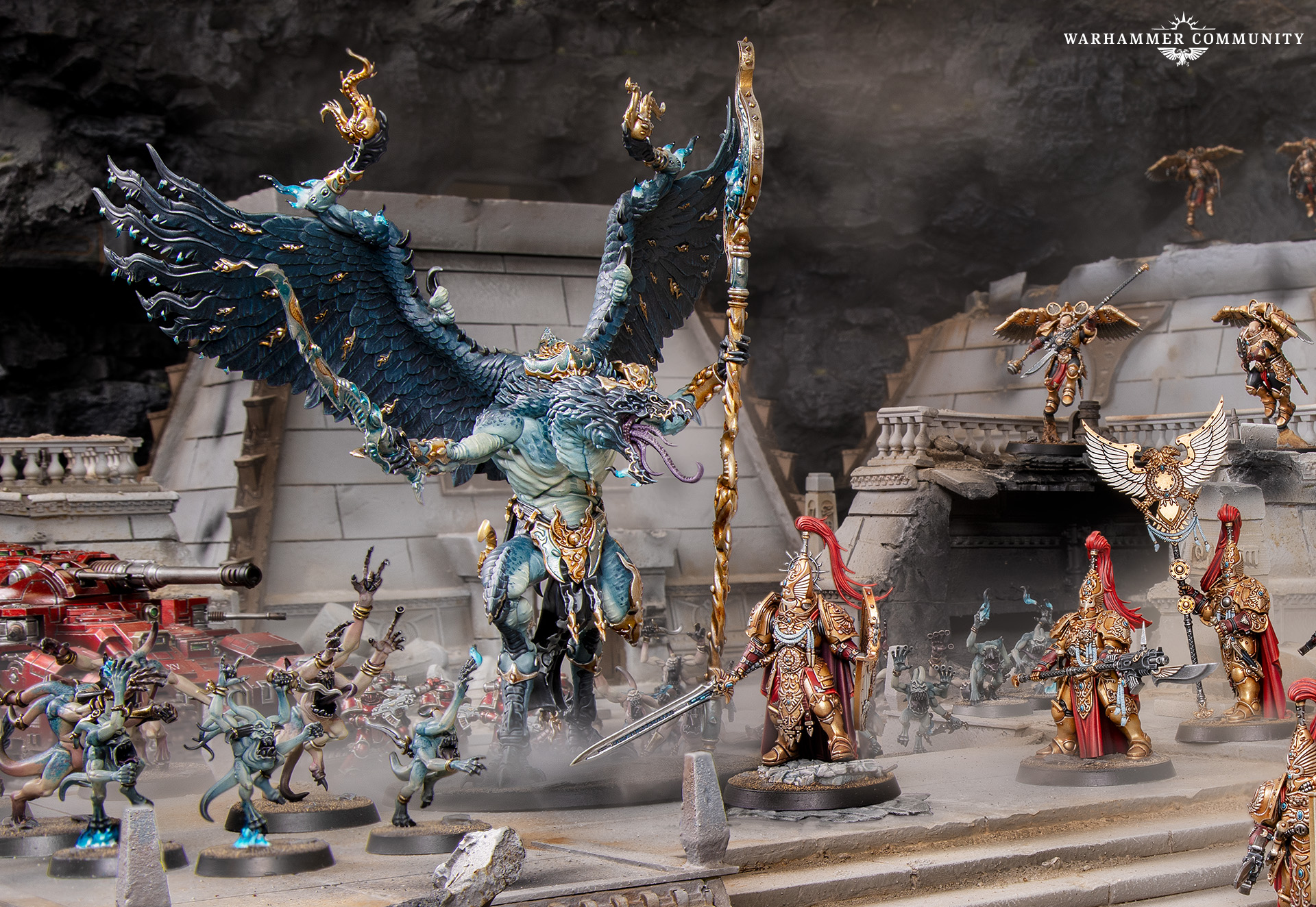
The Elucidators weren’t alone. The extract runs through what it calls His Talons, and the list is roughly the Emperor’s whole toolkit escalating by severity. Legio Custodes when He intervened personally in esoteric matters, and notably given a lighter hand with forbidden artefacts than anyone else in the Imperium, because their job included apprehending and interrogating people who knew things. Sisters of Silence as witchseekers, with Pursuer cadres, Erinyes jetbike squadrons and something called Divider stealth-craft. The Officio Assassinorum when death was the only available answer. And when a world had made compacts with the Warp and needed to stop existing, the Titans of the Ordo Sinister.
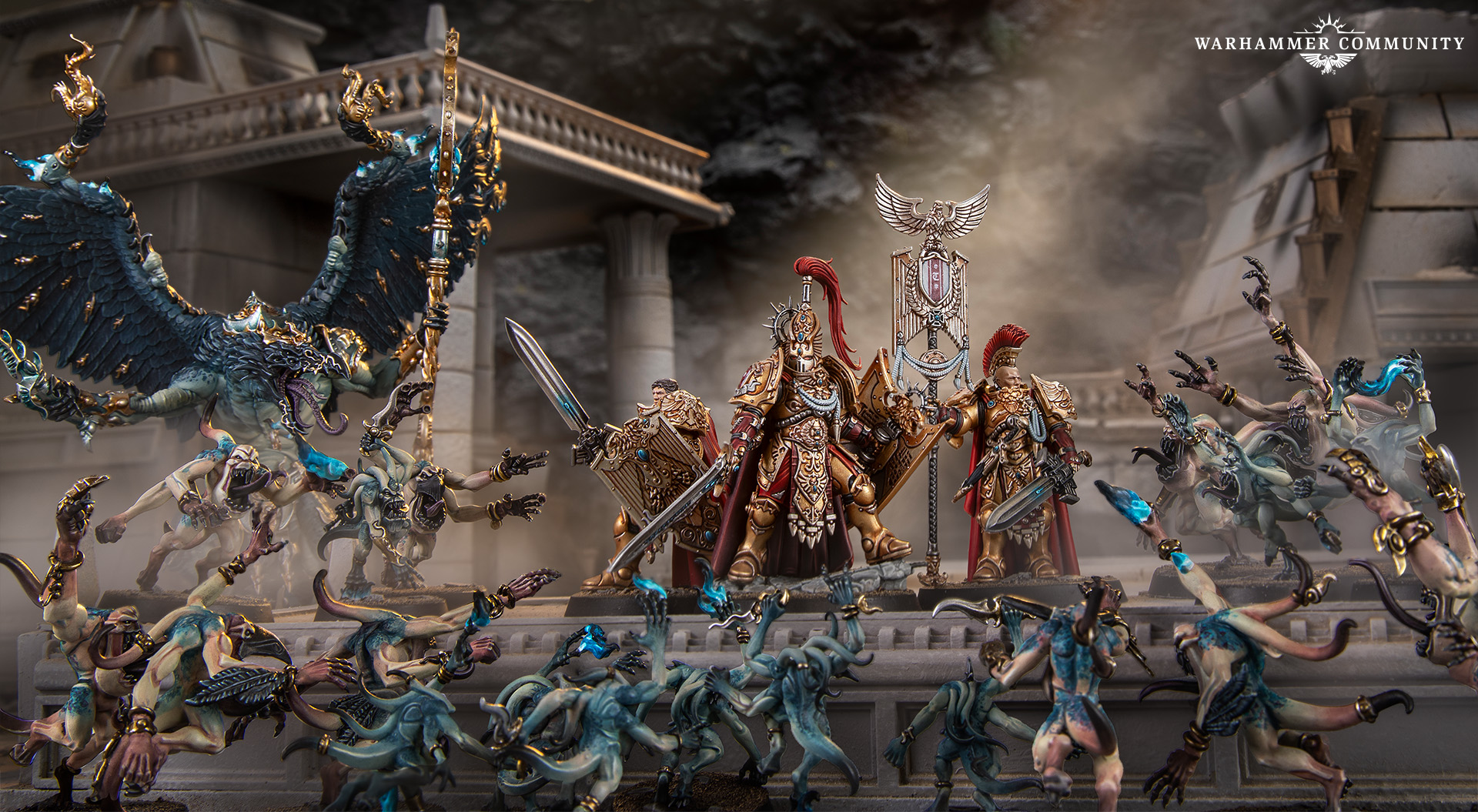
Now, the bit I keep chewing on and can’t resolve. The Imperium’s designated experts on occult threats during the Crusade were the Thousand Sons and the Word Bearers. Those two Legions got dispatched to deal with sorcerous phenomena so consistently that the narrator calls it suspiciously fortuitous, and notes they were always somehow adjacent to wherever such need arose. They were supposed to be destroying the grimoires. It was apparently an open secret that the Thousand Sons were cloistering them in Tizca. So the counter-daemon department was staffed by the two Legions who would go on to hand the galaxy its daemon problem, and the paperwork on that arrangement was signed off at the top. I don’t have anywhere to take that. It just sits there.
I have never owned a Black Book
Genuinely, not one. They were sixty-odd quid when I could least afford one and they’re collector prices now, and every scrap of Heresy background I have opinions about came out of free PDFs, other people’s photos of pages, and forum arguments. I’ve relayed something from Malevolence at a table with total confidence, having never held a copy of it.
Which is how I ended up losing an evening last spring. I’d gone looking for whether the Phalanx has a proper Librarius, because Pete had said something offhand about it while we were both meant to be painting and I wanted to be right. Two and a bit hours later I was reading about Munitorum ration tin standardisation and the argument about whether corpse starch is literal, and I had put down exactly one thin coat of Averland Sunset on a Firstborn Devastator sergeant I’ve owned since 5th edition and will never strip, because he’s got the old sculpt’s stupid little pointing hand and I like him…
Anyway. Dorn.
Dorn had a locked room
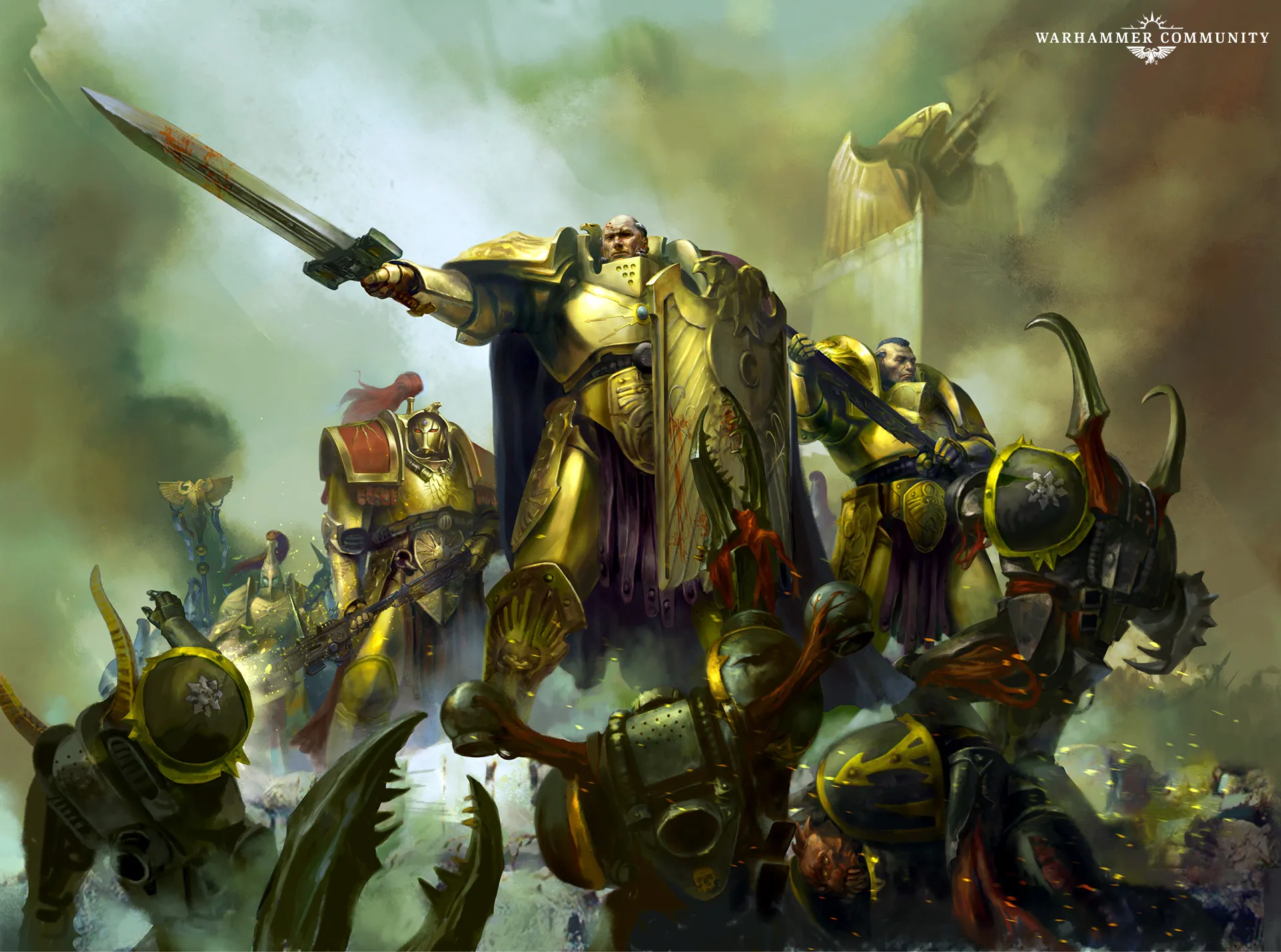
Buried under a heading called The Zealous Legions is a paragraph that reframed my entire army for me. The Imperial Fists were also, quietly, employed by the Emperor against daemonology.
The reasoning given is the stoicism. Zealous loyalty engineered into the core of the gene-code, steeling them against corruption, which made them safe to hand things that would have hollowed out anyone else. The document says the Emperor kept the VIIth and their Primarch close for much of the Crusade, and that Dorn could be trusted to exercise restraint and caution in his studies rather than chase knowledge for its own sake. So it’s rumoured the Emperor spent decades sharing secrets with Rogal Dorn that only a handful of people in the galaxy were privy to.
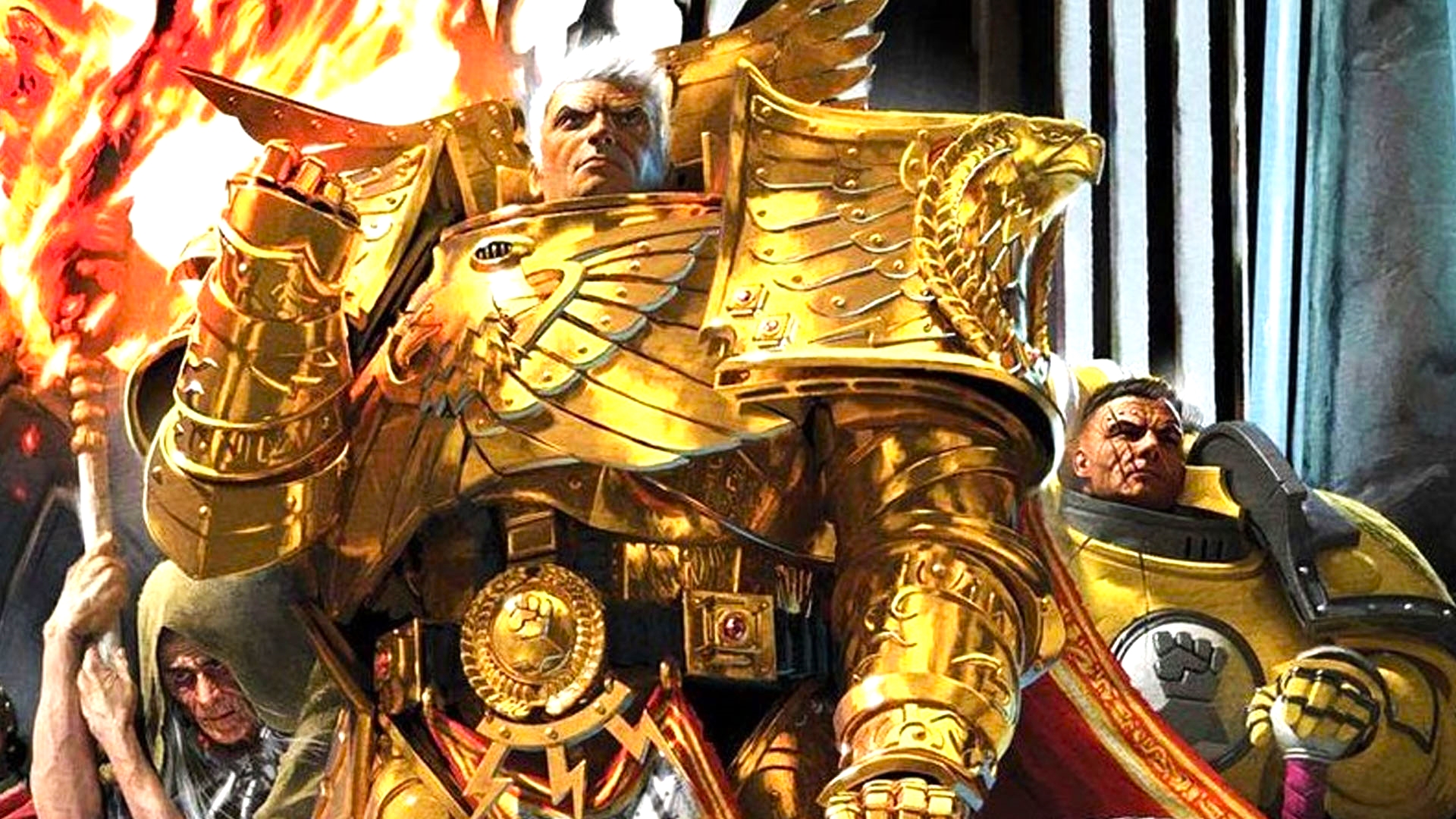
And Dorn built a collection. As the Fists encountered sorcerers and preachers of the profane, they learned to identify what they were fighting and pioneered an arsenal of psyarkana devices for use against Warp influence. Over the course of the Great Crusade he accumulated one of the greatest repositories of the arcane in the Imperium, held in the vaults of Phalanx, kept hidden from his brothers. He was reticent to use it. He used it during the Siege of Terra.
I’ve carried a version of Dorn in my head since I started the army, and it’s mostly a man who builds walls and applies a ruler to things. The document describes someone who spent two centuries quietly keeping material he’d been instructed never to discuss.
I want to push back on my own reading here, because “Dorn secretly knew” is exactly the kind of retrofit that makes every loyalist look prescient after the fact, and Malevolence is a 2019 book writing back over material from decades earlier. The narrator hedges it as rumour, twice. But then the psyarkana thing isn’t hedged at all, and neither is the vault, and a Legion quietly holding a working anti-daemon toolkit under a doctrine of public denial is the same shape of secret the Grey Knights would be built around ten thousand years later. So I’ve talked myself back round.
The extract closes on the survivors’ guilt. A long run of if-onlys about Guilliman learning of Isstvan before Calth, about Sanguinius flying clear of Signus, about Magnus not breaking Nikaea, ending on the line that these are the speculations of the bereaved.
The Hidden War is a free download on the Warhammer Community site, and it’s the largest of these extracts by some way. Last week’s instalment was warp cults and Calth; next Thursday’s is the Sisters of Silence, which given this week’s material on what the null-maidens were actually sent to do should be worth reading. Journal Tactica: Prospero Burns – The Judgement of Valdor, the book all of this is trailing, goes up for pre-order today.