The psyk-out grenades a Culexus Assassin carries are filled with dust scraped from the Golden Throne itself. That’s the detail that stuck with me. Not the skull-faced helmet, not the dead black eyes, the grenades. Somebody in the Officio Assassinorum worked out that the best thing to throw at a psyker was a fistful of ground-up Throne, and then built an entire killer around delivering it. The Culexus is the sharp end of something the Imperium calls the Untouchables, and the more you read about them the less they feel like a unit and the more they feel like a problem nobody wants to say out loud.
Everything alive casts a shadow in the warp. If you’ve read anything about how the warp works, you know a normal person barely registers, a faint spark, while a psyker burns like a signal fire every daemon in the vicinity can see. An Untouchable casts nothing. White Dwarf 440 describes it as a void, a yawning black pit where the soul should be, and reckons the defect turns up in fewer than one in a billion people. White Dwarf 447 says one in a trillion. I don’t know which number is right and I’m not convinced GW does either, but the point survives the maths. These people turn up maybe once in a billion births, and in the warp they read as nothing at all.
The effect on everyone else is physical. Non-psykers get the skin-crawl, an instinctive repulsion that doesn’t care whose side you’re on, allies included. Psykers get it much worse. According to White Dwarf 447, warp-flame gutters out as an Untouchable closes in, curses die in the caster’s mouth, and the psyker feels their own power constrict while the pain climbs. None of it is learned. A baby will cry. It’s the vibe-death when the wrong person walks into a party, except the wrong person is doing it just by existing, and can’t switch it off.
What a Pariah actually costs the person
Before any of these people become weapons, they’re children whose parents can’t stand to hold them. White Dwarf 440 is blunt about it. Pariahs get treated like lepers, rejected by families, driven out of settlements. The Inquisition turns them up living as hermits, or scraping a life in the lightless bottom of some hive, because that’s where you end up when every human you meet feels a low animal dread near you and can’t explain it.
That’s the part the tabletop never really sells. On the table a Culexus is a scary murder-model with a good statline. In the fiction, being born Untouchable is a slow catastrophe. You don’t get chosen for it. It just happens to you, and then everyone around you can feel it. You’re the thing the dog growls at, and it starts with your own parents.
I’ve owned a Culexus for about a decade and never finished it. It came in Assassinorum: Execution Force, that 2015 boxed game with the four plastic assassins, and honestly I bought the box for the Vindicare and the Eversor. The Culexus went onto a sprue in a drawer, got one coat of Leadbelcher on a weeknight, and has sat there since. Every so often I dig it out, look at the daft eye-lens helmet, think “I should base that,” and put it back. My Imperial Fists get painted. The soulless one waits. Pete has taken the mick out of me for it more than once.
And I’ll admit, for years I played the anti-psyker rules wrong. I had it in my head that a Blank just switched off powers nearby, full stop, like a bubble with a hard edge. It took a garage-group argument and someone reading the actual rules out loud before I understood it was ranges and modifiers and Perils checks, not a simple off switch.
The one with no weapons
So the Culexus. No gun. No sword. Doesn’t carry anything you’d call a weapon, because it doesn’t need one. It wears this huge helmet, the animus speculum, and the helmet’s main job is to muffle the wearer so its own side can function in the same room. There’s a suit under it, the etherium, that shifts the assassin half out of phase with reality. When it finally closes on a target it opens the eye, and the thing it’s been holding in this whole time comes flooding out. White Dwarf 440 says the animus speculum can obliterate a psyker’s brain outright and leave a withered husk. Against ordinary troops the aura just muddles their minds until they scatter.
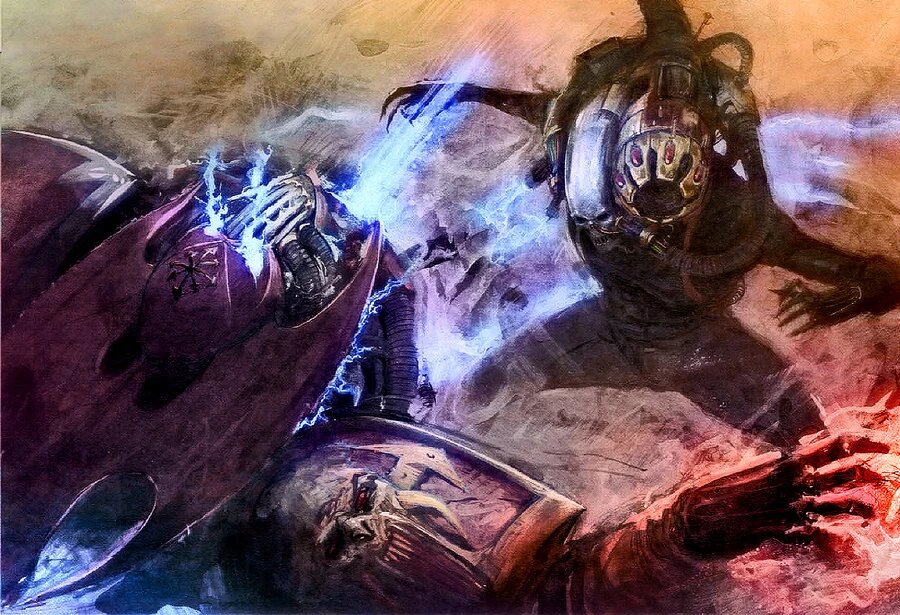
There’s a scene in the Mont’ka book where a Culexus goes after Aun’va, the T’au Ethereal Supreme. His honour guard throw themselves into the gap and die buying him seconds. Aun’va runs through an abandoned hive on a failing hover-drone, certain the black-clad thing is strolling after him at a walking pace, and it is. The book says the end was neither swift nor merciful. That’s the effect they’re going for. It’s a slow horror. The thing walks after you at its own pace, it has all the time it wants, and it wins by making you understand that well before it reaches you.
You can read the whole temple structure in a rundown of the Officio Assassinorum, and the Culexus is genuinely the one even the other assassins keep at arm’s length.
Weapon, or abomination
This is the knot the Imperium ties itself in, and it’s the only knot in this whole thing I actually care about. Back in the early Imperium, pariahs got shipped to Terra on the Black Ships alongside the captured psykers and handed to the Adeptus Mechanicus for study. White Dwarf 440 tells this bit like a heist. So many pariahs piled up in the Mechanicus cells that their combined blankness started punching a hole in the warp near Terra, and that hole began to interfere with the Astronomican, the psychic lighthouse the entire Imperium steers by.
The High Lords panicked. Navigators, the Astra Telepathica, the Master of the Astronomican, all of them pushing to have pariahs declared illegal and killed on sight. The Mechanicus, who had been quietly working with the Officio Assassinorum on wargear and training for years, watched its project about to get shut down. So they faked it. Announced they were ending the programme, made a show of closing the laboratoriums and executing the specimens. Except the execution count didn’t match the number of pariahs actually in the cells. A handful of the most promising ones got moved to a secret fortress at the edge of the galaxy, and that’s where the Culexus Temple was born.
The same trait that makes the High Lords want you exterminated is the trait that makes you an irreplaceable weapon, and the great institutions of the Imperium can’t agree which of those matters more, so they quietly do both at once. They hunt pariahs and they harvest them.
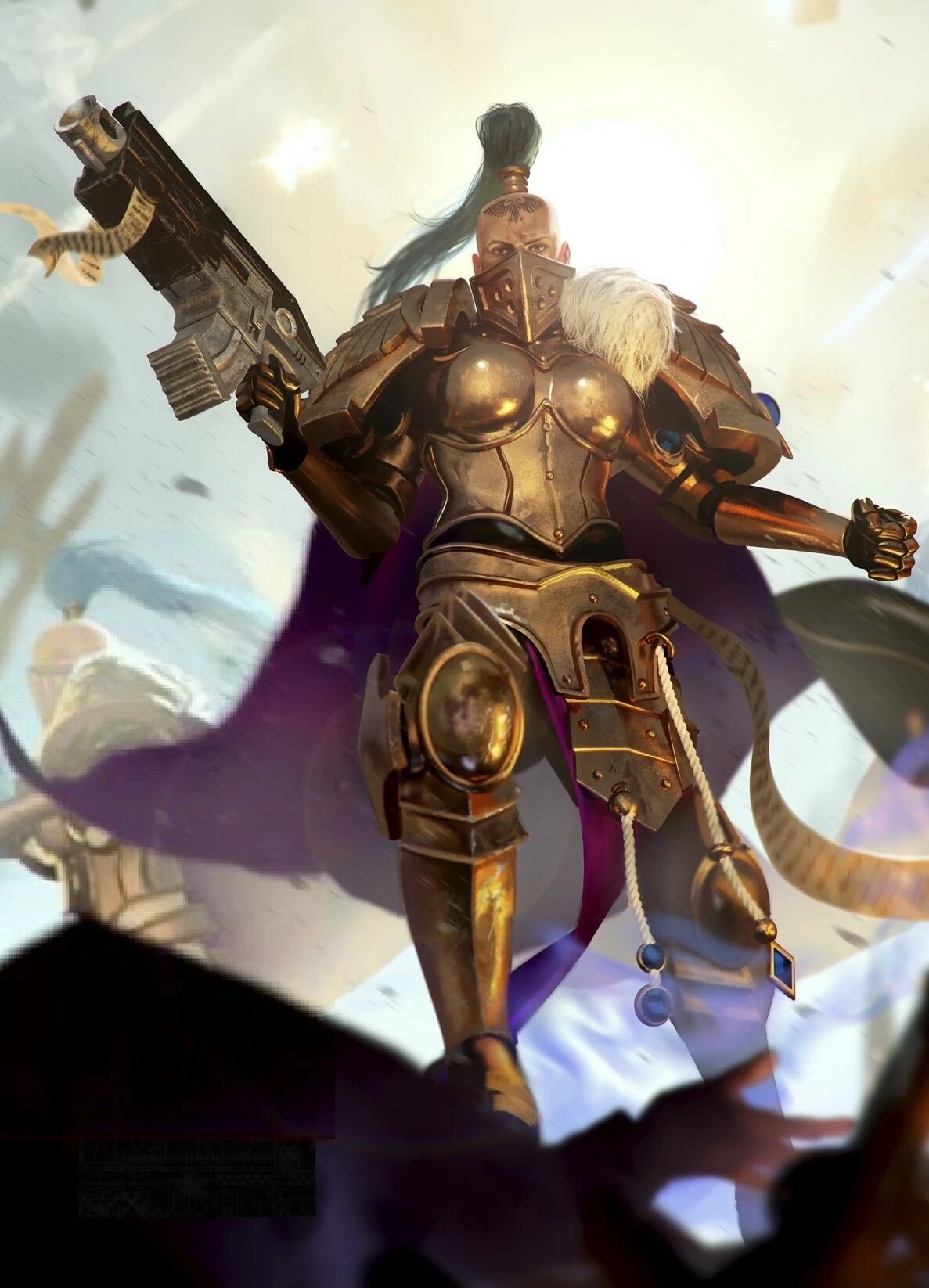
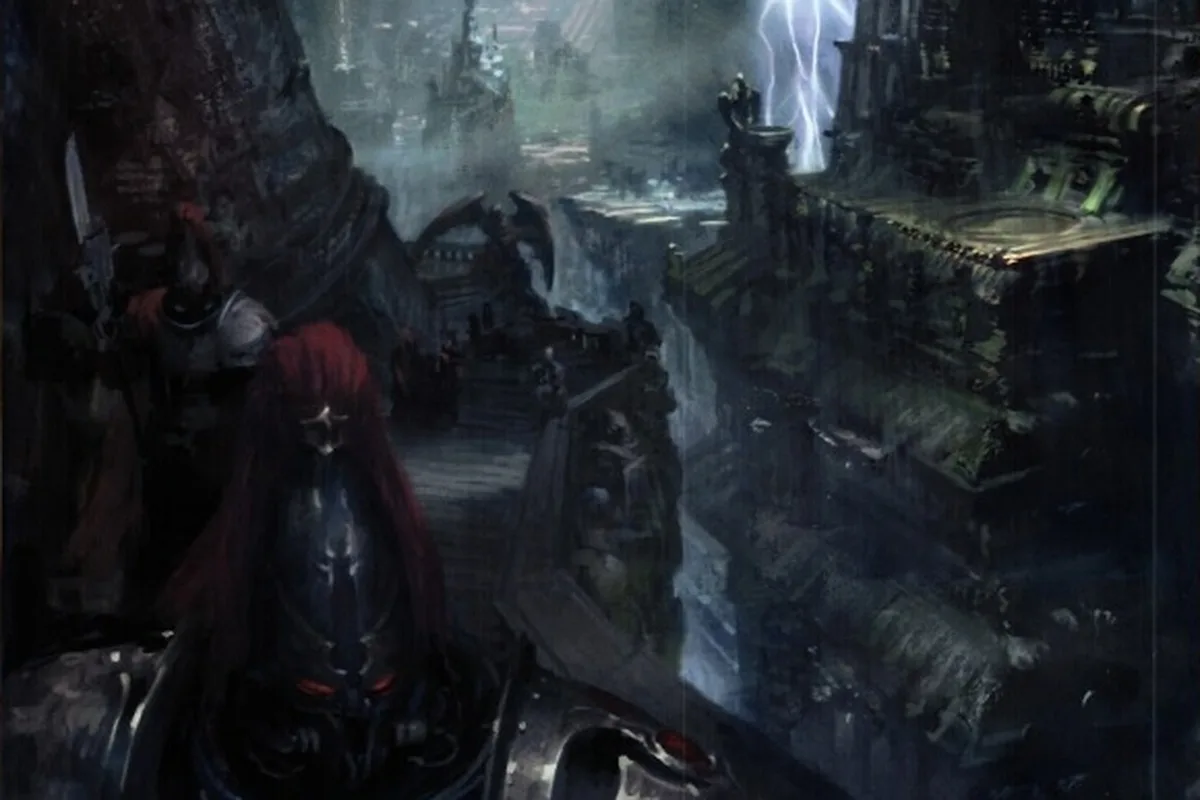
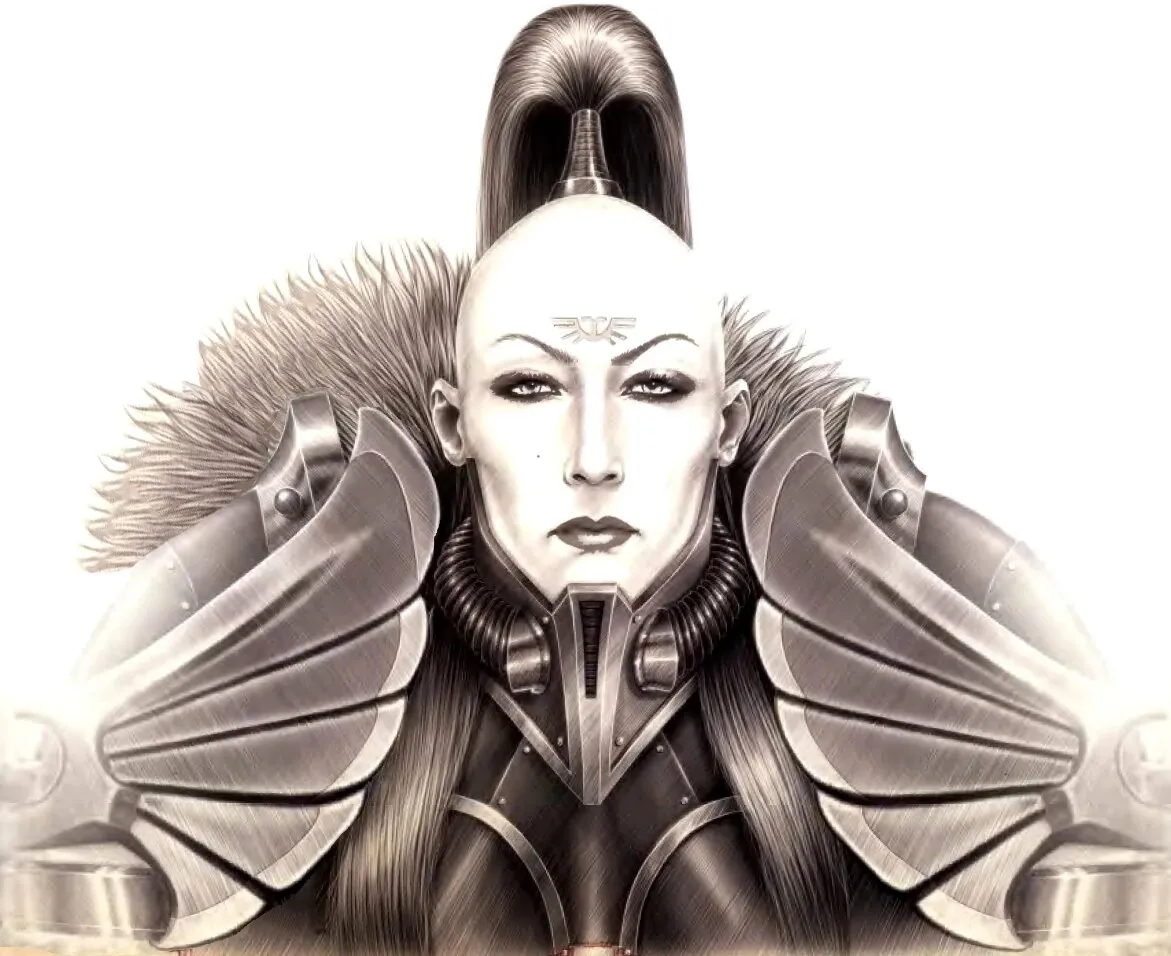
The Sisters of Silence are the other half of that answer. A whole order of Untouchable women, sworn to silence, who hunt rogue psykers precisely because their blankness makes them immune to the prey and horrifying to be near. They’d been all but forgotten for a stretch, off the tabletop from the late nineties until GW brought them back with the Burning of Prospero boxed set. That’s most of the time I’ve been in this hobby, a full order of characters sitting in a filing cabinet. When they finally came back it was as the Emperor’s own, standing beside the Custodes, and that recontextualised them for me completely. Whatever the rest of the Imperium made of Blanks, the Emperor had wanted these ones close enough to guard his own person.
The Necrons had the same idea, only bigger
I might be joining dots GW never actually drew, so take this with a pinch of salt. But once you know what a Culexus does, the Pariah Nexus stops reading like a Necron gimmick and starts reading like the exact same idea scaled up well past the point of sanity.
During the Psychic Awakening, an Imperial battle group pushed into a region of the galaxy that had gone completely silent. No distress calls. No screaming astropaths. Just quiet, which out there is worse than screaming. What they found was a Necron megastructure built by Illuminor Szeras, thousands of colossal blackstone pylons strung across dozens of systems, all radiating a field that did to an entire sector what a single Culexus does to a room. The books call the effect the Stilling. Psychic powers choke off. Warp travel fails. Daemons can’t manifest. And slowly, everyone caught inside starts to feel their own soul being throttled.
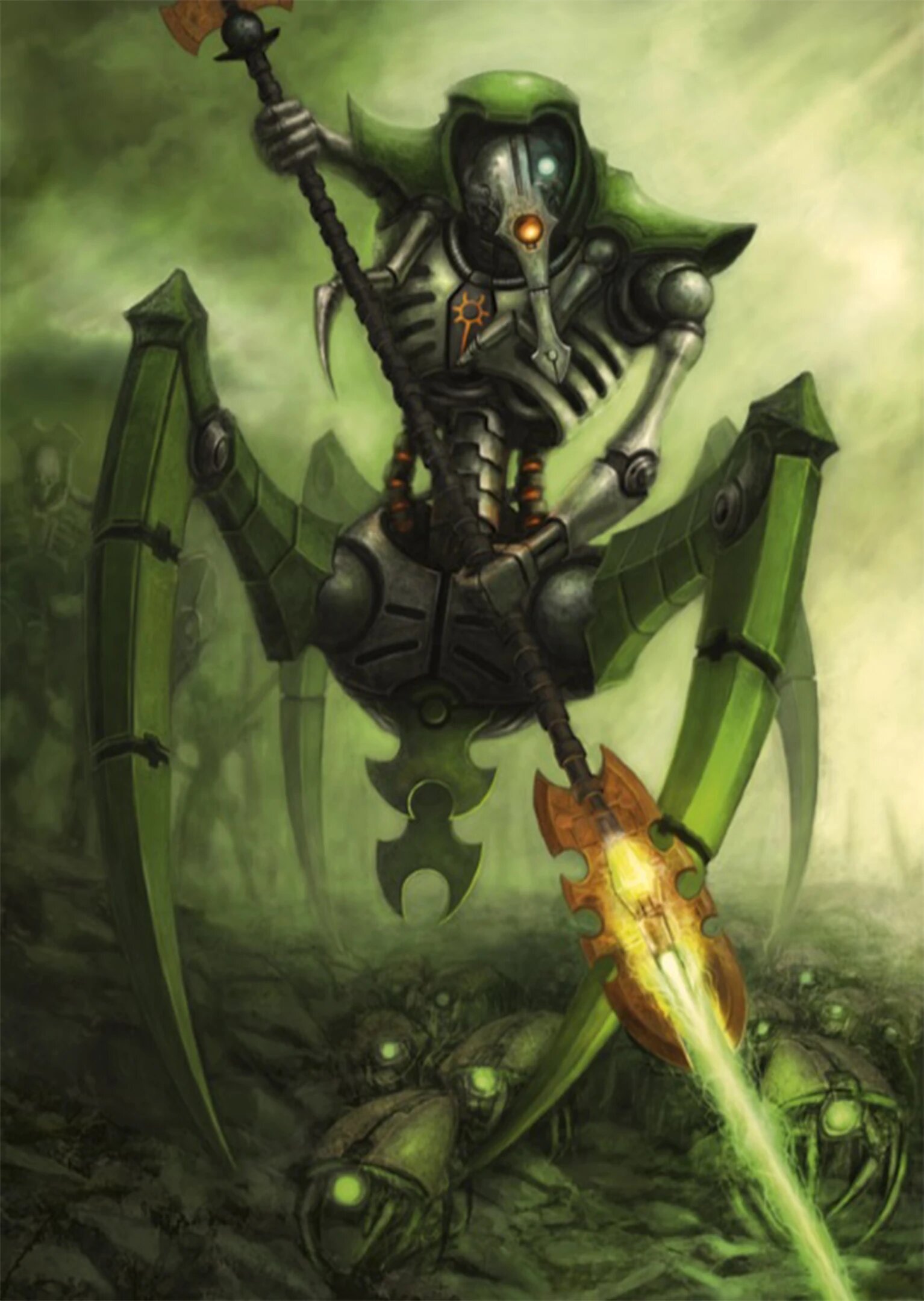
Blackstone is the connective tissue. It’s the same material, noctilith, that the ancients and the Necrons weaponised in both directions. Abaddon charged his Blackstone Fortresses to draw warp energy in, while the pylons of Cadia were tuned to shove it away. White Dwarf 440 says outright that the null zone blackstone creates is analogous to the soul-void a Culexus projects. The same effect on the warp, whether it comes off a lump of mineral or out of a living person.
The Necron endgame is the bit that actually turns my stomach. Szeras was doing more than becalming the warp. The Stilling spiritually hollows out every living thing in range, which conveniently hands the Necrons a near-infinite supply of living but empty bodies to pour themselves into, for their whole stalled biotransference problem. The crop was the same soullessness the Imperium breeds its assassins from, and Szeras had simply worked out how to grow it to order, on the living, instead of waiting for it to occur once in a billion births.
For the record, the pylon assaults went badly. White Dwarf 455 has Battle Group Kallides bombarding the Mesmoch Pylon from orbit, city-killing lance batteries just flashing off its shielding without a scratch, and then a Necron counter-attack that turned the Imperial retreat into a rout only a Black Templars charge managed to stabilise. A Warlord Titan got dropped into the middle of it. Didn’t much help.
What I keep circling back to isn’t the Nexus or the assassins, though. It’s the one-in-a-billion kid at the bottom of the hive who never gets found by the Sisterhood or the Assassinorum or anyone else. Who just lives and dies as the person every room quietly empties around, never once told why. Two galactic superpowers would do unspeakable things to get their hands on what that kid is. Statistically, neither of them ever comes.
Anyway. The Culexus is still on the sprue. Maybe this weekend.