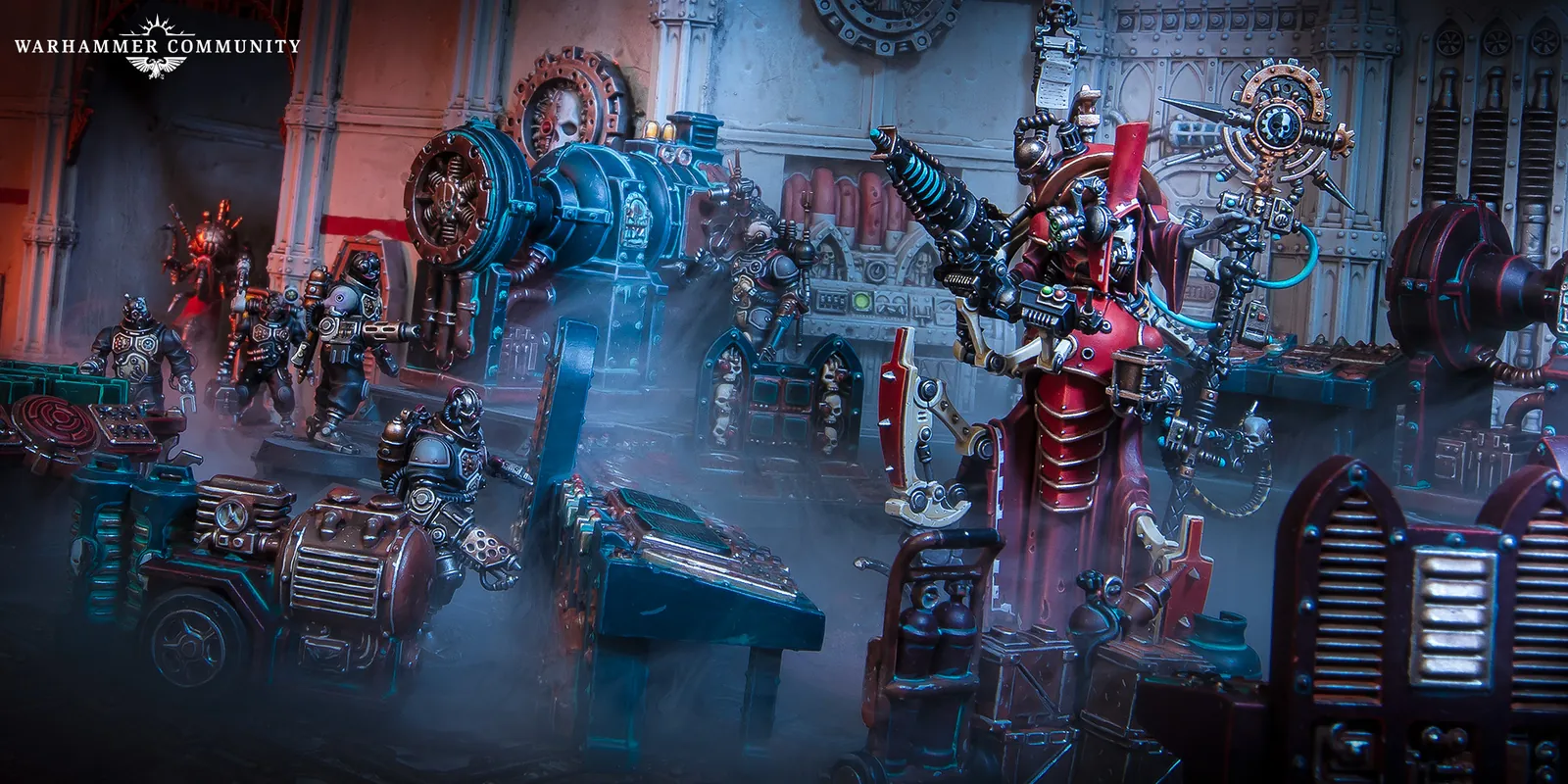
Before a Tech-Priest of Mars wakes a Land Raider for the first time, a wildcat is sacrificed inside the ceramite frame while the armoured panels are still being bolted on. That part is literal. Index Astartes Apocrypha describes the ritual exactly that way: a predator killed inside the chassis, runes inscribed on the plates as they are fitted, components blessed before assembly. The whole rite is built around the assumption that the engine has a soul before it ever moves, and the priest’s job is structured around negotiating with that soul.
A Tech-Priest of Stygies VIII would do something different. Mostly the same rites, because there are penalties from Mars if you skip them, but he would be watching the readings on his auspex for things the Martian wouldn’t think to check. He would be quietly comparing whether the motive force responding to the prayers reads like the one his colleague on Ryza got, or a slightly different one, or one that resembled certain auspex patterns the Aeldari left on their grav-vehicles during the Stygian relief. He wouldn’t write any of this down. He’d just remember it.
The codex blurbs do not go here. There is no single Cult of the Machine. There is a federation of forge worlds with overlapping and mutually incompatible beliefs about what makes a machine move, and the whole structure has been one bad heresy trial away from another civil war since the day Kelbor-Hal switched sides.
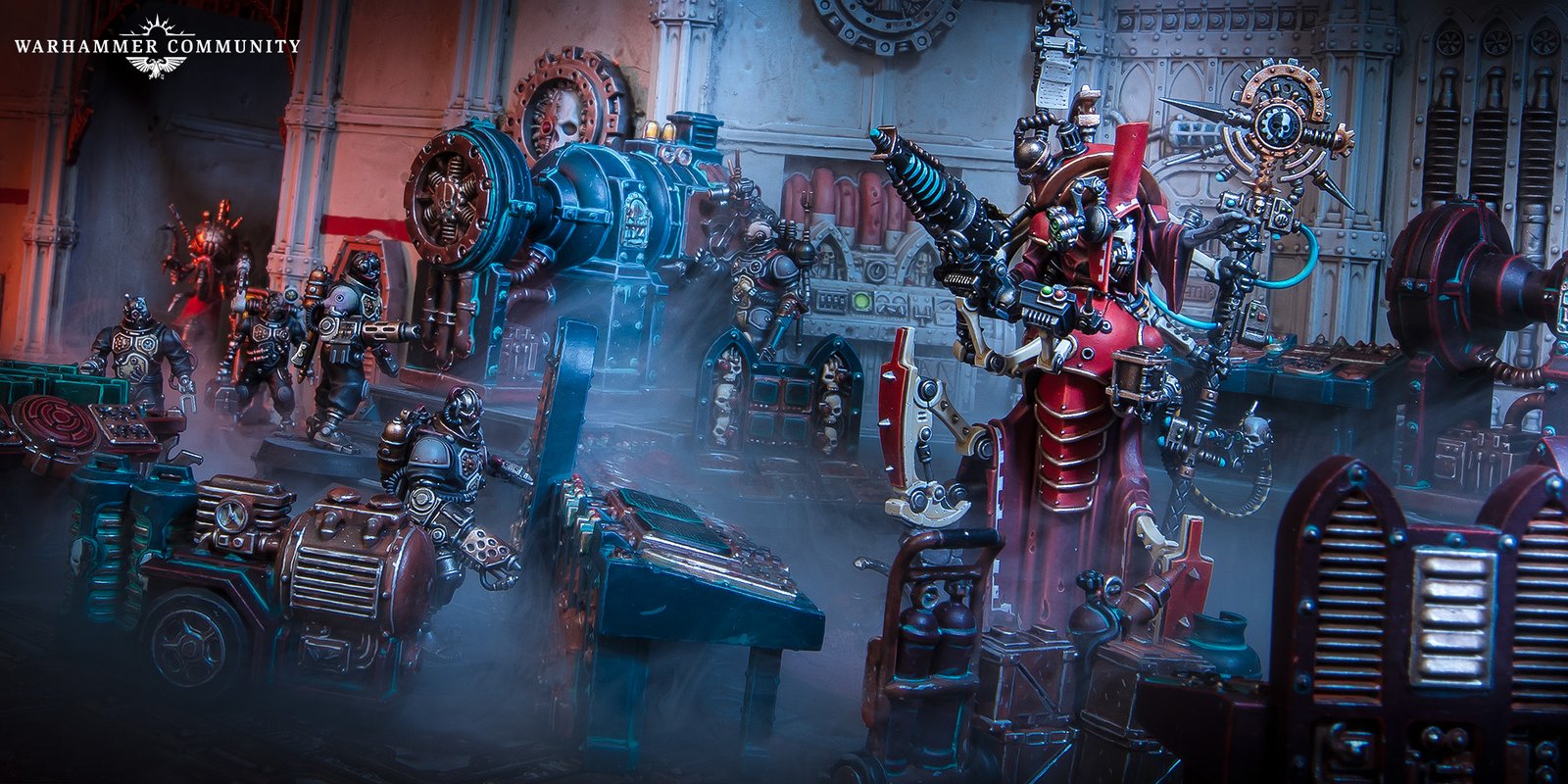
The First Schism Was Already There
The Adeptus Mechanicus split during the Horus Heresy, but the split they had was the second one. The first was about whether the Emperor was the Omnissiah at all. Visions of Heresy puts it without softening: “Some tech-priests regarded the Emperor as the living manifestation of their Machine-God. Others thought this a blasphemy, and that the Machine-God was still entombed beneath the red sands of Mars.”
That second group never quite went away. Fabricator General Kelbor-Hal led most of Mars into Horus’s camp, and White Dwarf #470 describes him as “political and spiritual leader of the Mechanicum” rejecting the Emperor as Omnissiah and proclaiming Mars’ secession from the Imperium. The position was theological as much as it was political. He thought the loyalists were heretics on a doctrinal point about who the god actually was.
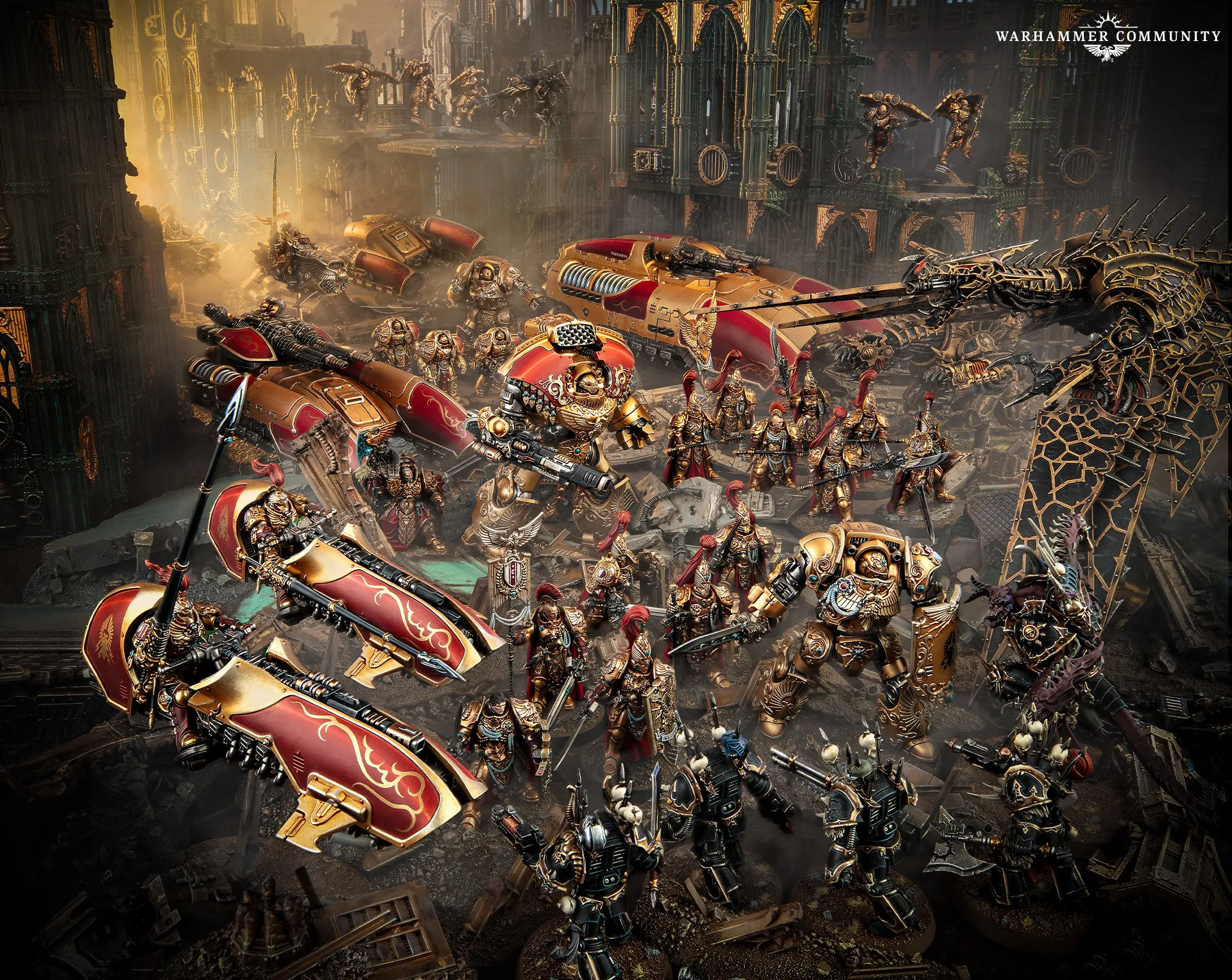
The Imperial Fists came down to extract the loyalist Magi. The Martian Civil War lasted nine years on the planet itself, with Titans duelling among the ruined factories. When it was over, the loyalists won the buildings. The argument retreated into the private theological correspondence of senior Magi, where it has stayed.
What Everyone Does Agree On
The piece of doctrine every Mechanicus sect signs onto is the Machina Animus. Imperial Armour Volume 2 describes it as “a machine anima that transcends its physical form like the soul of a living being.” A Tech-Priest “makes obeisance before performing maintenance,” and an operator “must pray before striking the Rune of Awakening.” Some machine spirits are bellicose. Some loyal. Some capricious. Denying that any of this is real, per the book, would “transgress the most fundamental tenets of Machine Lore.”
Every sect agrees motive force is real. The schism runs through the question of what kind of thing it is and where it comes from.
The Martian Orthodox answer is the simple one. The Omnissiah is the Machine God, the Emperor is His mortal aspect, every machine spirit is a small flame from the same fire. STC designs are sacred because they record the divine pattern. Innovation is heresy because it implies the original was incomplete. Imperial Armour Volume 1 is brutal on the point: “Understanding how or why things function is no longer seen as important, just that (by the will of the Machine God) it does function is enough for the Adeptus Mechanicus.”
The Xenarites
Stygies was saved during the Heresy by the Aeldari. Vigilus Defiant records the consequence in one sentence: “Following this, the adepts of Stygies pursued a controversial interest in aliens and alien relics.” The Xenarites of Stygies study xeno-tech openly. They write reports about how T’au pulse weapons compare to Imperial plasma. They have grav-vehicles that work on principles Mars officially considers blasphemy.
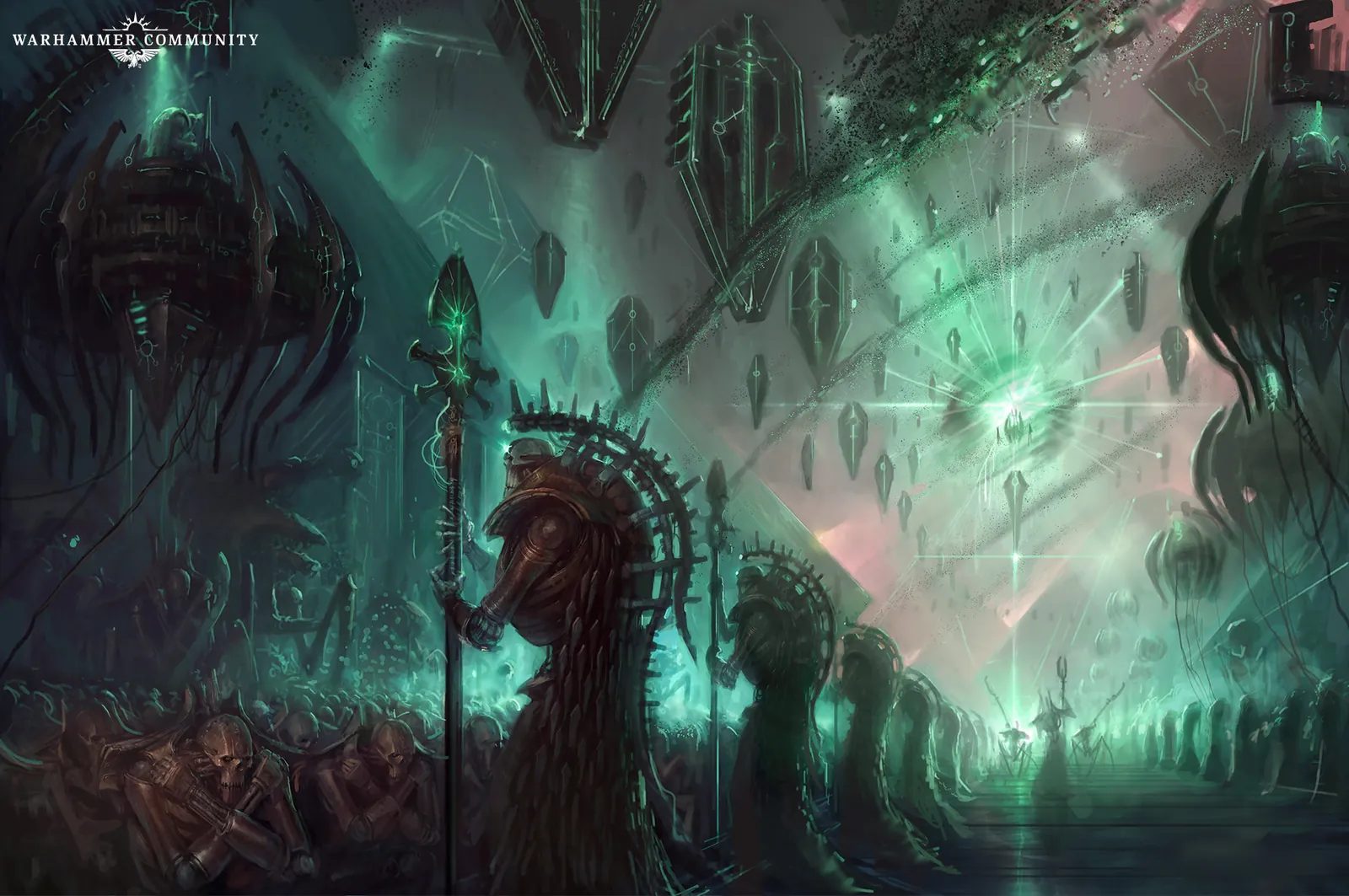
The Xenarites work from the same Omnissian premise as Mars, then extend it. Their position is that His gift of motive force is universal, that the same animating principle which wakes a Land Raider’s machine spirit also wakes a Necron Tesseract Vault, because both are responses of matter to the same divine logic. The same flame in different chassis. The Aeldari grav-vehicle, on this reading, is one expression of motive force the Mechanicus has been instructed to ignore.
Martian Orthodoxy treats the comparison itself as the heresy. White Dwarf #499 quotes the doctrine straight: “THERE CAN BE NO MERCY FOR SUCH HERETICS!” The all-caps is in the original transmission, and Mars routinely recirculates that line through binharic homily channels to remind everyone where the boundary is supposed to be drawn.
Stygies VIII still pays its tithes. It still sends macroclades to Vigilus. Stygies remains within the formal communion while privately holding the heterodox position, and everyone in the upper Mechanicus knows it, and the Xenarites keep their notes encrypted and the grav-vehicle workshops staffed.
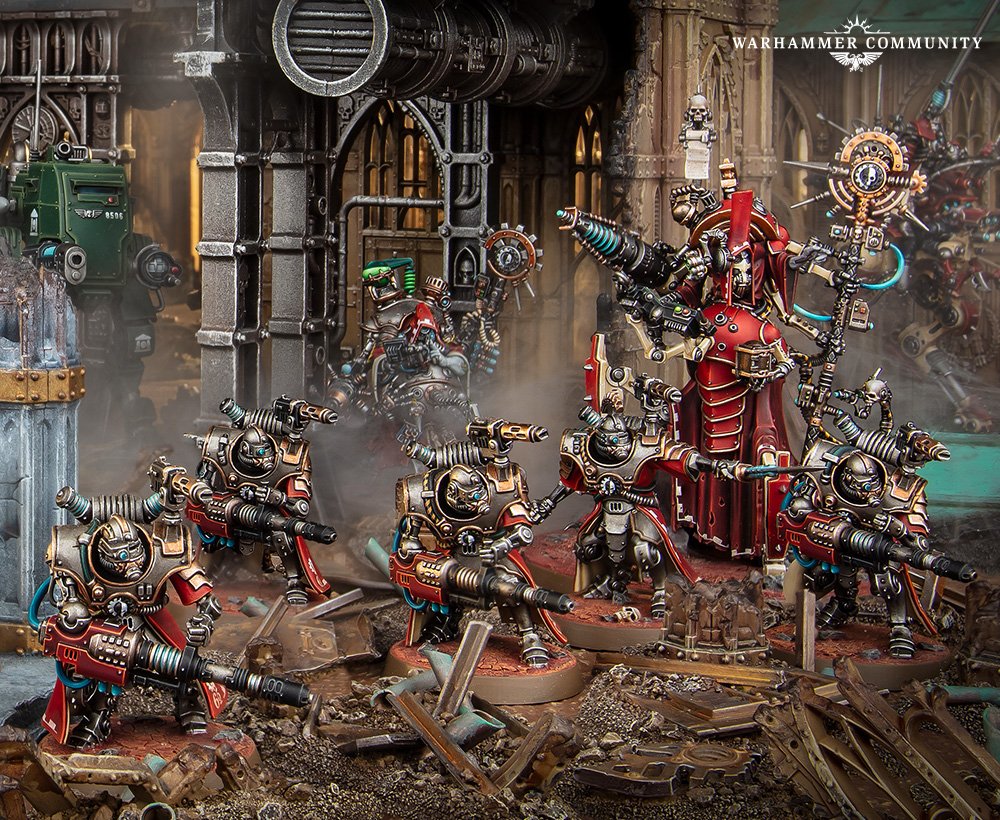
Pete and the Cawl Question
My friend Pete is a Salamanders man, ten-plus years on the same Chapter, and he is much better at finishing armies than I am. We went around on Belisarius Cawl one evening at my local store when Dark Imperium had been out long enough for everyone to have an opinion. Pete had spent the afternoon priming a fresh squad of his Sallies, was in a mood about resin, and decided that Cawl was the most obvious heretek the Mechanicus had ever sanctioned. His position was that Cawl had opened forbidden vaults, modified Astartes gene-seed without prior dispensation, run a project for ten thousand years that nobody had authorised, and the only reason he was not strapped to a stake of his own servo-arms was that his patron’s hand was on his shoulder. Pete kept calling it heretek-with-a-permission-slip until I stopped trying to argue the phrase down.
I think he was mostly right. White Dwarf #414 describes Cawl as “many thousands of years old” and rebuilt enough times that his body is a physical archive of design decisions he later abandoned. By Martian standards, that is a Tech-Priest who has done a millennium of original research and called it maintenance. He is the most prominent member of the Mechanicus, and he is, by any consistent reading of doctrine, a heretek who got away with it because his patron was a Primarch.
Pete’s other point, which I didn’t have a counter for, was that the Mechanicus had no choice but to canonise Cawl after the fact because if they didn’t, every Magos who had ever fudged the rules to keep a forge world functioning would have to be retroactively burned. The orthodoxy quietly bent to accommodate the man because the orthodoxy already bent every day in private, and most Magi knew it.
I don’t fully buy that. It’s been roughly ten years since that conversation, which is about as long as I have had the kid, and the only counter I’ve ever produced is “but I don’t want to think Cawl is a heretek,” and Pete can see that landing from across the table.
Metalica Turns the Volume Up
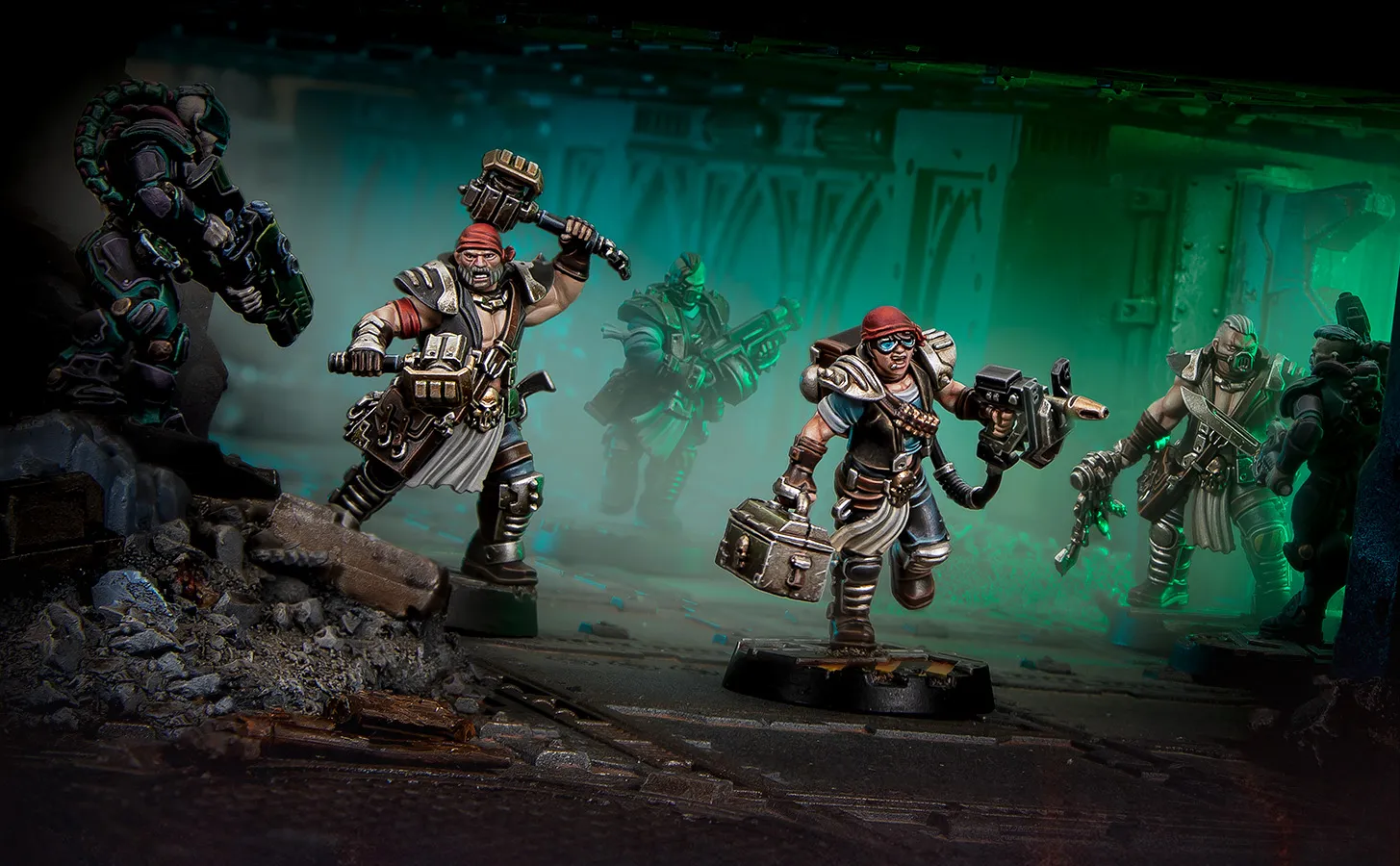
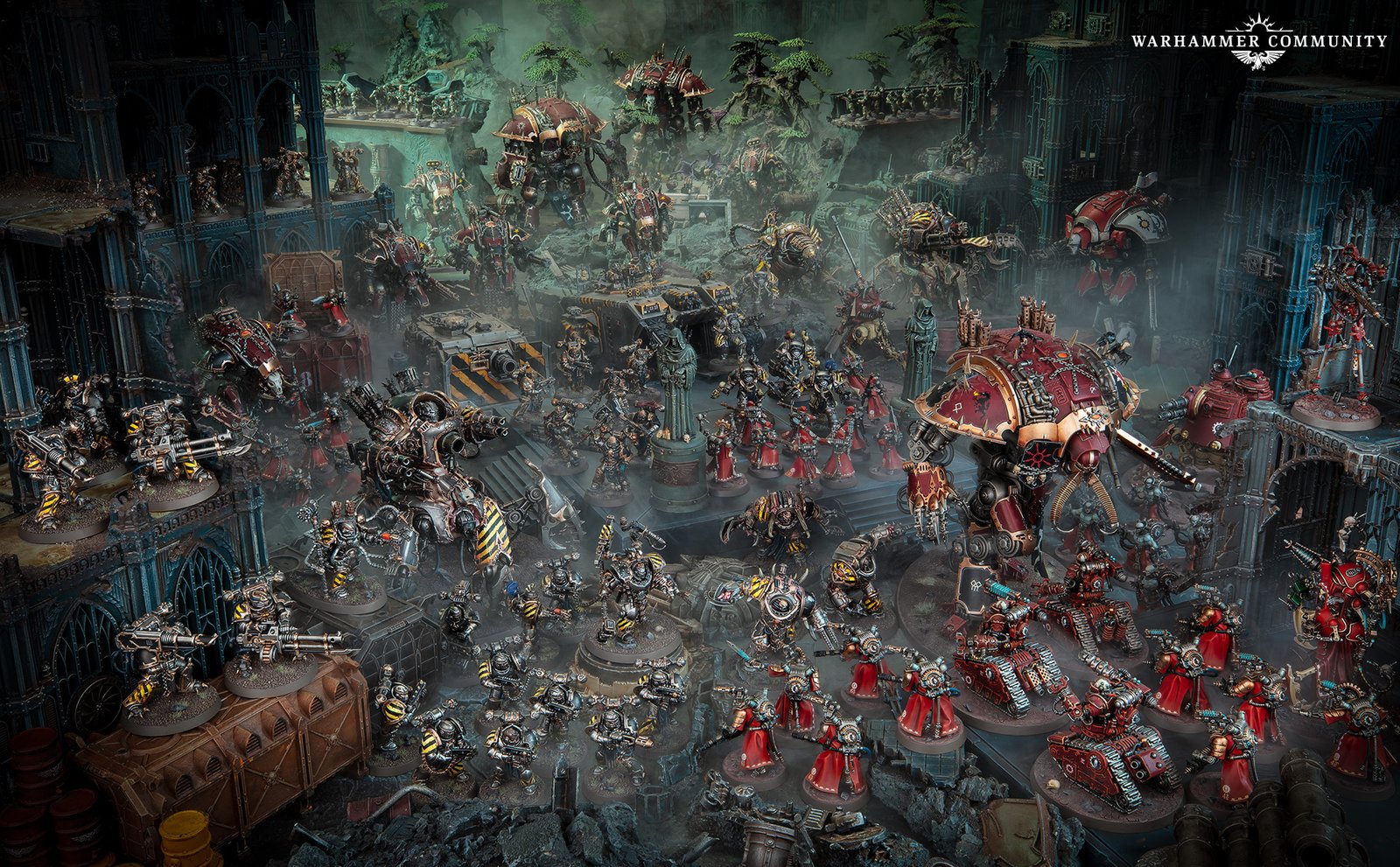
Metalica’s answer to the schism is performative. White Dwarf #463 describes their Skitarii Legions as “implacable and domineering” even by Mechanicus standards, advancing “in unfaltering lines, their loudspeakers and voxhailers unleash[ing] a deafening cacophony of binharic cant, prayers and white noise upon the enemy.” Cult Mechanicus sects from elsewhere, particularly Electro-Priests, gravitate to Metalica’s war convocations because of how openly the planet performs its faith.
Doctrinally, Metalica’s position is that it does not matter what motive force actually is, as long as everyone agrees to declare it loudly enough that doubt becomes inaudible. This is theology by amplification. Other forge worlds find it embarrassing and won’t say so. The Metalican Skitarii are very effective at killing things, and the Mechanicus tends to score arguments by body count when the deeper theology gets ambiguous.
I dunno, I find Metalica more honest than Mars. Sort of. Mars keeps up the act that there’s one big coherent Cult Mechanicus and every forge world runs a regional branch of it. Metalica’s basically gone, look, the doctrine is whatever you can shout the loudest about. Which is — yeah. At least nobody’s pretending the doctrine is fixed.
Ryza, and What the Mechanicus Does to Itself
The forge worlds also don’t trust each other. White Dwarf #468 has an extraordinary entry called “Forge Rivalries” that includes a casual mention of Ryza, ostensibly relieving Kernak III from an Ork invasion, deploying Hunter Clades with secret orders to “hunt and kill minor Kernak III Tech-Priests, eliminate all witnesses and hack numerous tech-vaults in the middle of Ork-claimed territory.” That is framed as normal Mechanicus practice when the chance comes around. The Quest for Knowledge takes precedence, and Ryza’s official report on the incident, if Ryza filed one, almost certainly framed it as a theological success.
At the level of policy, the motive force schism means exactly this. If you genuinely believe that an STC fragment in your forge world’s vault is an unrepeatable revelation of the Machine God, and you suspect your neighbour has one you don’t, your obligation to the Omnissiah outweighs your obligation to your treaty. Other forge worlds operate as rival churches with overlapping liturgies, and identical-looking STC fragments get read as different revelations depending on which forge world catalogues them. It is the corporate equivalent of two regional offices of the same company suing each other over a patent both branches swear was always theirs.
The Dark Mechanicum keeps growing for the same reason. White Dwarf #473 mentions, almost in passing, that “more rogue Tech-Priests and forge worlds have abandoned their allegiance to Mars, effectively becoming Dark Mechanicum as well” over the millennia. The driver is mostly internal. Once you accept the orthodoxy has no good answer to the question of why your interpretation of motive force is more correct than your neighbour’s, the next act of heresy becomes a question about why one bit of innovation got blessed and yours wasn’t, and that question doesn’t have a good answer either.
The Knights Knew First
House Taranis is the only Knight house that survived the Martian Civil War on the loyalist side. The Imperial Knight Companion records that Taranis’s ancestors swore allegiance “to the Machine God and the Adeptus Mechanicus” before the Throne Mechanicum was even fully developed. They were the first Knight pilots to plug their nervous systems directly into a machine spirit and have something stare back. Their banners use a double cog symbol, where each Knight earns ranks of “initiation into the Cult Mechanicus” recorded directly on the suit.
Taranis is the answer the Mechanicus doesn’t really like to talk about. The closest thing to a clean theology any Mechanicus institution has, total devotion, no xeno-curiosity, no political games, no Cawl-style heretek brilliance, just thousands of years of dying for Mars without complaint. And there is only one Taranis. It survived because the other Mars-loyal Knight houses all picked the wrong side in the Heresy and got killed off in the Martian Civil War along with everyone else.
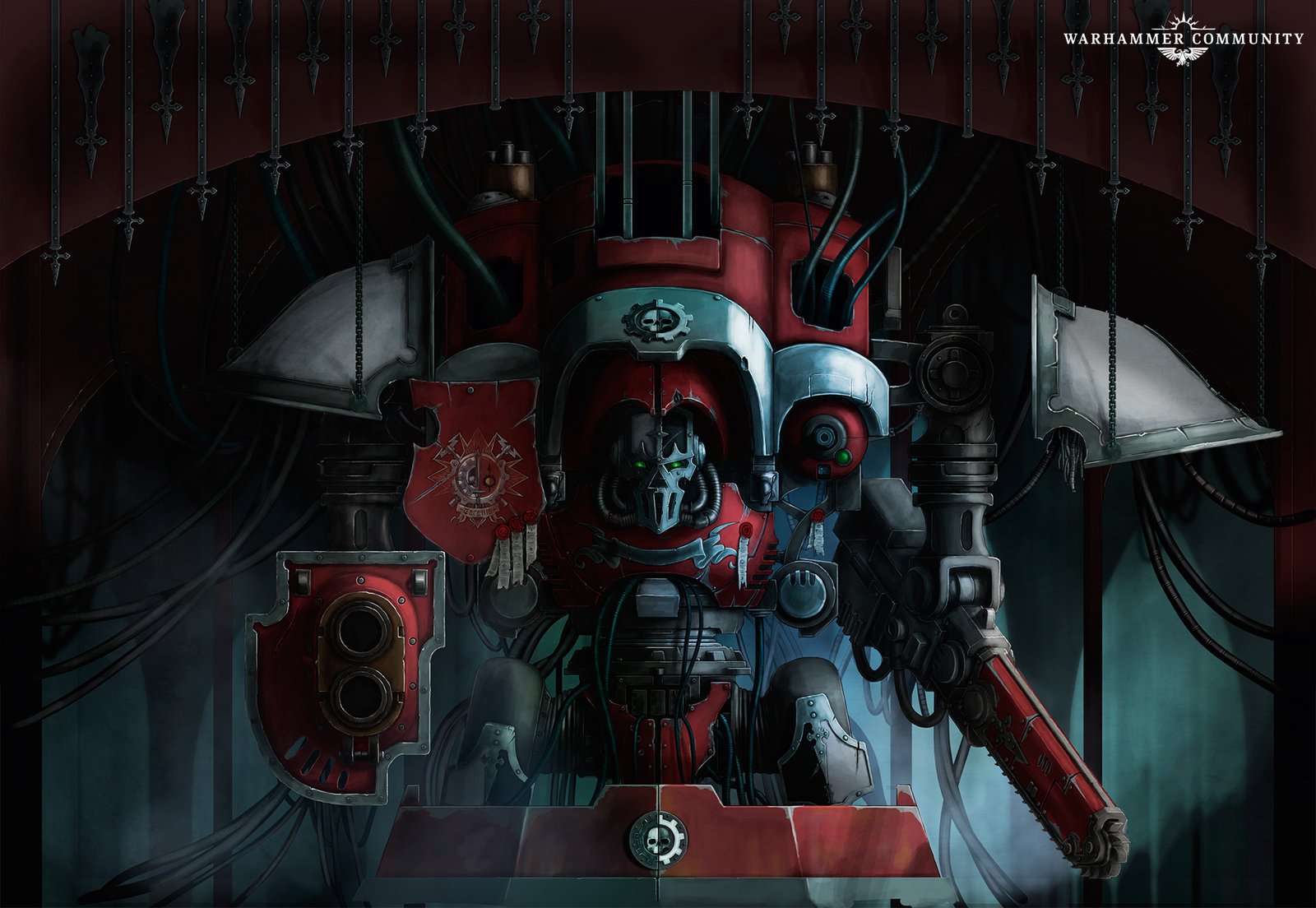
That is the joke buried in the schism. The most orthodox group in the Cult Mechanicus is a single Knight house that exists because the orthodoxy lost a civil war so badly that anyone left standing on the loyalist side got promoted by default. Mars has spent ten thousand years trying to act as if the consensus was just temporarily disrupted, and Taranis is the only Knight house that actually shows up to that meeting.