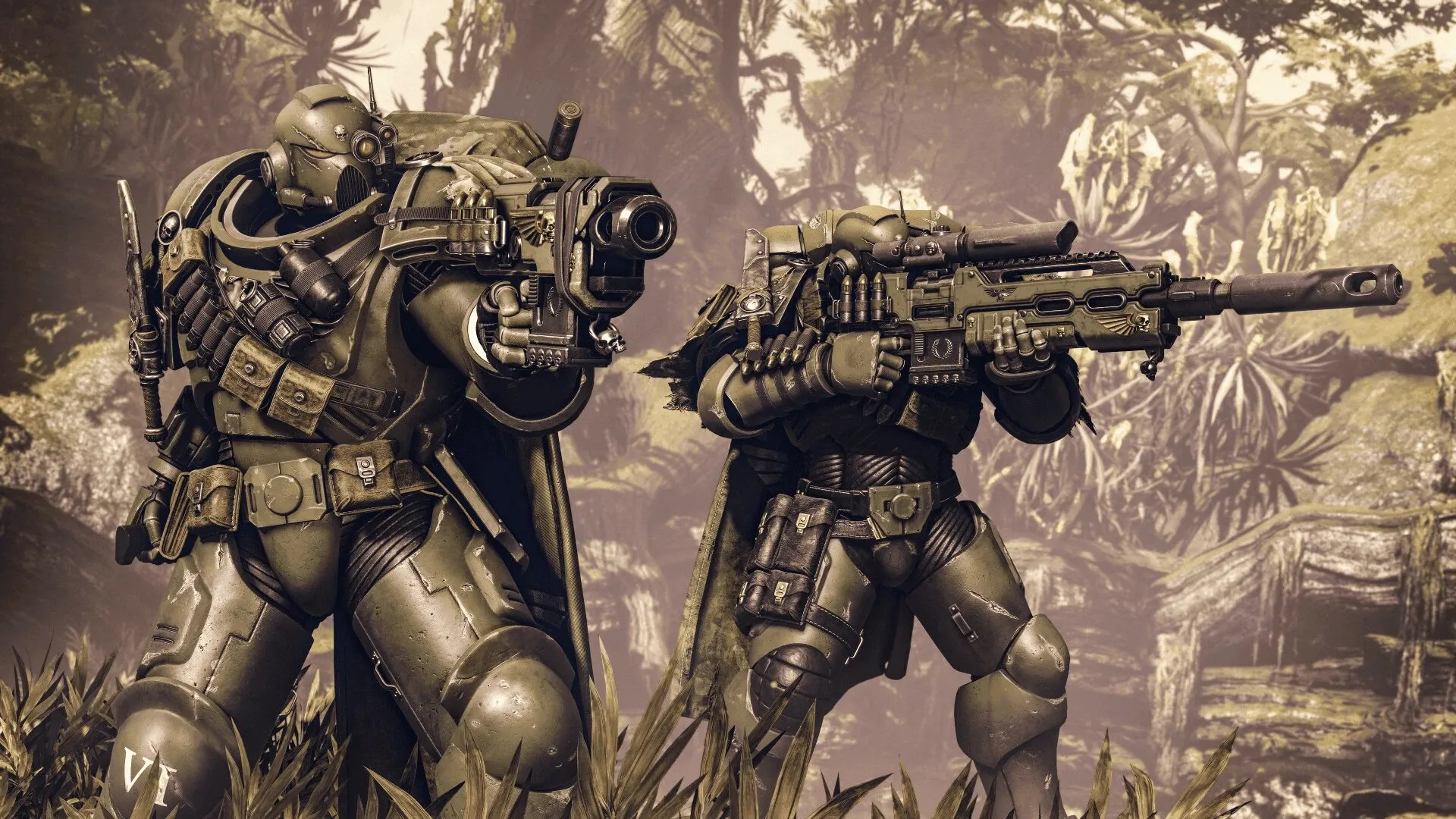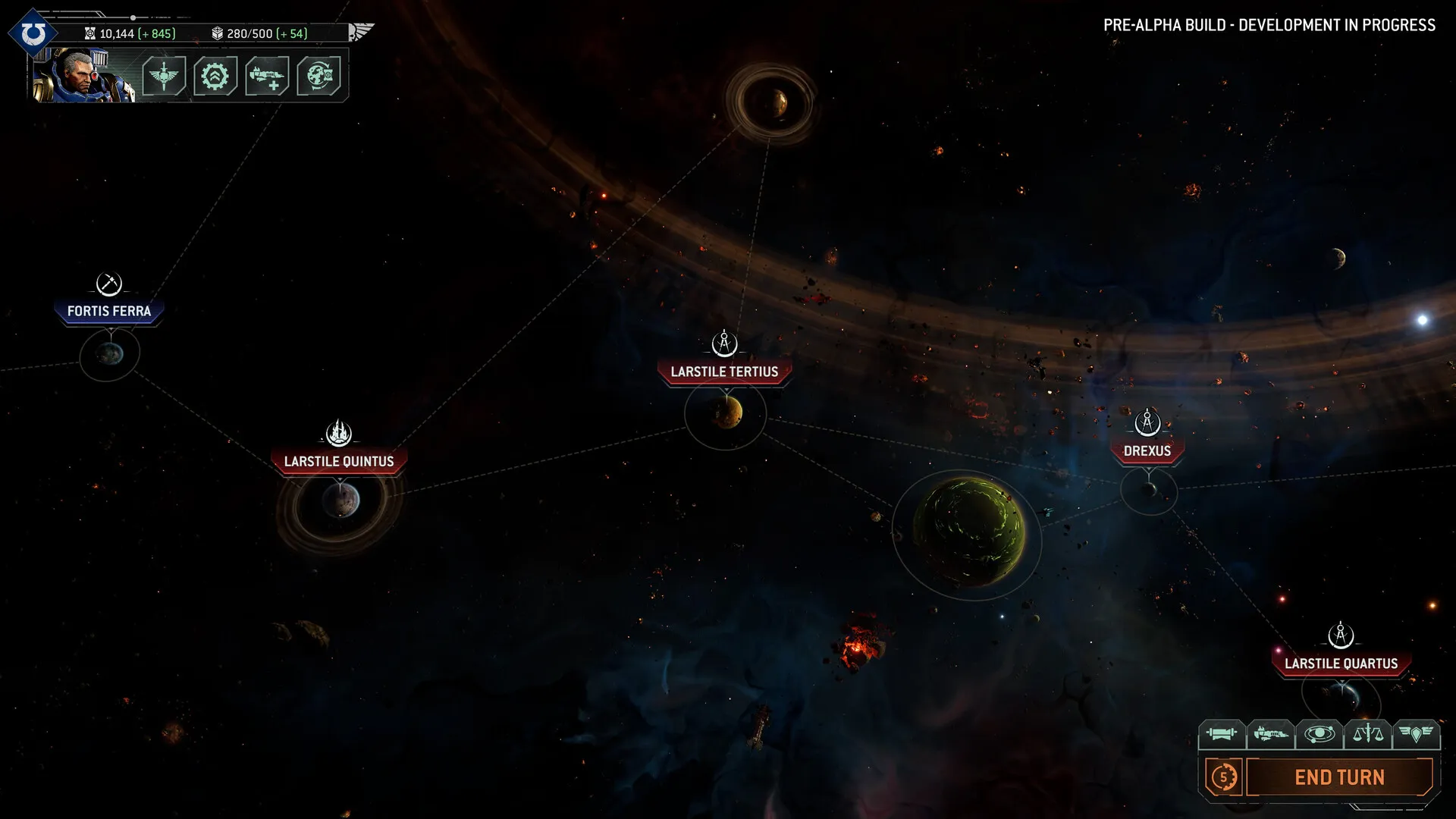
There’s a paywalled article from German site GameStar that broke the most interesting detail about Total War: Warhammer 40,000, and it’s the bit nobody on the English-language news sites is leading with. The galaxy map you see in the trailer (the one with planets connected by star-lanes) isn’t a Total War campaign map. You don’t move armies on it. You don’t end turns on it. Lead Designer Simon Mann described it in the developer roundtable as “a battle on the planet” being the actual gameplay layer. The galactic view is a hybrid between a campaign selection menu and meta-progression. You pick a campaign, you fight it, the result feeds back into the next one.
That’s a much weirder game than the trailer made it look.
I bought Total War: Warhammer 2 on a Steam sale during the 2020 lockdown winter, paid about £15 for it, and played Skaven for what Steam tells me was 78 hours without ever finishing the Vortex campaign. The thing I loved was the friction between the strategic layer and the battle layer. You’d be in the middle of a war with the High Elves, three turns away from sacking Lothern, when a Lizardmen doomstack would crawl across the world and force you to redeploy. Those campaign-level surprises (the kind you only get when armies actually move on a shared map) are what made the Total War: Warhammer trilogy a generational strategy series. Total War: Warhammer 40,000 doesn’t seem to have those.
It might not need them. The grim darkness of the far future is mostly compartmentalised by sector and segmentum, and the way the lore handles big interstellar conflict (a fleet shows up, a planet gets eaten, the Inquisition writes an angry memo, fleet leaves) is closer to discrete campaign theatres than continuous strategic pressure. Creative Assembly might have looked at the setting and decided that the Total War campaign map is the wrong shape for this IP. I’m not going to call that wrong. Mostly I’m just surprised they were brave enough to ship something that isn’t more Total War: Warhammer.
The Larstile system and what the trailer actually shows
Look at the screenshot. Larstile Quintus, Larstile Tertius, Larstile Quartus — the planets in one system, each connected to others by faint lines. Top-left there’s an Imperial-style stat bar with 10,144 of one resource and 280/500 of another. Bottom-right there’s an “End Turn” button. So the layer isn’t entirely passive. Something happens when you end a turn. But the GameStar piece is clear that ending a turn isn’t moving armies. Each planet is a smaller, more traditional Total War campaign embedded inside the larger structure. Hive cities give resources. Resources unlock further regions. Sectors connect via what Creative Assembly is calling “Crusade Theaters” — areas of the galaxy where conflict concentrates.
That’s a strategy game with three layers, and the top one is the layer doing all the unusual work.
I’m not sure how I feel about that. A sci-fi setting needs sci-fi structure, and forcing interstellar war into a medieval-Italy template would have looked silly on a galactic scale. There’s also the version of the story where Creative Assembly tried to make the galaxy map work as a real strategic layer in five years of development, ran out of time, and turned the layer into a campaign launcher because that fit in the time they had. Both readings sit in my head and I haven’t picked one.
The four factions are the original four
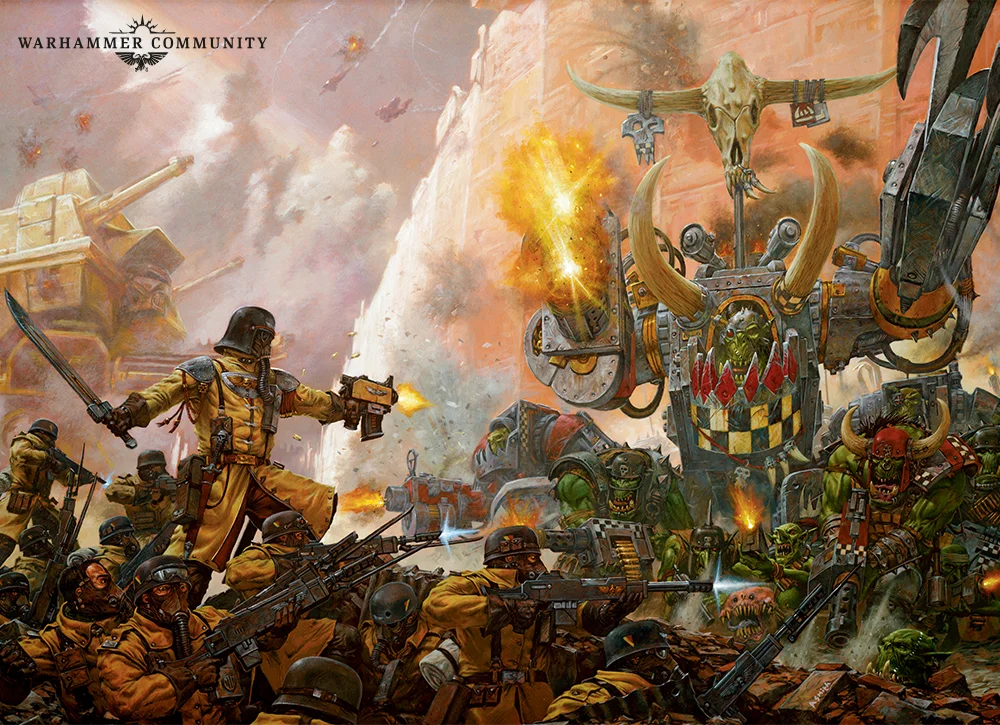
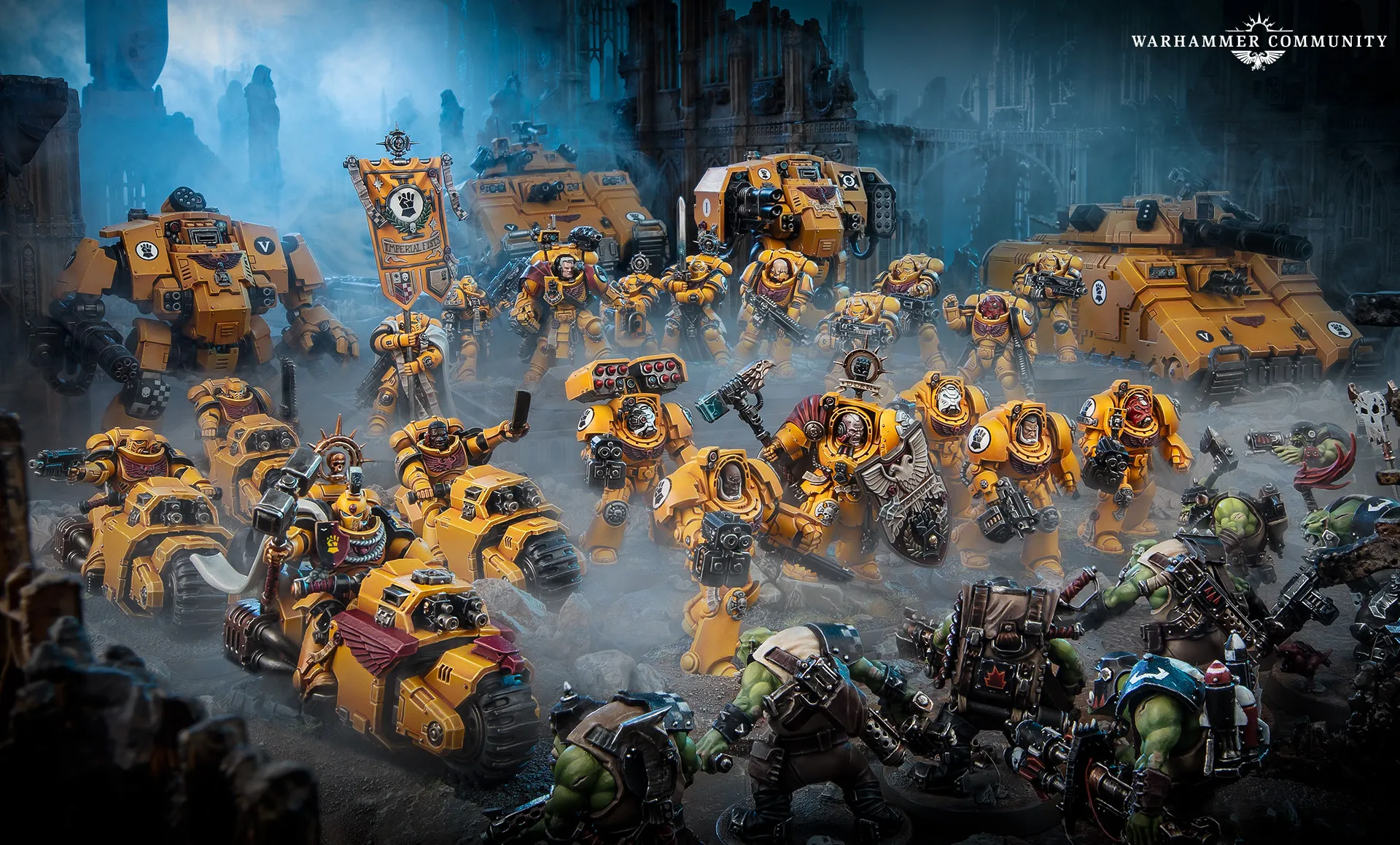
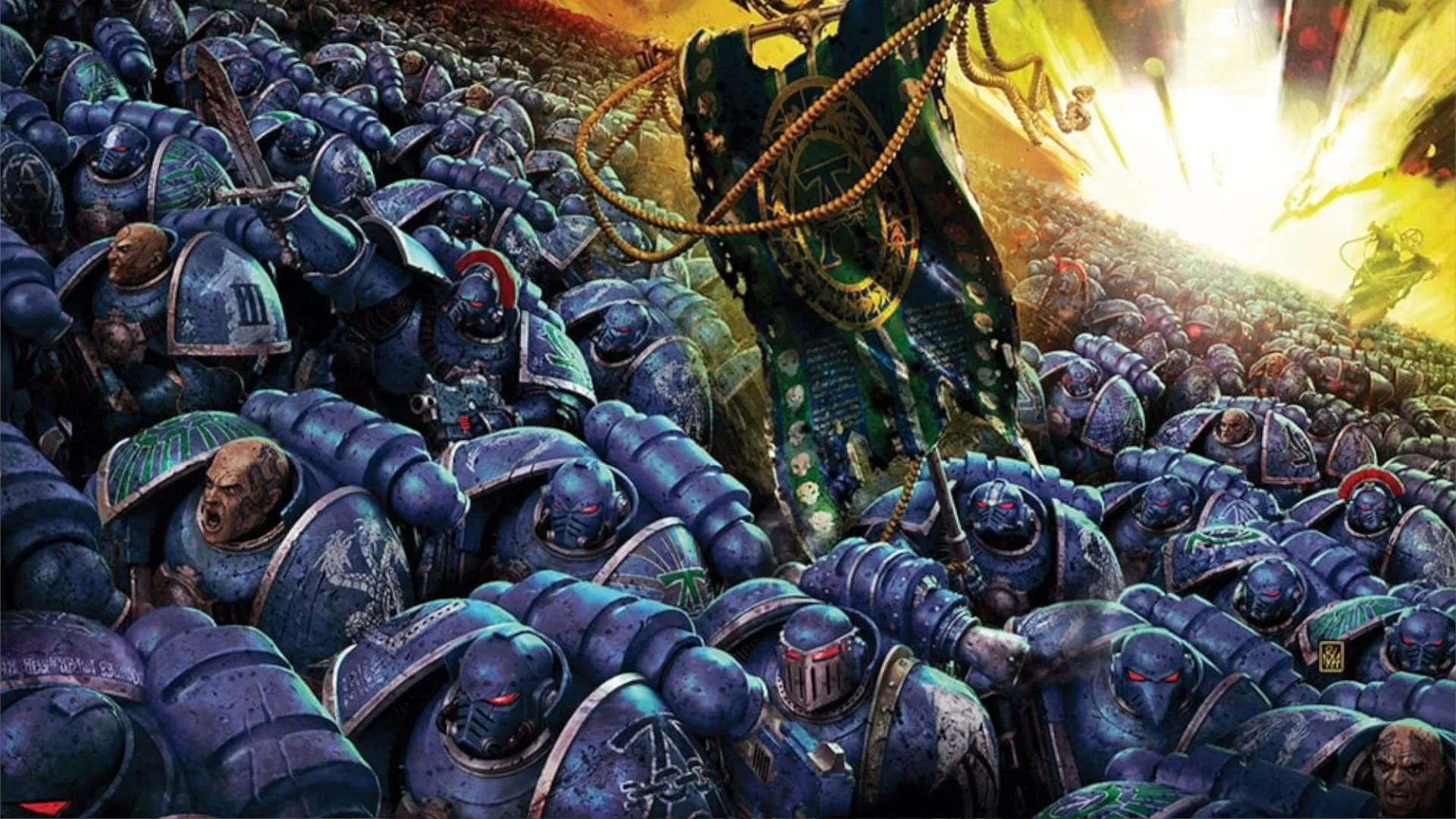
Space Marines. Astra Militarum. Orks. Aeldari. That’s the launch lineup, confirmed in the Steam description and the IGN piece from the Game Awards reveal. Pick those names up and rearrange them and you get the original 1987 Rogue Trader rulebook faction list, near enough. Marines and Guard for the Imperium. Orks for the brutes. Eldar (we still called them Eldar then) for the alien sophistication. Those were the four factions the setting needed to function in 1987, and they’re back to anchor the launch in 2026 or whenever the game ships.
Every faction in the launch lineup was already in the setting by 1992.
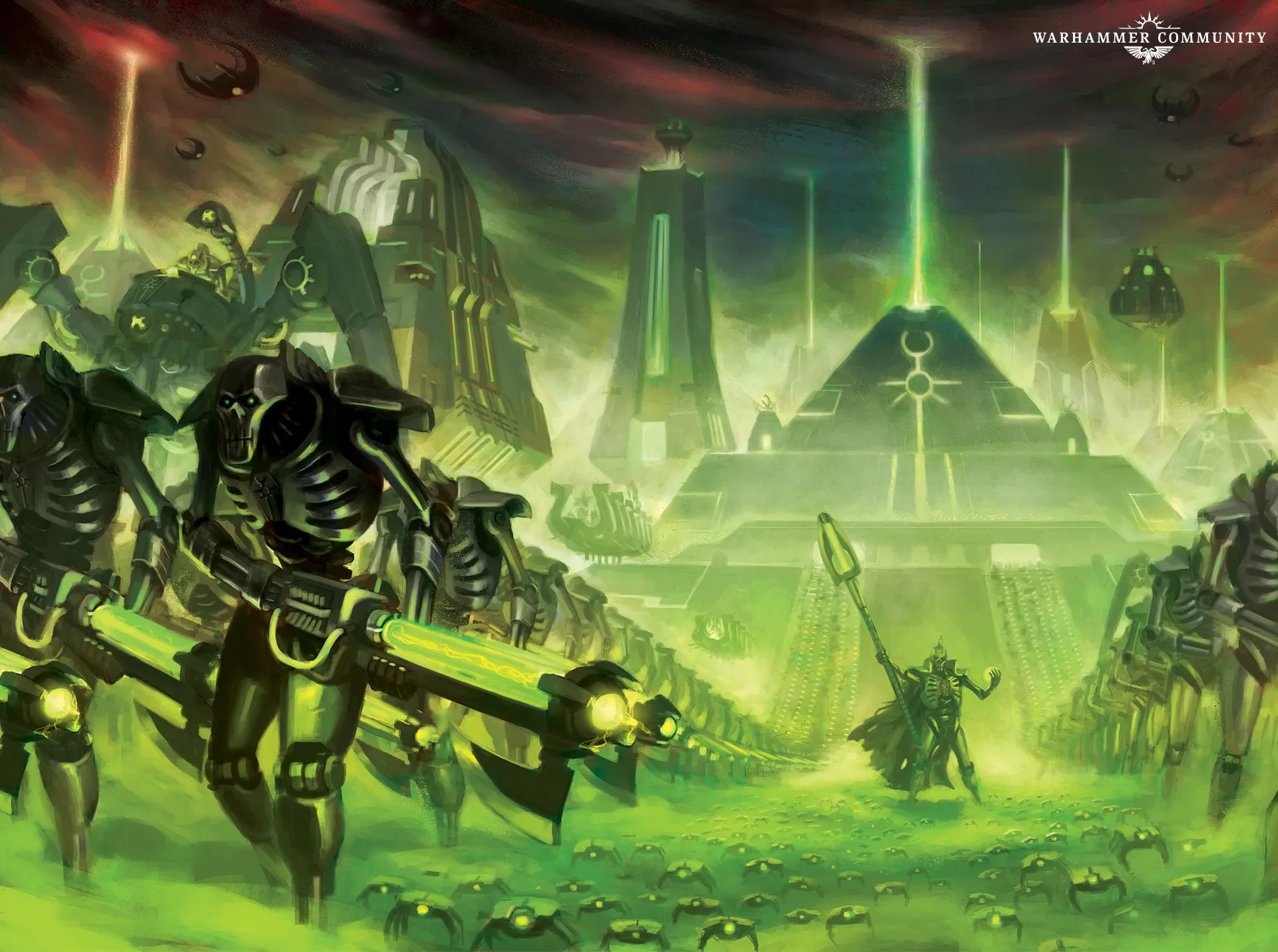
The list of absent factions is long. Chaos, which has been the central antagonist of 40K for thirty-five years. Tyranids, which would be technically interesting in a Total War system because the Hive Mind is exactly the kind of swarm AI the engine has been doing well since Battles of the Greenskins. Necrons, who are by some distance the most narratively active faction in modern 10th edition lore. Adeptus Mechanicus, Tau, Drukhari, Sisters of Battle, Thousand Sons. The design space that defines modern 40K is largely outside the launch scope.
Roger Collum, VP of Total War at CA, posted a year-end thank-you to the studio’s fans where he said the goal was to have “all your favorites from the setting eventually coexist with a vast galactic sandbox” and that this was “what the next 10 years looks like for CA.” Ten years. That’s a Total War: Warhammer-style trilogy plus rolling DLC, exactly what they did with the fantasy game. So the omissions are intentional, and the launch lineup is the conservative core they can build everything else on top of.
Kiran (who plays Death Guard, who has been campaigning for a Total Warhammer 40K since at least 2018, and who I told in 2022 with full confidence that Creative Assembly would never touch the IP because they were too risk-averse) is taking the Chaos omission badly. He had a list. Marines, Guard, Tyranids, Death Guard, that was his prediction. Two out of four isn’t bad as a forecast, except the two he got right are the two everyone got right. He sent me a 22-minute voice note about it on Discord last Sunday, and I’m somewhere around minute eight.
So yeah. Four factions. The original 1987 four. Welcome to the next decade of Warhammer 40K PC games, in which Creative Assembly slowly bolts more content onto a base game most of us will start playing without any of the factions our painted armies actually represent.
Marines and Orks again, for the sixth time
Pair the Total War: Warhammer 40,000 launch with Dawn of War IV (also out in 2026), and the headline factions are: Space Marines, Orks, Necrons, Adeptus Mechanicus on one side, and Space Marines, Astra Militarum, Orks, Aeldari on the other. The overlap is Marines and Orks. The two RTS games shipping in the same year both lead with the same pair, and Marines plus Orks has been the lead pair in pretty much every 40K video game since Dawn of War 1 in 2004.
That’s an industry conviction. Marines sell because they’re the marketing face of the IP. Orks sell because they’re cartoonish enough to be enjoyable for newcomers and Warhammer-licensed enough to feel authentic. Everything else is a niche. CA’s choice to add Astra Militarum and Aeldari to the mix is honestly a small act of bravery, given that DoW 4 went with the more visually loud Necrons and Mechanicus while Guard and Aeldari ask for more subtle mechanics to feel right.
Aeldari are the real test. Craftworld Eldar are a finesse faction. They’re the trickiest faction to translate into Total War mechanics because their lore identity is “fast, glass cannon, psychic, deeply alien.” The fantasy Total War games handled finesse factions through specific mechanics (High Elves with their influence system, Wood Elves with the seasonal forest stuff). What an Aeldari faction needs is a webway-shaped set of campaign abilities that let you appear and disappear at will, plus units that hit hard and die fast. CA has shipped that kind of asymmetry before in the fantasy trilogy.
A pre-alpha trailer is not a release date
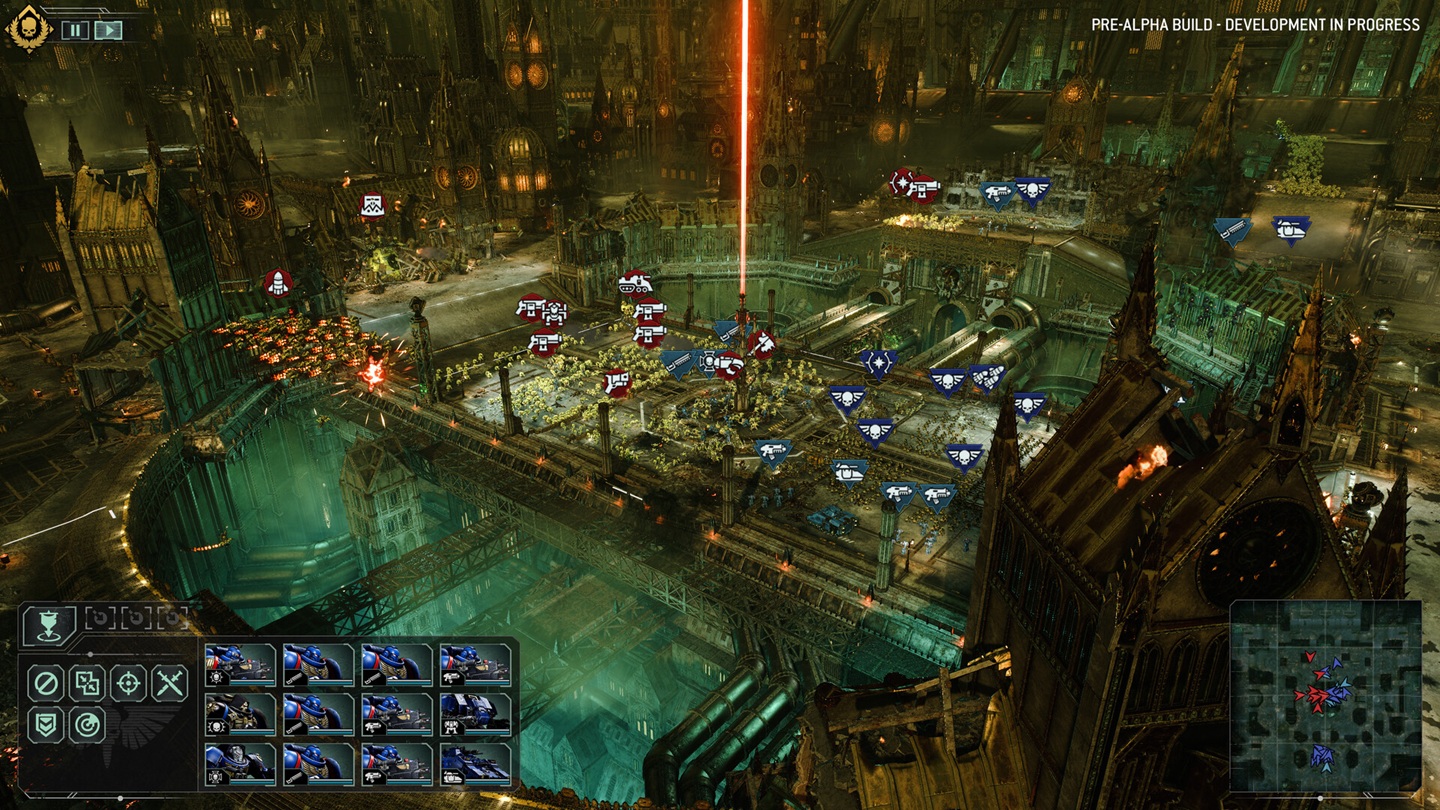
The footage in the trailer was pre-alpha. Creative Assembly’s ten-year plan starts now and probably ships in stages. The David Harbour casting bit got most of the headline coverage (he’s voicing some character, which is fine, although the casting choice has its own complications I’m not going to get into here…). The under-covered story is that this is a strategy game with no announced release date, no announced release year, made by a studio that has had a rough run since Three Kingdoms and recently laid off staff during the Warhammer III DLC churn. The project is not in alpha yet, despite the volume of hype sitting on top of the announcement.
Which means the most useful thing to do right now, as a hobbyist, is to read the Steam page carefully and then close the tab. The promises are big. The pre-alpha is pre-alpha. Whatever this game ends up being in 2027 or 2028 will be partly determined by what factions GW signs off on for DLC, and how the campaign-selection-menu galaxy layer plays under stress, and how Creative Assembly’s engine handles bolters as a class of weapon. None of that is decided yet.
I’d quite like to play Drukhari in a Total War game one day, just to see what they’d do with the webway. I’d probably need to wait until DLC year four. Kiran’s Death Guard land somewhere between year three and year six depending on which factions GW prioritises, and the lower end of that bracket is the most 40K thing imaginable for a strategy game we waited a decade for. I’ve been a fan since 7th edition, and I’ve already started thinking about what DLC pricing looks like across a decade-long roadmap.
The press release confirms apocalyptic weaponry that “erases entire planets.” That’s Exterminatus. The fact that it’s in the launch description means the planet-wipe button will be a UI element somewhere. I want to know how it interacts with the campaign-selection-menu galaxy layer. Maybe Exterminatus is what counts as “ending a turn.”
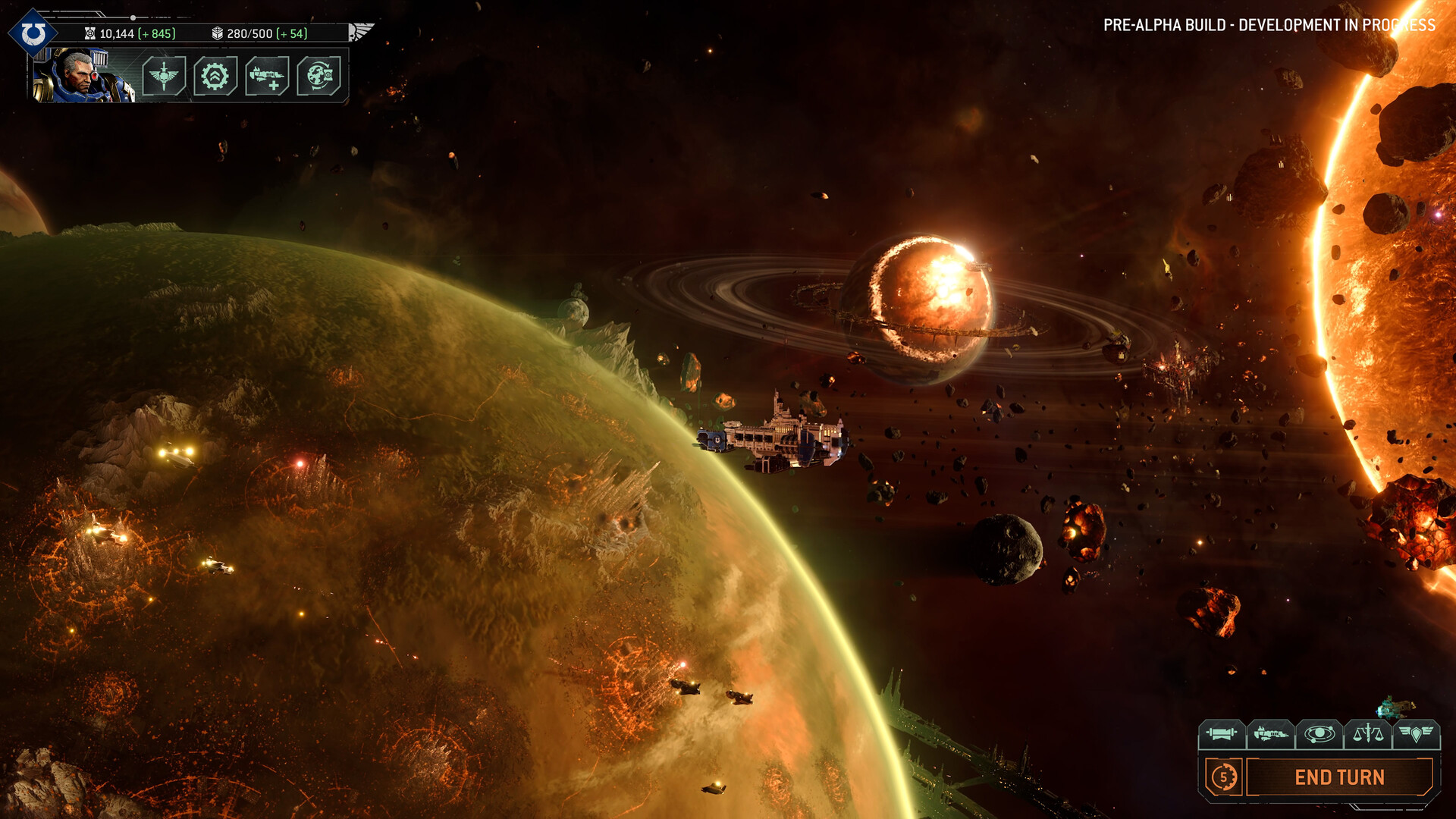
The pre-alpha label sits in the top-right of every screenshot. It will probably still be there a year from now.