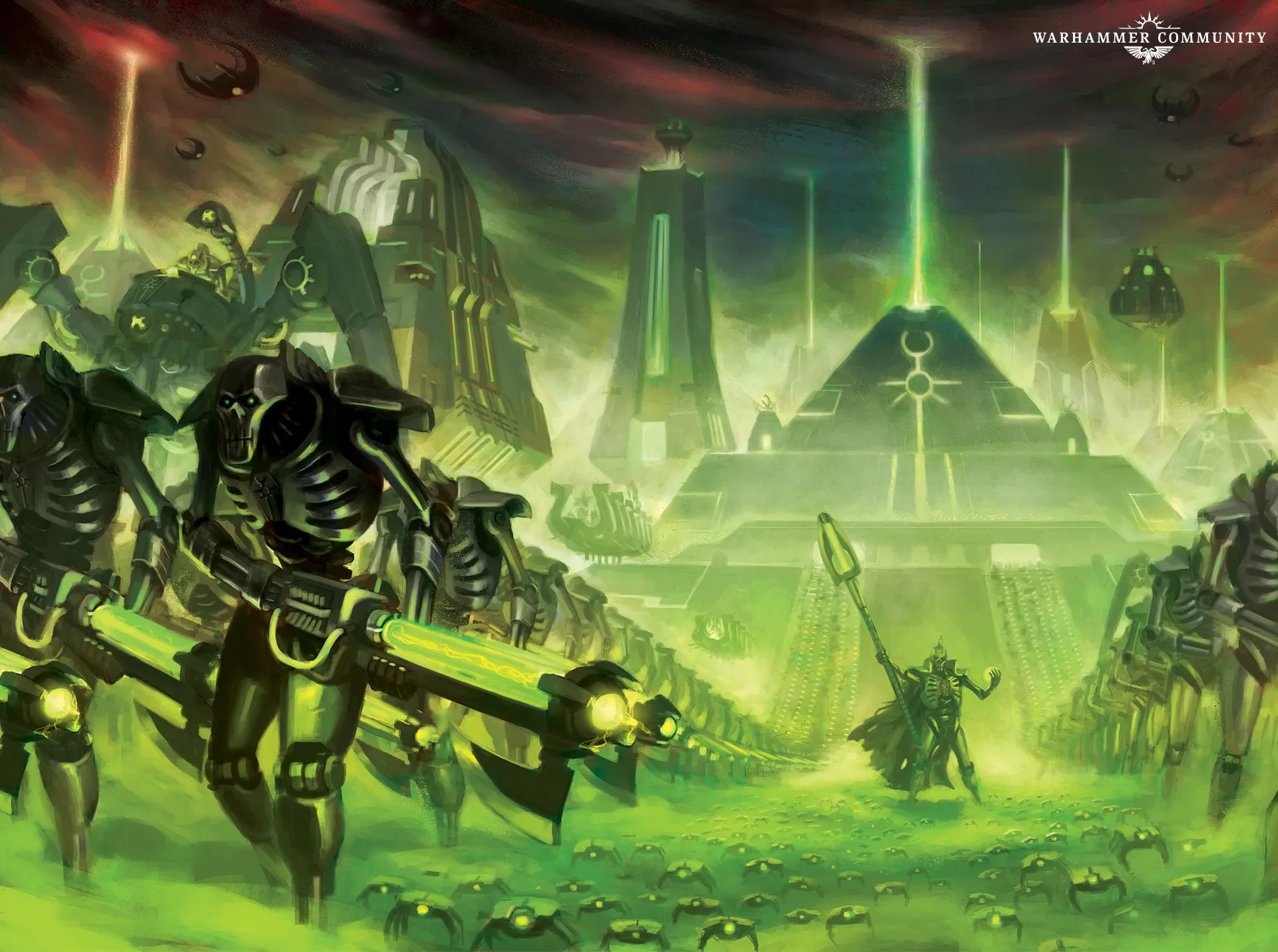
The trigger for the worst week in the Ultramarines 2nd Company’s recent history was geology. A series of seismic shocks in 972.M41 cracked the geothermic fusion stations on Damnos, and the surveys that followed turned up artefacts none of the colony’s miners could identify. The Adeptus Mechanicus did what the Adeptus Mechanicus always does: it claimed the artefacts and started lifting them out of the ground. A year later, the warriors sleeping under the rock began to wake up.
That’s how a Necron tomb world starts. Not with an awakening sequence and a dramatic countdown. With a mining permit, a few crates of unfamiliar metal, and tech-priests who couldn’t read the warning labels because there weren’t any.
I picked up Nick Kyme’s Fall of Damnos in a charity shop somewhere off the M1 in about 2014, paperback, spine creased the way only a book read three times can crease. I’d been into 40K for around six years by then, deep into Imperial Fists, and I bought it hoping for Necron lore. What I got was a Marine novel that didn’t really like its own villains, but the bones of the campaign were still good. Damnos had already been canonised in the 5th edition rulebook a few years earlier. Goonhammer ran a Lore Explainer on Damnos this week, which is part of why the campaign keeps rattling around my head again.
The Imperium found Damnos in the Great Crusade and gave it a low priority. It was rich in resources and not much else. The colony got a small Planetary Defense Force, an Imperial Guard garrison, and the geothermal stations that would later betray it. The map references for the planet shifted between editions. The 6th edition rulebook puts it in the Eastern Fringe, in the Vidar Sector. The 8th edition Necron codex moves it much closer to Macragge, which made the campaign personal for the Ultramarines in a way the older lore didn’t quite manage. Either way, it was a mining world built on top of something that did not belong to the Imperium and never had. The wider tomb world architecture (see the Necron Dynasties piece) is full of these arrangements, but Damnos is the one that got the novel.
Six months and a comm shroud
The way a Necron tomb world wakes up is the part I keep coming back to. The early signs look like infrastructure failures: a faulty geothermal station, mining accidents that don’t add up, an unusually bad season for crime in the manufactorum districts. PDF reports go up the chain, the chain forwards them to Mechanicus liaisons, and the Mechanicus liaisons file them as anomalous noise.
In 973.M41 the Necron Warriors began emerging from beneath the manufactorums. In phalanxes, disciplined and slow, pouring out of the deep mining shafts. The PDF tried to hold the line. They held for six months. By the end of those six months the manufactorum cities of Damnos Prime were empty of humans, and the planetary capital, Kellenport, was under siege.
Then the comm shroud arrived. Necron tomb-world tactics treat isolation as a weapon equal to firepower. A field of communication interference rolls in ahead of the advancing army, killing astropathic and vox traffic dead. The Damnos defenders couldn’t call for help. They couldn’t talk to each other. Reconnaissance Thunderbolts that flew into the shroud never came back, and nobody on the ground heard them go down.
The Imperial Navy did get one ship to Damnos, the battleship Nobilis. The Necrons pulled it out of orbit with a single bolt of compressed energy fired from the surface, and the wreckage broke up over the planet. By the time Governor Arxis got his astropathic distress call out, his command bunker was already being undermined from below by Tomb Spyders and Scarab swarms. He died in his own bunker, killed by a tunneling problem he couldn’t see.
Half a company
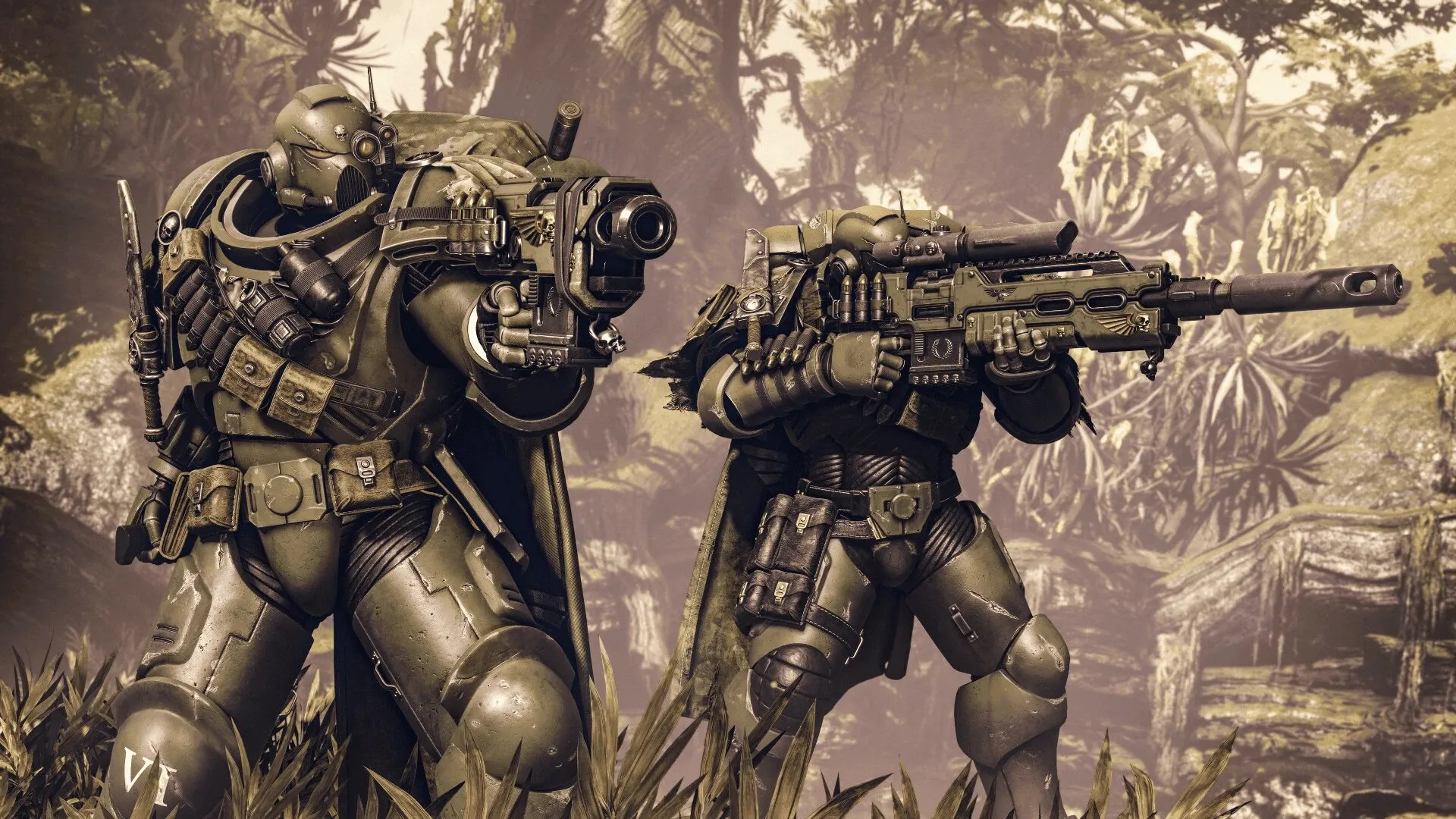
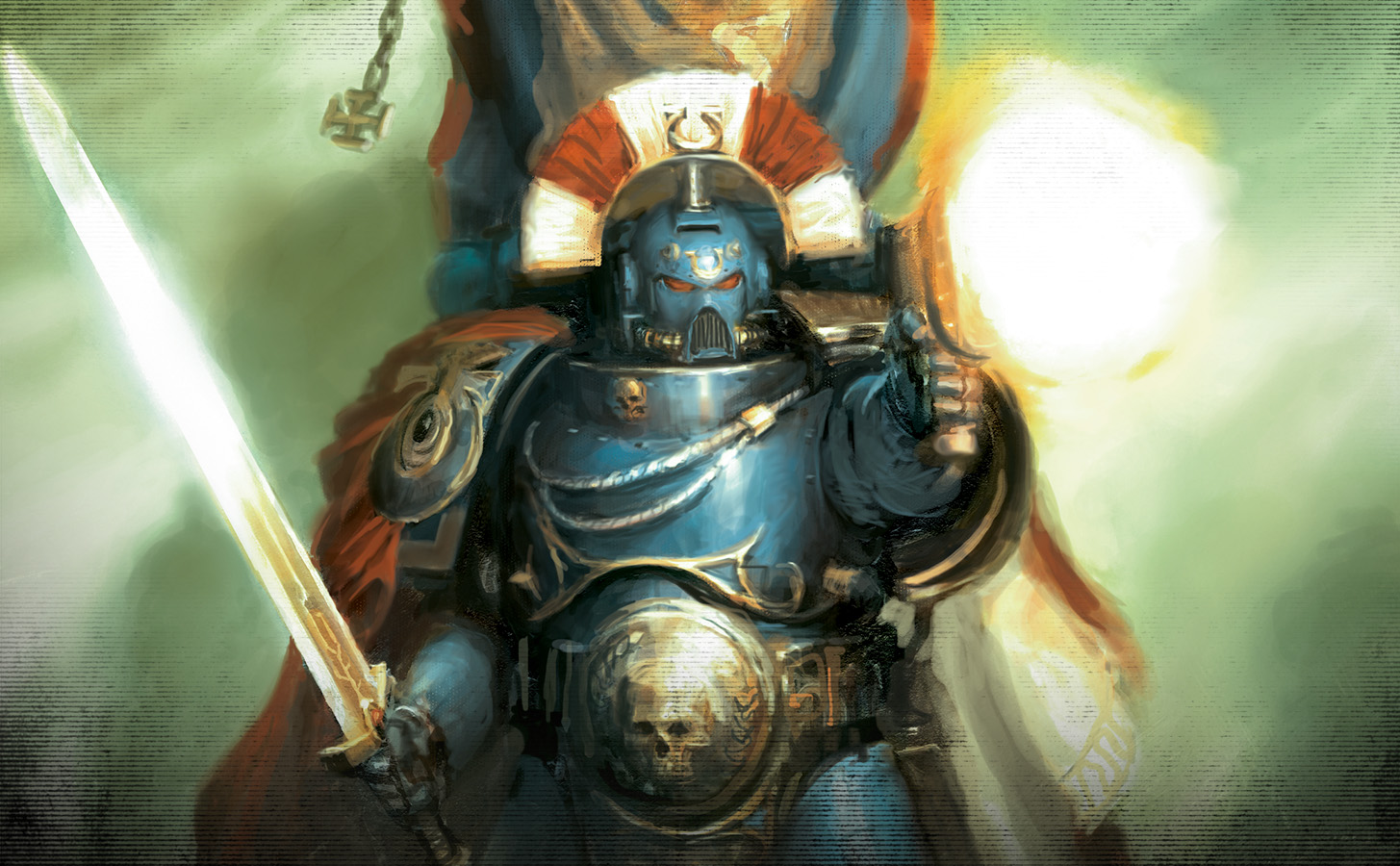
The Ultramarines arrived because Cato Sicarius happened to be passing. Honestly. The strike cruiser Valin’s Revenge was in the area, picked up the distress call, and Sicarius (who is not famous for his patience) diverted immediately. He drove the Revenge through the orbital debris of Nobilis to dodge the surface gauss-beams, took three direct hits, and launched drop pods just as the shields collapsed. The 2nd Company of the Ultramarines did this kind of insertion routinely.
The campaign gets unusual for a Marine novel of its era right after the drop pods land. Sicarius led the assault on the Necron command unit himself, and the warscythe of the local Necron Lord, the one called The Undying, cut him down. His command squad refused to break. Brother Agrippan, a Venerable Dreadnought, finished the Lord with a single power-fist swing. Sicarius was dragged unconscious back to the Apothecarium and survived. Chief Librarian Tigurius, meanwhile, had received a vision of the death of a hero. Black Library novels of that period rarely delivered on that kind of foreshadowing for a named character of Sicarius’s profile, so the vision sat there unresolved through most of the book.
Sicarius walked. Half the rest of the company died on the planet.
The evacuation that mattered
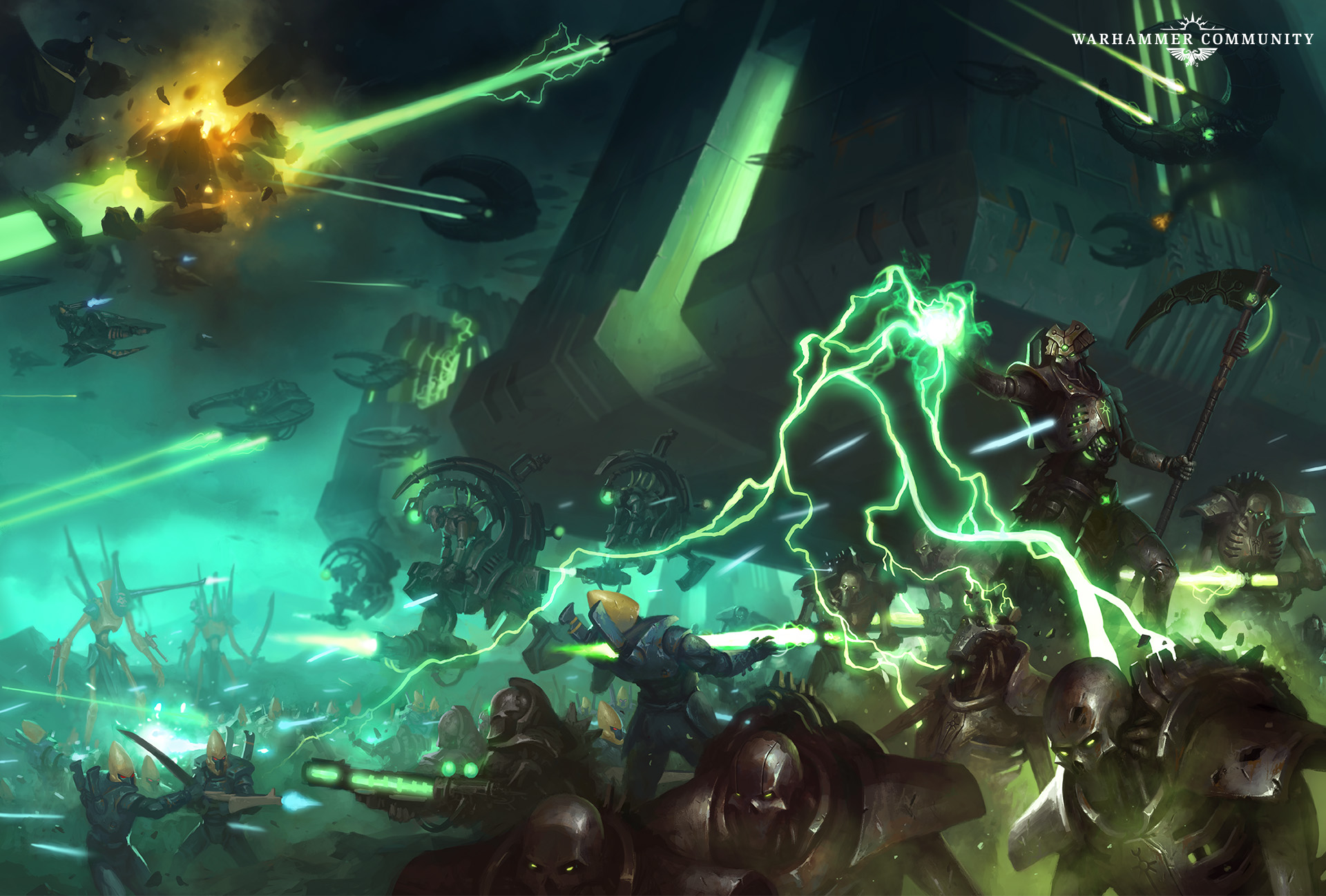
Tigurius and Agrippan made the call I’m not sure many other Marine commanders in the same setting would make. They conceded the planet. With Sicarius down, the Company at half strength, Kellenport unfit to defend, and reinforcements weeks away, they switched the entire campaign from defense to evacuation. The Techmarines rebuilt the spaceport instead of the city walls. Every available landing craft went up and down between the Revenge and the surface, ferrying civilians.
Brother Agrippan personally held Kellenport’s western gate alone for three hours while the spaceport ran. He tore the first Monolith ever to appear in the campaign canon to pieces with a power fist. He took a wound from it that should have ended a normal Dreadnought and kept fighting. A Predator tank called Rage of Antonius took broadside hits from gauss weapons and somehow stayed running long enough for its commander, Antaro Chronus, to destroy the cell’s phase generator and force a Necron retreat. Techmarines who later examined the tank described its survival as miraculous, and the codex passage records the word without softening it.
The Ultramarines lifted what civilians they could. Damnos became a Necron World. That’s how the campaign ended in the 5th edition books, a published Imperial defeat with half a Marine company dead and a planet abandoned.
What you don’t get from the rulebook
I painted three Necron Warriors halfway through 2015 after that charity-shop read. They’re still in a box on a shelf, undercoated black, with green tubes washed but never highlighted. Pete has a fully painted Salamanders army, a partially painted Salamanders crusade force, and is starting on a third successor chapter. I have three Necron Warriors and a 12-year backlog of Imperial Fists. The Damnos miniatures range from that era was genuinely good, and I have not opened the box in over two years.
So yeah. Damnos. Mining world. Tech-priests pulled the wrong wires. Six months later, half an Ultramarines company is dead and the survivors are running. That’s the whole thing.
The reason this stays interesting, almost twenty years after the campaign was first published in real-world time (longer than I’ve been a dad, by some way), is that almost nothing else in the 5th edition era treated the Adeptus Mechanicus as the active cause of an Imperial disaster. Damnos falls because tech-priests, doing their job exactly as their Cult tells them to, hauled archaeotech out of the wrong dig site. The cause is the Mechanicus itself, working correctly to its own specification. The lore is openly hostile to its own faction in a way the contemporary novels generally weren’t, and the codex page records the Mechanicus’s role without celebration.
The retake nobody talks about
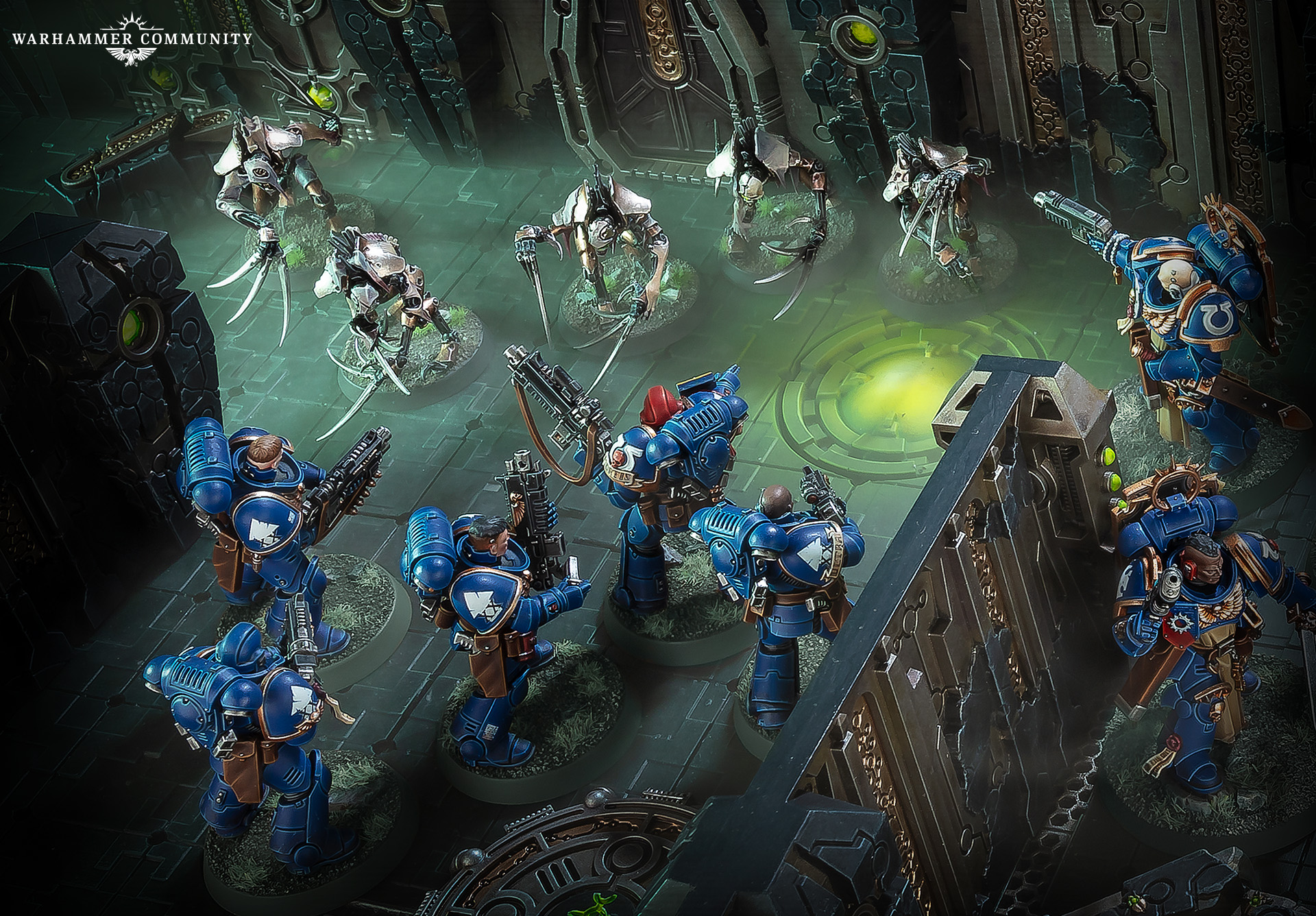
In 999.M41, six in-universe years after the fall, Sicarius came back. The 2nd Company launched a fresh campaign, killed The Undying again (the Necron Lord apparently has a reanimation problem the codex never quite explains), and reclaimed Damnos for the Imperium. The retake is the part of the story everyone forgets. Damnos is a campaign with two halves, and the Ultramarines lost the first half in print, on the page, in the rulebook, before any retake had been written.
In early M42 the Necrons came back again, this time the Szarekhan Dynasty proper. The fight is still ongoing in 9th and 10th edition material, with Primaris reinforcements now in the mix and the Ultramarines treating the Damnos system like a personal grudge. I’d quite like to read whatever GW eventually publishes about the third Damnos war, if they ever bother.
I’ve half-considered building a Damnos-themed Cadian force as a side project. Defenders of an evacuated mining world, weathered armour, an indifferent paint scheme to suggest a unit that survived a thing they shouldn’t have…
…and then the Necron codex would sit on the shelf next to my three painted warriors, and the pile would grow, and Pete would point at the unbuilt sprues again the next time he came round.
The 6th edition rulebook puts Damnos in the Vidar Sector on the Eastern Fringe. The 8th edition codex moves it near Macragge. Both are canonical. Nobody at GW has ever explained the move.