There’s a line in White Dwarf #421 that does the work most people expect a whole essay to do. Talking about what ten thousand years in the Eye did to the nine Traitor Legions, it says cohesion “has broken down entirely” for the World Eaters, the Emperor’s Children and the Night Lords, and then, almost as an aside, that the Word Bearers and the Iron Warriors “have simply adapted to their new existence.” Two legions singled out for still being recognisably themselves. The other seven, one way or another, came apart.
The r/40kLore thread asking which Traitor Legion was least destroyed after the rout at Terra has been going for days now, and almost nobody quotes that line, because it’s buried in a paint-and-rules article nobody reads for lore. It’s basically GW answering the question for you. I think they got it right, even if the reasoning people give underneath is usually wrong.
The night Horus died, every Traitor Legion lost something different
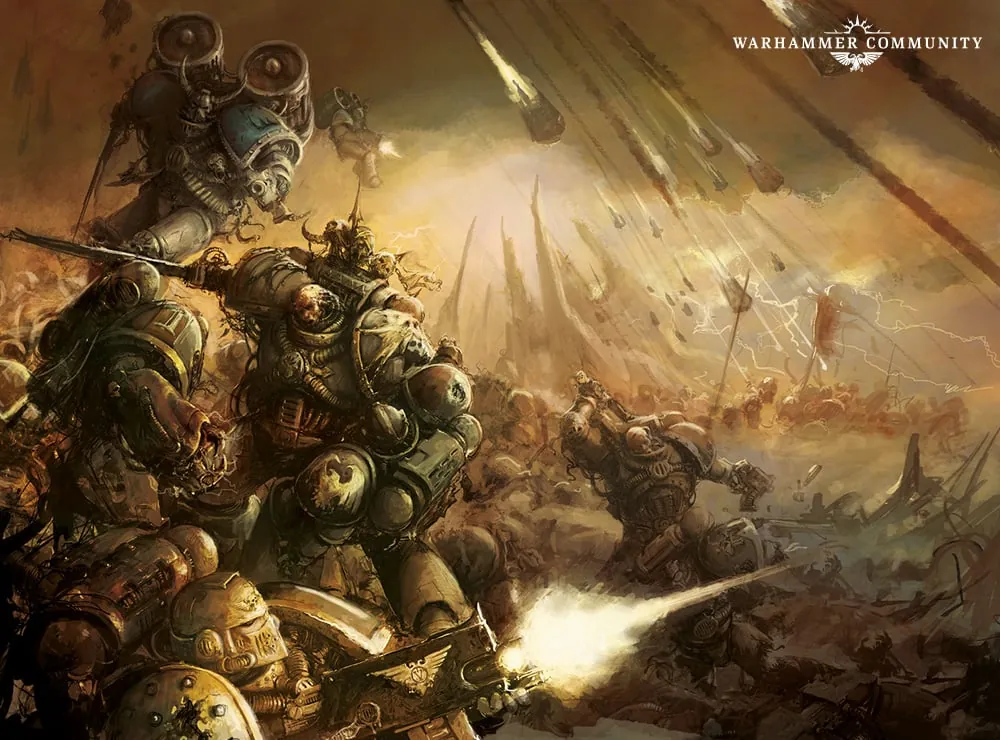
The actual rout is well documented. When Horus fell, the daemon horde got yanked back into the warp in a single psychic instant, and the besieging army lost cohesion as “each primarch looked only to the needs of his own Legion,” to quote the old Visions of Heresy account. The Siege of Terra ended with the whole traitor army coming apart in the space of a few minutes, primarchs and Titans and all.
The Sons of Horus retreated first, hauling Horus’s body into the warp aboard the Vengeful Spirit. Factions in the other legions later blamed them for starting the whole collapse. So the Warmaster’s own praetorians, the chosen of the chosen, were the first to break and run, and within a few centuries they’d been bled white in fights with everyone else and had to repaint their armour black out of shame. Score “least broken” and the Sons of Horus are out almost immediately. They’d lost Horus himself, the primarch the legion was named after, and never got the thread back.
Angron was already a daemon prince by the time Terra fell, having ascended at Nuceria during the Shadow Crusade. The Visions account has him board his ship, look back at the Palace he’d nearly taken, shake his fist, shrug, and leave. A primarch who’s become a daemon isn’t leading a legion any more. He’s a weapon that occasionally remembers it has sons. By the rout the World Eaters were already sliding into the scattered warbands they’ve been ever since.
Fulgrim ascended too, and abandoned the most precise, vain, perfectionist force in the entire Crusade to rot into the sensation-junkies everyone knows now. By the time of the Scouring the Emperor’s Children were already selling their own gene-seed and splitting into warbands.
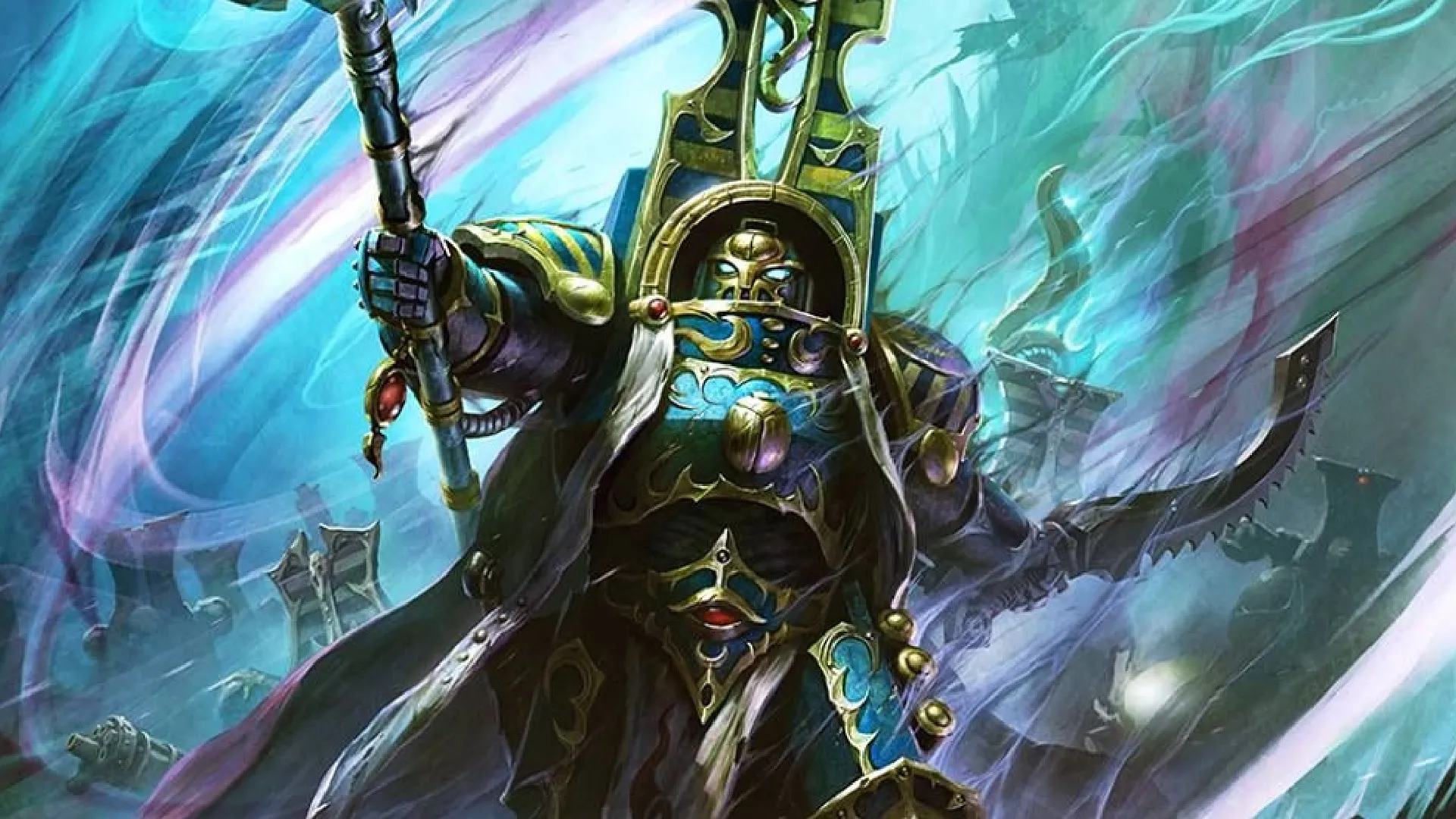
And the Thousand Sons, my lot, more or less. Prospero had already happened. Magnus took the survivors to the Planet of the Sorcerers, and then Ahriman’s Rubric turned most of the rank and file into ambulatory dust rattling around inside ceramite. A legion of automatons piloted by a few hundred sorcerers is a great many things, but “intact fighting force” isn’t one of them. I love them dearly. I’m not going to sit here and pretend they walked out of the Heresy in good shape.
So you can knock four legions off the list fast. The ones whose primarch died, ascended and wandered off, or whose core got transmuted into something that can’t reload.
What “broken” even means
The thread keeps going in circles because people mean different things by destroyed. If you mean casualties, nearly every legion took catastrophic losses at Terra and across the Scouring, and the numbers are murky and GW has never been consistent about them anyway. If you mean territory, they all lost everything except what they could cling to in the Eye. If you mean command structure, now you’ve got the interesting axis, and it’s the one WD #421 is quietly using. Did the legion still have a working hierarchy, a doctrine, a way of making more of itself, once the dust settled?
The Night Lords flunk that test for a daft reason. They never really had it to lose. Curze’s legion was a confederation of murderers held together by terror and the occasional appearance of a primarch who openly despised them. When Konrad Curze let an assassin kill him because he’d decided he deserved it, there was no command structure waiting to be inherited. They’d been a broken organisation since well before the Heresy, and the rout changed very little about how they operated.
The Alpha Legion are the trick answer everyone reaches for. Every cell survived because every cell was built to run without the others, and the myth of the primarch (or the two primarchs, depending which book you trust) kept ticking over. But you can’t rout a thing that was a thousand independent knives to begin with. There was never a single centre to collapse, which is its own way of failing the cohesion test rather than passing it.
Death Guard, then. Kiran’s lot, so I hear about this one a fair bit. They came out of the warp on the road to Terra already remade by Nurgle’s plague, and that’s the catch in the whole argument. They kept Mortarion. They kept a recognisable structure. Typhus kept the Destroyer Hive ticking. In one reading they’re the most intact of anyone: a primarch and a functioning legion fused into a single coherent plague-engine that still answers to its father. Kiran raises exactly this every time it comes up, and he isn’t entirely wrong. The wrinkle is that Mortarion didn’t pick Nurgle. He lost a bargain in the warp and woke up belonging to a god. A legion that stays whole by being swallowed whole is cohesive in a fairly grim sense of the word.
The case for the Word Bearers
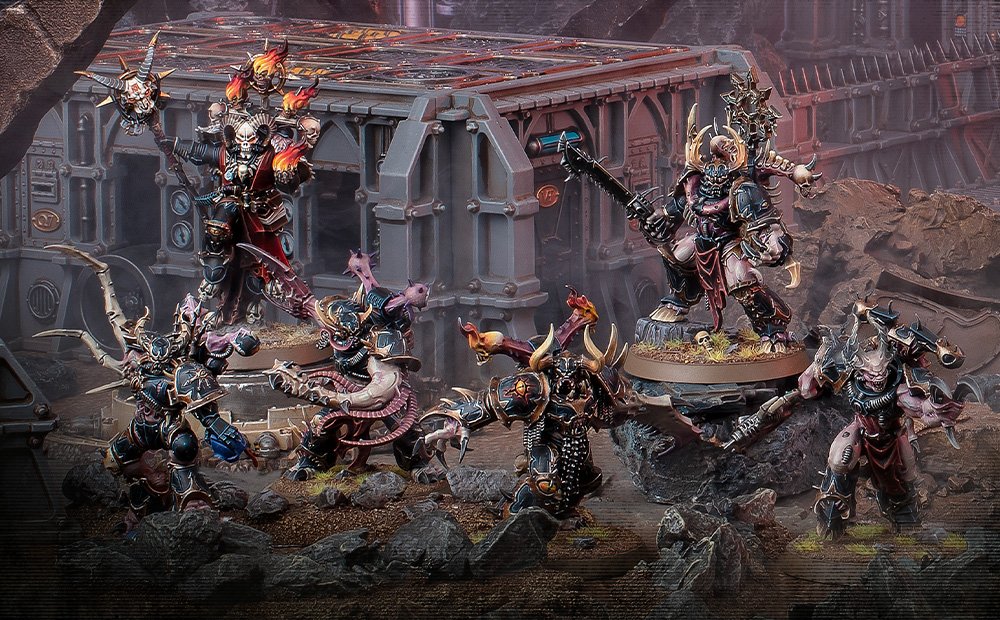
The Word Bearers are the answer almost nobody leads with, and I think that’s because the obvious pick feels like it ought to be the Iron Warriors. Look at what the Word Bearers actually kept, though.
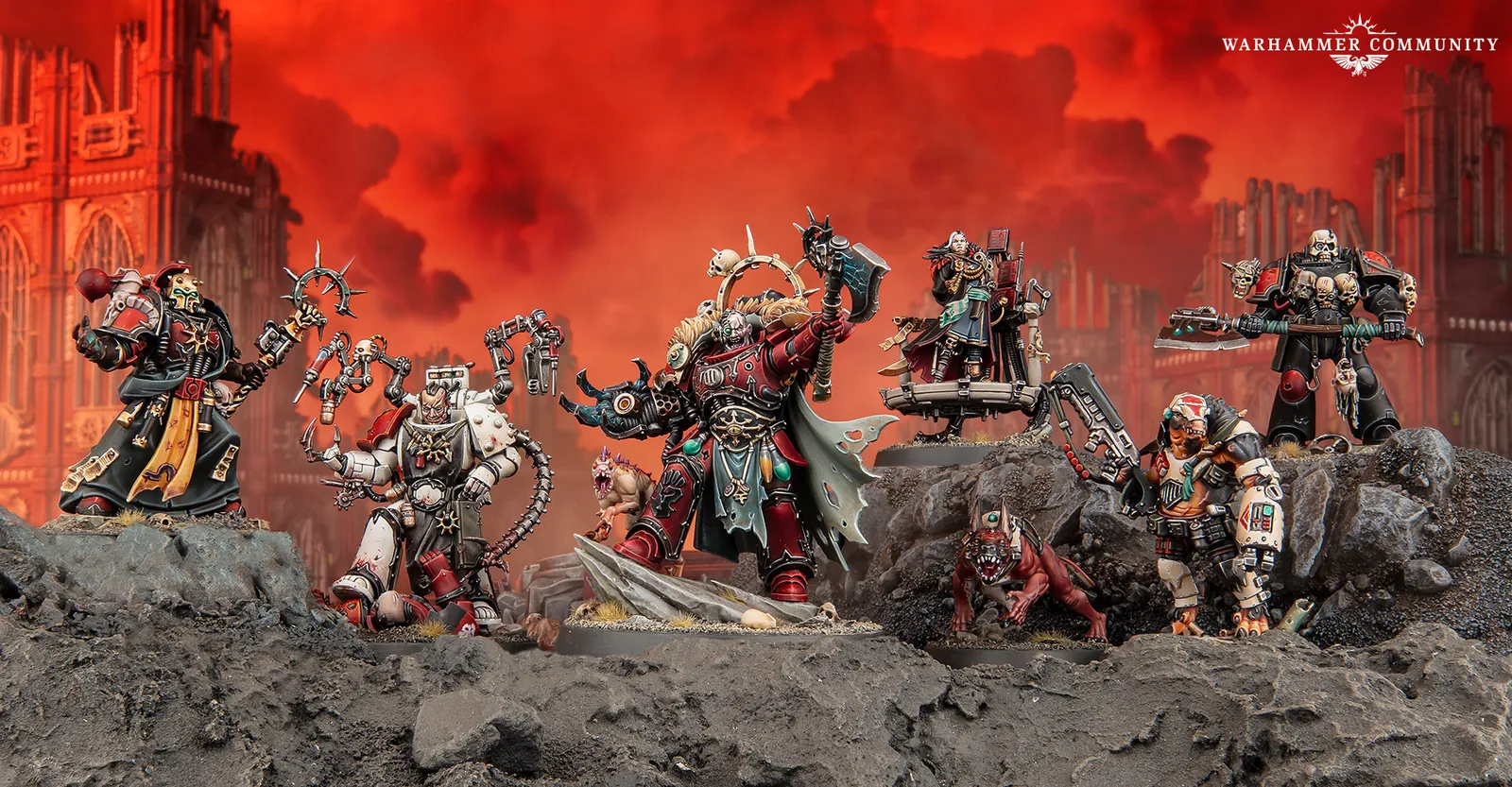
They kept their primarch. Lorgar didn’t ascend to daemonhood and drift off, and he didn’t die. He withdrew into contemplation eventually, but the legion he left behind ran on the apparatus he’d spent decades building: the Dark Apostles, the Coven hierarchy, the entire religious officer corps. Crack open Vigilus Ablaze, set ten thousand years later, and they’re still organised into named hosts and warbands under Dark Apostles, raising Noctilith Crowns for Abaddon while privately deciding he’s a useful idiot who’s refused “the ultimate blessing of the Ruinous Powers.” There’s a Dark Apostle in that book sneering that for all Abaddon’s vision, “he is still but a mortal.” The hierarchy Lorgar built was still issuing orders and running its rituals ten thousand years after the rout.
The reason underneath is the bit the casualty-counters skip. The Word Bearers were the only legion whose whole identity was already Chaos worship before Terra. Every other traitor legion had to process a defeat: a lost cause, a dead or absent father, a sense of purpose that evaporated the moment Horus died. The Word Bearers had no cause that could evaporate, because their cause was never Horus in the first place. It was the Primordial Truth. Losing the battle for Terra was, in their own theology, a setback in a war they already understood as eternal. Read the Long War lore and the Word Bearers folded the defeat straight into their doctrine, a predicted reversal in a holy crusade that was always going to take millennia. Lorgar’s sons came out the far side of the Scouring still doing exactly what they’d done going in, which can’t be said for many of their cousins.
I’ll grant the obvious objection. Measured purely by martial muscle, the Word Bearers probably aren’t your pick, because they always leaned on daemon-summoning and cultist hordes more than on disciplined Astartes gunline work. If you want the legion that still fights most like a legion, that’s the next one along.
The Iron Warriors, and why people pick them instead
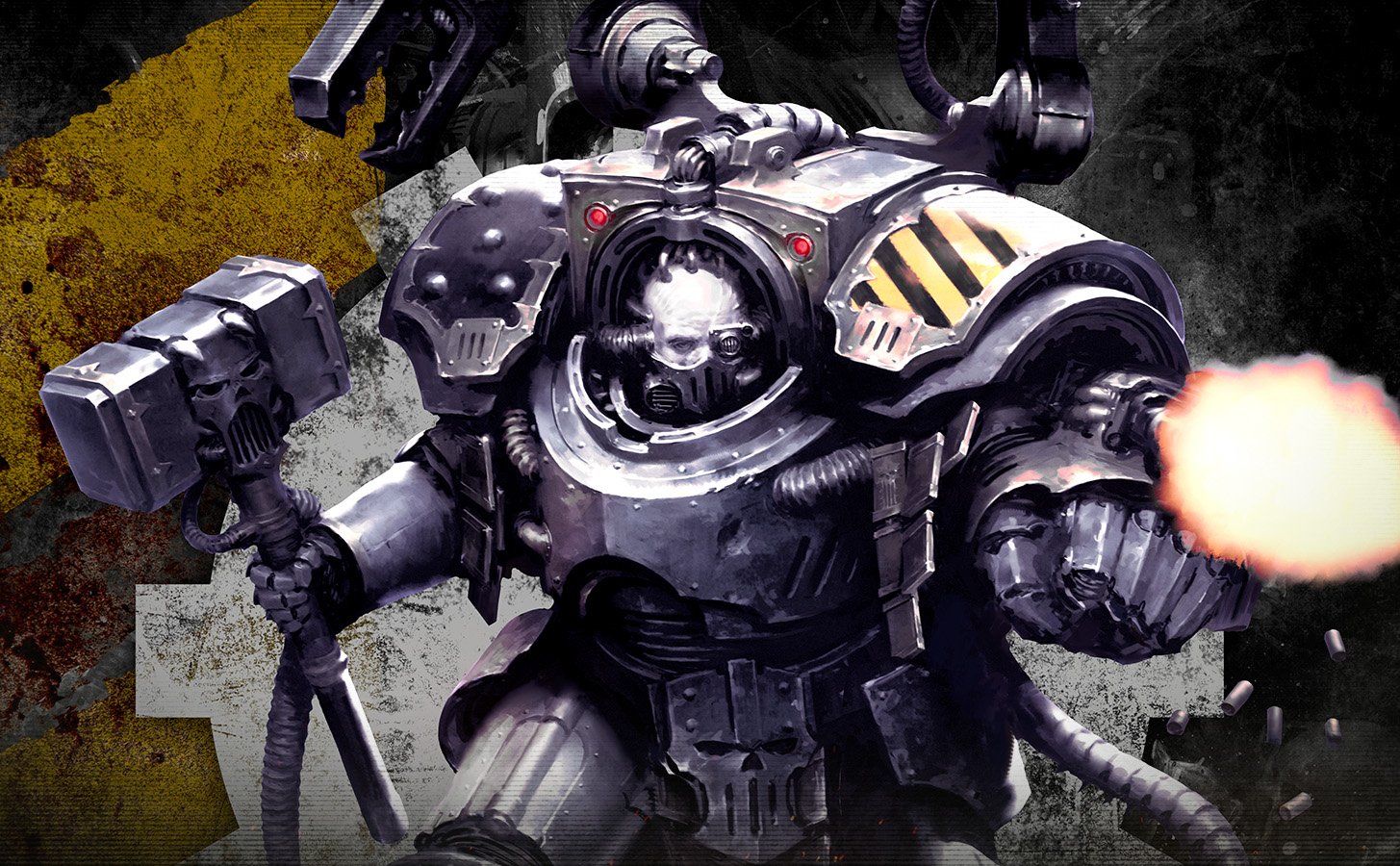
The popular answer, and an honestly good one. The Iron Warriors held a genuine empire centred on Olympia for two whole years after Terra while everyone else was already streaming into the Eye. When the Imperial Fists and Ultramarines finally came for them, the Olympia garrison held out so long that they triggered their own missile stockpiles rather than surrender, and left the world a blasted Perdita ruin. Then the survivors took Medrengard, fortified it against loyalists and rival traitors alike, and carried on being the Iron Warriors. Siege doctrine intact. Fire plans intact. Still the most heavily armed of all nine. I wrote a whole piece on how they still run like an army, and I stand by every word of it.
The complication is what Perturabo did with all that cohesion once he had it. The Imperial Armour timeline records the Dispute of Iron around M34: a civil war erupts on Medrengard, tears through every Iron Warriors domain, wipes out whole sub-factions like the Shattered Tower and births new ones like the Steel Brethren, then stops as suddenly as it began. The book notes some believe the whole thing was “carried out according to the Daemon-Primarch Perturabo’s design in order to weed out the weak and the unworthy from his scions.” He took the most cohesive traitor legion in the galaxy and ran a purge through it for quality control.
When people say the Iron Warriors are the least broken, what they really mean is the Iron Warriors are the most functional. Those aren’t the same claim. The machine still works beautifully. It’s just that the machinist keeps feeding bits of it back into the furnace, the way some people can’t leave a tidy cupboard alone and have to reorganise it until half the contents are in the bin.
I went down this exact rabbit hole years ago, the way you do. Started on the Word Bearers entry in an old Index Astartes reprint because I wanted one fact about Dark Apostles for a Kill Team list I was theorising and never built. Three hours later I was on the Lexicanum page for the Dispute of Iron with eleven tabs open and a stone-cold mug of tea, having completely forgotten the list existed. Never did build that killteam. The models are still grey plastic in a box under my desk. The more you read, though, the more the question stops being “who took the most casualties” and turns into “who still knew who they were afterwards.”
So yeah. Word Bearers. Weird pick, I know. Everyone wants it to be the Iron Warriors because the Iron Warriors look the part, all trenches and artillery and grim competence. But the Iron Warriors got purged by their own primarch inside four centuries. The Word Bearers just carried on preaching. Lost the war and kept the faith, never once had a crisis about what any of it was for. Ten thousand years of that.
Anyway, that’s my vote in the thread. I’ll probably get told I’m overrating Lorgar, which is fair, because I usually am.