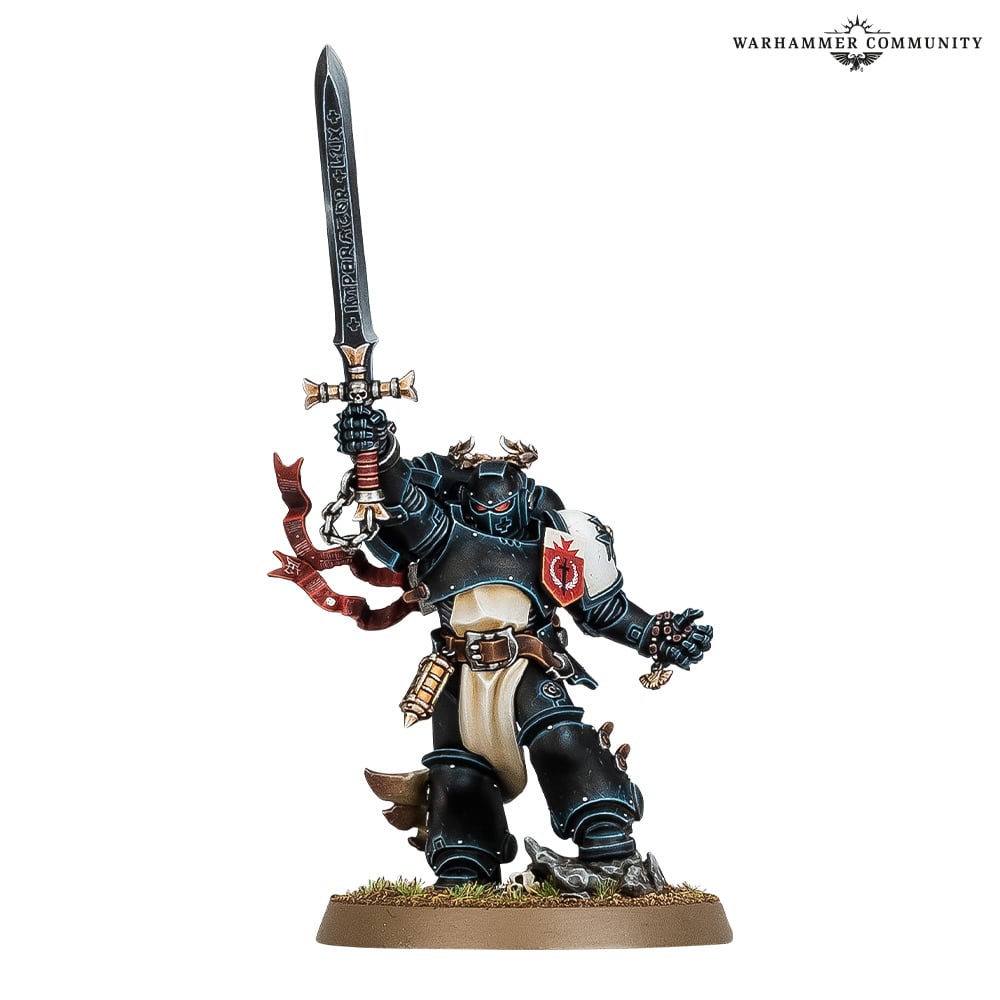
There are exactly ten of them. Ten Black Swords, each a massive two-handed power blade, each sealed in its own stasis casket somewhere in the Black Templars’ scattered Crusade fleets. A Crusade can sail for decades with its sword locked away and never drawn, carried from war to war like luggage nobody’s allowed to open. It waits for one specific night. The night a battle-brother kneels through the pre-battle prayers and comes out of them with a vision of burning angels stuck in his skull. Then the casket opens, his name gets cut into the obsidian hilt, and the Black Templars have an Emperor’s Champion again.
The Emperor’s Champion is the strangest thing about the Black Templars, and I say that as someone whose own army is the most boringly loyal Space Marines you can field. It isn’t a rank. You don’t get promoted into it. A Marshal can’t hand it to his best duellist as a reward for good service. The Chapter’s official position is that the Emperor Himself, the actual corpse on the Golden Throne, reaches across ten thousand years and a galaxy of warp static and taps one specific man on the shoulder on the eve of a fight. And from that night, that man outranks every officer in the Crusade, some of whom have run it for a century.
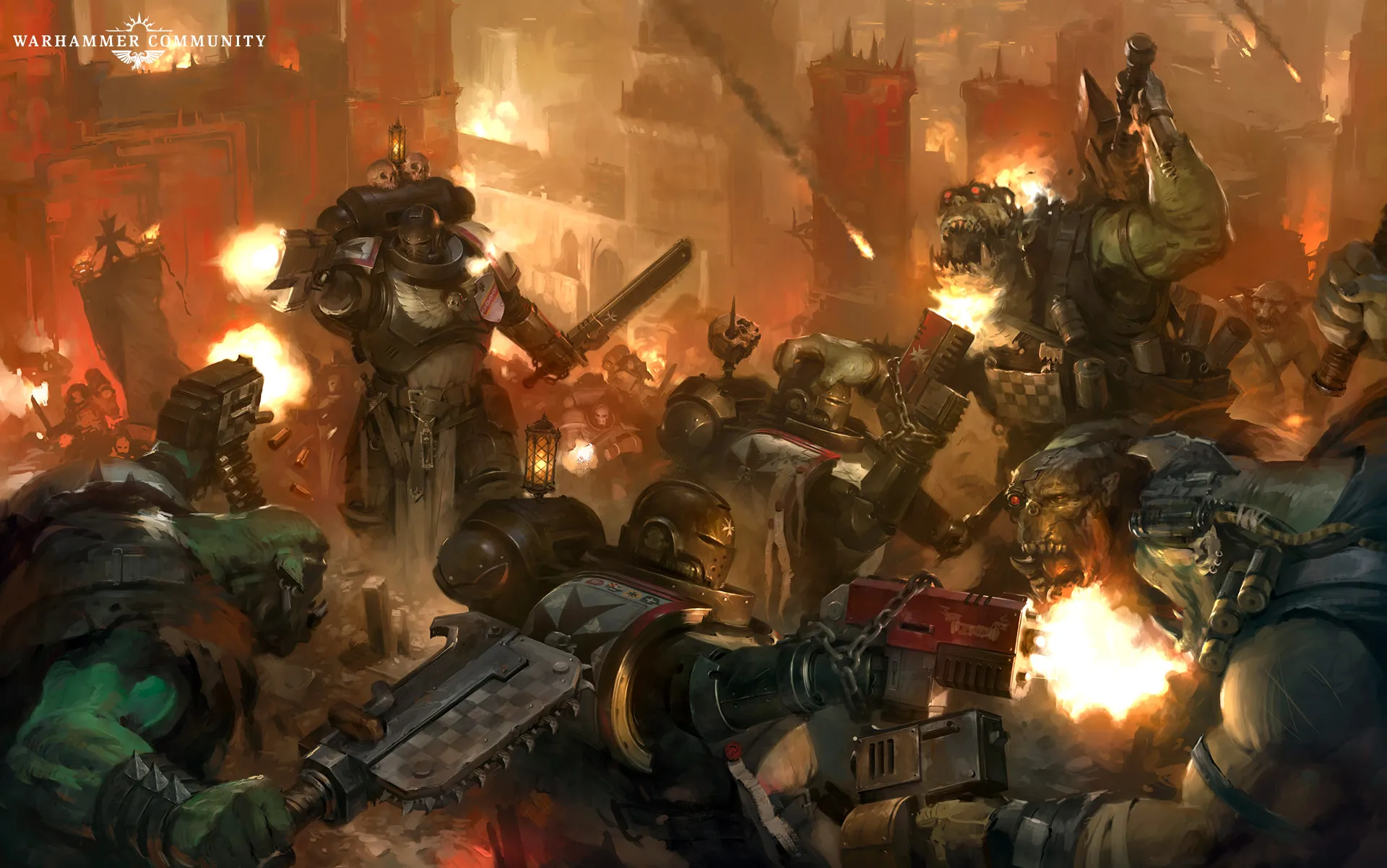
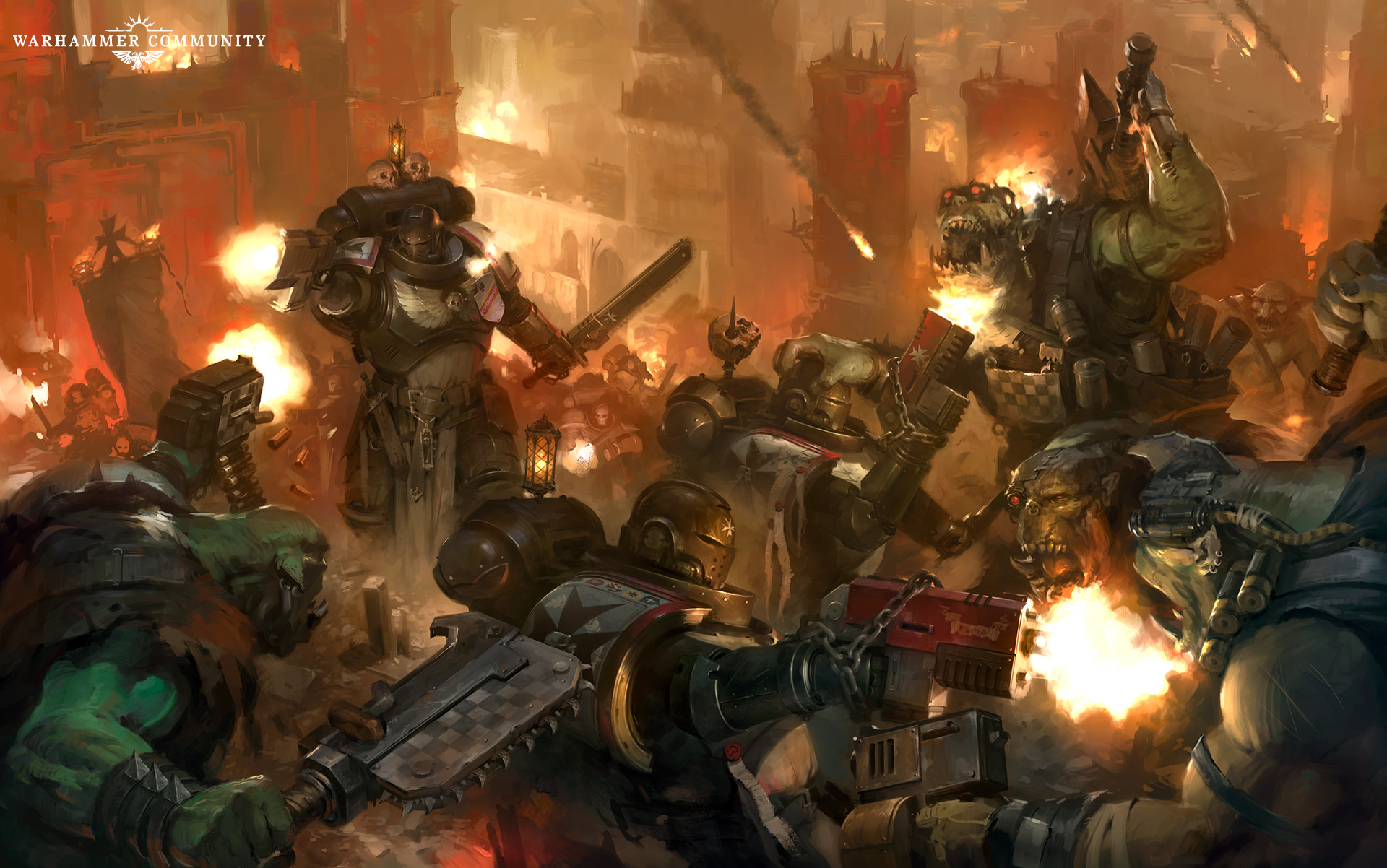
Bell of Lost Souls ran a tidy little explainer on the role on the 19th of June, and it’s the kind of piece that surfaces every time the Templars drift back toward the middle of the hobby. Which they have, hard. Eleventh edition launched on the back of Armageddon, the whole game is Orks and Imperial heroes again, and the Templars are the Chapter that historically turns up to Armageddon with three entire Crusades and a grudge the size of a Land Raider.
How an Emperor’s Champion gets chosen
The detail BoLS gets right and most people skim past is the screening. On the eve of battle the whole Crusade prays and fasts by candlelight, Chaplains walking the lines swinging censers, everyone muttering into the smoke. Most nights nothing happens. The candles burn down, everyone gets up, they go and kill something. A handful of times a century, one brother doesn’t get up the same man. He’s seen it: a pale burning knight against a sea of foes, crumbling walls, a light going out that has to be relit. Roughly the same imagery every time, because the Chapter believes what he’s actually seeing is Sigismund’s memories of the Siege of Terra.
Then the Chaplain interrogates him, and this part I love. The senior Chaplain sits the brother down, makes him recount the vision in full, and cross-references the symbols against the Liber Divinitus, the Chapter’s book of recorded visions, to check they match. They’re scared stiff of daemonic fakes, of a brother being lured into the role by something in the warp wearing the Emperor’s face. The lore is very keen to tell you that in the Chapter’s entire history, not one vision has ever been judged false. Which, sure. I’m certain the screening is flawless and there has definitely never been a Tzeentchian sorcerer who’d find that exact loophole hilarious.
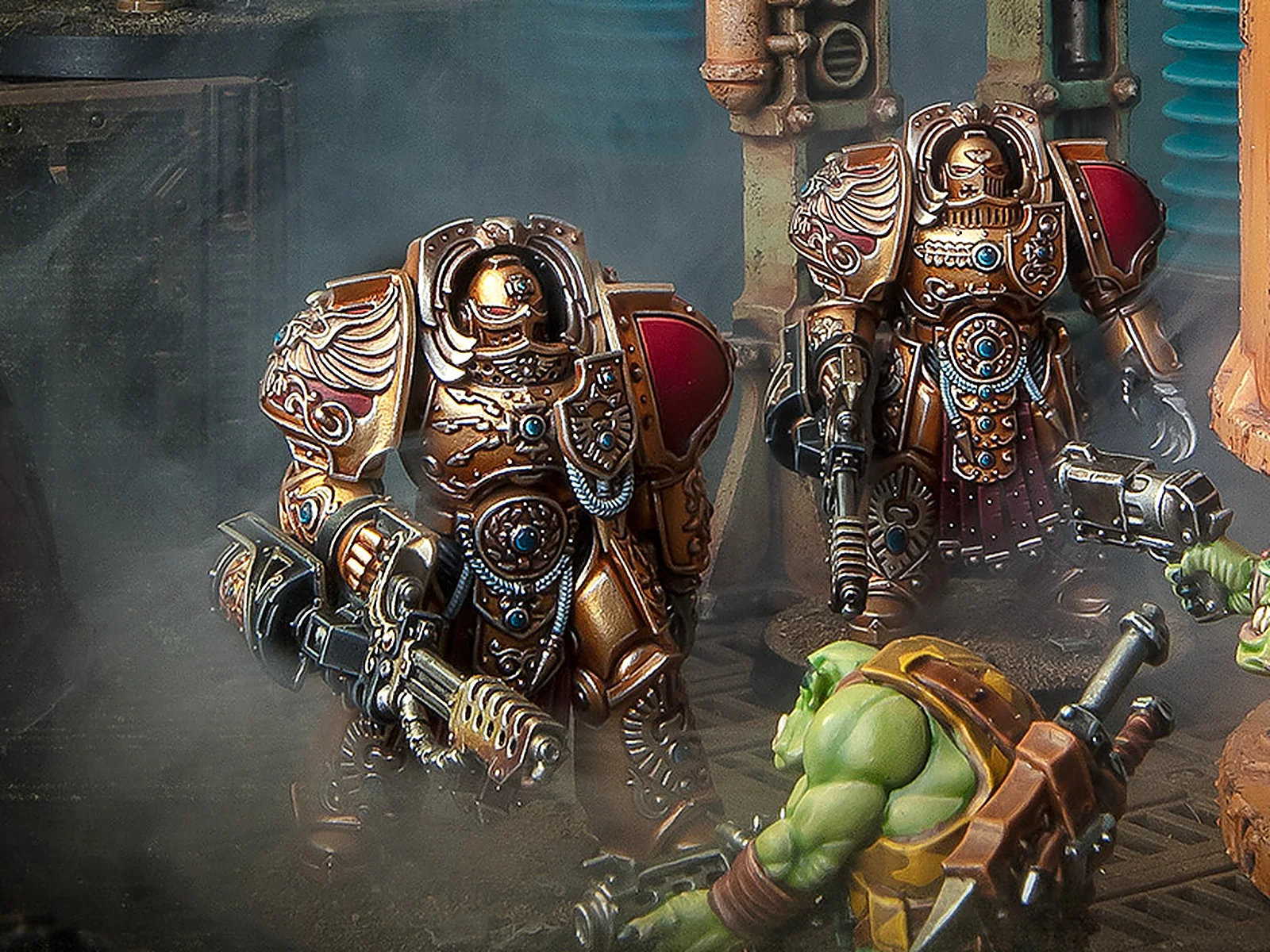
Once he’s confirmed they dress him. The Armour of Faith, artificer plate covered in tiny spidery script with every line a benediction, and one of the ten Black Swords drawn from its casket. From that moment he answers to no one. Not his Marshal, not the High Marshal. He walks where his visions send him, kills what he’s been sent to kill, and the Chapter just lets him. They reason that the Emperor summoned him for a purpose mortal commanders can’t see, so who are they to give him orders.
That’s the part I keep turning over. An army built entirely around obedience and holding the line voluntarily creates one slot the chain of command isn’t allowed to touch. It’s a bit like a company where one random employee occasionally gets a memo direct from the dead founder, and everyone else just has to quietly rearrange the org chart around him.
Why this Chapter, and almost nobody else
Other Chapters have done the Emperor’s Champion thing. The Crimson Fists used to, until Rynn’s World blew up their fortress monastery and, the lore strongly implies, destroyed the sacred vestments along with most of the Chapter, so the visions stopped coming. (If you’ve never read up on what actually happened on Rynn’s World, it’s one of the great gut-punch stories in the setting.) The Blood Ravens keep a version of it too. But the role lives and breathes in the Black Templars, and to understand why you go back to Sigismund.
When the Legions were broken up after the Heresy, Rogal Dorn fought it. He called Guilliman a coward; Guilliman branded Dorn a rebel; an Imperial Fists vessel got fired on and the whole thing nearly tipped into a second civil war before Dorn backed down. He split his Legion into the Imperial Fists, the Crimson Fists, and the Black Templars, and he handed the Templars to Sigismund, his most zealous warrior, the man who’d already served as the first Emperor’s Champion during the Siege.
Sigismund knew how much suspicion hung over a Legion that had very nearly refused the Emperor’s own decree. So he made a gesture. He swore the entire Chapter onto a Crusade that would never end. No homeworld, no fixed base. They’d live and die aboard their fleets, forever, burning the witch and the alien and the heretic to prove a loyalty nobody had actually questioned out loud. They’re still going. The Crusade has run for something like ten thousand years, longer than the whole span of human recorded history several times over, and the Templars have never once decided the point’s been made.
So yeah. Sigismund. Dorn’s best swordsman, handed a Chapter and a vow at the absolute low point of the Imperium, and he turns the whole thing into a ten-millennia apology nobody asked him for. That’s the Templars in one move. Permanently proving a point. To who? Dunno. The Emperor isn’t talking.
No Librarians, no exceptions
The same faith that produces a man chosen by visions also produces the most psyker-hostile loyalists in the Imperium. The Black Templars don’t field Librarians. At all. Most Chapters guard their Librarians like crown jewels; the Templars look at their own latent psykers and decide the risk isn’t worth running, full stop. One of the four battle-vows a Champion can lead the Chapter in is literally “Abhor the Witch, Destroy the Witch,” and they apply it to everyone, allied psykers included. Imagine being a Grey Knight, an entire Chapter of sanctioned psykers built specifically to fight daemons, and showing up to a warzone where your supposed allies would happily put you on a pyre.
For years I read this as edginess, or straight hypocrisy. They’ll accept a vision beamed in from the warp but they won’t trust a Librarian? Pick a lane. And honestly, sitting with it, I came round a bit. The way the Templars see it, a Librarian opens himself to the immaterium deliberately, and that act of reaching in is the unforgivable part. The Champion opens nothing. He gets chosen, and then the choice gets audited by a Chaplain against a centuries-old book before anyone’s allowed to act on it. I can see the logic. I also still think it’s a bit convenient, and I suspect the Templars would burn me for saying so.
I’ll cop to something. For an embarrassingly long time I read the Emperor’s Champion as a stat line and nothing else. Fourth edition, the vows were just rules text. You picked “Accept Any Challenge” for the bonus attacks, glued the model together, never thought twice about what he was meant to be. Took me years to clock that the bare, undecorated armour is the entire point, that he’s deliberately anonymous because the role is bigger than whoever’s currently filling it.
The ones who don’t come back
The lore is blunt about it: it’s rare for an Emperor’s Champion to survive long after donning the Armour of Faith. Filled with what the Chapter calls divine courage, he throws himself at the biggest enemy on the field and usually sells his life doing it. The Chapter built the role that way on purpose. Both the brother and the Chapter accept it as part of the covenant.
The famous one is Marius Amalrich. During the Gathering Storm, with Guilliman freshly resurrected and trapped in the Maelstrom by Kairos Fateweaver, it was Amalrich who rammed the Black Sword through the chest of the Bloodthirster Skarbrand. It killed him, but the wound let Guilliman finish the daemon and reach Terra. There’s Renald too, who lost his Black Sword and his armour when his strike cruiser’s Gellar field failed, and held off a tide of daemons with nothing but a chainsword until the field came back, then died of his wounds. He never carried a Black Sword in battle. They inscribed his name on one anyway, just to remember the deed.
When a Champion falls, the Chaplains carry the body off the field, break the seals on the Armour of Faith, and wash the prayers from it with holy oils. The Black Sword goes back to the flagship, the Eternal Crusader, and into the reliquary. Then High Marshal Helbrecht listens to Chaplain Grimaldus recount the dead man’s deeds while a serf cuts the name into the obsidian beside all the others, and the blade goes back into its casket to wait for the next vision.
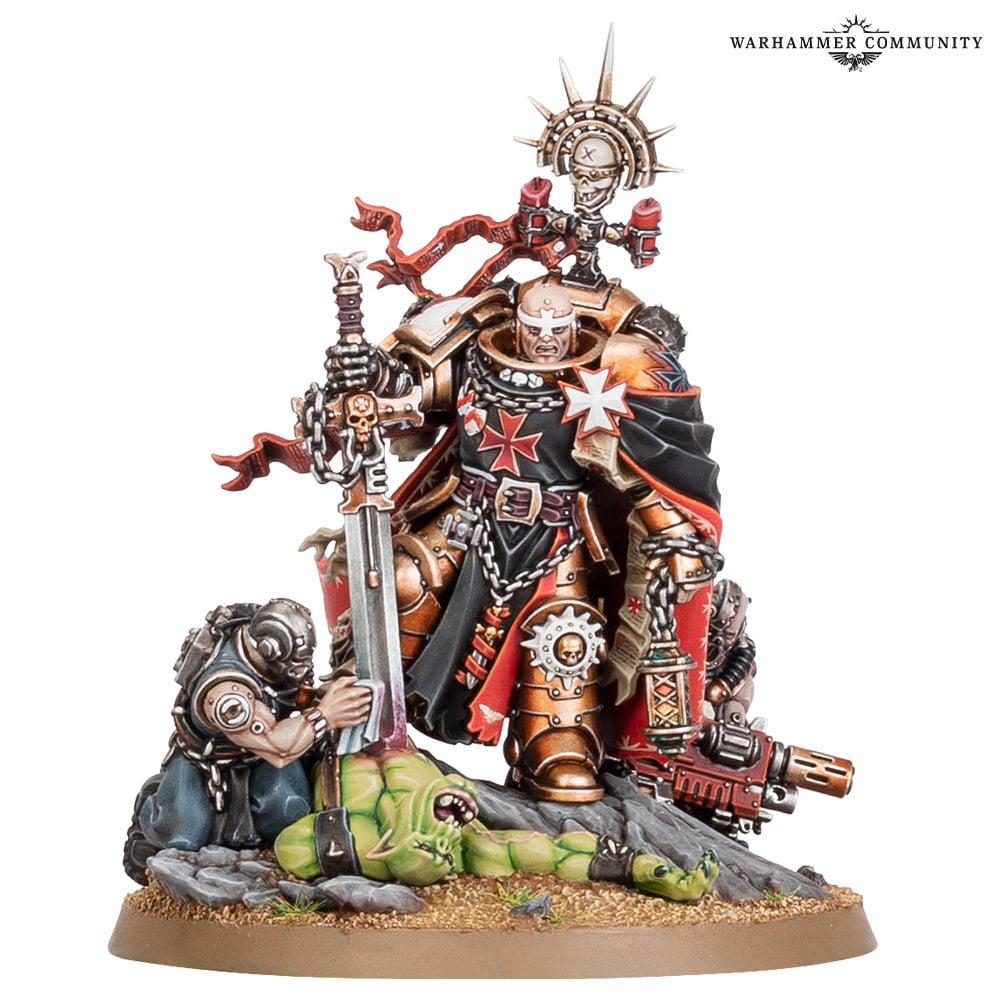
Which brings me to my mate Pete, who collected Black Templars all through 7th edition and ran an Emperor’s Champion in basically every game whether the points made sense or not. One night, big Armageddon-themed narrative game, Orks everywhere, he declares the “Accept Any Challenge” vow and charges his Champion headlong into Ghazghkull’s bodyguard mob to get at a warboss. Beautiful, thematic, exactly what the model is for. He then rolled, I want to say, two hits out of six and got pulped by a power klaw before he could swing again. Pete just nodded like it was scripture. “Accept any challenge,” he said, picking the model up off the mat. He wasn’t even annoyed.
I think that’s the thing the rules never quite capture and the lore does. The Emperor’s Champion was never built to come home. He’s a sword the Chapter keeps in a box for ten thousand years on the off chance the Emperor needs a hand for one afternoon. Nine of them are still in their caskets right now, waiting. Pete’s painting a new one.