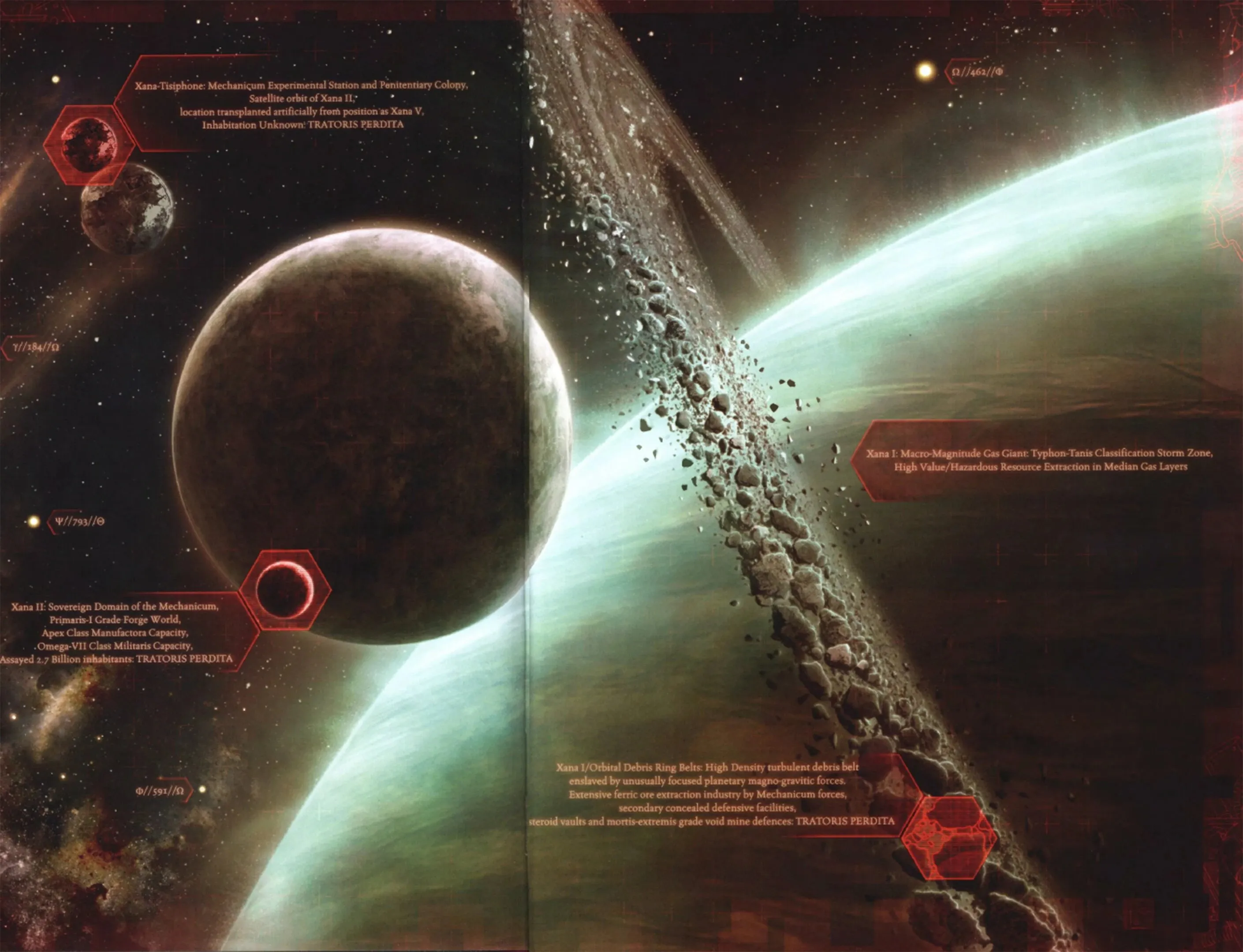
In 843.M30 a Rogue Trader called Casilida DeAniasie limped out past the last charted stars on the western fringe with her galleass half wrecked from a scrap with Fra’al corsairs. Three hulking automata warships found her drifting there. They could have finished the job in under a minute and nobody would ever have known. Instead they offered aid, took her under tow, repaired and resupplied the ship, and handed over a formal diplomatic greeting from something calling itself the Sovereign Forge Domain of Xana.
She later described the place as “a beacon on the shore of night.” A working forge world as capable as anything the Imperium had outside Mars, orbiting a gas giant, around a star with no neighbours for hundreds of light years in any direction.
Mars hated it immediately. The emissaries who went out there wanted to know who had built the place, and Xana declined to tell them.
That’s the long runway to the Xana Incursion, which Games Workshop put back in front of everyone at the end of July as part of Pages from the Black Books, their run of free lore excerpts from the old Forge World Horus Heresy books. This one comes out of 2016’s Book Six: Retribution. It’s a handful of pages, and it’s the campaign where the Loyalists get what they came for and the galaxy ends up worse off for it.
Nobody could explain Xana
The assayers turned up expecting either a lost colony or a fraud. What they found was a Primaris-grade forge world with roots centuries deep, quasi-independent forge-fanes, its own Titan Legions, and a void navy with Warp-capable ships. All of it built by an expedition Mars had no record of ever sending. Forge worlds of that grade are supposed to come with a paper trail back to Mars, the way Agripinaa does. Xana’s magi blamed their missing archives on old wars and solar storms, which is the kind of answer you give when you’ve decided the conversation is over.
So the Imperium ran the numbers on taking it by force. The estimate came back at a full Space Marine Legion, preferably more, plus multiple Titan Legions and hundreds of thousands of ancillary troops, to secure a prize that would be a smoking ruin by the time anyone reached the forges. The Rangdan Xenocides were about to start. There wasn’t a Legion going spare and everybody knew it.
The treaty they signed in 846.M30 let Xana keep its sovereignty, notionally under Mars, so long as it obeyed the same technological restrictions Mars did and pumped munitions into the Great Crusade. It worked, more or less. Xana’s two Titan Legions, the Gore Crows and the Death Cry, went off to the Rangdan front and got broken there. The weapons kept coming. When the Heresy started, the Vodian Consistory that ran the place declared the whole thing an internal matter of the Great Crusade’s military and went quiet.
That’s the bit I keep turning over. A forge world at the edge of the galaxy, with a stated position of not caring who wins, sitting on a stockpile of war material that intelligence reports described as prepared for shipment to a client nobody could identify.
Rogal Dorn loses patience
By 007.M31 the stockpile was too big to ignore. Dorn declared Xana II Traitoris Perdita, under sentence of death, which was less a military plan than a statement of intent from a man with no ships to send that far. Malcador went the other way and opened a back channel offering to lift the sentence in exchange for absolute allegiance and immediate delivery of the goods.
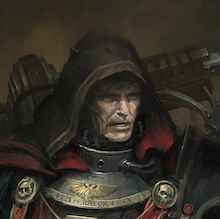
Horus sent a priest. He’d worked out that a warlord or a magos would land badly on a world that despised Mars and had already sat through a primarch’s death sentence without blinking, so what arrived was a Davinite lodge priest named Unvacar Noon, in feathered raiment and the bones of the dead, offering the one thing Terra couldn’t: the end of the Emperor’s restrictions on what Xana was allowed to build. Same deal he’d used on Sarum and Cyclothrathe, same deal that had already worked on plenty of magi who resented Martian oversight.
Xana took it. Secretly. And carried on negotiating with Malcador’s people at the same time, in bad faith, right up to the end. It’s the behaviour of somebody sitting on two job offers who keeps both recruiters warm past the deadline because they can’t quite believe either one is real.
The Imperium sends the one man it doesn’t want back
Endryd Haar was a World Eater, and he was a World Eater before there were World Eaters. He came out of the first intake the XII Legion raised in the geneworks on Terra, back when they hadn’t even taken the name War Hounds, decades before anyone found Angron. His whole intake company died. He didn’t. Fabius Bile, who took an interest in these things, reckoned Haar came out of a cruder and less streamlined process than the ones that came later, a mongrel, and that this was why he was bigger and faster than a legionary his size had any right to be.
He never took the Butcher’s Nails. When the Legion was reorganised at Nuceria and everyone queued up for the implants as a gesture of unity with their new father, Haar declined, and none of the sources I’ve read explain why he was allowed to.
Malcador had him off doing secret work through most of the years that mattered, which meant Haar was somewhere else entirely when Isstvan III happened. He came home to a galaxy on fire and his Legion on the wrong side of it, renounced them, and got interned in Khangba Marwu with everyone else wearing traitor colours. He broke out. Loyalists, traitors and innocents all died on his way through the Vault.
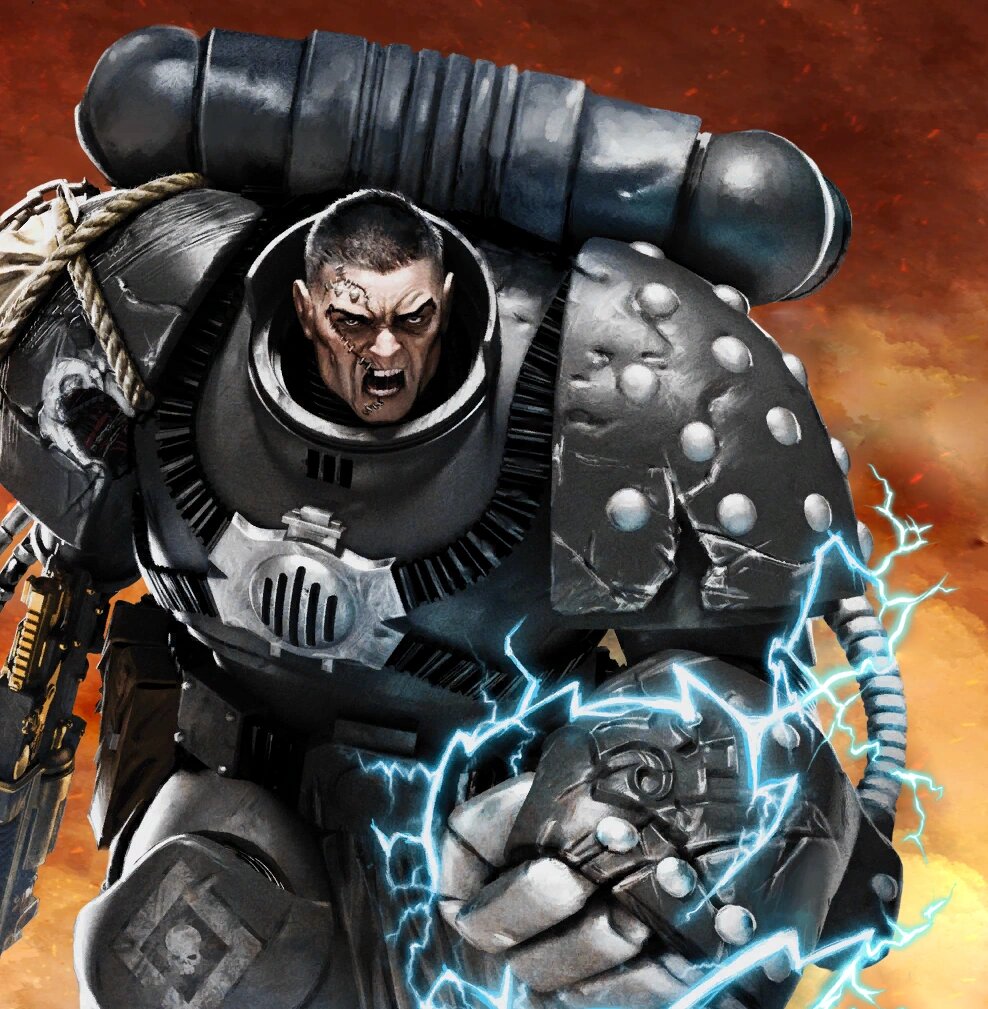
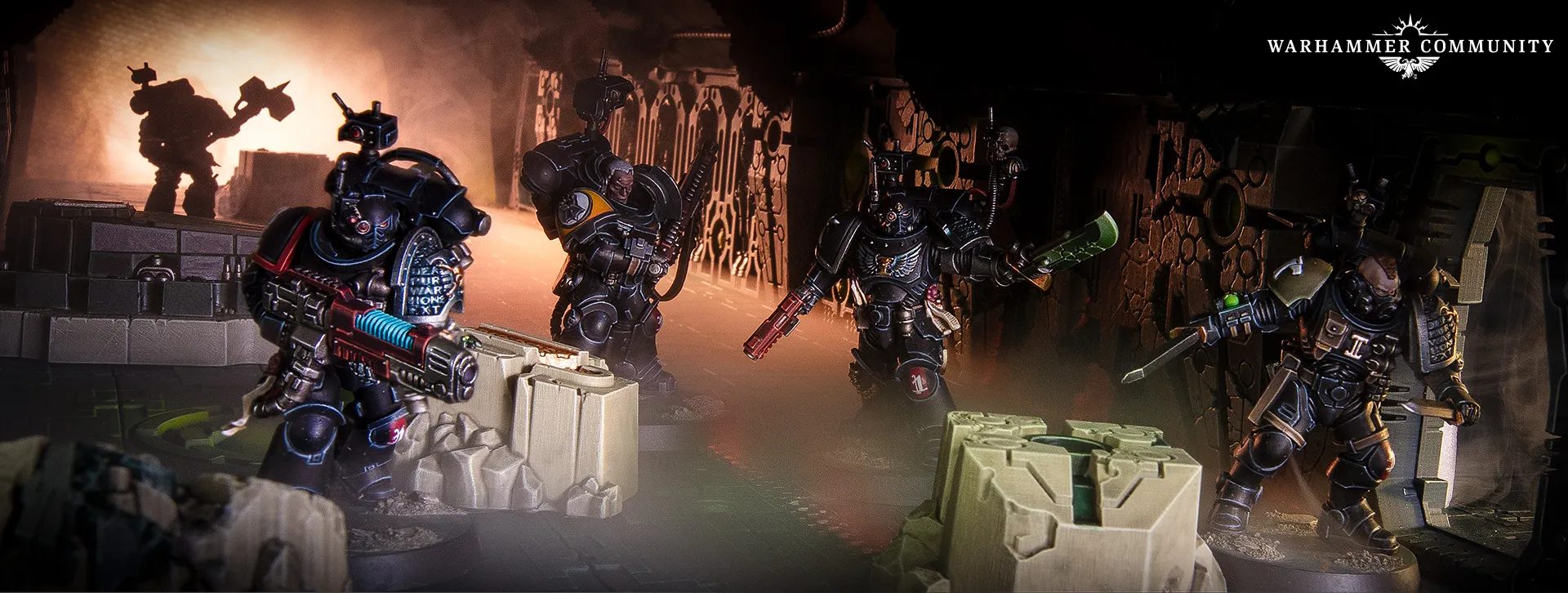
After that he stripped every mark of the XII off his armour, swore a Death Oath, and put together a Blackshield warband called the Fangs of the Emperor out of stray Death Guard, Iron Warriors and Raven Guard. Blackshields are the Heresy’s third answer, the ones who blacked out their heraldry and acknowledged no master except whoever they’d picked from among themselves. Some of them were loyalists who’d lost faith in Terra’s competence, plenty were traitors who’d lost faith in Horus, and a fair number just went pirate. Haar’s lot fought Horus because Haar wanted Horus dead, and the distinction between that and loyalty is one Malcador seems to have decided not to press.
The Fangs got to Xana by capturing a Sons of Horus vessel, the Cicatrix Tyrannis, renaming her Ruination, and having Haar impersonate her commander Raxhal Koraddon on the approach. Members of his own warband who objected to the mission were killed by Haar personally, before the ship made its run in.
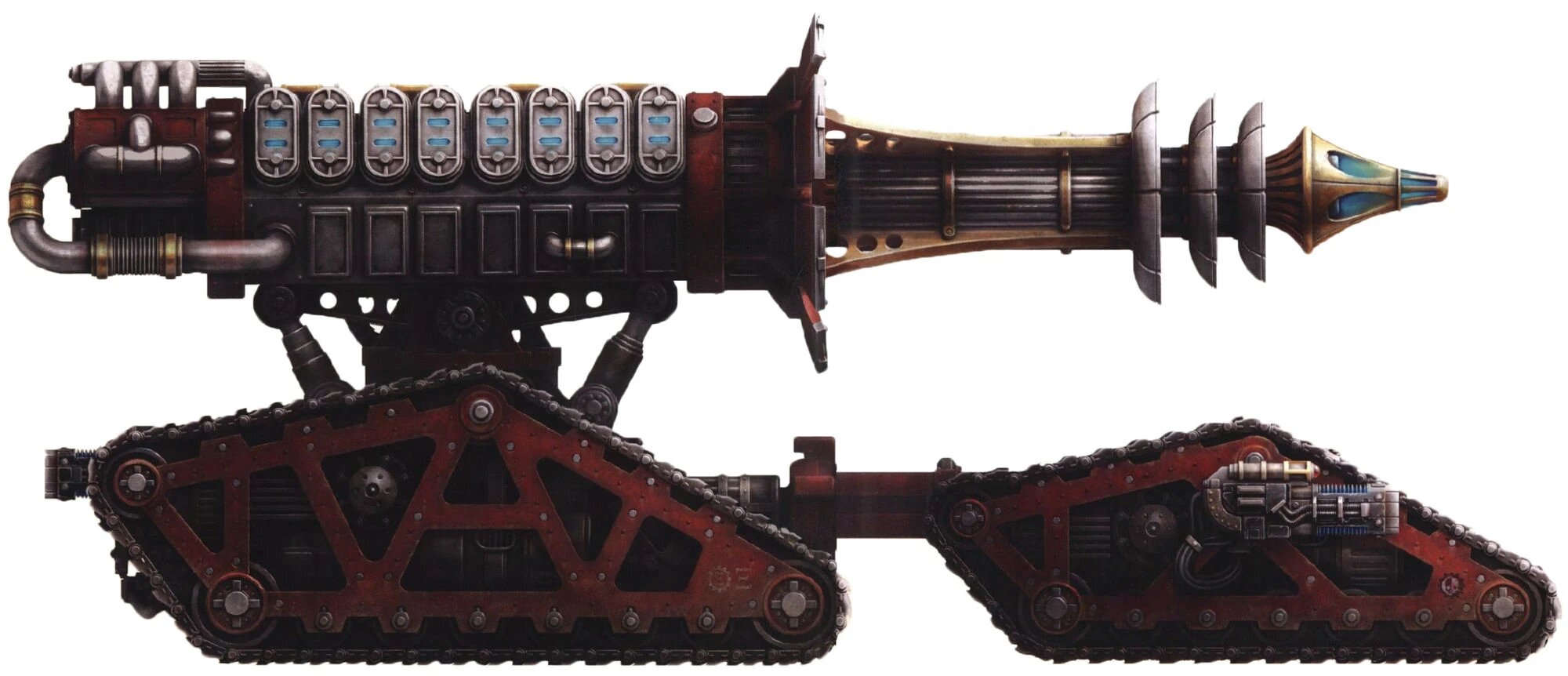
I bought Book Six off eBay in about 2021 for something like a hundred and ten quid, which was over the odds even then, entirely because I’d seen a photo of the Ordinatus artwork and wanted it on a shelf. Nine years the book’s been out now, which is roughly as long as I’ve been playing this game, and I have never once played a game of 30K. The book currently lives under my second monitor doing the job a stack of magazines used to do. Kiran has pointed this out more than once. In my defence the art really is very good.
What actually happened on Xana-Tisiphone
The prize sat on Xana-Tisiphone, a moon that used to be the planet Xana V before the Mechanicum dragged it out of its own orbit and parked it around the gas giant. Proving ground, research station and penal colony in one. The final field tests on a batch of Ordinatus Ulator macro-engines were happening there, and those were the sweetener in the deal with Horus.
Ordinatus are the big ugly things I have a lot of time for. Dark Age relics mounted on tracked hulls the size of a city block, unique, unreplicable, no two configured quite the same. Haar’s force took three of them and immediately turned them on the people who’d built them.
Down on the surface of Xana II it went badly for everyone. Tephra had a reactor breached and detonated, turning several square kilometres of the forge-fane’s heart into radioactive slag and killing tens of thousands. Escorial took diffuse damage all through its tunnel network from attackers who’d got in deep and kept fighting long after they should have stopped. Setna came through almost intact, because Setna had a contingent of House Malinax Knights in the sub-surface galleries, and nearly half of them died holding it.
I’ve read the next bit four times and I still don’t follow it. The Book Six account keeps describing the Loyalist attackers as revenant Space Marines. The fighting at Setna only stopped when the last of them had been “bodily broken beyond whatever bitter thread of life propelled it.” A small Dark Angels force is present at Xana carrying a Dark Age relic, and the section covering their part is titled The Vengeance of the Fallen. The book calls the force used in the attack “the army of the fallen” and then declines, flatly, to say what that means. Alan Bligh wrote it as an unsolved thing on purpose. I’ve seen people insist the relic was reanimating dead legionaries and I’ve seen people insist that’s a misreading, and I genuinely can’t tell you which is right, because the primary source is a black book that files the whole episode under intelligence failure.
Haar got the Mithrax and the Ashurax off the moon. The third, Nepothax, was destroyed by a counterattack from below, delivered by brazen-armoured Legio Cybernetica automata in patterns nobody recognised. Those two Ordinatii went on to fight in the Titandeath and at the Siege of Terra, which is the line everyone quotes when they call Xana a Loyalist victory.
The man in the cell on Xana-Tisiphone
Sheaol was the penitentiary facility on the same moon. In it was Anacharis Scoria, once the Vodian Magister, chief enforcer of Mechanicum doctrine on Xana, cast down and erased from the records by the same archmagi who then kept him alive in a cage and went on using his ideas anyway.
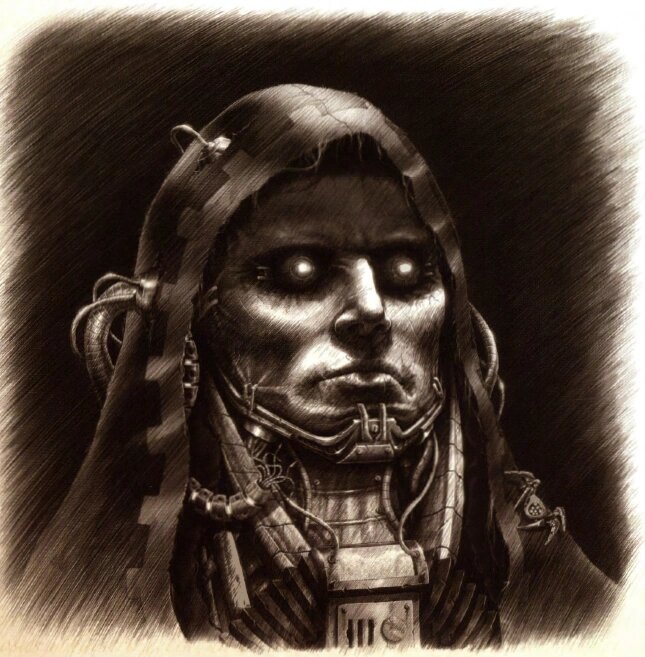
Haar’s raid let him out. Not deliberately. Nobody in the Loyalist force knew he was there.
Scoria took command of the defence, and those unrecognised battle-automata that wrecked Nepothax and drove the Blackshields off the moon were his. Then he turned on the Consistory. The synod that had judged him was murdered from inside within months of the raid, and Scoria took Xana. Under him it rebuilt, refortified, and started shipping the Warmaster war machines far stranger and nastier than the ones the Imperium had come to steal. Xana II became the first of the Hell-Forges, and after the Heresy failed it dragged itself bodily into the Eye of Terror, where it still is, still selling Hell Blades and Hell Talons and Idolator-class raiders to whoever turns up with slaves and raw materials, beholden to no Chaos god at all.
Book Six is careful about this. It says the true gains, or whether they were worth the cost, are “a judgement none can now make,” and then puts the counter-argument in the mouths of unnamed savants: that toppling the Consistory brought something far worse forward, and that it was the Imperium’s own deceit and savage weapons that made the nightmare.
I want to argue with that. Xana had already signed with Horus in secret, so it was going to arm the traitors whatever anyone did, and two Ordinatii at Terra is not nothing. Then I remember that the Xana of 008.M31 was a committee playing both sides for advantage, and the Xana of 010.M31 answered to a man that committee had been too frightened to kill, and the argument gets harder to hold…
Next week’s Black Books entry is Zhao-Arkkad, another edge-of-the-galaxy forge world, this one going over to the Thousand Sons. I’ll read it. I’ll also not play a game of 30K.