
There’s a moment in Necropolis, about halfway through, where Abnett stops the war to describe a staircase. Just a staircase in Vervunhive, where a family has lived on the same landing for three generations. Maybe fifty words. It’s still the best thing I’ve read about what it actually means to live in a Warhammer 40K hive city.
Abnett writes hives as places where people live. Everything else follows from that.
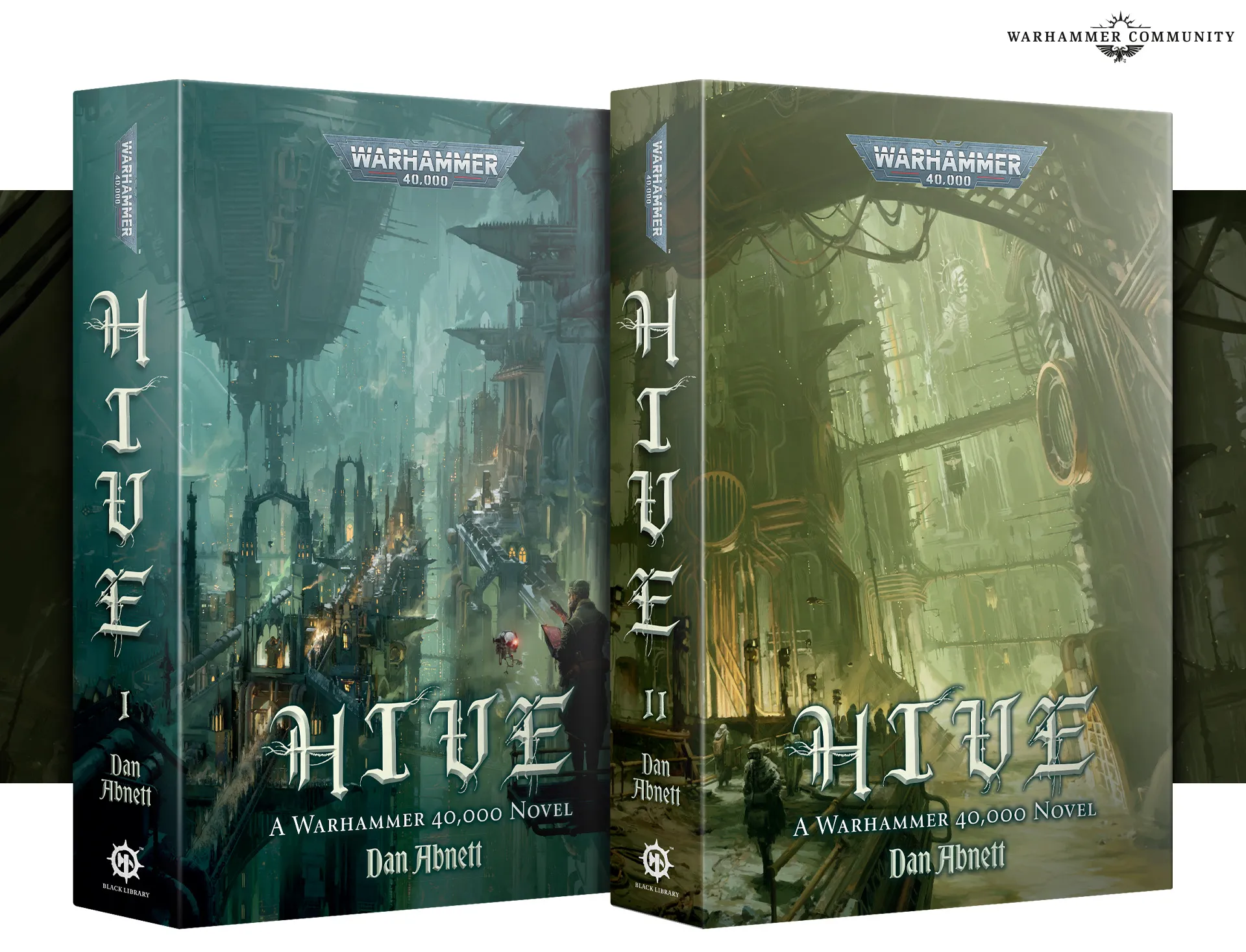
Black Library announced Dan Abnett’s new novel Hive back in March, with the kind of low-key tease that usually means a big book. Two-book set. Late 2026. A hive city called Sacramentus where the planetary governor has fallen to scandal and betrayal, the Adeptus Arbites are grinding the populace under the Lex Imperialis, and whispers of rebellion are already reaching the upper spires. Something’s lurking in the depths beneath all of this, and the blurb puts a question mark after “the greatest threat” like whoever wrote it wanted you to wonder. I wondered.
What we actually know so far
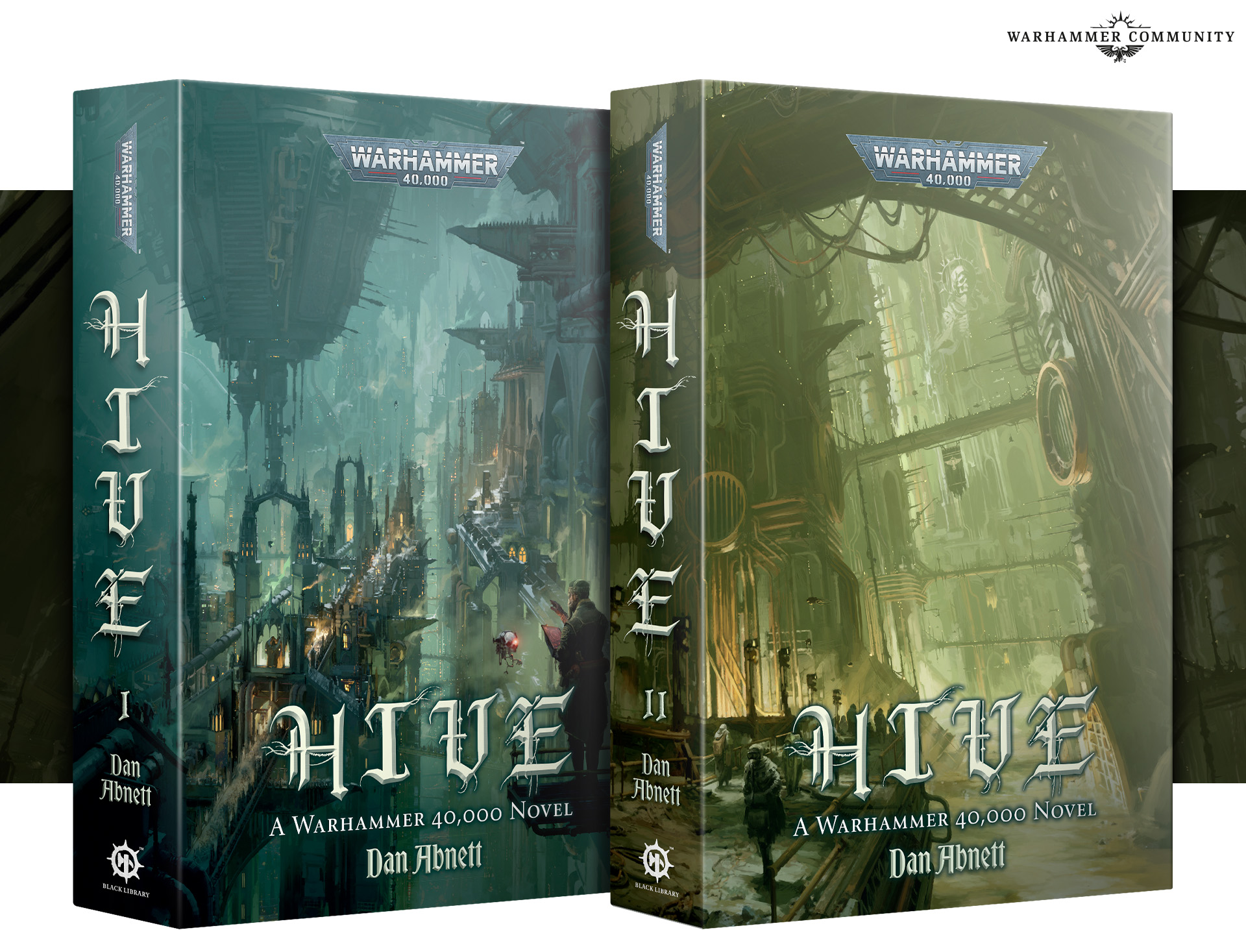
Sacramentus is new. This isn’t Necromunda, it’s not Atoma Prime, it’s not Verghast. Abnett is building a hive city from scratch, which he hasn’t done in a while. The setup positions it as a political powder keg: a dead governor, an outsider replacement trying to hold the throne, an occupying-force-in-all-but-name policing the streets, and a population starting to ask the questions you don’t ask in the Imperium of Man.
The book releases in two parts, a format Black Library has been using for Abnett lately (Penitent, Pandemonium, End and the Death). The special edition was meant to go up for pre-order a couple of weeks back and got delayed. WarCom mentioned the delay in a footnote to the Sunday preview and then said nothing else about it. I don’t think there’s anything ominous there. Black Library delays happen. They’ll announce the new date when they’re ready.
He writes hives like he’s lived in one
He hasn’t. He lives in Maidstone. But reading an Abnett hive, you come away believing he’s been down there, past the last well-lit dome, and come back with notes.
Necropolis is the obvious one. Vervunhive is the hive that other writers should read before attempting one. You get the whole structure: Main Spine, Commercia, the Hab-levels. Then Abnett populates it with plumbers and shift supervisors and grocery clerks, people with surnames and accents and rent problems. When Vervunhive falls to Chaos, what you feel is grief for a place.
Then there’s Eisenhorn. The Inquisitor books spend a lot of time in hives. Spatian, Thracian Primaris, Gudrun. Abnett uses them as rooms for things to happen in. A bar fight in a mid-hive tavern. An interrogation in a rented apartment. A chase through the cargo tiers of an orbital station hanging above the uppermost spire. Every one of those has texture. You know what the air smells like. You know what the floor tiles feel like.
And there’s Darktide. Abnett co-wrote the lore for Fatshark’s game, which is set in Hive City Tertium on Atoma Prime. Play twenty minutes of that game and tell me you don’t come away with a real sense of what Tertium is. The industrial dead-zones. The Inquisitorial recruitment scheme where they pluck you out of a prison because they need deniable bodies. The Ministorum street preachers doing crowd control with faith alone.
The other thing Abnett quietly does better than almost anyone is characters. Gaunt’s Ghosts isn’t really about Gaunt — it’s about Rawne, Larkin, Bragg, Corbec, Mkoll, Criid, a cast of thirty-odd soldiers who you remember the names of years after finishing the book. The Inquisitor trilogies are the same. Aemos the savant, Fischig the bodyguard, Bequin the pariah. He builds people and the hive is whatever these people happen to be walking through. Sacramentus will have its own cast of plausible, annoying, contradictory humans, and that’s probably where the book will actually live.
A political thriller in a 40K costume
Look at the premise for Hive again. Governor falls to scandal and betrayal. New outsider takes the throne. The regime has to establish itself before it gets rolled. Rebels are moving in the mid-levels. The Arbites are enforcing the Lex Imperialis with grinding brutality that’s creating the thing they’re trying to prevent.
That’s a political thriller. Change the proper nouns and you could be describing Roman succession, a John le Carré novel about a colonial administrator, the plot of I, Claudius. What Abnett is doing, or seems to be doing, is using the 40K hive as a stage for the kind of story Black Library rarely touches. They publish a lot of war fiction because war fiction sells Space Marines. Political fiction sells ideas.
And look, I could be completely wrong about the shape of this book. Maybe it’s a straight horror story and the “something lurking beneath” is a Genestealer cult that eats the protagonist on page sixty. Abnett has form for that too. Eisenhorn does the political thing and the cosmic horror thing in the same breath. Hive could very well go the same way. Maybe the political setup is the first chapter and everything else is Arbites shotguns in the dark. I’d read that.
But the blurb’s language — “whispers of rebellion,” “the seeds of anarchy,” “before the regime gets moving” — that’s thriller phrasing, not slasher phrasing. I’ll stake my money on thriller.
The other thing tilting me that way is the Arbites detail. If Abnett wanted a war story, he’d have put Astra Militarum regiments on the streets. He didn’t. He put the Arbites on the streets, specifically enforcing the Lex Imperialis “without so much as a hint of pity.” That’s a policing-of-population setup, not a military engagement setup. The Arbites are what an unhappy regime uses when it wants the violence to look legal. Choosing them as the face of the oppression tells you the book’s real enemy is probably closer to the governor’s throne than anywhere in the Underhive.
Why the release window is weird for this kind of book
Hive drops late 2026, right as 11th Edition rolls out across the Armageddon launch. Every spotlight is on Orks and Space Marines. Giant-scale war, Waaagh! energy, the Blood Angels curse cycling around Armageddon for the fourth time.
Into that, a book about a hive city having a political breakdown. No Space Marines in the blurb. No named Primarchs. No trans-stellar war. Adeptus Arbites, a couple of dead political figures, and whatever’s growing in the dark.
That’s an interesting marketing choice. Black Library still wants a foothold in 40K fiction that isn’t driven by the model line. Hive isn’t going to sell you a new detachment or move a Battleforce box off the shelves. It’s there because Abnett is writing, and a lot of readers buy the book for that alone.
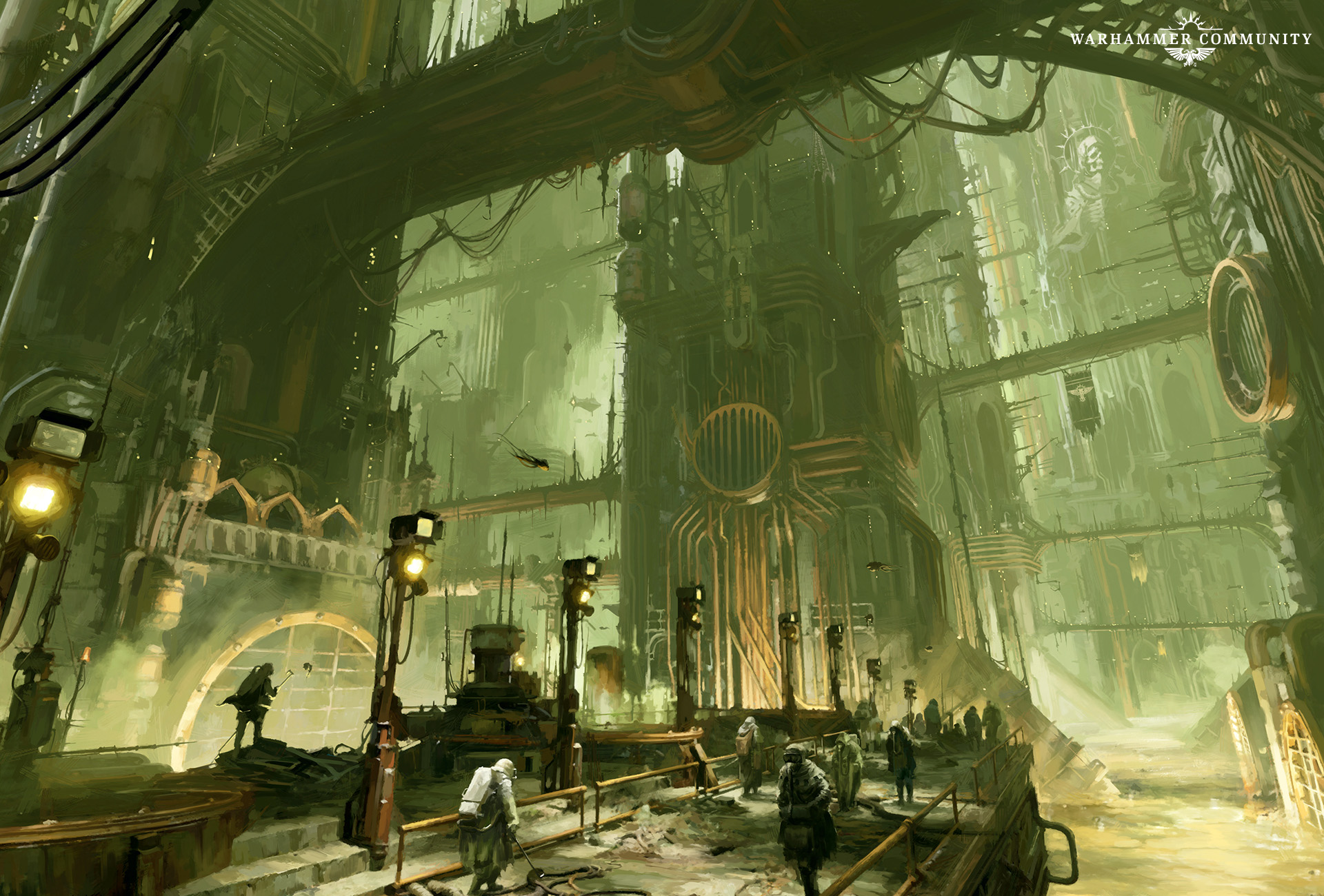
A tangent
Short version. When I was about fifteen, I bought Necropolis from a cluttered secondhand bookshop in a town I don’t remember the name of, on holiday with my parents. 50p, maybe 75p. Mass market paperback, bent spine, someone had folded the corner of page 140-something as a bookmark. I read the whole thing in three days.
I bounced off it at first, actually. Thought the prose was dense. Thought Gaunt was a bit of a stiff. Put it down a quarter of the way through and went back to painting Space Wolves (badly, wrong colour wash, 4th edition rulebook open on the carpet). Picked it up again a week later because I’d run out of other books. Finished it on the ferry home. Been an Abnett reader since.
Not sure why I’m telling you this. When I see the cover for Hive I do the same thing I did back then: flip it over, read the blurb twice, check who wrote it, check the price. A twenty-five-year-old reflex that Abnett earned.
The delay
The pre-order delay is probably nothing. Black Library’s relationship with release dates has been weird since at least the early Horus Heresy days, when Abnett’s Prospero Burns famously drifted around the schedule for a year and a half before showing up. If Hive slides a few months, it slides a few months.
What I want from this novel, honest answer, is for Sacramentus to join the hive cities I can name from memory. Vervunhive. Thracian Primaris. Tertium. Hive Primus. The city the Flood book is set in (can’t remember the name and I’m not looking it up). That list has been slowly growing for three decades and Abnett’s written most of it.