The Minotaurs arrived at Terra with their entire chapter fleet, and Asterion Moloc told Guilliman’s people they’d barely escaped a Death Guard ambush on the way in. Losses, he said, had forced them to make for the Throneworld to resupply. That was the story.
The actual reason was that six High Lords of Terra had invited him, and the Minotaurs were their muscle.
This is the part of Chris Wraight’s Regent’s Shadow I keep coming back to whenever someone asks what the Minotaurs actually are. The Badab War fans know them as the chapter that broke the Lamenters. The political readers know them as the Hexarchy’s shock troops. They’re the same thing. Moloc’s choice to sail for Terra in support of a coup against a Primarch says, in one sentence, who this chapter actually works for.
A chapter with no father
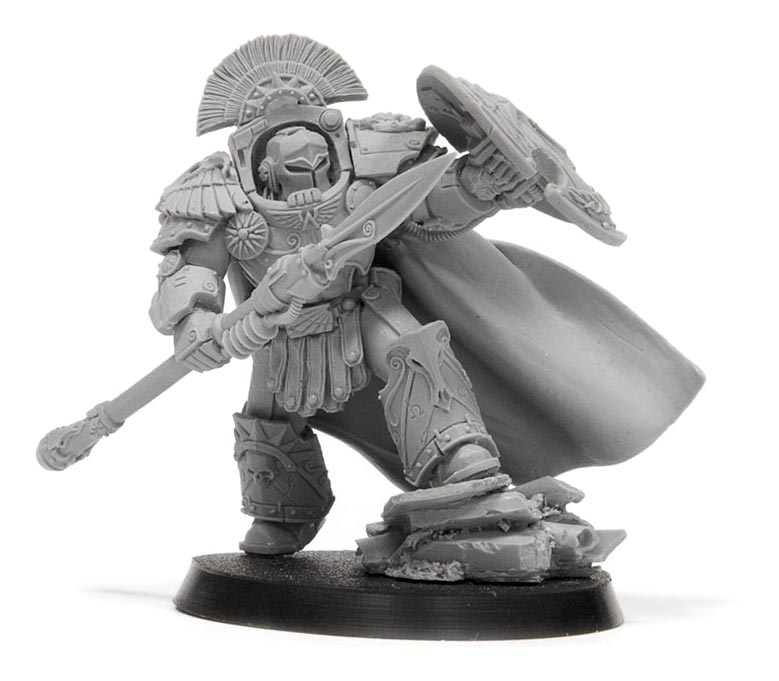
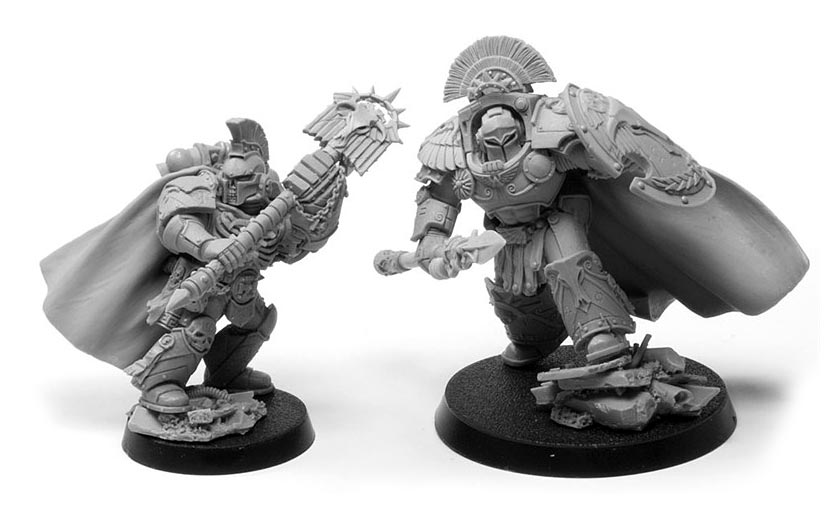
The Minotaurs belong to the 21st Founding, which the Imperium calls Cursed because it produced chapters with warped gene-seed and worse reputations. The Minotaurs don’t have any of the usual markers. Their gene-lineage is officially unknown. Their Chapter Master refuses to discuss it. In the older records they’re described as “a force of berserkers that made war with savage abandon,” and in the modern era they fight like a well-drilled combined-arms force with more Contemptor Dreadnoughts than a chapter their supposed age should reasonably possess.
Nobody writes about this because it’s not resolvable. It’s an open GW mystery, and those tend to stay mysteries. But the implication in Imperial Armour 10 is that “Minotaurs” might be a name applied to multiple chapters over millennia, with the current incarnation inheriting the name, the heraldry, and the role. The role being arriving in bronze armour when the High Lords need a Space Marine chapter killed.
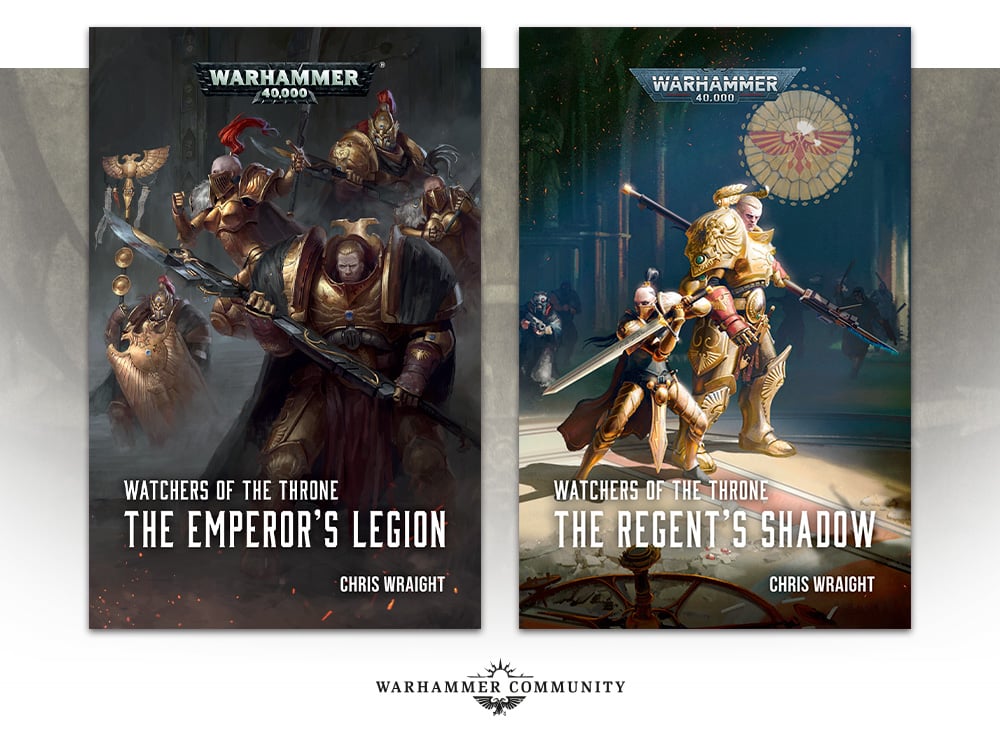
I actually first ran into them in the Watchers of the Throne audiobook without realising who they were. Moloc’s name dropped in Violeta Roskavler’s POV chapter and I paused the audio and went, wait, isn’t this the Badab War guy? If you grew up reading Forge World books, that recognition moment is jarring. The chapter you associate with putting down the Lamenters is suddenly playing in a much bigger game.
The Badab reputation
Nine hundred and eight. The number of solar years into the 41st Millennium when the Minotaurs intercepted the Lamenters in the Optera system. Seventeen hours of running combat. Ship-to-ship, then boarding actions, then a brawl across the surface of Optera V. Forge World’s text describes heavy Minotaur casualties, which is unusual, because their whole approach is to show up with so much tonnage that the fight is over before it starts. The Lamenters were stubborn. The Minotaurs ground forward anyway. Their orders were explicit.
The Lamenters were already a cursed chapter. Bad luck, black ships, blood rage. They’d made the very practical political mistake of siding with the Astral Claws because they didn’t see a clean moral line, and that was enough. Once the High Lords branded them traitors, the Minotaurs were dispatched to execute the sentence. Gene-seed ethics didn’t come into it.
What I find interesting about Optera V, if you want to go into the weeds, is that Moloc wasn’t at any of the Loyalist war councils during the Badab War. Ever. Not once. His Reclusiarch, Ivanus Enkomi, went as his representative. Moloc personally refused to sit in the same room as Carab Culln or any of the other Loyalist Chapter Masters. He’s not collaborative. He takes his orders from above, and above has never meant another Astartes.
The six who wanted the old Imperium back
The Hexarchy. Six High Lords of Terra: Irthu Haemotalion, Baldo Slyst, Aveliza Drachmar, Mar Av Ashariel, Merelda Pereth, and Fadix. Half were still sitting High Lords; half had been dismissed by Guilliman when he rebuilt the senatorum on his arrival. Haemotalion led it. He’d been Master of the Administratum, and he was part of what Wraight calls the Static Tendency, the conservatives who believed the Imperium had reached its ideal form in the 41st Millennium and any reform was, by definition, treason.
Which is a wild position when you consider that by this point the Imperium had just survived Cadia’s fall, the Great Rift, the Noctis Aeterna, and a full Chaos offensive on Terra itself. The Static Tendency looked at all of that and concluded the problem wasn’t the machinery. The problem was a returning Primarch trying to change the machinery.
The coup was clean on paper. Guilliman had taken the Indomitus Crusade into the far Segmentum. Terra was stripped of its best defenders. A small cabal of High Lords with vast resources, enough allied forces, and a Space Marine chapter willing to ignore the chain of command could secure the Senatorum in a matter of days. Reverse Guilliman’s edicts. Restore Imperium Eterna. When the Regent came back he’d face a fait accompli and an argument he couldn’t win inside the Inner Palace without triggering a civil war he’d already lost.
Moloc brought the Minotaurs because institutionally, the Hexarchy were his masters. The High Lords have always directed this chapter. Guilliman, whatever his formal rank, was disrupting that chain. The coup had a credible Astartes arm because the arm had already been pointed at other Astartes before, and it went where the Senatorum pointed it.
Fadix’s trick
Then it falls apart, and it falls apart because Fadix was never really a Hexarchy conspirator.
Fadix was Grand Master of Assassins. The Officio’s seat on the High Lords rotates more than other seats, and the occupant has always been seen as semi-neutral in Senatorum votes, a tie-breaker rarely invested in either side. In Watchers of the Throne he’s folded himself into Haemotalion’s conspiracy from the inside, long enough to learn who all six members are and where each of them can be reached. The moment the Hexarchy moves openly against the new High Lords, he gives a signal. Every other Hexarchy member dies in the same hour. Not in a dramatic confrontation. Not in court. Callidus and Vindicare assassins have been in position for months. Five High Lords die at their desks, in their chambers, on their way through corridors they’ve walked every day of their lives.
That’s five dead in a single quiet hour, and the only Hexarchy asset left alive on Terra is the Minotaurs fleet, sitting in high orbit.
The Imperial Fists and Custodes close in. Tor Garadon leads the Fists. Trajann Valoris, Captain-General of the Custodes, deploys the Ten Thousand. Wraight writes a scene where four Sisters of Silence and seven Custodes face off against ten Minotaur Terminators inside one of the cathedrals. A Custodian dies. Two Sisters die. The Minotaurs keep pushing. Their formation doesn’t break even when it should.
The whisper
This is the part that’s never been answered.
Violeta Roskavler, the new Chancellor and now the sole claimant to Master of the Administratum because Haemotalion is dead, walks up to Asterion Moloc before he can give the order to commit his full chapter to a street war on Terra. She whispers something in his ear. Moloc withdraws. Entire chapter, gone within the hour.
Wraight never tells us what she said. Fan theories range wildly. The most cited one is that Moloc is hypno-conditioned to respond to a specific phrase or code held by the Master of the Administratum, a control word buried in the Minotaurs’ leadership going back centuries. There’s support for this in the Forge World lore around Moloc’s rumoured status as a legacy identity. If “Asterion Moloc” is passed down through engrammatic imprinting, it’s not unreasonable that the imprint includes compliance triggers.
The other theory is less exotic. Roskavler told him Haemotalion was dead, Slyst was dead, Ashariel was dead, and the coup had collapsed. The Minotaurs follow orders; the orders had just ceased to exist.
I’m not sure which is right. Both feel plausible. Honestly? If it’s the mundane one I’ll be a bit disappointed. Control-word Moloc is so much grimmer. So much more 40K. But also kind of don’t want GW to just, you know, answer it? Some of this stuff is better left as rumour in-setting. The moment it becomes canon, the chapter gets smaller.
Since then, silence
The Minotaurs have barely appeared in canon since. One White Dwarf snippet. A passing reference. They withdrew from Terra and, as far as I can tell, withdrew from the narrative. No appearance in the Dark Imperium novels. No prominent mention in the Indomitus-era sourcebooks. Primaris reinforcements? Unclear. Current deployment? Unknown.
Read that two ways. One reading is that Guilliman had them quietly disgraced or sequestered after the coup. He’s shown elsewhere he’s not squeamish about grounding chapters he doesn’t trust. The other reading is that the Senatorum doesn’t want to advertise the capability while it’s rebuilding its legitimacy, and the Minotaurs are still exactly where they’ve always been.
Roskavler is very much still around. She held on to the Master of the Administratum position after everything settled. If anyone knows what she said to Moloc, it’s her, and she’s not in a hurry to tell anyone. That feels right. She walked into a coup and walked out with the senior Administratum chair. She understands exactly what it’s worth to hold one secret that makes an entire chapter of Space Marines go quiet.
I keep hoping Wraight returns to this. The setup is too clean not to pay off eventually. Moloc’s still out there. The Minotaurs still have twelve strike cruisers, a battle barge, Contemptors nobody can explain, and an order-of-battle that reads like a small Legion’s first company.