The Blood Ravens have one defining feature, and it’s an absence. They don’t know who their Primarch was. Nearly every other Space Marine Chapter can draw a clean line back to one of the Emperor’s sons and point at a founding Legion, but the Blood Ravens can’t. Their archive just stops at the exact place the answer should be. And instead of quietly filing that away as an embarrassment, they built the whole personality of the Chapter on top of the hole: a Librarian-heavy order of scholar-warriors who recover lost relics, dig through ruins, and chase the one fact that might tell them what they actually are.
So it’s a little too neat that the Chapter is fronting Dawn of War 4, because the Blood Ravens were invented for a video game in the first place. They didn’t exist in the tabletop canon before Relic dropped them into the original Dawn of War back in 2004. The studio wanted a Space Marine Chapter that wasn’t already weighed down by established lore, something they could do what they liked with, so they made one up. Then it leaked back into the official setting. It got an Index Astartes article, started turning up in Black Library novels, and now has more written about it than half the First Founding. A Chapter whose in-fiction tragedy is that it doesn’t know its origins. The real origin is that some developers needed a blank slate. I find that funnier than I probably should.
Two hundred years back on Kronus
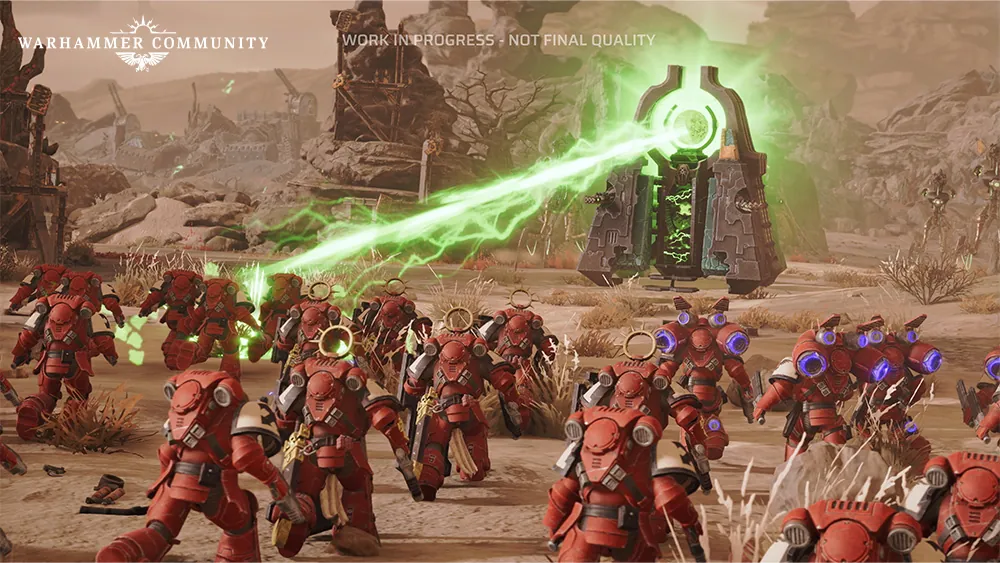
Games Workshop confirmed at Warhammer Skulls that Dawn of War 4 arrives on the 17th of September 2026, with a Commander Edition a few days ahead of that. It’s being built by King Art Games, the German studio behind Iron Harvest. Relic made the first three; this one’s a new team. Deep Silver is publishing. Over seventy campaign missions, solo or co-op, with Last Stand returning from Dawn of War II and a hard pivot back to classic base-building RTS after the MOBA-lite experiment of Dawn of War III sank without much of a trace.
The setting is the part that got me. They’re going back to Kronus, and if you played Dark Crusade, the 2006 expansion, that name does something to you. Kronus was a single planet carved into provinces, fought over by seven armies on a campaign map that played a bit like Risk. You picked a faction, you took territory, and every province you assaulted dropped you into a real-time battle. I lost a full weekend to that map the winter it came out. The meta-game of watching the AI armies grind each other down while you decided where to strike next was the sort of thing that made you forget to eat. And I still managed to lose my home base to the Necrons because I’d marched everything off to the far side of the continent and left the front door open. Genuinely one of the dumber things I’ve done in a strategy game, and I’ve done a lot of dumb things in strategy games.
Dawn of War 4 sets itself two centuries after that war and brings back Cyrus, the Scout Sergeant from the original game, alongside a Marine called Jonah. The pitch is that they’ve returned to Kronus to rebuild their Chapter. Which, once again, is on the nose for the Blood Ravens, who spend most of their modern lore frantically rebuilding after one catastrophe or another. The Aurelian Crusade nearly finished them. A botched campaign under Captain Indrick Boreale cost them five full companies in one go. By the time of the Indomitus Crusade they were limping along on reinforcements, and the Custodes ended up handing them fresh gene-seed so they could even make Primaris Marines.
The Chapter that’s all Librarians
The Blood Ravens are run by figures the lore calls the Secret Masters, and little is recorded about who they are or what they officially hold within the command structure. A lot of them are psykers, and a lot of those specialise in studying Chaos so the Chapter can fight it more effectively. That’s a dangerous specialism. There’s a persistent rumour, written down in the Chapter’s own lore, that the Blood Ravens have on occasion bound daemons into failed initiates in order to study them up close, then banished them. If that were ever proven, the entire Chapter would be declared Excommunicate Traitoris before the ink dried. They know it. It’s why they self-police harder than almost anybody.
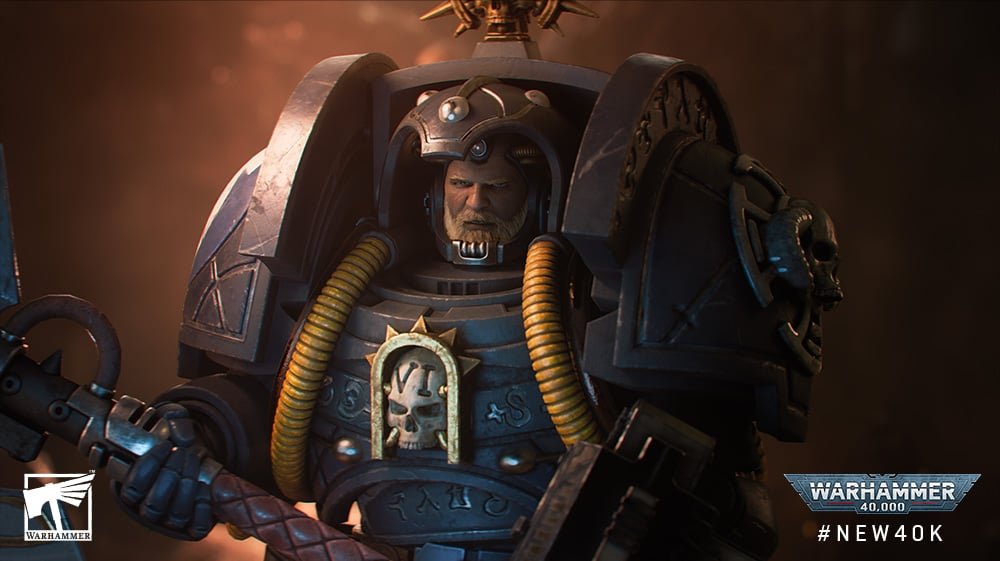
Then there’s the part the developers will never confirm. The Blood Ravens are a psyker-heavy Chapter with one of the largest libraries in the Imperium, a motto about salvation and knowledge being denied, and a habit of fielding more Librarians than any sane gene-line should manage. The fan theory, going on twenty years old now, is that they’re secretly descended from the Thousand Sons, Magnus’s sorcerer Legion. Black Library authors have flatly denied it. The hints keep stacking up regardless. There’s a story where a Blood Ravens Librarian named Rhamah loses his memory and slots straight into Ahriman’s warband as though he belongs there, before eventually snapping out of it. Games Workshop has never opened that door and never quite shut it either.
Here’s where I want to argue against myself for a second. Part of me thinks the smart move would be to just answer it. Twenty years is a long time to dangle a thread. Give us the gene-seed reveal, let the Blood Ravens find out they’re sons of a traitor Primarch, and watch the Chapter tear itself apart over what to do with that. There’s a brilliant tragedy sitting right there. But the longer I sit with it, the more I think the unanswered version is the better one. The Blood Ravens work precisely because the question never resolves. The day GW prints the answer is the day they stop being interesting and become just another succession of Marines with a paint scheme. Some mysteries earn their keep by staying open. This is one. For what it’s worth, this is the same instinct that keeps GW from ever naming the two deleted Primarchs, and that restraint has paid off for decades.
John French is a strange hire, in a good way
The story is being written by John French. If that name doesn’t ring a bell, he wrote the Ahriman novels, three books that put you inside the head of the Thousand Sons’ chief sorcerer as he tries to undo the curse that turned his Legion to dust. French knows the Thousand Sons better than almost any living writer. Handing that man a Blood Ravens story is either a complete coincidence or the single biggest wink the franchise has ever thrown at the gene-seed theory. I genuinely can’t tell which, and I don’t think we’ll know until the game ships, if then.
What French does well is interiority. His Marines doubt things. They carry guilt. They make decisions they can’t fully justify and live with the consequences. That’s a much better fit for a Chapter built around an unanswered question than the usual “for the Emperor, fire the bolter” register. A Blood Ravens campaign written by someone who specialises in psykers gnawing at forbidden knowledge could be the most thematically coherent Dawn of War story we’ve had since the first one.
Who else is on Kronus
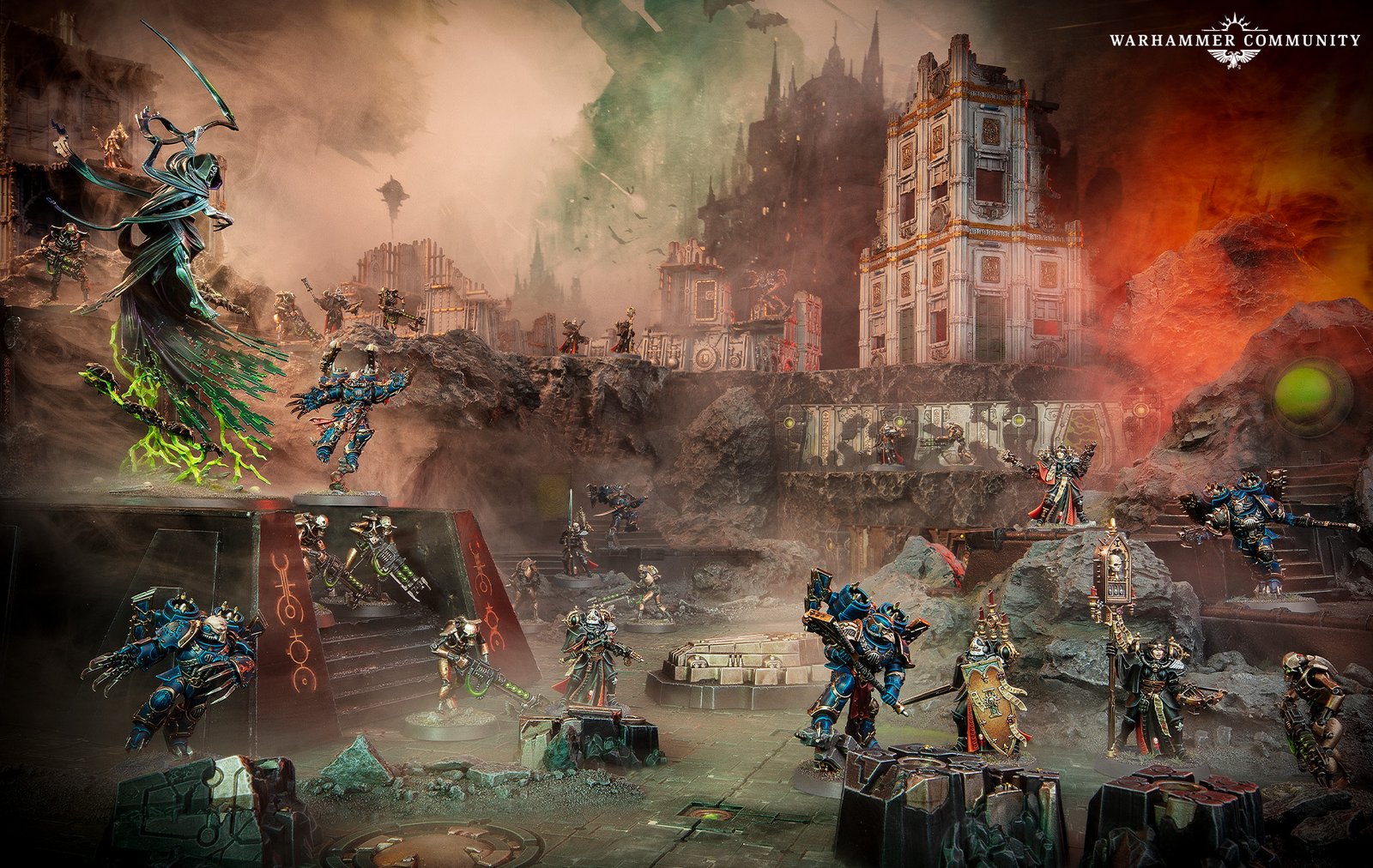
Four launch factions. Space Marines, Orks, and then the two newcomers. The Necrons got a brief tease at the end of Dawn of War III and now turn up as a fully playable army, which fits Kronus, a world that had a Necron presence buried in it back in Dark Crusade. The Adeptus Mechanicus have never appeared in a Dawn of War game at all, so that’s new ground, and a faction whose whole deal is hoarding lost technology dovetails nicely with a Chapter whose whole deal is hoarding lost knowledge. The Dark Angels reportedly turn up in the campaign fighting alongside the Blood Ravens too, which, given the Dark Angels’ own habit of keeping enormous secrets from everyone, makes for an entertaining pairing.
Four armies is leaner than the old games launched with, and I expect the rest to arrive as DLC the way Dark Crusade and Soulstorm bolted factions onto the original. That’s the model. Build the core, sell the expansions. Anyone who lived through the first three Dawn of War releases knows exactly how this goes.
So yeah. Dawn of War’s back, properly back, RTS again, no MOBA nonsense, on the map I wasted a weekend on twenty years ago, fronted by the one Chapter in the setting whose entire reason to exist is that nobody knows why it exists. Including, originally, the people who made it. If you want the wider picture on where this sits among the best 40K games on PC, or how studios pick launch rosters for a new strategy title, there’s plenty to chew on. The engine’s good and the factions are fine. But they handed the most self-referential Chapter in Warhammer to a writer who spent three novels inside the head of the sorcerer they might secretly be descended from, and then said nothing about it. That’s the bit I can’t get over.