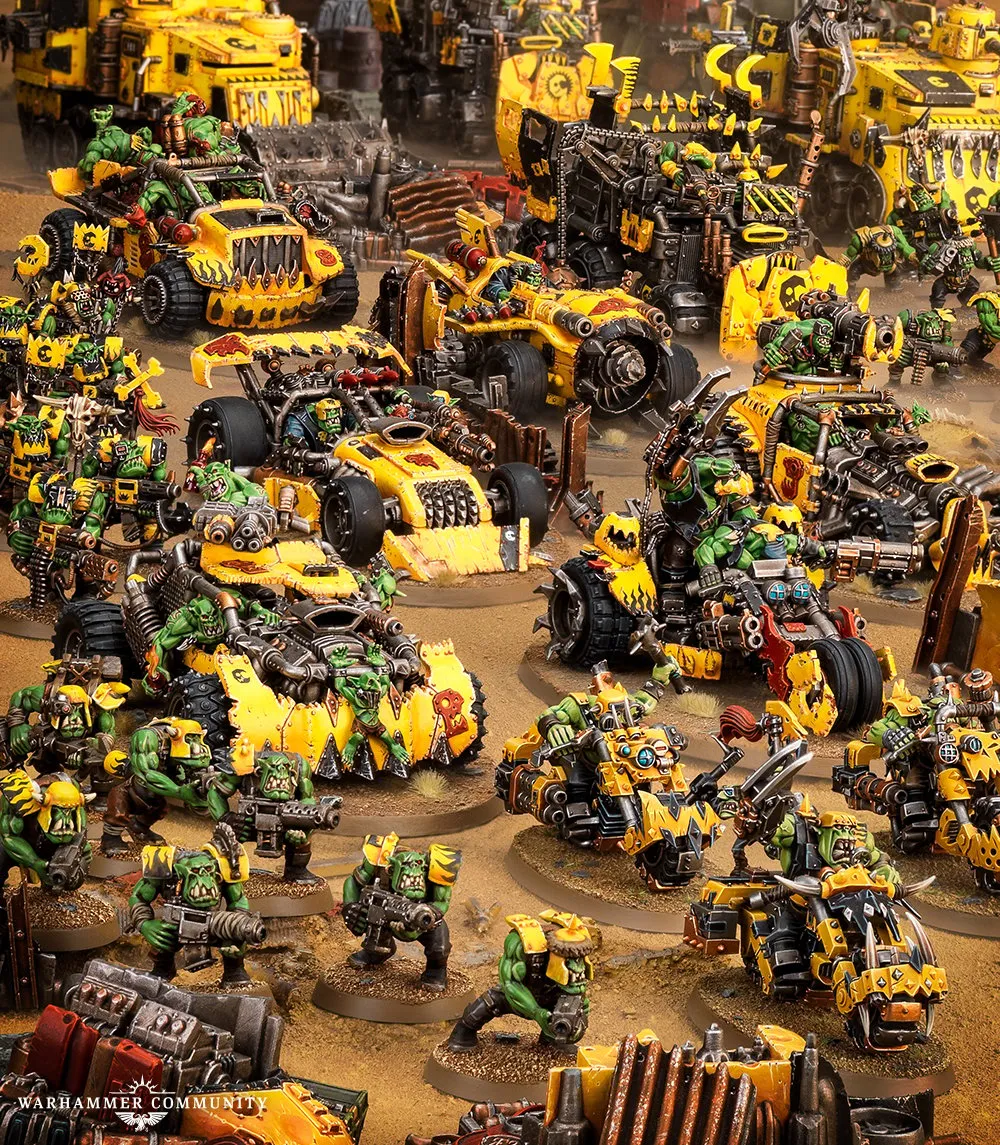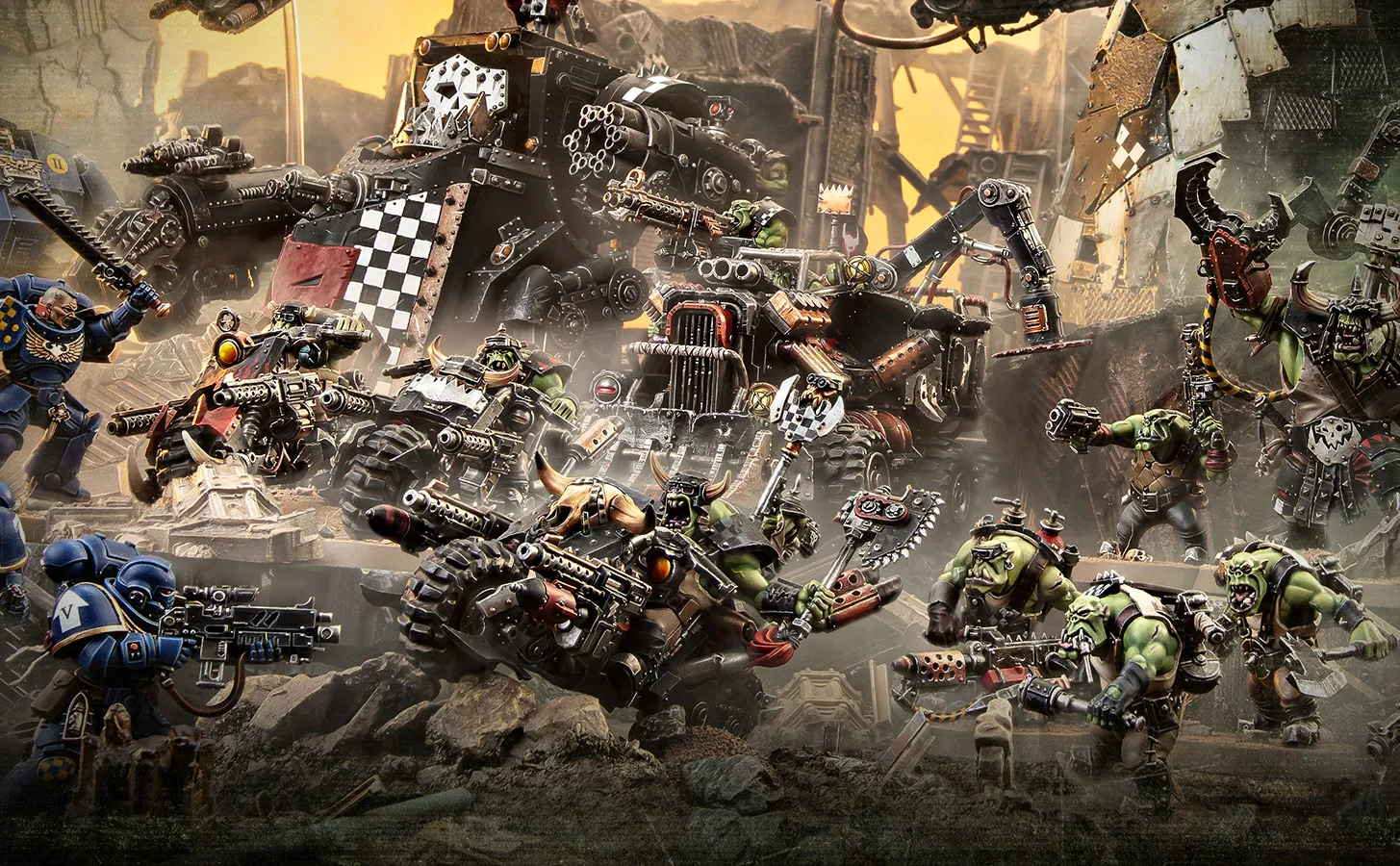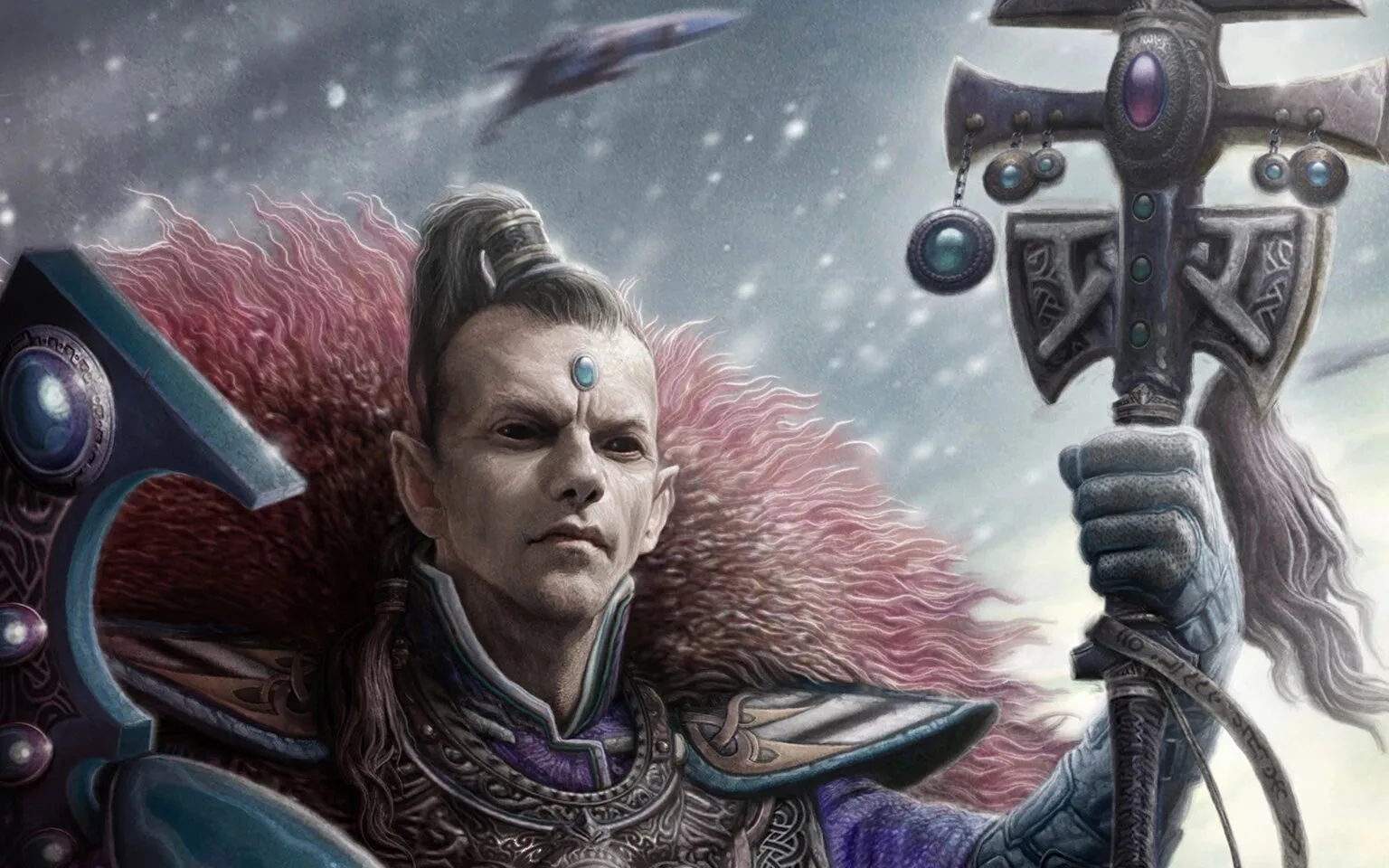
Somewhere in the late 41st millennium, Eldrad Ulthran did the maths on Armageddon and decided a few million humans were an acceptable cost. The Orks were going to break out somewhere; his Farseers had cast the runes and seen a Waaagh that, in one branch, fell on the craftworlds and cost Ulthwé ten thousand Aeldari lives. So he nudged. A raid here, a dead rival warlord there, the slow tilting of greenskin politics until one Ork rose above the others, and that Ork’s ambitions happened to point at a human hive world instead of an Aeldari one. The Ork was Ghazghkull Thraka. The hive world was Armageddon. Neither the Orks nor the humans ever knew an Aeldari had set any of it moving.
People talk about Eldrad as a prophet, someone who reads the one true future off the skein of fate and acts on it. That gets him wrong. He’s a gambler, placing enormous bets on probabilities only he can see, mostly with other people’s lives, and he loses a fair number of those bets.
WarCom ran a Battle Report a few days back, on the 9th, putting Eldrad across a table from Mortarion. Eldrad versus a Daemon Primarch of Nurgle, the whole thing decided by dice. Which is a bit funny, because the last time those two were anywhere near each other in the actual lore, Eldrad was the Aeldari trying to warn the galaxy that creatures like Mortarion were about to turn traitor, and getting ignored for the effort.
What the runes actually buy
The oldest proper write-up of Eldrad I love is from White Dwarf #286, back in 2003, the Eye of Terror campaign era. It frames Farseer manipulation plainly. A pre-emptive strike on a minor Ork warlord stops a Waaagh before it grows. An unprovoked attack on a human outpost kills a Chaos cult before its masters have even sworn their oaths. To everyone else these look like random Aeldari aggression. To the Farseers they’re moves in a game of centuries. Eldrad has been playing that game for over ten thousand years, longer than almost any Aeldari alive, and Ulthwé sits close enough to the Eye of Terror that the Seer Council never runs short of threats to game against.
That same article ran an interrogation transcript of a captured Aeldari Ranger, and it’s still the most chilling thing GW ever wrote about the species. The prisoner, knowing he’s about to die, spits out exactly how Ulthwé sees the rest of us. You are not allies, he says, any more than a butcher’s knife is his ally. You are tools, to be used and expended to protect our race. He names Armageddon directly. He says Eldrad guided them to Ghazghkull and steered the Waaagh at the human world to save ten thousand Aeldari, and asks what a million human lives weigh against that.
So, the runes. Here’s where I have to be honest about how much of this I take on faith. We hear about Eldrad’s hits. The Armageddon gambit, the warning that saved Iyanden from Hive Fleet Kraken, the closing of the warp rift over Haran. What we almost never hear about are the misses, and a cynic would point out that the misses tend to kill everyone who’d otherwise be around to report them. A man who only ever publishes his winning bets looks like a prophet. I keep circling this and I keep not landing on an answer, because the lore is written from inside the Aeldari belief that the foresight is real. Then again, Iyanden actually did survive Kraken because of him, so maybe I’m being clever for the sake of it.
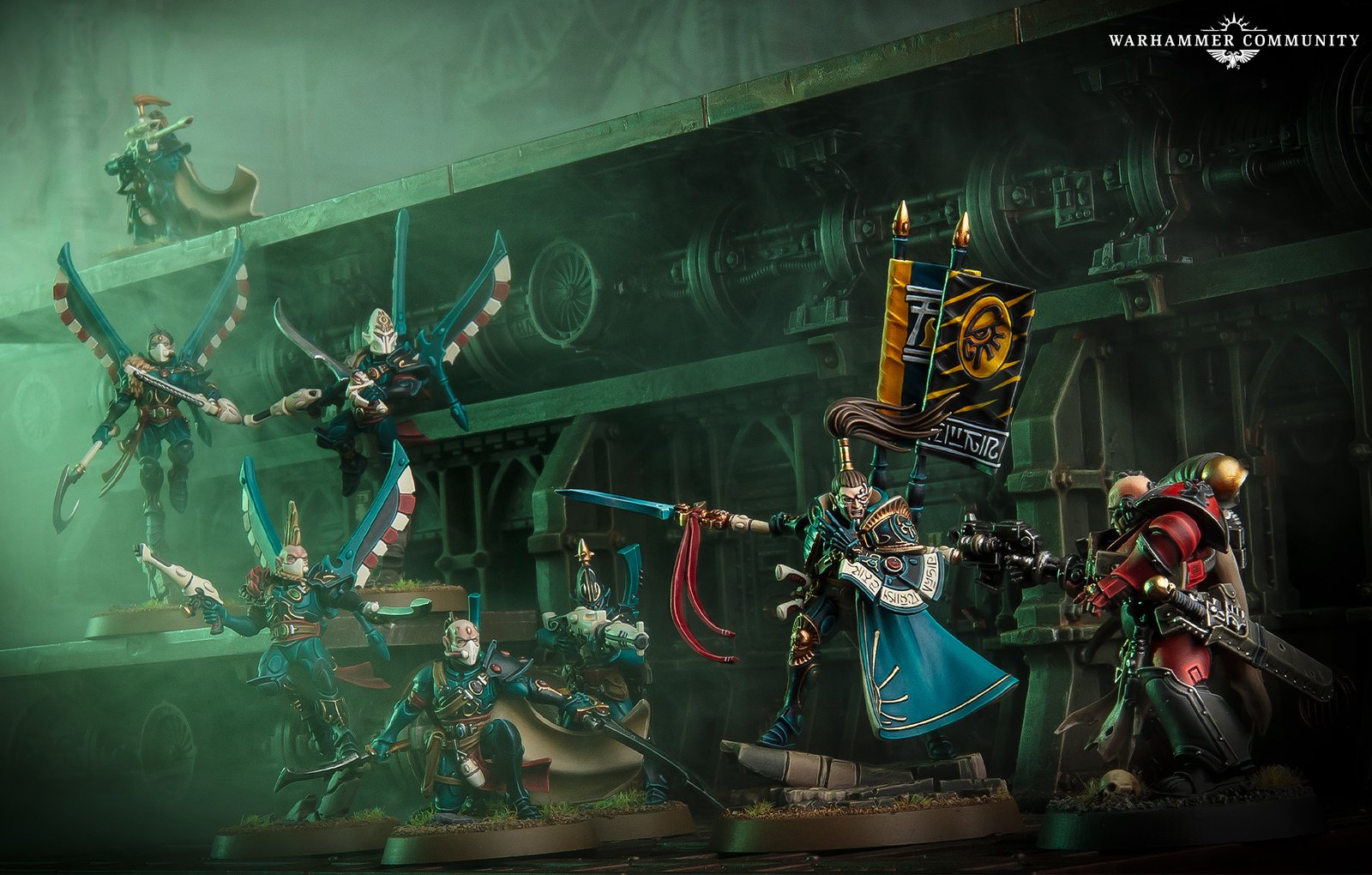
I should admit my own history with this stuff is mostly bruises. Seventh edition, around 2015, my Tyranids against Kiran’s Ulthwé army at the local store. He had a Farseer chain going, prescience and guide and forewarning stacked up, and it felt less like a game than a man reading the result off a card before I’d rolled. My Carnifex charged his Wraithguard and whiffed every single attack while he rerolled into me. Tabled turn four. Seventh edition Eldar were genuinely broken, so I won’t pretend it was all lore, but it did send me to the wiki that night to work out why his army got to half-ignore the dice.
The man who tried to warn the Emperor
Eldrad’s relationship with humanity goes back to the Heresy itself, and it started with him trying to help. He was the first to see Horus turning. He went to Tarsus, a Maiden World, and tried to warn Fulgrim of the betrayal coming, not realising Slaanesh had already hollowed the Phoenician out. When reason failed he tried to kill Fulgrim outright, and the attempt went badly. Ulthwé lost the ancient Wraithlord Khiraen Goldhelm and an Avatar of Khaine, and Fulgrim answered by virus-bombing maiden worlds across the region. That betrayal soured Eldrad on humanity for good.
He kept meddling anyway, because his read on the war was specific and strange. In the novels around the Cabal, the cross-species conspiracy that wanted Horus to win on the theory it would eventually destroy Chaos, Eldrad disagreed. He thought humanity was meant to be the firebreak, the wall that Chaos breaks against, and that if mankind fell the Aeldari fell soon after. So he talked the agent John Grammaticus into using a relic meant to murder the Emperor to instead heal the shattered Vulkan. The greatest Aeldari manipulator of the age spent the Heresy quietly keeping humans alive because the runes told him he’d need us later.
Foresight that can’t close the deal
Andante IV is where the foresight stalled. Abaddon engineered a meeting between them there, attacking a webway gate to Ulthwé, the real goal being to trap and wipe out Ulthwé’s entire Seer Council. Eldrad met the Despoiler in person and beat him, hand to hand, the Staff of Ulthamar a blow away from finishing Abaddon for good. Then Abaddon’s patron gods yanked him off the battlefield before the killing strike landed. Eldrad had foreseen the meeting, won the fight, and still didn’t get the kill that would have changed everything. He came away from Andante IV understanding his own end was close.
It’s a recurring shape with him. The foresight is good enough to put Eldrad in the room with the great threats of the age, Fulgrim, Abaddon, the awakening C’tan, and then it stalls right at the moment he needs one more turn of luck.
The bet that cost him his own people
The Ynnead gamble is the biggest hand Eldrad ever played, and the one that finally turned his own craftworld against him. The Aeldari die and their souls feed Slaanesh; Ynnead, the god forming in the infinity circuits from all those dead, is the long-shot answer, a death-god who might one day wake and kill Slaanesh outright. Eldrad worked with the Harlequins to force that awakening early. His first attempt got broken by the Deathwatch at Coheria. At the Battle of Biel-Tan he led the newly forming Ynnari and helped birth the Yncarne, the avatar of the dead god, and it worked, after a fashion.
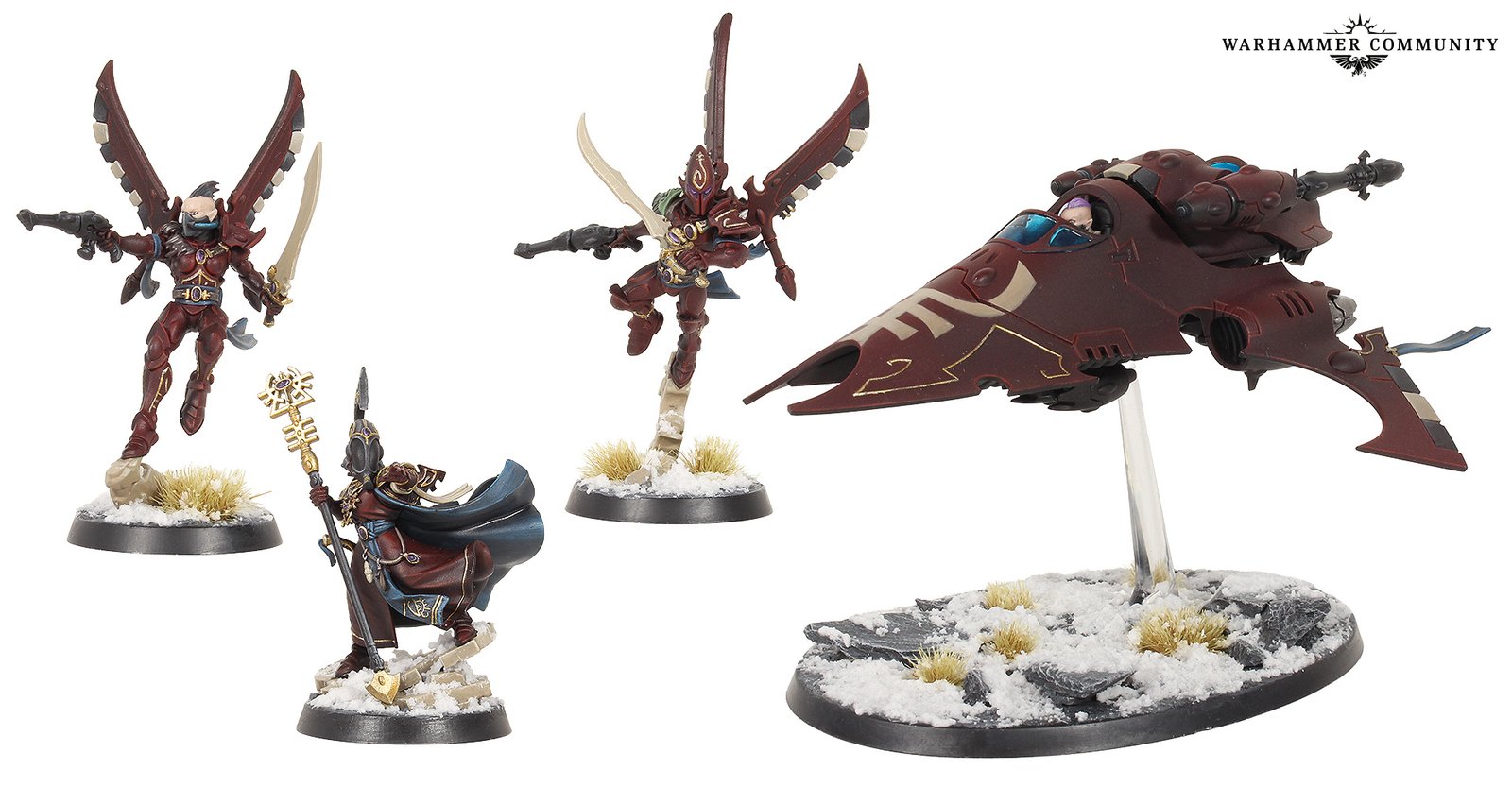
The bill was three of Ulthwé’s finest Farseers, who turned to crystal in the ritual that opened the escape portal. For that, and for the arrogance he’d shown at Coheria, the Seer Council exiled him from the craftworld he’d guided for ten thousand years. He went with the Ynnari, drifting the galaxy after the croneswords that would fully wake Ynnead. When Cadia fell he was there, on Kalisus in the same system, leading human survivors into the webway to safety.
There’s a canon wrinkle I can’t fully untangle, for what it’s worth. GW has described Eldrad as crystallising, in his last days, and also kept writing him into new books for a decade. Whether he’s currently alive in the 41st, or the 42nd now, I honestly couldn’t tell you with confidence. He’s been written as nearly-dead for three editions and keeps showing up anyway.
The detail that sticks with me is in the 10th edition Aeldari codex. Eldrad, it says, has pulled away from the Ynnari because he thinks Yvraine has become too willing to sacrifice Aeldari lives to chase her goals. Sit with that. The Farseer who tilted a Waaagh onto a human world to save ten thousand of his own, who fed three Farseers to crystal for a half-born god, now flinches when someone else spends Aeldari too freely. Ten thousand years of being the knife, and somewhere in there he started counting the cost. The Ranger said it cleaner than I can, kneeling in an Imperial cell waiting to be shot: you are tools, nothing more, to be used and expended to protect our race. He believed every word. What the runes have never told Eldrad, as far as I can see, is whether they were showing him the future or just giving him permission to do what he’d already decided.