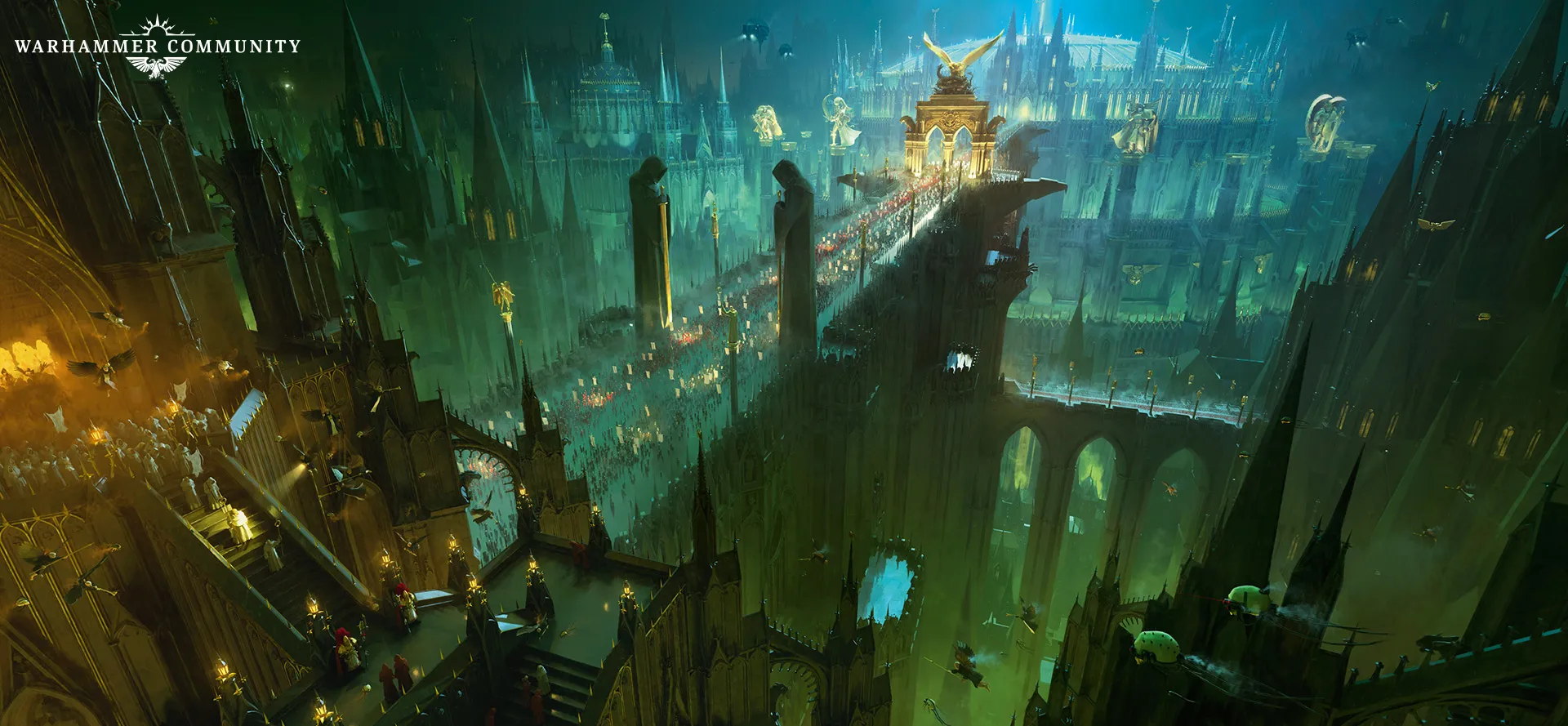
A thousand billion people live on Necromunda, and nobody has ever counted them. The last serious attempt was a census of Trazior Hive four thousand years ago. It got as far as a billion in the upper habitation levels before whoever was doing the counting gave up, and no one’s tried since. That’s one hive, and only the top of one hive. There are several thousand hives on the planet. So when a codex says “a thousand billion,” what it actually means is a shrug rendered in official font. GW just announced a new edition of Necromunda, and I can’t stop thinking about that number.
Because that’s what 40K almost never shows you. You get Space Marines, who are one in a billion by design. You get the God-Emperor and His primarchs and Titans the size of hab-blocks. And then there’s Necromunda, which is a game about eight people with names and stub guns fighting over a water still.
The people who never see a Space Marine
Here’s what most of the Imperium actually is, if you strip out the transhuman supersoldiers and the psychic space elves. It’s this. It’s a hive world. Necromunda is the poster child, but there are thousands of them, and White Dwarf #424’s Hive Worlds piece lays out the arithmetic in a way that stuck with me: a hive world’s population “far outweighs its ability to feed or support itself,” so the whole planet sits at the top of a supply web, hauling in “billions of tonnes of imported bulk foodstuffs” just to keep everyone alive. Cut the supply and, in the magazine’s cheerful phrasing, billions of “hunger-mad subjects” fall on each other “in a frenzy of cannibalistic insanity.”
Day to day, though, nobody’s eating imported food. The real stuff is a luxury for the wealthy. Everyone else eats corpse-starch, which is exactly what it sounds like, recycled organic matter reprocessed into nutrient paste and logged on the manifests under that name because the Administratum doesn’t do euphemisms. You drink recycled water. You’re born, you work, you sleep, and you die inside as small a footprint as the planet’s governors can cram you into, because every square metre of surface they free up is another square metre they can strip-mine.
And the people at the top aren’t even there. This is the detail that made me love the setting. The seven Great Houses that own Necromunda, House Helmawr and the rest, are described in White Dwarf #424 as “primarily investors” who “make nothing and provide no service.” It’s a company town where the owners live abroad and have never once smelled the factory, the kind of landlord who’s never once visited the building he rents to you. Their grandees spend “as little time there as possible,” lounging “beneath exotic arbors on far away worlds” on artificially extended lifespans while the planet that pays for it chokes on its own ash.
I go on about this to people who only play 40K proper, and I get why it doesn’t land. When your models are Space Marines they’re demigods, and death is a footnote because there are a hundred more where that one came from. Your gang in Necromunda is eight nobodies from the manufacturing underclass, and they’re all the models you have. When one of them takes a bad hit and rolls badly on the injury table, that’s a named person walking away from the campaign with a permanent limp, if the roll even lets them walk away.
What’s actually in the new edition of Necromunda
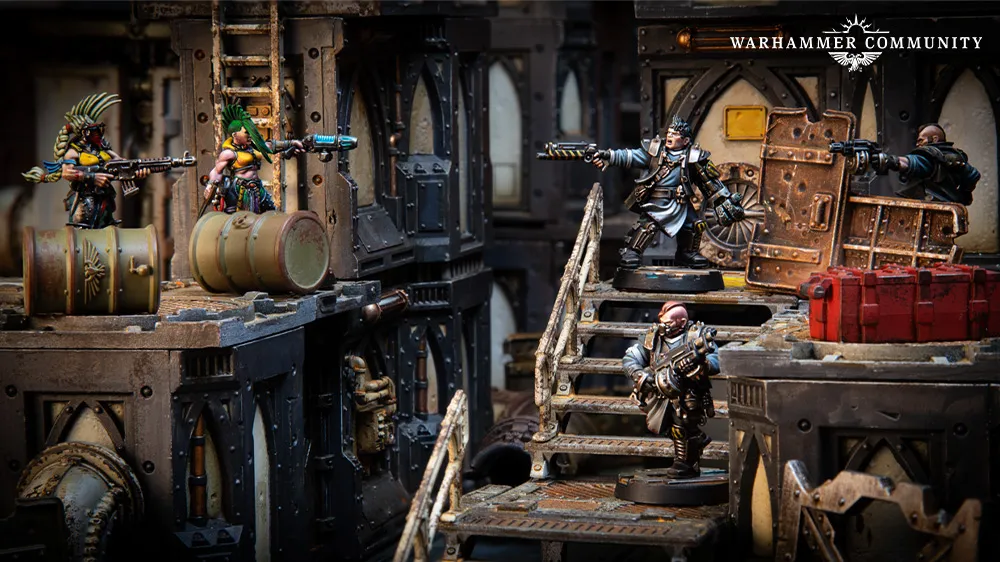
Right, the news. The new edition kicks off with a fresh Core Set, and the two gangs in the box are the Escher Blades of the Matriarch and the Goliath Forge Smelters, eight new plastic fighters each. Classic pairing, that. Escher and Goliath have been the starter matchup since the 2017 relaunch and it still works, because they’re the two houses that read most clearly at a glance. GW’s framing is the usual: the Escher get “feathers, pelts, bold hairstyles, and heels that could double as weapons,” the Goliaths are “hulking fighters, clad in plate armour, and armed with re-purposed tools from the foundries.”
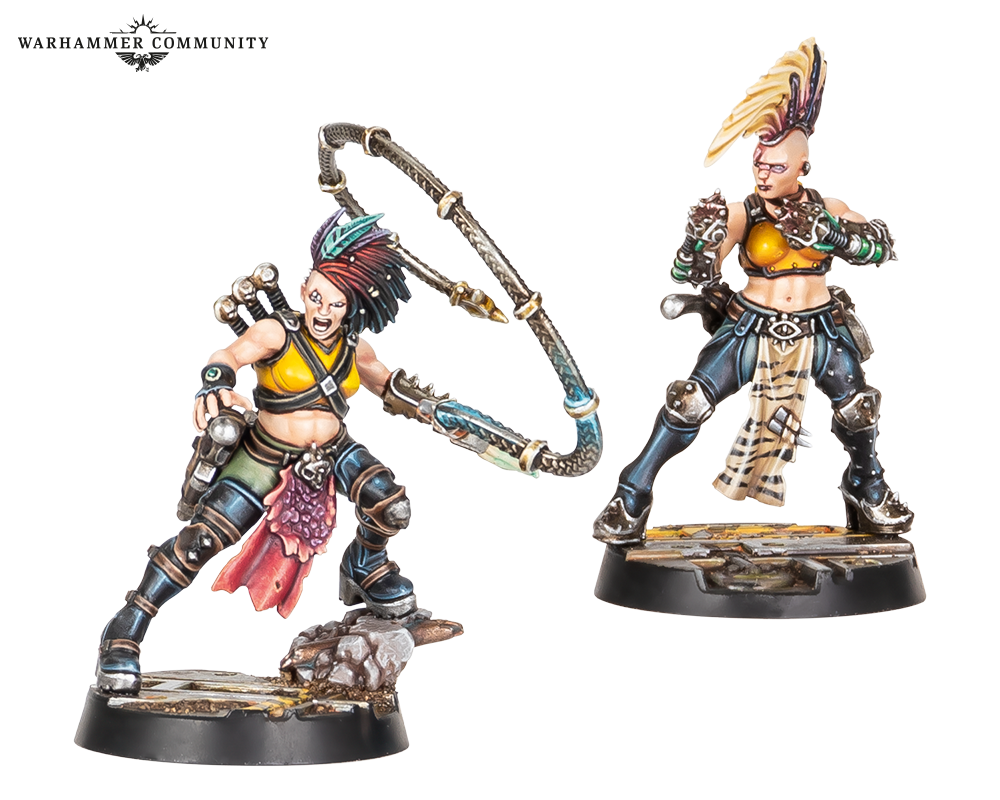
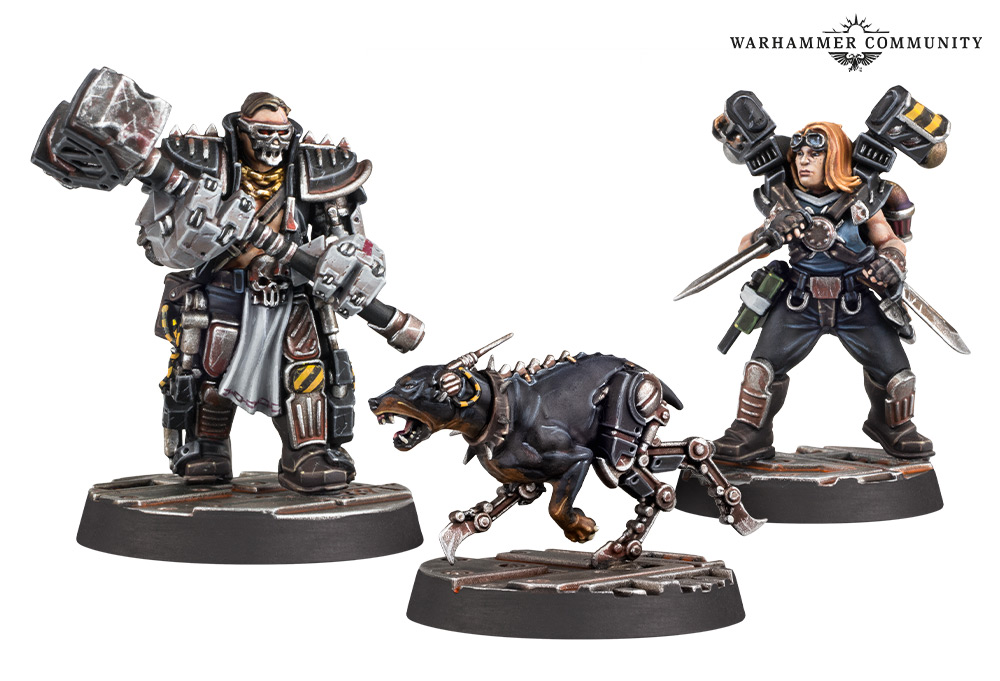
The rules are getting the streamline treatment. New Core Rulebook, quicker and “more balanced,” with campaigns “tweaked to offer more flexibility” and dice changed so “each roll in the game matters.” I’ll believe the balance claim when I see it, Necromunda’s beauty has always been slightly held together with tape and house rules, but flexible campaigns I’m on board with. The box also comes with a chunk of Zone Mortalis: Ruined Factoria Pipes terrain, and the older gang publications are being replaced by two new Gang Books covering profiles, Hired Guns, Brutes, Hangers-on, and Pets. Yes, Pets. Your gang can have a pet. This is important and I won’t be taking questions.
The bit that matters if you’re starting cold is the Underhive Crew boxes. There’s one each for Escher, Goliath, Orlock, Van Saar, Cawdor, and Delaque, and each comes with a spread of fighters, Leaders, Champions, Gangers, Prospects, plus a weapons and upgrades frame so you’ve got kit options out of the box. That’s the on-ramp. One box gets you a playable gang, which is about the cheapest way into any GW game right now.
Six houses that hate each other on a schedule
The six you can pick from are the Clan Houses, and they’re not factions in the 40K sense. They’re closer to castes, or guilds, or those old European trade companies where your surname decided your whole life. White Dwarf #424 calls them manufacturers, the ones who “maintain the vast manufacturing base of Necromunda” while the Great Houses just invest. Each has “its own cultural traditions, distinctive linguistic traits, codes of dress and behaviour.” The people of the six houses don’t mix, borders between their territories are guarded, and where two houses meet you get “an interposing dead zone.”
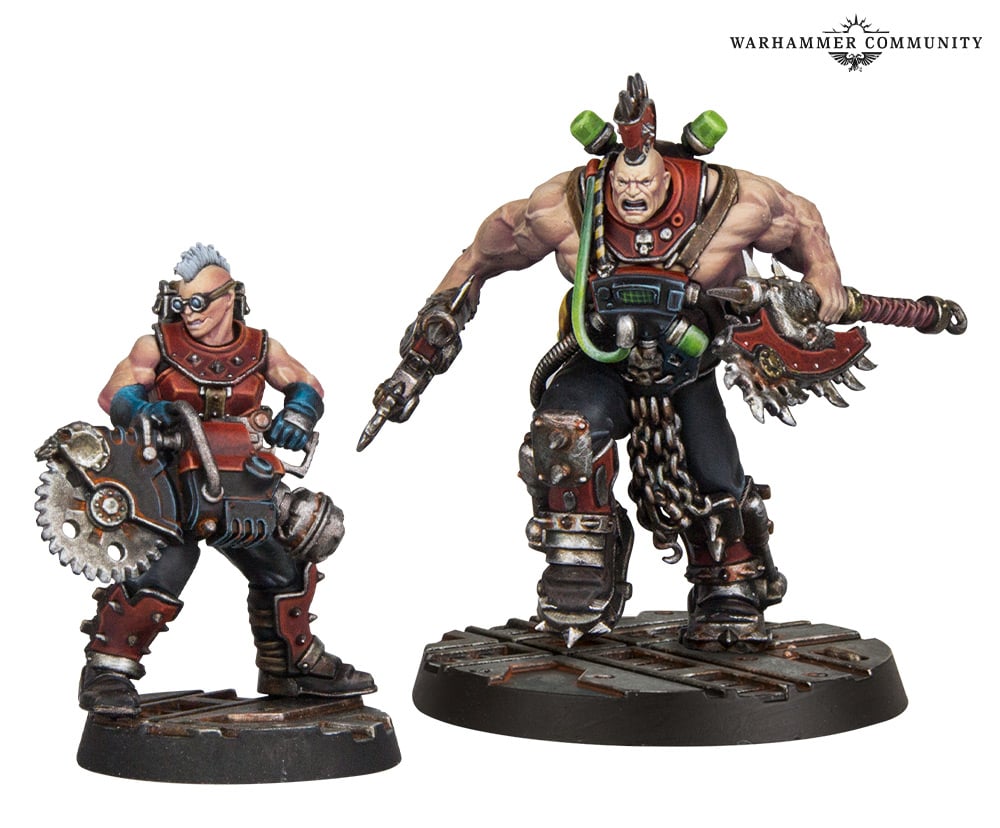
The gangs you actually play are the disposable end of all this. When two houses have a dispute, and they always do, they don’t go to open war, because that would wreck trade and annoy the Great Houses who take a cut of everything. So they settle it by proxy, through gangs. Your fighters are the “disposable foot soldiers in the endless proxy wars fought in the darkness of the underhives,” which lets the suits upstairs keep doing business “with a semblance of civility in the spires above.” You are, functionally, deniable labour in somebody else’s dispute over a supply contract.
And the houses are genuinely distinct, which is where a lot of the game’s charm lives. Goliaths are vat-grown musclemen with short lifespans who settle everything with strength. Van Saar have the best tech and it slowly poisons them. Cawdor are a fanatical rag-clad underclass who burn things for the Emperor. Escher are all-woman, fast, and lethal with chem and blade. Orlock are the working-man’s house, the closest thing to normal. Delaque are the weird ones, the setting’s paranoid whisper made flesh, and GW leans all the way into it. There’s a Delaque unit called the Servant of the Silent Ones, a part-mechanical, part-organic thing built from “plasteel and genetic scraps” with “a cultured cranial soup” poured into its skull to link it to the house’s psychic overmind. Delaque players field a psychic fish’s nightmares and I respect it enormously.
My own history with the game is not glorious. When it came back in 2017 I bought the box, Escher versus Goliath, same as this one basically. I got three Escher fighters painted, a leader and two gangers, in a scheme I thought was really clever, and then a mate and I started a campaign that died after two sessions because life happened and neither of us chased it. Those three gangers are still in a drawer. The other five are still on the sprue. Nine years, which is about as long as I’ve been properly in this hobby, and I have a fifth of one gang. Kiran keeps threatening to run a proper Necromunda campaign at the club, the kind with a map and territory and everyone tracking their fighters between games, and every time he brings it up I think about that drawer and feel a specific kind of guilt.
The reason I want it to happen anyway is that Necromunda is the closest 40K gets to a role-playing game without actually being one. Your fighters gain experience. They earn scars, level up skills, sometimes get captured, occasionally die for good. A campaign generates stories the way a good Kill Team box does but slower and more personal, because it’s the same eight people across weeks instead of a fresh fight each time. You end up weirdly attached. My favourite of the three I painted is a plasma-toting ganger I never even named, and I’d still be annoyed if she died.
There’s the small matter of price, because there’s always the small matter of price. A Necromunda campaign is cheaper to get into than a 40K army, one gang box versus a whole detachment, but the terrain is where it gets you. This is a game that lives or dies on a properly built board, multi-level, full of gantries and ladders and things to shoot people off. The new set comes with Zone Mortalis pipes, and there’ll be a standalone terrain set, and you will want more of it than they give you. I’ve watched people go absolutely feral building underhive tables, sinking months into a board they’ll get maybe six games out of.
This is the register 40K works best in, for me. The gang war two miles below the spire, over water rights, between people who’ll never in their lives see a nine-foot angel and would probably be shot by one for standing in the wrong place if they did. The law on Necromunda is House Helmawr’s private army, the Palanite Enforcers, and their idea of policing is a high-calibre round to the forehead. Nobody’s coming to save these people. They’re just going to keep fighting each other over the scraps, on a schedule, forever, while the owners watch the numbers from a garden on another planet.
I don’t have a release date yet, GW just said “closer to its release date,” which is their way of saying autumn if we’re lucky. When it lands I’ll probably buy it, because I’m a soft touch and because Kiran will make me, and because somewhere in a drawer I have five Escher still on the sprue that deserve better than this. Maybe this is the edition I actually finish a gang. Probably not. But maybe.